What actually happened in Algiers
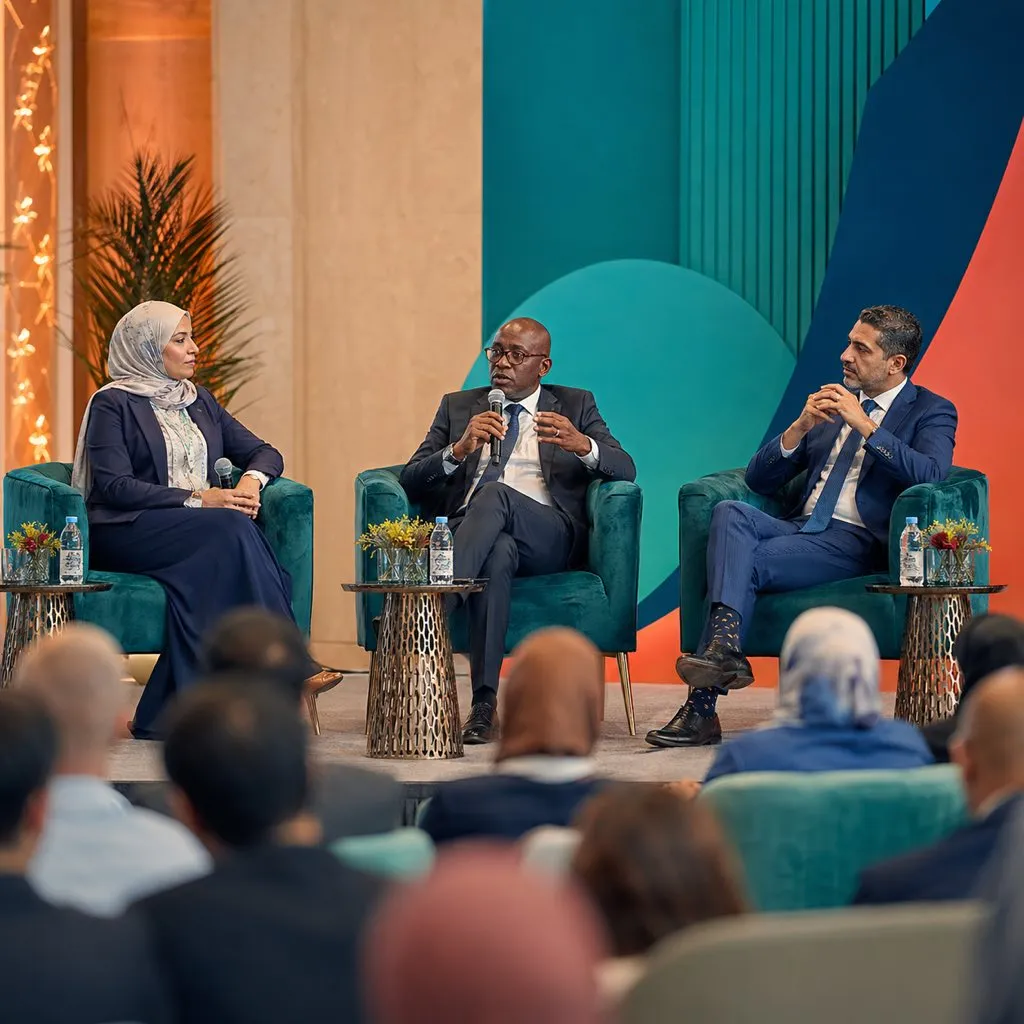
Two distinct but coordinated events anchored Algeria’s spring 2026 digital diplomacy. Global Africa Tech 2026, held March 28-30 at the Abdelatif Rahal International Conference Center under the high patronage of the President of the Republic and led by the Ministry of Post and Telecommunications, billed itself as the first pan-African summit dedicated to digital sovereignty and connectivity convergence. Organisers reported more than 5,000 participants from 45 countries, including over 50 ministers responsible for ICT or telecommunications portfolios. The summit’s theme — “All Networks, One Convergence” — translated into four working pillars: Land (terrestrial fibre), Air (satellite and wireless), Sea (submarine cables), and Space (orbital infrastructure).
The follow-up ICT Africa Summit ran April 21-23, 2026 at the Palais des Expositions des Pins Maritimes in Algiers, alongside the African Telecommunications Union’s Africa Digital Transformation Summit (ADTS 2026), which drew approximately 1,000 delegates focused on digital transformation policy. The pairing was deliberate: the ATU and African Union Commission have spent two years pushing for a single continental coordination calendar, and the Algiers events represent the first time those bodies converged around a single host country.
The most consequential output was procedural. African ICT ministers adopted the Algiers Declaration on African Telecommunications Sovereignty and Integrated Connectivity (2026-2030), a 14-article framework aligned with the African Union’s Agenda 2063 and the UN Sustainable Development Goals. The declaration commits signatories to coordinated infrastructure investment, harmonised spectrum management, joint submarine-cable governance, and regional cloud-capacity planning over the four-year window.
The infrastructure backdrop
The Algiers location matters because of cable geography, not symbolism. Algeria is a landing point for several major submarine systems that connect Europe, the Mediterranean, and West Africa. The Medusa cable, an 8,700-kilometre EU-backed system, lands at Algiers and Collo, with the eastern section expected to enter commercial service by end-2026. Africa-1 lands at Bejaia. Alval and Orval, operational since 2020, connect Algiers and Oran respectively to Valencia, Spain. SeaMeWe-4 lands at Annaba. That cable density gives Algeria more international fibre capacity than most North African neighbours, which is the technical reason it can credibly host continental-scale infrastructure conversations.
The four-pillar framing of Global Africa Tech reflects how African operators now think about resilience. Pure terrestrial fibre is necessary but insufficient: the 2024-2025 Red Sea cable cuts and repeated terrestrial fibre disruptions in the Sahel have made it clear that no single layer can guarantee connectivity. Satellite operators including Eutelsat-OneWeb, SES, and emerging African players are increasingly treated as part of the same architecture rather than a separate market. The Algiers Declaration formalises that integrated framing as continental policy.
What the declaration actually commits
The 14-article text is more concrete than typical declarations. Key commitments include the development of terrestrial fibre interconnection between member states, strengthening of submarine-cable governance and security, the launch of coordinated initiatives on space communications and orbital infrastructure, harmonisation of spectrum policy to support cross-border 5G rollout, and the development of African data-centre and cloud capacity to reduce reliance on extra-continental hosting. The implementation timeline runs through 2030 and is explicitly aligned with the African Continental Free Trade Area’s digital protocol.
Algeria’s role is positioned as a coordination node rather than a singular leader. The Ministry of Post and Telecommunications committed to host follow-up ministerial meetings during the implementation period, and to make Algiers a recurring venue for cross-border infrastructure discussions. That positioning is consistent with the country’s existing assets: cable landings, regional fibre links to Tunisia and Morocco, and a sovereign data-centre programme that has been expanding since 2021.
Advertisement
What this means for Algerian operators and enterprises
For domestic operators — Algérie Télécom, Mobilis, Djezzy, Ooredoo — the practical implication is that continental coordination commitments will start producing technical specifications during 2026-2027. Cross-border interconnection requires harmonised peering arrangements, shared transit pricing, and consistent quality-of-service thresholds. Operators that engage early with the working groups feeding the Algiers Declaration are better positioned to influence those technical specifications than those that treat the framework as diplomatic background noise.
For enterprise CTOs, the relevant signal is the data-centre and cloud-capacity track. The declaration’s commitment to develop African hosting capacity is the policy framing that will shape procurement decisions over the next 36 months. Algerian enterprises that have been weighing local versus extra-continental hosting now have a clearer policy direction: regional data-centre investment is being treated as continental infrastructure, not just national IT spend. That changes the calculus on data residency, cross-border replication, and disaster-recovery siting.
For startups in the connectivity, fintech, and SaaS verticals, the most actionable consequence is the commitment to harmonised spectrum and cross-border services. Companies that have struggled to scale beyond Algeria because of regulatory friction at borders may find it easier to operate continentally as the 2026-2030 implementation period unfolds.
A Four-Pillar Engagement Framework for Algerian Operators and Enterprises
The Algiers Declaration is a working calendar, not a diplomatic archive. Each of the four pillars — terrestrial fibre, satellite/wireless, submarine cables, and cloud capacity — has its own working group and its own first-output deadline in late 2026 or early 2027. Operators and enterprises that engage before those deadlines shape the specifications; those that engage after inherit them.
Pillar 1: Terrestrial Fibre Interconnection — Influence the Peering Model
The fibre-interconnection working group will define cross-border peering architectures and transit pricing rules between member states. Algérie Télécom and the mobile operators — Mobilis, Djezzy, Ooredoo — should nominate technical delegates now, before the first draft circulates. The specific question to table is symmetric transit pricing: Algeria’s position as a regional hub creates leverage to negotiate preferential bilateral rates with sub-Saharan operators, but only if a technical representative is in the room. Waiting for a published final text and then reacting is the wrong sequence; operators who lobby during drafting capture structural advantages that are expensive to reverse.
Pillar 2: Submarine Cable Governance — Assert Co-Management Rights
Algeria holds landing rights for Medusa (Algiers and Collo, expected commercial service end-2026), Africa-1 (Bejaia), Alval and Orval (Valencia links), and SeaMeWe-4 (Annaba). That five-system portfolio makes Algeria one of the most connected landing states in North Africa, and the declaration’s submarine-cable governance track is the forum where co-management rights, maintenance-vessel access, and security protocols get codified. The Ministry of Post and Telecommunications should push for a named Algerian co-chair on the submarine governance sub-group; a passive observer role cedes management rights over infrastructure Algeria physically hosts.
Pillar 3: African Cloud Capacity — Position Before the Procurement Framework Hardens
The declaration commits signatories to develop African data-centre and cloud capacity to reduce reliance on extra-continental hosting. The Algerian data-centre programme, expanding since 2021, is exactly the domestic asset that should be cited in these discussions. Enterprise CTOs who are currently weighing local versus Paris or Amsterdam hosting have a narrowing window to contribute to the procurement criteria that will define what “African cloud hosting” means under AfCFTA’s digital protocol. Input submitted during the working-group drafting phase is far more likely to reflect Algerian technical and data-residency requirements than criteria written after the fact.
Pillar 4: Spectrum Harmonisation — Start the 5G Coordination Now
The declaration’s spectrum harmonisation track targets cross-border 5G rollout. Algeria’s 5G programme has been advancing, and the borderlands with Tunisia and Morocco are the specific zones where coordination has tangible commercial value: cross-border coverage without roaming friction, shared backhaul economics, and unified technical specifications for handset manufacturers. ARPCE — the regulator — should map the specific spectrum bands and power-level differences at the three border corridors and present that technical delta to the harmonisation working group as the input Algeria needs resolved. Abstract participation in a harmonisation process produces generic outcomes; precise technical problem statements produce concrete compromises.
What to watch over the next 12 months
The first credibility test is the implementation cadence. The Algiers Declaration sets up working groups across the four pillars, and their first technical outputs are expected in late 2026 and early 2027. Without concrete deliverables — interconnection agreements, spectrum harmonisation timelines, joint procurement frameworks — the declaration risks joining the long list of African ministerial texts that produced more diplomacy than infrastructure.
The second test is funding. The declaration references AfCFTA digital-protocol implementation, World Bank and African Development Bank infrastructure facilities, and private-sector partnerships, but commits no specific budget envelope. The 2026 ministerial meetings scheduled for the second half of the year will be the first place to look for concrete financing arrangements.
The third test is whether the Algiers diplomacy translates into measurable changes for Algerian operators, enterprises, and startups. Continental coordination only matters domestically if it produces faster cross-border peering, lower regional transit costs, or clearer data-residency rules. Those are the signals that will tell whether April 2026 in Algiers becomes a marker in African digital infrastructure history or another well-attended summit.
Frequently Asked Questions
What made the African Digital Transformation summits strategically important for Algeria?
Two events anchored the season: Global Africa Tech (March 28-30, 2026) drew 5,000+ participants from 45 countries and 50+ ministers, and the ICT Africa Summit ran April 21-23, 2026 at the Palais des Expositions des Pins Maritimes. African ICT ministers adopted the 14-article Algiers Declaration on African Telecommunications Sovereignty for 2026-2030, aligned with AU Agenda 2063 and the UN SDGs. The cable landings at Algiers, Collo, Bejaia, Oran, and Annaba give Algeria the technical backbone to host continental-scale infrastructure discussions.
How can summit diplomacy turn into real infrastructure progress?
The Algiers Declaration sets up working groups across four pillars — terrestrial fibre, satellite and wireless, submarine cables, and space infrastructure. Their first technical outputs are expected in late 2026 and early 2027. Concrete tests include interconnection agreements, spectrum harmonisation timelines, joint procurement frameworks, and the funding mix between AfCFTA digital protocol, AfDB and World Bank facilities, and private partners.
Why should Algerian CTOs and telecom operators care?
The declaration’s data-centre and cloud-capacity track will shape procurement direction over the next 36 months. Operators — Algérie Télécom, Mobilis, Djezzy, Ooredoo — that engage early with working groups will influence cross-border peering, transit pricing, and quality-of-service thresholds. Enterprise CTOs gain a clearer policy frame for data-residency and disaster-recovery decisions, since regional hosting is now positioned as continental infrastructure rather than national IT spend.
Sources & Further Reading
- Africa Adopts Algiers Declaration to Strengthen Telecom Sovereignty and Connectivity — TechAfrica News
- ICT Africa Summit kicks off in Algiers — Xinhua
- ICT Africa Summit 2026 Opens in Algiers — AL24 News
- Telecommunications Sovereignty Takes Focus as Algiers Declaration Sets Africa’s 2026–2030 Direction — TechTrends
- Africa Digital Transformation Summit (ADTS — 2026) — African Telecommunications Union