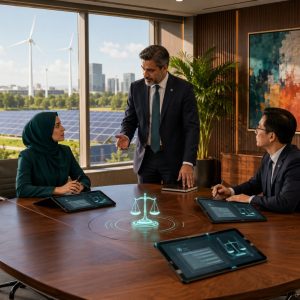
What Microsoft actually committed in Canberra
On April 23, 2026, Microsoft Chairman and CEO Satya Nadella stood next to Australian Prime Minister Anthony Albanese and announced the company’s largest single commitment to Australia. The headline figure is A$25 billion (about USD 18 billion) of capital and operating expenditure on AI and cloud infrastructure by the end of 2029. Microsoft says the package will expand its existing Australian footprint by more than 140 percent, deploy advanced AI accelerators in local Azure regions, and extend supercomputing capacity to government and enterprise customers.
Two adjacent commitments make the announcement different from prior hyperscaler region launches. The first is a national cyber defense partnership formalised in a Memorandum of Understanding with the Australian Government, aligned to Canberra’s recently published expectations for data center and AI infrastructure operators. The second is what Microsoft calls Australia’s largest-ever AI skilling commitment: helping three million Australians build workforce-ready AI skills by the end of 2028.
That skilling target builds on a previous Microsoft pledge to train one million people across Australia and New Zealand by the end of 2025, which the company says was met ahead of schedule. The new program also commits to a 30 percent participation floor for regional and remote communities, Indigenous Australians, people with disabilities, and women in technology.
The bundled structure is the real story
For most of the last decade, large cloud announcements were easy to categorise: a region launch, a new data center campus, or a workforce program treated as a corporate social responsibility line. The Australia package collapses those categories. Compute, cybersecurity, and skills are presented as one integrated stack tied to a government MoU, not three parallel press releases.
That bundling reflects how national AI competitiveness now actually works. Compute without cyber resilience invites political backlash and regulatory drag. Compute without workforce absorption produces underused capacity that gets reallocated to other markets. Skills programs without local infrastructure leak value abroad, because the trained workforce ends up serving foreign workloads.
Australia is a useful test case because the supporting institutions already exist. Microsoft’s Datacentre Academy, launched in 2025 with TAFE NSW and expanded in March 2026 to Melbourne via Victoria University, already trains entry-level data center technicians. The Institute of Applied Technology Digital, a public-private partnership, has reached 500,000 enrolments through free microskills and subsidised microcredentials. The new Microsoft Elevate for Educators program, also launching in April 2026, plugs into the public school system at no cost. The package is therefore not a standing start; it is an acceleration on top of existing channels that other markets do not have.
Sovereign capacity has become a procurement question, not a slogan
The Australia announcement also illustrates how the language of digital sovereignty has matured since the early 2020s. Governments no longer talk only about data residency. They are increasingly asking whether they have enough local compute, cybersecurity depth, and institutional talent to keep critical workloads governable when something goes wrong. Canberra’s MoU explicitly references defense capability alongside infrastructure, which signals that AI capacity is now treated as part of national security planning rather than as commercial procurement.
This matters far beyond Australia. The European Commission published its AI Continent Action Plan in April 2026, naming compute, data, skills, and regulation as a single coordinated stack. Microsoft’s earlier USD 10 billion Japan commitment in April 2026 used a similar bundled template covering infrastructure, cyber defense, and workforce programs. The pattern is clear: hyperscalers and host governments are now negotiating package deals where compute capacity is conditioned on local skills uplift and security cooperation.
That pattern has consequences for smaller markets. The unbundled procurement era, where a government bought a region launch and treated training as someone else’s problem, is closing. Countries that cannot align infrastructure policy, cybersecurity posture, and talent development risk getting smaller, less integrated commitments even when vendors are willing to invest.
Advertisement
What mid-sized markets should take from the architecture
Not every country can attract a A$25 billion package, but the architecture is portable. The lesson is not to mimic Australia’s spending scale. It is to coordinate three policy levers that have historically sat in different ministries: infrastructure investment, cyber resilience, and workforce skilling.
Three implementation choices stand out in the Australian model. First, the MoU format gives the government a structured place to set non-financial expectations on operators, including security standards and equity targets. Second, the skilling commitment is anchored in named delivery institutions (TAFEs, universities, accredited credential bodies) rather than vendor-only platforms, which creates institutional memory. Third, the equity floor of 30 percent for under-represented groups turns workforce uplift into a measurable commitment rather than a marketing line.
For finance ministries and digital agencies elsewhere, the practical move is to negotiate packages that bundle the same three layers in advance, even at smaller scale. A region launch without a security MoU and an enrolment-anchored skills target will generate fewer downstream benefits and more political fragility once the construction announcements stop.
What Enterprise CTOs and Policy Leaders Should Take From Australia’s Architecture
The Australia package is not a template to copy — it is a diagnostic tool. Any government or enterprise leadership team planning AI infrastructure investment can use it to identify which of the three layers (compute, cyber, skills) is weakest in their context and sequence the buildout accordingly.
1. Negotiate the Security MoU Before the Infrastructure Contract
The most transferable element of Australia’s model is the timing of the cyber defense MoU. Microsoft’s Canberra agreement was negotiated in parallel with the investment announcement, not after it. This sequence matters enormously. Infrastructure operators that sign a region launch first and negotiate security obligations later find that vendor leverage disappears once shovels are in the ground. Governments and large enterprise buyers elsewhere should make security expectations, including incident notification timelines, data residency controls, and audit rights, a pre-condition of the infrastructure commitment rather than a follow-on governance exercise. The EU’s NIS2 Directive and Australia’s Critical Infrastructure Act both demonstrate that post-hoc security mandates cost more to implement than pre-negotiated ones — the OECD estimates that retrofitting security controls onto deployed AI infrastructure costs 3-5x more than building them in from the start.
2. Anchor Skills Targets in Named Institutions, Not Vendor Platforms Alone
Microsoft’s A$25 billion commitment is backed by specific delivery institutions: TAFE NSW, Victoria University, the Institute of Applied Technology Digital, and the public school system via Microsoft Elevate for Educators. That institutional anchoring is what differentiates a durable national skills uplift from a temporary corporate training program. When a vendor’s business priorities shift, vendor-only training platforms get deprecated; TAFE qualifications and university microcredentials persist. Enterprise CTOs building internal AI capability programs should apply the same logic: fund certifications and credentials that are portable and institution-backed (AWS Certified, Google Cloud Professional, Kubernetes Administrator) alongside vendor-specific programs. According to LinkedIn’s January 2026 Labor Market Report, engineers holding at least two cloud-provider certifications command 22-28% higher compensation than those relying on single-vendor credentials — a market signal that institutional breadth matters to practitioners as well as employers.
3. Set an Equity Floor Before the Program Scales
Australia’s 30 percent participation floor for regional communities, Indigenous Australians, people with disabilities, and women in technology is not corporate social responsibility — it is a structural constraint that forces program design to accommodate users who would otherwise be excluded by default. Programs built without inclusion targets tend to serve the already-advantaged first and stall on equity metrics later, triggering political pushback that delays full deployment. Enterprise and government leaders designing AI skills programs in other markets should define inclusion metrics before launch, even when the definitions are simpler than Australia’s: first-generation university graduates, candidates from non-capital cities, or women in engineering are all measurable targets that can be tracked from cohort one. Setting the floor early changes who the program is designed for, which changes who benefits.
The Structural Lesson
The three prescriptions in this article — negotiate the security MoU before the infrastructure contract, anchor skills targets in named institutions, set an equity floor early — synthesize into one governing principle: sovereign AI capacity is not a procurement decision, it is a sequencing decision. Countries and enterprises that get the sequence wrong — build the compute, then figure out the governance, then worry about workforce — end up with infrastructure that generates political fragility and underused capacity.
Microsoft’s A$25 billion commitment to Australia is the largest hyperscaler country-investment in 2026, but its significance is architectural rather than budgetary. The MoU format, the TAFE and Victoria University anchoring, the 30 percent equity floor — each element is a pre-commitment that shapes who benefits and how the system behaves once it is running. Governments and enterprise CTOs that study the structure rather than the headline number will find a template that scales down without losing its core logic.
The broader 2026 pattern confirms the lesson. Microsoft’s Japan commitment and the European Commission’s AI Continent Action Plan follow the same bundled architecture. The unbundled era — where compute, security, and skills were negotiated separately by different ministries on different timelines — is closing. The countries and enterprises that adapt to the bundled model earliest will extract the most value from the AI infrastructure decade now underway.
Frequently Asked Questions
What was significant about Microsoft’s Australia AI infrastructure announcement?
Microsoft tied A$25 billion (about USD 18 billion) in infrastructure investment by 2029 to a national cyber defense MoU and a commitment to help three million Australians build AI skills by 2028. The package will expand Microsoft’s Australian footprint by more than 140 percent and adds advanced AI accelerators to local Azure regions.
Why does sovereign AI capacity require more than data centers?
Local compute is only useful if governments and enterprises can secure it, regulate it, staff it, and connect it to real workloads. The Australia MoU explicitly references defense capability alongside infrastructure, which shows sovereignty becoming a trust architecture that includes power, networking, cyber defense, and skills.
What should Algeria learn from Australia’s model?
Algeria does not need to copy Australia’s spending scale. It should adapt the policy architecture by aligning infrastructure planning, cybersecurity capacity, and AI skills programs before major AI workloads become mission-critical, and anchor skilling targets in named delivery institutions rather than vendor-only platforms.
Sources & Further Reading
- Microsoft deepens commitment to Australia with A$25 billion investment – Microsoft
- Microsoft announces Australia’s largest AI skilling commitment – Microsoft
- Microsoft expands AI footprint in Australia with $18 billion investment – CNBC
- Microsoft Commits $18 Billion to Build Australian AI Capacity – Bloomberg
- AI Continent Action Plan delivers major milestones – European Commission