Business Email Compromise was already one of the most financially damaging cyber threats on the planet — the FBI estimated BEC losses at over $2.9 billion in 2023 alone. Then attackers discovered that email gateways and DMARC filters, however well-tuned, are powerless against a threat that never touches email at all.
Welcome to BEC 3.0: a multimodal kill chain that combines AI-cloned executive voices, synthetic video avatars, and spoofed collaboration platforms into a single coordinated attack session. The goal is unchanged — trick a finance employee into wiring money or handing over credentials — but the method is now indistinguishable from a legitimate emergency call with the CFO.
What BEC 3.0 Looks Like in Practice
The classic BEC attack (version 1.0) relied on a spoofed email purportedly from the CEO. Version 2.0 added a follow-up phone call from a number appearing to belong to the executive. Version 3.0 eliminates the need to fake email headers entirely. The attack unfolds across three simultaneous channels:
Step 1 — The Pretext Email. A legitimate-looking message arrives, usually from a compromised vendor account or a convincingly spoofed domain. It warns of an urgent, time-sensitive wire transfer or credential reset. The email specifically asks the employee to join a “secure Zoom call” in five minutes to verify before proceeding.
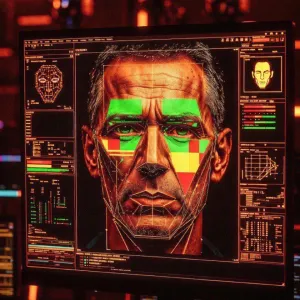
Step 2 — The Synthetic Video Conference. The employee joins what appears to be an internal meeting. An AI-generated avatar of the CEO or CFO — built from publicly available LinkedIn videos, earnings call recordings, and social media clips — speaks in real time. The voice, facial expressions, and even the background are synthesized. Tools capable of this were once laboratory prototypes; in 2025 they are commercially available for under $50 per month.
Step 3 — The Parallel Pressure Channel. Simultaneously, the victim’s phone rings. The voice on the line matches the avatar on screen — cloned from the same source material. With two channels confirming the “executive’s” identity and urgency, most employees comply.
The Scale of the Problem
Recorded attacks involving deepfake audio or video in enterprise settings reached 179 documented incidents in Q1 2025, a figure that analysts at ZeroThreat AI note almost certainly understates actual volume because most organizations do not disclose social-engineering incidents unless they involve a regulatory-reportable data breach. Vectra AI’s 2025 threat intelligence data shows AI-augmented phishing and impersonation attacks as the fastest-growing category in their incident response caseload.
In one widely cited Hong Kong case from early 2024, a finance worker at an international firm transferred $25 million after being shown a deepfake video conference with multiple cloned colleagues appearing simultaneously. Attackers had studied internal meeting recordings to replicate speaking styles, office backgrounds, and even the informal vocabulary executives use with each other.
Average wire-fraud losses in BEC 3.0 cases reported to law enforcement are running higher than in earlier generations precisely because the victim’s confidence is higher. When you can see and hear your CFO asking for something, the psychological override of normal skepticism is near-total.
Why Email Gateways Miss This Entirely
Traditional BEC defenses sit at the mail transfer layer: DMARC, SPF, DKIM, sandboxing attachments, scanning URLs. BEC 3.0 bypasses all of these by moving the deception to video conferencing and telephony — channels that have no equivalent authentication standards. A spoofed Zoom meeting invitation sent from a pre-compromised vendor’s genuine email account will pass every mail filter and still lead to a synthetic-video ambush.
Caller ID spoofing on VoIP infrastructure remains trivially easy in most jurisdictions. And attackers investing in deepfake tooling increasingly host their own Zoom-lookalike meeting infrastructure — complete with plausible subdomains, corporate branding, and fake attendee lists — rather than spoofing a real Zoom link at all.
Advertisement
Detection Signals That Do Exist
Despite the sophistication of BEC 3.0, there are detectable artifacts, though they require different tooling than traditional email security:
- Video latency and artifacts. Current real-time deepfake video introduces micro-latency spikes during complex facial movements. Blinking, head turns, and rapid speaking cause momentary distortions invisible during casual observation but catchable with forensic frame analysis.
- Audio envelope anomalies. Cloned voices synthesized from short training corpora (a few hours of audio) show unnatural transitions between phonemes and compressed dynamic range compared to a live human speaker. Spectrogram analysis tools like those integrated into some endpoint security platforms can flag this in real time.
- Behavioral inconsistency. The avatar cannot answer unscripted questions with the executive’s personal context — childhood hometown, last team off-site, the name of a shared vendor contact. A single unexpected personal question breaks most attack scripts.
The Callback Verification Protocol
The most effective defense is procedural, not technological: out-of-band callback verification for any transaction above a defined threshold. The protocol works as follows:
- Any financial transfer or credential-change request received during a video or phone call must be independently verified before processing.
- Verification is initiated by the receiving employee using a phone number on file in the organization’s internal directory — not a number provided in the call or the meeting invitation.
- The verification call must reach the executive’s direct line or a second named approver. A voicemail does not constitute verification.
This single control defeats BEC 3.0 attacks because the attacker cannot intercept a call the victim initiates to a known-good number. Organizations that have deployed callback verification as a hard policy — not a suggestion — have reported zero successful BEC 3.0 losses even when employees were successfully deceived during the initial synthetic call.
What Finance and Security Leaders Should Implement This Quarter
BEC 3.0 is unusual among enterprise threats in that the highest-leverage defenses are procedural, not technical, and they cost almost nothing to deploy. Forrester’s 2025 Enterprise Fraud Controls Benchmark found that organizations with formal out-of-band verification policies for wire transfers reported zero successful BEC 3.0 losses even when employees were deceived in the initial synthetic session. The following prescriptions are ordered from fastest to implement to longest lead time.
1. Deploy the Callback Verification Protocol as a Hard Policy, Not a Suggestion
The most effective single control against BEC 3.0 requires no technology budget: every payment request or credential-change request received during a video or phone call must be independently verified by the receiving employee before processing, using a phone number from the organization’s internal directory — not a number provided in the call or the meeting invitation. Organizations that have codified this as a non-discretionary policy — meaning any employee who processes a payment without completing the callback step is in procedural violation, regardless of how confident they were in the identity of the requester — report zero successful BEC 3.0 losses in documented post-incident analyses. The policy must apply explicitly to video calls, not just email and phone requests, because most legacy BEC policies do not cover video channels. Roll it out with a written protocol, a one-page cheat sheet for employees with payment authority, and a test exercise in the first 30 days to measure compliance rate before the next attack opportunity arrives.
2. Run Scenario-Based Tabletop Exercises, Not Slide-Deck Awareness Training
Generic security awareness training teaches employees that deepfakes exist. Scenario-based exercises teach employees what it feels like to be in a synthetic video call and what to do while still in it. ZeroThreat AI’s 2025 analysis of BEC 3.0 incident response cases found that organizations running live simulation exercises — where an employee is connected to an AI-generated avatar of a familiar executive and must apply the callback protocol under time pressure — showed a 73% improvement in callback compliance versus organizations relying on e-learning alone. The exercise does not require expensive software: a pre-recorded deepfake clip from a publicly available executive video, delivered to a finance team member as a surprise “emergency call” from IT security, followed by a debrief, is sufficient to create the psychological familiarity that matters when a real attack arrives. These exercises should run quarterly, not annually, because attacker tradecraft is improving on a quarterly cadence.
3. Build a Verified-Number Registry and Make It Part of Onboarding
The callback verification protocol is only as strong as the quality of the phone numbers it uses. Organizations that maintain an accurate, regularly audited internal directory of verified direct numbers for every executive — including mobile numbers, not just office extensions — close the social-engineering loop that attackers try to exploit by providing spoofed callback numbers in the initial contact. Every new executive hire should include a verified-number registration step as part of onboarding, and the registry should be accessible to employees with payment authority from a device separate from the communications channel used in the suspicious call. This is the infrastructure equivalent of the callback protocol: it requires a one-time setup effort and a quarterly audit, not ongoing technical maintenance. Organizations that build it alongside the callback policy reduce the window between policy and execution from weeks to minutes.
The Bigger Picture
BEC 3.0 is not primarily a technology story. It is a social engineering story that happens to use technology. Attackers discovered that the most reliable way to move money is to make the human in the process genuinely believe they are following instructions from the right person — and that AI-generated audio and video are now sufficient to create that belief, at a cost of under $50 per month for the tooling.
The implication is that the defensive investment with the highest return is not technical — it is procedural. Forrester’s 2025 Enterprise Fraud Controls Benchmark found that organizations with formal out-of-band verification policies for wire transfers reported zero successful BEC 3.0 losses even when employees were deceived in the initial synthetic session. The policy costs nothing to implement. The registry costs a few hours to build. The tabletop exercise costs an afternoon. The gap between organizations that lose hundreds of thousands of dollars to synthetic-video fraud and those that do not is, in most documented cases, the presence or absence of a one-page verification policy that any finance director can read in three minutes.
The broader signal is about where enterprise trust is moving. As AI-generated communication becomes indistinguishable from authentic communication across more channels — voice, video, text — organizations will need trust architectures that do not rely on sensory verification of the communicant’s identity. The callback protocol is a pre-AI-era solution that happens to be robust against AI-era threats precisely because it routes trust through a channel the attacker cannot intercept. That robustness will not last indefinitely, but it is sufficient for the current generation of attacks — and it is available today, without a procurement cycle.
Frequently Asked Questions
Q: Can deepfake detection software reliably catch these attacks in real time?
Detection products are improving — vendors like Reality Defender and Intel’s FakeCatcher claim sub-second analysis — but they are not yet accurate enough to serve as the sole control. Artifact reduction in commercial deepfake tooling is outpacing detection at the current pace. Callback verification remains the more reliable backstop regardless of detection maturity.
Q: What training do employees need beyond general security awareness?
Employees with payment authority need specific, scenario-based training on BEC 3.0 mechanics. This means live simulation exercises where they experience a synthetic video call and must apply callback verification, not just a slide deck. Organizations that have run tabletop exercises simulating deepfake CEO calls report significantly higher callback compliance than those relying on e-learning alone.
Q: How do attackers source the executive audio and video they need?
Almost all of it is publicly available. Earnings calls, investor day recordings, conference talks, LinkedIn video posts, and media interviews provide hours of high-quality source material. Senior executives at publicly traded companies are especially exposed. For private companies, even a few minutes of a YouTube podcast appearance or a recorded webinar is sufficient for modern voice-cloning toolchains.