The Scale of the Problem in 2026
The deepfake voice fraud threat is no longer a theoretical risk or a case study from high-profile financial institutions — it is the operating reality for any enterprise that conducts financial authorizations by voice. The data from 2025 makes the trajectory unambiguous.
Deepfake-enabled vishing attacks surged over 1,600% in Q1 2025 compared to Q4 2024, according to Keepnet Labs. U.S. deepfake fraud losses reached $1.1 billion in 2025, triple the $360 million recorded in 2024. In the first half of 2025 alone, deepfake fraud cost Americans $547.2 million. Financial institutions report an average loss of $600,000 per incident involving deepfake-related fraud, with over 10% of surveyed institutions reporting individual cases exceeding $1 million. Deloitte’s Center for Financial Services projects AI fraud losses in the United States could reach $40 billion annually by 2027.
The CEO fraud dimension is particularly operationally significant. CEO fraud now targets at least 400 companies per day using deepfakes, according to data from multiple security vendors. Voice cloning fraud specifically rose 680% in the past year, with the average loss per deepfake fraud incident exceeding $500,000. The fundamental technical enabler is the collapse of the audio sample threshold: attackers now need as little as three seconds of audio to create a voice clone with 85% accuracy. Three seconds is achievable from any public earnings call, LinkedIn video post, conference presentation, or media interview. For C-suite executives at public companies, the voice sample requirement is already met by publicly available content.
The most famous enterprise case — the Arup finance worker tricked into wiring $25 million via deepfake video conference in 2024 — was initially dismissed as an exceptional case. The 2025 data shows it was a prototype, not an anomaly. A UK company lost £20 million in a CEO fraud attack using AI-generated deepfakes the same year. The FBI classifies deepfake CEO fraud as one of the fastest-growing and highest-value fraud categories targeting U.S. enterprises in 2026, with AI-powered BEC generating $2.77 billion in losses across 21,442 incidents in 2024.
Why Voice Verification Is No Longer Sufficient
The fundamental problem with using voice recognition as a security control is that it was designed as an authentication mechanism in a world where voice was hard to synthesize convincingly. That constraint no longer exists. Modern voice cloning models — available to both sophisticated APT actors and criminal groups with $200/month PhaaS subscriptions — can replicate timbre, cadence, accent, and speaking patterns with fidelity that passes human evaluation.
The threat has evolved along three dimensions that compound one another.
First, audio requirements have collapsed. The 2023 threshold for a convincing voice clone was typically 60 seconds or more of clean audio. By 2026, three seconds at 85% accuracy is achievable; 30 seconds produces near-perfect fidelity for most commercial voice cloning models. Executive voice samples are freely available from earnings calls, investor day presentations, podcast appearances, and conference keynotes.
Second, multimodal deepfakes have arrived at production quality. The Arup attack used a real-time deepfake video conference with multiple cloned participants. Real-time video deepfaking has become accessible to well-resourced criminal groups — the visual uncanny valley that previously allowed trained observers to detect deepfake video has narrowed to the point where enterprise employees conducting a routine video call with an “executive” cannot be expected to reliably identify the fraud.
Third, the social engineering pretext is being industrialized. Sophisticated campaigns do not begin with a fraudulent call — they begin with weeks of relationship building via email, Teams, or LinkedIn (using real or impersonated accounts), followed by a voice or video call that appears as the natural conclusion of an established communication. By the time the fraudulent authorization request arrives, the victim has a “relationship” with the attacker.
Advertisement
What Enterprise Risk Officers Should Do About It
1. Replace Voice-Only Authorization with Out-of-Band Verification for All Financial Transactions
Voice authorization for financial transactions must be treated as an authentication mechanism that has been compromised at the protocol level — not at the implementation level. No amount of training helps employees detect a 95% accuracy voice clone in a real-time call. The structural fix is to remove voice-only authorization and replace it with a mandatory out-of-band verification: any wire transfer, IBAN change, or payment authorization request received via voice or video call requires secondary confirmation via a pre-established, non-call channel. For intra-organizational transfers, that means a callback via a known corporate directory number, not a number provided by the caller. For vendor payment changes, it means a written confirmation via a verified email channel that has been active for 30+ days. This is not a “best practice” — it is the primary control that prevents the category of fraud that deepfake vishing enables.
2. Implement a CFO Behavioral Pattern Baseline and Anomaly Alert for Unusual Authorization Requests
Most deepfake CEO fraud calls are structurally anomalous: they request unusual urgency, non-standard amounts, novel beneficiaries, or deviation from established payment procedures. Enterprises should create a formal “CFO/CEO authorization pattern” baseline that documents: (a) typical transaction amounts by category, (b) advance notice expectations for wire transfers, (c) the communication channels through which executives typically initiate authorization requests, and (d) the names and positions of employees authorized to receive executive authorization instructions. Any deviation from this baseline — a first-time authorization channel, an unusual amount, an unfamiliar beneficiary — should trigger an automatic hold and a verification callback before processing. Keepnet data shows that 77% of victims who received a voice clone call and transferred funds reported no second-channel verification was used.
3. Deploy Real-Time Deepfake Detection Tools for Executive Communication Channels
Real-time audio deepfake detection tools — including solutions from vendors such as ID R&D, Pindrop, and Resemble AI — analyze spectral patterns, microtremor characteristics, and synthesis artifacts that are present in AI-generated audio but absent in live human speech. These tools can be integrated as pre-call screening layers for inbound calls to the CFO, treasury, and payment authorization functions. The current generation of real-time detectors achieves detection accuracy in the 85-95% range against commercial voice cloning models — not 100%, but sufficient to flag suspicious calls for additional verification. Additionally, Microsoft Authenticator and enterprise identity platforms are beginning to integrate AI-generated media detection as an optional authentication layer for video conference calls. Security teams should evaluate these for deployment on executive communication channels by Q3 2026.
4. Establish an Executive Voice Sample Policy That Limits Public Audio Availability
For C-suite executives at non-public companies or executives whose public audio footprint is limited, a proactive voice sample minimization policy can increase the attacker’s sample acquisition cost. The policy elements: (a) internal communications should default to text or encrypted messaging for routine matters rather than audio/video calls that could be recorded; (b) public conference presentations should be submitted as recorded presentations rather than live-streamed, reducing the volume of high-quality audio available to attackers; (c) earnings calls and investor communications should use formal prepared text read by IR teams rather than improvised executive Q&A wherever feasible. For public company executives with extensive public audio, this policy is not practicable — but the verification protocols in Actions 1 and 2 are the applicable substitute.
5. Train Finance and Treasury Teams Specifically on Deepfake-Specific Red Flags — Not Generic Fraud Awareness
Generic fraud training does not cover the specific social engineering patterns of deepfake CEO fraud. The targeted training should include: (a) specific examples of known deepfake fraud calls (the $25M Arup case, the £20M UK case) with audio analysis demonstrating what a high-quality voice clone sounds like versus live speech; (b) a role-play scenario in which trainees receive a simulated deepfake authorization call and must execute the out-of-band verification procedure; (c) explicit instruction that executives never bypass the out-of-band verification procedure regardless of urgency, seniority, or social pressure; (d) a clear escalation path: if an authorization call cannot be verified via out-of-band means within 30 minutes, the transaction is halted until verification is complete. The Verizon 2025 Data Breach Investigations Report confirms that organizations with quarterly targeted social engineering simulation training reduce susceptibility rates by 64% compared to annual-only programs.
The Structural Lesson for Enterprise CFOs
The deepfake vishing threat is not a technology problem — it is a process problem. The technology to clone voices convincingly exists and is accessible. The technology to detect voice clones in real-time is imperfect. The gap between the two creates a window of vulnerability that cannot be closed by better AI tools alone.
The structural lesson is that voice and video verification must be retired as stand-alone authorization mechanisms for financial transactions, just as password-only authentication was retired in favor of multi-factor authentication as password cracking became trivially automatable. The timeline for that transition — password cracking to MFA adoption — took approximately ten years and required a decade of high-profile breaches to complete. Enterprise CFOs who wait for the same gradual pressure to drive deepfake vishing protocols are accepting a decade of exposure during which fraud losses will compound annually.
Deloitte projects $40 billion in annual AI fraud losses by 2027 in the U.S. alone. The CFOs and risk officers who implement out-of-band verification protocols in 2026 will not be making a heroic investment — they will be making the minimum required baseline adjustment to a threat environment that is already operational.
Frequently Asked Questions
How realistic are real-time deepfake video calls — is the Arup attack reproducible by a typical criminal group?
The $25 million Arup attack (2024) used multiple simultaneous video deepfakes with cloned voices, which at the time required significant technical resources. By mid-2026, real-time face-swapping and voice cloning tools are accessible to well-resourced criminal groups at a fraction of the 2024 cost. The technical barrier has fallen faster than enterprise security protocols have adapted — which is the structural exposure. Organizations should not model their risk based on the sophistication level required in 2024; they should model it based on the capabilities commercially available in 2026.
What is the minimum audio sample an attacker needs to clone an executive’s voice credibly?
Current commercial voice cloning models can produce an 85% accuracy clone from as little as three seconds of audio. A 30-second clean audio sample produces near-perfect fidelity for most models. C-suite executives at any company with public earnings calls, investor presentations, conference keynotes, podcast appearances, or media interviews have already provided sufficient samples for a credible clone. The voice sample minimization policy (Action 4) is meaningful only for executives with a limited pre-existing public audio footprint.
Does deepfake detection technology work reliably enough to be used as a security control?
Current real-time deepfake detection tools achieve 85-95% accuracy against commercial voice cloning models — high, but not sufficient to be used as a sole security control. They should be used as a first-pass screening layer that flags suspicious calls for additional verification, not as a replacement for out-of-band verification protocols. The 5-15% false negative rate means that approximately 1 in 10 to 1 in 20 high-quality deepfake calls would pass undetected — unacceptable as a standalone control for a transaction authorization context where a single failure can cost $500,000+.
Sources & Further Reading
- Cyber Insights 2026: Social Engineering — SecurityWeek
- Deepfake Statistics and Trends 2026 — Keepnet Labs
- Deepfake CEO Fraud: $50M Voice Cloning Threat to CFOs — Brightside AI
- Voice Cloning Is the New BEC: Deepfake CEO Fraud — CybelAngel
- Deepfake Phishing Attack 2026: How to Defend Your Business — Jazz CyberShield
- FBI IC3 2024 Annual Report: BEC and AI Fraud Losses
🔗 Related Intelligence

AI Deepfake Voice Fraud: The Enterprise Defense Playbook for 2026
AI Vishing: How Voice Deepfakes Are Becoming Enterprises’ Most Dangerous Attack Vector
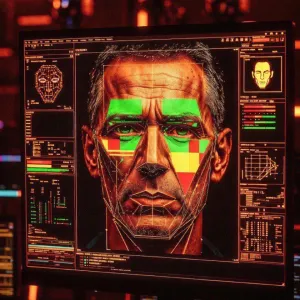
Deepfake CEO Fraud: The Wire Transfer Attack That Changed Business Security

AI Voice Cloning Hits the Indistinguishable Threshold: The $680K Fraud Wave