Why Teacher Training Is the Leverage Point
Most digital-skills programs in Algeria target students directly: bootcamps, hackathons, coding clubs. The Algiers STEM Center took a different route. When it opened in April 2016, World Learning and its industry partners bet that the fastest way to scale hands-on science and technology education in Algeria was to train the teachers first — then let each trained teacher reach hundreds of students every year.
That model is now visible in the numbers. Early reporting on the center noted that 25 teachers from across Algeria were trained in interactive STEM teaching approaches during the initial cohorts, and more than 900 students went through the center’s programs in its first 16 months, with around 150 joining regular specialized clubs. Every trained teacher acts as a multiplier: the students those teachers reach in classrooms, after-school clubs, and robotics teams never appear in the center’s headline figures but represent the real return on the investment.
From Single Makerspace to National Network
The Algiers STEM Center started as a single makerspace in the capital. It has since seeded a network that now includes the Algiers STEAM Makerspace, the Ouargla STEAM Center, the Illizi STEAM MakerLab, and university-hosted “STEAM in American Spaces” programs — 12 STEAM centers in total, according to World Learning’s initiative page.
This geographic spread matters. Most tech-education investment in Algeria concentrates on Algiers and a handful of northern cities. Placing centers in the south (Ouargla, Illizi) is an intentional counterweight — it shifts who gets early exposure to robotics, 3D printing, and basic coding, and begins to change which cities feed the national talent pipeline.
Industry Funding, Not Just Grants
The center is explicitly industry-led. Its founding sponsor list, per Africa Tech Schools, includes Anadarko Petroleum, Dow Chemical, and The Boeing Company, with launch-phase support from the U.S. Embassy in Algiers. World Learning operates the programs on the ground.
This funding mix is worth noting for anyone designing a new training program in Algeria. Pure public funding tends to be slow to deploy and uneven year-to-year; pure grant funding runs out when the cycle ends. The Algiers STEM Center’s combination of corporate sponsorship and international-NGO delivery has kept it operating through nearly a decade of political and economic turbulence — a durability most standalone initiatives haven’t matched. World Learning’s Boeing-Algeria case is often cited as a model for corporate-workforce programs in the region.
Advertisement
What the Teacher-Training Curriculum Actually Looks Like
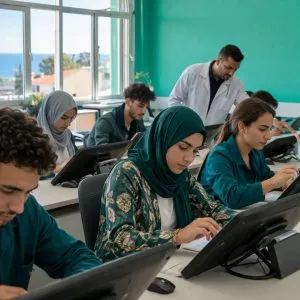
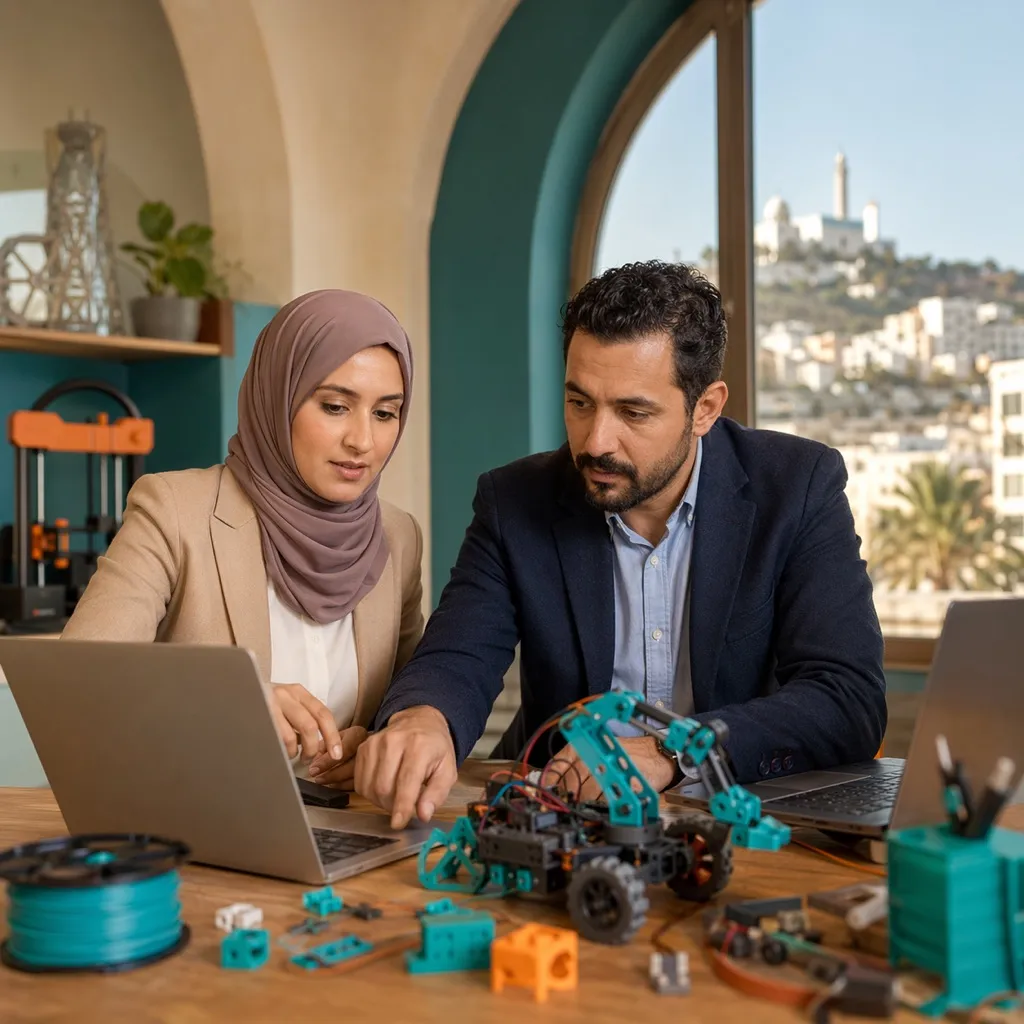
Two threads run through the program. The first is a teaching-methodology course for current and future STEM teachers. It focuses on interactive, project-based approaches — the kind of classroom behavior that is still relatively rare in Algeria’s formal education system, where rote learning and exam-driven instruction dominate. Teachers learn to run hands-on workshops, supervise group projects, and integrate low-cost tools like Arduino kits, 3D printers, and open-source electronics into their lesson plans.
The second thread is the annual interactive STEM Camp for students, which also functions as a laboratory for trained teachers. Camp mentors rotate, and the camps themselves serve as practice environments where new teachers can apply what they learned in the methodology course, supervised by more experienced peers. This keeps the training grounded in classroom reality rather than theory.
The volunteer network built through these programs is one of the less-visible assets of the initiative. Graduates of the teacher-training program now lead activities at various STEAM centers, which means the system no longer depends on a small central staff to run every workshop.
Limits and Gaps
The program has clear opportunity to scale. Twelve centers across a country of 47 million is a starting point, with room to expand. The centers currently concentrate on primary and secondary education, and deepening university-level integration with Algeria’s 74 AI master’s programs or the new chip-design initiatives at CDTA is the natural next step. Expanding reach in rural areas beyond the specific host cities is the next layer to build.
For Algerian education policymakers, the most useful takeaway may be structural rather than pedagogical. The STEM Center model works because it combines three ingredients that are rarely aligned: durable industry funding, a specialized curriculum focused on teacher multipliers, and infrastructure (makerspaces, tools, supervision) that lets teachers practice what they teach. Replicating even one of those elements in a government-led program is hard; replicating all three is rarer still.
The Workforce Question
The Algiers STEM Center has never claimed to single-handedly produce Algeria’s next generation of engineers. Its metric is upstream: the teachers who teach the students who eventually enter universities, vocational centers, and accelerators. A student who first touched a microcontroller in a Ouargla STEAM MakerLab in 2022 is the kind of applicant that emerges in 2027 for an AI master’s or a cloud-certification track.
As Algeria moves toward its 2030 digital-economy targets — including the 500,000 new tech jobs announced in national plans — the center’s teacher-first approach looks less like a supplementary program and more like a necessary piece of the pipeline. The alternative is a country that keeps funding bootcamps for students whose classroom teachers never learned how to teach technology.
Frequently Asked Questions
When was the Algiers STEM Center founded and who funds it?
The center opened in April 2016. It was launched with sponsorship from Anadarko Petroleum, Dow Chemical, and The Boeing Company, with initial support from the U.S. Embassy in Algiers. World Learning operates the programs on the ground.
How many teachers and students has the center reached?
Early reporting documented at least 25 teachers trained as master trainers and over 900 students in the first 16 months, with about 150 joining regular specialized clubs. The network has since expanded to 12 STEAM centers across the country, multiplying downstream student reach through each trained teacher.
Can Algerian schools and universities replicate this model?
Yes, but replication requires three elements the center has held together for nearly a decade: durable funding (a mix of corporate and grant support), a curriculum focused on teacher multipliers rather than student bootcamps, and physical infrastructure — makerspaces with real equipment — where teachers can practice what they teach.
Sources & Further Reading
- Algiers STEM Center — World Learning program page
- Algiers STEM Center — World Learning Algeria initiative
- Algiers STEM Center profile — Africa Tech Schools
- How Boeing and World Learning Are Cultivating a Modern Workforce in Algeria and Egypt — World Learning
- An Innovative Approach to International Education in Algeria — World Learning on Medium