A Shared Digital Platform for AI Research
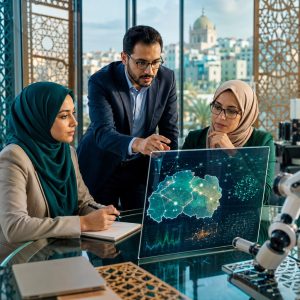
Tunisia and Algeria have taken an unprecedented step in North African scientific cooperation by launching a joint digital platform dedicated to artificial intelligence research. The platform connects universities, research laboratories, and institutions across both countries through common digital tools, enabling data exchange, dissemination of scientific work, and networking of expertise.
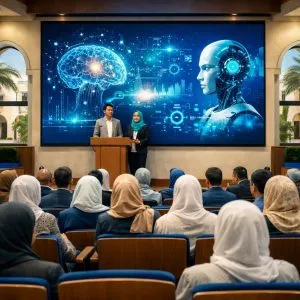
The initiative was announced by Moez Chafra, president of the University of Tunis El Manar, at the second International Forum on Emerging and Intelligent Information Technologies. It addresses what organizers describe as the fragmentation of traditional research approaches — where institutions in neighboring countries pursue parallel work on similar problems without coordination.
From Border Universities to Digital Integration
The platform builds on commitments made at the seventh Forum of Algeria-Tunisia Border Universities, held on December 16, 2025, at Mohamed-Chérif Messaâdia University in Souk Ahras. The forum, attended by Algerian Minister of Higher Education and Scientific Research Kamel Baddari and his Tunisian counterpart Mondher Belaid, brought together ten border-region universities from both countries.
On the Algerian side, the participating institutions include the universities of Tébessa, El Tarf, El Oued, Annaba, and Souk Ahras. Tunisia contributes the universities of Gafsa, Kairouan, Sfax, Jendouba, and Gabès. The theme — “Higher Education in the Digital Age: Knowledge, Innovation and Economic Competitiveness” — directly set the stage for the AI research platform that followed months later.
The participating universities pledged to create what they called “a successful integration model” and to strengthen unity in higher education and scientific research. The digital platform is the first concrete deliverable from that pledge.
Advertisement
What Each Country Brings to the Table
The partnership draws on complementary strengths. Algeria boasts one of Africa’s strongest computer science educational foundations, with 57,702 students enrolled across 74 AI master’s programs in 52 universities. The country produced 859 peer-reviewed AI publications in 2024 — a 40% increase from the previous year — supported by 12 specialized research centers and the Ministry of Higher Education’s dedication of 10-15% of its R&D budget to AI.
Tunisia, meanwhile, has positioned itself as an AI hub for the continent. Novation City in Sousse hosts an NVIDIA Deep Learning Institute (DLI) hub — one of the first in Africa to deploy an NVIDIA DGX system. The hub offers training in generative AI, accelerated computing, and data science, and has already supported approximately 30 startups across the continent. NVIDIA plans to train 100,000 developers across Africa through the DLI over the next three years, with Tunisia as a primary gateway.
Practical Applications and Target Sectors
Authorities from both countries emphasize that AI will serve as a driver of innovation in critical sectors, including education, healthcare, and industry. By improving access to shared resources and promoting joint projects, the platform intends to generate solutions tailored to local challenges — from precision agriculture in Algeria’s southern regions to healthcare delivery optimization in Tunisia’s interior.
The platform’s architecture enables researchers to collaborate on datasets, share pre-trained models, and co-publish findings without the bureaucratic delays of traditional academic cooperation agreements. For Algerian researchers, this opens a direct channel to Tunisia’s NVIDIA-powered computing infrastructure. For Tunisian researchers, it provides access to Algeria’s larger research community and institutional network.
A Template for Maghreb Integration
The Tunisia-Algeria AI platform represents more than a bilateral agreement — it signals a shift toward structured, digital-first scientific cooperation in the Maghreb. Historically, North African universities have maintained stronger ties with European institutions than with their immediate neighbors. This platform directly challenges that pattern.
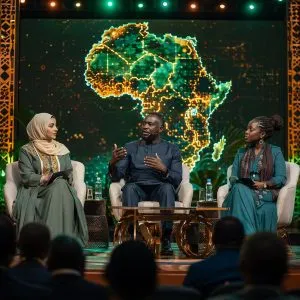
For Algeria’s 57,702 AI students and Tunisia’s growing developer community, the platform offers a practical pathway: joint research projects, shared computing resources, and a combined talent pool that neither country could achieve alone. If the model proves effective, it could expand to include other Maghreb nations and serve as a blueprint for South-South AI research collaboration across Africa.
Frequently Asked Questions
Which Algerian universities are participating in the joint AI platform?
The platform initially connects five Algerian border-region universities: Tébessa, El Tarf, El Oued, Annaba, and Souk Ahras. These institutions were signatories at the seventh Forum of Algeria-Tunisia Border Universities held in December 2025 at Mohamed-Cherif Messaadia University in Souk Ahras, where the platform concept was formally agreed upon.
What computing resources does the platform provide access to?
Through the partnership, Algerian researchers gain access to Tunisia’s Novation City in Sousse, which hosts an NVIDIA Deep Learning Institute hub equipped with an NVIDIA DGX system — one of the first deployed in Africa. The hub offers training and compute resources for generative AI, accelerated computing, and data science applications.
Can researchers outside the five border universities join the platform?
The initial framework focuses on the ten border-region universities (five from each country), but organizers have described it as a template for broader Maghreb integration. As the platform matures and proves effective, expansion to additional Algerian and Tunisian institutions — and potentially other North African countries — is part of the stated roadmap.
Sources & Further Reading
- Tunisia and Algeria Launch Joint Digital Platform to Accelerate AI Research Collaboration — iAfrica.com
- Tunisia and Algeria Build Digital Platform to Accelerate AI Research — Ecofin Agency
- Algeria, Tunisia Discuss Higher Education Reform at Border Universities Forum — Ecofin Agency
- Why Algeria Is Positioned To Become North Africa’s AI Leader — New Lines Institute
- New AI Innovation Hub in Tunisia Drives Technological Advancement Across Africa — NVIDIA Blog