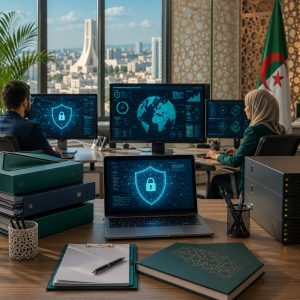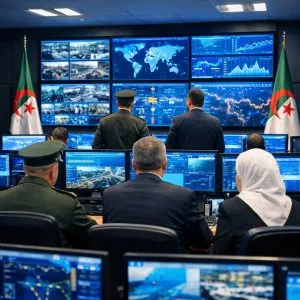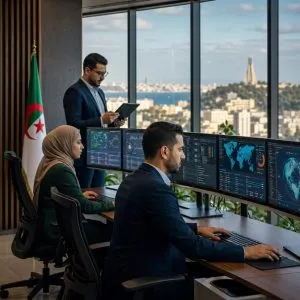
The Catalyst: $11 Million for Cybersecurity, AI, and Robotics
In February 2025, Algeria’s state-owned telecommunications operator Algerie Telecom announced a 1.5 billion DZD fund (approximately $11 million) targeting startups working in artificial intelligence, cybersecurity, and robotics. The fund was unveiled by Minister of Post and Telecommunications Sid Ali Zerrouki at the third edition of Algeria’s CTO Forum, as part of the state’s broader national AI and digital transformation strategy.
This is not a general-purpose tech fund. By explicitly including cybersecurity alongside AI and robotics, the government has signaled that it views cyber defense not merely as a compliance requirement but as a growth sector with commercial potential.
Frequently Asked Questions
Why the Fund Matters
Algeria’s startup ecosystem has historically struggled with two problems: access to capital and market demand. The Algerie Telecom fund addresses both simultaneously:
Capital. While the Algeria Startup Fund (ASF), established in partnership with public banks with a capital of 2.4 billion DZD, has funded over 100 startups across 20 sectors in 22 provinces, cybersecurity ventures have historically received minimal attention from generalist funds. A dedicated fund removes the competition for capital between cybersecurity startups and, say, e-commerce or fintech ventures.
Market demand. Presidential Decree 26-07 now requires every public institution to create a cybersecurity unit, conduct risk mappings, deploy monitoring tools, and coordinate with ASSI. Hundreds of institutions need help — and most of them need it now. This regulatory mandate converts a vague aspiration into a concrete, budget-backed requirement.
The Demand Side: Decree 26-07 Creates a Market Overnight
Understanding the opportunity for cybersecurity startups requires understanding the demand that Decree 26-07 has created. Signed on January 7, 2026 and published in the Official Gazette on January 21, 2026, the decree establishes the operational framework for cybersecurity across all public institutions.
Every Algerian public institution — ministries, agencies, state enterprises, wilayas, public hospitals, universities — must now establish a dedicated cybersecurity unit separate from IT, reporting directly to the institution head. These units must perform risk mapping, deploy remediation plans, maintain continuous monitoring, and coordinate with the national Information Systems Security Agency (ASSI), which operates under the Ministry of National Defense.
Most of these institutions have never conducted a formal cybersecurity risk assessment. They do not have SIEM platforms, intrusion detection systems, or incident response procedures. They need everything — from initial assessments to ongoing managed services.
Algeria recorded over 70 million cyberattacks in 2024, ranking 17th globally among the most targeted nations according to Kaspersky. The country also blocked more than 13 million phishing attempts and nearly 750,000 malicious email attachments during the same period. This threat environment makes the decree not just regulatory compliance but operational necessity.
Market Size and Growth
Algeria’s cybersecurity market was valued at approximately US$129 million in 2024, with projected annual growth of 7.24 percent to reach US$183 million by 2029. However, Decree 26-07’s mandate is likely to accelerate this growth trajectory significantly, as hundreds of public institutions begin budgeting for cybersecurity tools, services, and staffing for the first time.
The Supply Side: Algeria’s Local Cybersecurity Firms
Algeria’s cybersecurity service provider ecosystem is small but growing. Several local firms are positioned to capture the demand wave:
UNIDEES. One of Algeria’s most established cybersecurity companies with over 20 years of experience, UNIDEES specializes in consulting, auditing, and integration services. The company holds ISO 27001 certification for its CSIRT and Managed SOC scope, and partners with international vendors including Fortinet, Symantec, and Veritas for solutions spanning advanced firewalls, endpoint security, data loss prevention, and backup systems.
GEMA. Known for its IT services portfolio, GEMA offers cybersecurity assessments, endpoint security solutions, and cyber hygiene training for Algerian enterprises and institutions.
BeeNet. A growing player in the market, BeeNet provides email security, cloud protection, intrusion prevention systems, and cybersecurity audits.
Winbest Net. Focused on SME digital transformation, Winbest Net offers firewall configuration, antivirus deployment, and secure web hosting with embedded cybersecurity tools.
The Gap: What Is Missing
While these firms provide valuable services, several categories of cybersecurity products and services remain underserved in Algeria:
- Managed Detection and Response (MDR) — 24/7 security monitoring as a service, critical for institutions that cannot staff round-the-clock SOCs.
- Security Awareness Training Platforms — scalable, Arabic-language training platforms tailored to Algerian public sector employees.
- Threat Intelligence Platforms — localized threat feeds covering Algeria-specific attack patterns and threat actors.
- Identity and Access Management (IAM) — solutions for managing privileged access across government networks.
- Incident Response Retainers — pre-contracted rapid response teams available when breaches occur.
- OT/ICS Security — specialized cybersecurity for industrial control systems in oil and gas, power generation, and water treatment. With Sonatrach and Sonelgaz operating vast SCADA networks, this is a high-value niche that requires deep domain expertise.
- Compliance Automation — platforms that help public institutions track their Decree 26-07 compliance status, manage risk registers, automate audit reporting, and coordinate with ASSI.
- Arabic-Language Security Tools — dashboards, alert systems, and training content localized for Arabic-speaking security teams. Most commercial cybersecurity tools default to English, creating friction for non-English-speaking operators.
Each of these gaps represents a startup opportunity. The Algerie Telecom fund, combined with the ASF and the new FCPR (Fonds Commun de Placement a Risque) private venture capital framework, provides multiple funding pathways for entrepreneurs targeting these niches.
Building the Talent Pipeline: Skills Centers and Vocational Training
You cannot build a cybersecurity startup ecosystem without cybersecurity talent. Algeria has launched several programs to address the skills gap:
Skills Centers
The Ministry of Post and Telecommunications inaugurated Algeria’s first Skills Center in Setif on February 20, 2025, offering free short-term training in cybersecurity, AI, cloud computing, and IoT. The center provides access to collaborative spaces, training workshops led by Algerian and international experts, and a dedicated artificial intelligence laboratory.
Additional centers have since opened in Annaba, Chlef, and Oran, with plans for gradual expansion across all provinces. The Setif center is particularly notable for being housed in former Algerie Telecom premises — a signal that the telecom operator is actively contributing physical infrastructure to the ecosystem.
Vocational Training Expansion
The government has announced 285,000 new vocational training places starting February 2026, with dedicated cybersecurity certification programs among the priority tracks. Algeria is expanding vocational training to meet growing cybersecurity demand, including new certificate-oriented qualification programs based on the Competencies Approach.
Huawei Vocational Training Partnership
In May 2025, the Ministry of Vocational Training and Professional Education signed a partnership agreement with Huawei to modernize ICT training. Beginning in September 2025, the collaboration provides vocational trainees with instruction in cloud computing, cybersecurity, and AI, culminating in a diploma jointly issued by the Ministry and Huawei. The partnership focuses on three key institutions: the National Specialized Institute for ICT in Rahmania, the INSFP in Bousmail, and the African Institute for Vocational Training in Bourmerdes. While this partnership raises questions about vendor dependency, it provides immediate access to structured curriculum and globally recognized certifications.
The Talent Arithmetic
The global cybersecurity workforce gap stands at an estimated 4.8 million unfilled positions according to ISC2’s 2024 Cybersecurity Workforce Study, a 19 percent increase year over year. Africa has approximately 20,000 certified cybersecurity professionals continent-wide according to CrowdStrike — roughly one-fifth the number needed for a population of 1.4 billion. Algeria’s training initiatives are a necessary start, but the output will take two to three years to materialize at scale. In the interim, startups that can productize cybersecurity expertise — turning scarce human knowledge into scalable software and services — will have a structural advantage.
Advertisement
The 2025-2029 National Cybersecurity Strategy: Sectoral Opportunities
The National Cybersecurity Strategy for 2025-2029, adopted via Presidential Decree 25-321 on December 30, 2025, creates specific market opportunities through its sector-specific mandates:
Banking and Financial Services
The strategy mandates sector-specific cybersecurity regulations for financial institutions. Banks, insurance companies, and payment processors will need to implement enhanced security controls, transaction monitoring systems, and fraud detection capabilities. With Algeria’s fintech ecosystem building momentum in 2026 — around 30 to 35 fintech startups now operating across digital payments, mobile banking, and financial infrastructure — the intersection of fintech and cybersecurity presents a high-growth niche.
Healthcare
Hospitals and healthcare facilities — already covered by Decree 26-07 as public institutions — will face additional sector-specific requirements around the protection of patient data, medical device security, and telehealth platform integrity. Algeria’s public hospitals represent a substantial addressable market for healthcare-focused cybersecurity solutions.
Energy
Algeria’s energy sector, dominated by Sonatrach with $45 billion in export turnover in 2024 and Sonelgaz for electricity and gas distribution, operates critical infrastructure that requires specialized OT/ICS cybersecurity capabilities. Energy-sector cybersecurity is a distinct discipline from IT security, requiring knowledge of SCADA systems, industrial protocols, and safety-critical operations.
Funding Ecosystem: Multiple Pathways
Algeria’s startup funding landscape has matured significantly, offering cybersecurity entrepreneurs multiple capital sources:
Public Funding
- Algerie Telecom Fund: 1.5 billion DZD ($11M) for AI, cybersecurity, and robotics startups.
- Algeria Startup Fund (ASF): 2.4 billion DZD across 20 sectors. ASF achieved a 3.35x return on its investment in VOLZ, which raised $5 million in a Series A in December 2025 — the largest funding round by an Algerian startup and the first successful exit of the ASF.
- Government procurement contracts: Decree 26-07 compliance will generate direct procurement opportunities for cybersecurity services.
Private Funding
- FCPR Framework: A new regulatory framework allowing private venture capital funds to launch with as little as 50 million DZD and just two unitholders, established under COSOB Regulation No. 24-02. Afiya Investments, managed by Tell Markets, became the first approved FCPR.
- Corporate partnerships: International cybersecurity vendors (Fortinet, Kaspersky, Palo Alto Networks) seeking local channel partners may provide co-investment or distribution agreements.
Revenue-Based Growth
Given the immediate market demand created by Decree 26-07, cybersecurity startups may also grow through revenue rather than equity funding. A firm that secures five to ten government consulting contracts for risk mapping and policy development can generate significant revenue within its first year.
Private Funding
- FCPR Framework: A new regulatory framework allowing private venture capital funds to launch with as little as 50 million DZD and just two unitholders, established under COSOB Regulation No. 24-02. Afiya Investments, managed by Tell Markets, became the first approved FCPR.
- Corporate partnerships: International cybersecurity vendors (Fortinet, Kaspersky, Palo Alto Networks) seeking local channel partners may provide co-investment or distribution agreements.
Given the immediate market demand created by Decree 26-07, cybersecurity startups may also grow through revenue rather than equity funding. A firm that secures five to ten government consulting contracts for risk mapping and policy development can generate significant revenue within its first year.
Lessons from Other Markets
Algeria is not the first country to create a regulatory-driven cybersecurity market. Several parallels offer lessons:
Saudi Arabia’s NCA Framework. The National Cybersecurity Authority’s Essential Cybersecurity Controls (ECC) created a surge in demand for local cybersecurity services. The NCA also established a Cybersecurity Accelerator program specifically to stimulate the local cybersecurity startup ecosystem, combining regulatory mandates with direct startup support. Algeria’s decree follows a similar structural logic.
Singapore’s Cybersecurity Act. Singapore mandated cybersecurity obligations for critical information infrastructure operators across sectors including energy, banking, healthcare, and transport. The act created a thriving cybersecurity services industry. Algeria can study Singapore’s approach to public-private partnerships in cybersecurity.
European Union’s NIS2 Directive. The NIS2 Directive expanded cybersecurity obligations to a broader set of sectors and required member states to establish national cybersecurity strategies. The directive has driven significant growth in managed security services across the EU.
The common pattern: regulatory mandates create demand, demand attracts investment, investment enables startups, and startups compete to deliver compliance and security capabilities. Algeria is at the beginning of this cycle.
Building a Cybersecurity Startup: Strategic Considerations
Product vs. Service
Algerian cybersecurity entrepreneurs face a fundamental strategic choice: build a product (software, platform, tool) or deliver a service (consulting, auditing, managed security). Each has different economics:
Service businesses can generate revenue immediately — the demand for risk assessments, compliance consulting, and security audits is already here. But services are labor-intensive, difficult to scale, and limited by the available talent pool. Revenue grows linearly with headcount.
Product businesses take longer to build and monetize but offer scalability. A compliance management platform, a threat intelligence feed, or a security awareness training system can serve hundreds of institutions without proportional headcount growth. The challenge is that product development requires upfront capital, engineering talent, and patience — typically 18 to 24 months before meaningful revenue.
The smartest approach may be hybrid: start with services to generate cash flow and build domain expertise, then productize the most repeatable elements of the service offering into software. Several global cybersecurity companies, including CrowdStrike and Rapid7, followed this trajectory.
Go-to-Market in the Public Sector
Selling to Algerian public institutions requires understanding procurement rules, tender processes, and payment timelines. Key considerations:
- Tender requirements often favor established companies with multi-year track records. Startups may need to partner with or subcontract under larger firms initially.
- Payment cycles in the public sector can extend to 60 to 120 days. Startups must plan for working capital accordingly.
- Decision-making authority for cybersecurity procurement under Decree 26-07 now sits with the institution head (who oversees the cybersecurity unit), not the IT department. Startups must adjust their sales approach to target executive leadership.
- Proof of concept opportunities can be powerful entry points. Offering a free or low-cost initial assessment to demonstrate capability can build the trust needed to win larger contracts.
Intellectual Property and Data Sovereignty
Cybersecurity startups handling sensitive government data must consider data sovereignty requirements. Algeria’s evolving regulatory framework, including the push for sovereign cloud infrastructure, suggests that solutions storing or processing government security data will need to keep that data within Algerian territory. Startups building cloud-based security platforms should plan for local hosting from the beginning.
What VOLZ’s Exit Signals for Cybersecurity Startups
The Algeria Startup Fund’s first successful exit provides instructive lessons for cybersecurity entrepreneurs. ASF achieved a 3.35x return on its investment when VOLZ, a travel-tech startup founded in 2023, raised $5 million in a Series A in December 2025 — led by a consortium under Tell Group with participation from Groupe GIBA.
While VOLZ operates in travel technology rather than cybersecurity, the exit demonstrates several dynamics relevant to the cybersecurity sector:
Government-backed funds can generate returns. ASF’s 3.35x return proves that Algerian public-sector venture capital can work. The Algerie Telecom fund, structured similarly, should attract more ambitious proposals when founders see that exits are possible.
Series A capital is accessible. VOLZ’s $5 million raise shows that follow-on funding exists for Algerian startups that demonstrate traction. A cybersecurity startup that wins five to ten government contracts and demonstrates recurring revenue should be well-positioned for growth-stage investment.
Speed matters. VOLZ moved from ASF investment to Series A in approximately 18 months. In the cybersecurity market, where Decree 26-07 creates immediate demand, the window for establishing market position may be even shorter. First-movers who build reference clients and demonstrate compliance expertise will be difficult to displace.
Challenges and Expansion Potential
Key Challenges
Procurement barriers. Public sector procurement in Algeria involves complex tender processes, long payment cycles, and preference for established vendors. Startups may struggle to navigate these requirements without experienced business development teams.
Competition from international vendors. Global cybersecurity companies like Fortinet, Kaspersky, and Palo Alto Networks already have established presence in Algeria through local distributors. Startups competing on product features alone will struggle; the winning strategy is to compete on localization, Arabic-language support, regulatory knowledge, and responsive service.
Talent retention. As demand for cybersecurity talent surges, startups will compete with the public sector, established firms, and international employers for the same limited pool of qualified professionals. Offering equity, flexible work arrangements, and growth opportunities may help startups attract talent that might otherwise leave Algeria.
Trust and track record. Public institutions may be reluctant to entrust cybersecurity to young companies without established track records. Building reference clients, obtaining international certifications (ISO 27001, SOC 2), and partnering with recognized global vendors can help overcome this trust gap.
Regional Expansion Potential
Algerian cybersecurity startups that successfully serve the domestic public sector market will have natural expansion opportunities across francophone Africa. Tunisia, Senegal, Cote d’Ivoire, and other countries face similar cybersecurity challenges with even less developed local ecosystems. A product or service platform built for Algerian compliance requirements can be adapted for neighboring markets with relatively modest localization effort. Algeria’s geographic position and francophone capabilities make it a natural hub for cybersecurity services across the Maghreb and West Africa.
The Road Ahead
Algeria’s cybersecurity startup ecosystem is at an inflection point. The convergence of three forces — dedicated investment capital, regulatory mandate, and training infrastructure — creates conditions that did not previously exist:
- Capital is available. The Algerie Telecom fund, ASF, and new FCPR framework provide funding at various stages.
- Demand is real and urgent. Decree 26-07 has converted cybersecurity from a discretionary expense to a mandatory requirement for hundreds of public institutions.
- Talent is being built. Skills Centers in Setif, Annaba, Chlef, and Oran, plus vocational training programs and the Huawei partnership, are producing the next generation of cybersecurity professionals.
The government has set a target to create 20,000 startups by 2029, with 124 university incubators already active and over 7,800 companies registered on startup.dz. With AI projected to contribute 7 percent of national GDP by 2027, the digital economy — and cybersecurity as its essential enabling layer — is positioned as a strategic growth sector.
For entrepreneurs considering the cybersecurity space, the message is clear: the market is real, the funding is available, and the timing has never been better. The question is not whether there is opportunity, but who will move fast enough to capture it.
Sources & Further Reading
- Algeria’s Big AI Bet: Algerie Telecom Establishes USD 11M AI Fund — WAYA
- Algeria: An Investment Fund to Boost AI, Cybersecurity, and Robotics — Leancubator
- Algeria Strengthens Cybersecurity Framework to Protect National Infrastructure — TechAfrica News
- Presidential Decree 26-07 Full Text — ARPCE
- Algeria Orders Cybersecurity Units in Public Sector Amid Surge in Cyberattacks — Ecofin Agency
- Algeria Adopts 2025-2029 National Cybersecurity Strategy — We Are Tech
- Algeria Launches Setif Skills Center — We Are Tech
- Minister Inaugurates First Skills Center — Ministry of Post and Telecommunications
- Algeria Plans 285,000 New Vocational Training Places in 2026 — Ecofin Agency
- Algeria and Huawei Forge Strategic Partnership for Vocational Training — SAMENA Council
- Algeria’s Public Startup Fund Scores First Exit as VOLZ Raises $5M — LaunchBase Africa
- Cybersecurity Market in Algeria — Statista
- ISC2 2024 Cybersecurity Workforce Study — ISC2
- Algeria Startup Ecosystem 2025 Reforms — Techpression
- Sonatrach Posts 20% Jump in Net Earnings for 2024 — AL24 News
- Algeria Targets 7% GDP from AI by 2027 — We Are Tech