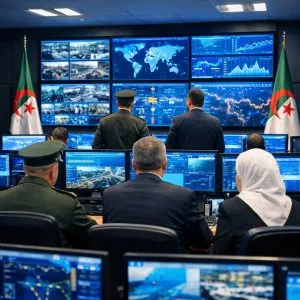
The Stakes: Why OT Security Is an Existential Issue for Algeria
Algeria is a hydrocarbon economy. Sonatrach, the national oil and gas company, generated $45 billion in export revenue and $6 billion in net profit in 2024, a 20 percent increase in net earnings over 2023. It is the largest company in Africa, with 154 subsidiaries operating across the entire oil value chain. Hydrocarbons account for roughly 60 percent of Algeria’s government revenue and over 85 percent of export earnings.
Sonelgaz, the state electricity and gas distribution company, powers the country’s homes, factories, and public services. Together, these two enterprises are the circulatory system of Algeria’s economy.
Both depend on operational technology (OT) — the hardware and software that controls physical processes. Supervisory Control and Data Acquisition (SCADA) systems monitor pipeline pressure, regulate gas flow, manage electricity distribution, and control water treatment. Distributed Control Systems (DCS) automate refinery operations. Programmable Logic Controllers (PLCs) govern individual pumps, valves, and compressors across thousands of remote installations, many in isolated Saharan locations.
When these systems are compromised, the consequences are not data breaches — they are physical. A manipulated pipeline pressure reading can cause explosions. A disrupted power grid leaves cities dark. A tampered water treatment process can endanger public health.
The Threat Landscape: What Is Targeting Industrial Systems
Global Context
The Dragos 2026 OT Cybersecurity Year in Review reveals a fundamental shift: adversaries are moving beyond pre-positioning to actively mapping control loops and understanding how to manipulate physical processes. This is the difference between an attacker who knows they are inside your network and one who understands exactly which valve to close to cause a catastrophe.
Key findings from the report:
- Dragos tracked 119 ransomware groups impacting 3,300 industrial organizations in 2025, a 49 percent increase from 80 groups in 2024.
- Three new threat groups were identified — AZURITE, PYROXENE, and SYLVANITE — each targeting different aspects of industrial infrastructure from engineering workstations to supply chain compromises. PYROXENE deployed destructive wiper malware against critical infrastructure during regional conflict in 2025.
- KAMACITE conducted systematic reconnaissance of industrial devices between March and July 2025, mapping control loops by targeting operator interfaces (HMIs), variable frequency drives, meters, and remote gateways — scanning that suggests deliberate preparation for future disruption.
- 25 percent of ICS-CERT and NVD vulnerability advisories had incorrect CVSS scores, and 26 percent contained no patch or mitigation from vendors.
Energy Sector Under Siege
The energy sector is a primary target. Zscaler ThreatLabz documented a 400 percent increase in IoT and OT malware attacks year-over-year, with manufacturing and oil and gas among the most targeted sectors. Cyberattacks have been specifically observed against North African energy operations: in February 2025, a threat actor group called Belsen posted network access to the “largest energy company in North Africa” on a dark web forum, priced at $20,000.
Lessons from Colonial Pipeline
The 2021 Colonial Pipeline ransomware attack remains the defining case study for energy-sector OT risk. A single compromised VPN password without multi-factor authentication gave the DarkSide ransomware group access to the IT network of the largest refined oil products pipeline in the United States. Though the attack targeted billing systems, the company shut down pipeline operations as a precaution, creating fuel shortages across the U.S. East Coast, panic buying at gas stations, and a presidential declaration of emergency. The company paid a $4.4 million ransom in Bitcoin.
The lesson for Algeria: even an IT-side breach can force operational shutdowns when IT and OT networks lack proper segmentation. And Algeria’s pipeline infrastructure — thousands of kilometers of oil and gas lines crossing the Sahara to Mediterranean export terminals — presents a comparable attack surface.
Water Infrastructure: The Overlooked Target
Algeria has committed approximately $5.4 billion to desalination infrastructure, with desalinated water expected to meet 60 percent of the country’s drinking water needs by 2030 through 11 desalination plants across two phases. These plants run on SCADA systems that control reverse osmosis pressure, chemical dosing, and distribution pumps.
The 2021 Oldsmar water treatment incident in Florida demonstrated the risk: an attacker remotely accessed a SCADA system and increased sodium hydroxide levels from 100 parts per million to 11,100 ppm — a potentially lethal change. An operator caught the manipulation in real time, but the incident exposed how vulnerable water treatment SCADA systems can be, particularly when they rely on remote desktop sharing tools with poor password security and outdated operating systems.
Algeria’s expanding desalination network — increasingly automated and digitized — faces similar risks. With plans for desalinated water to meet 60 percent of drinking water needs by 2030, the cybersecurity of these SCADA-controlled facilities is directly tied to public health and national water security.
The Ransomware Factor
Ransomware is no longer just an IT problem. The Dragos 2026 report found that 119 ransomware groups impacted 3,300 industrial organizations in 2025, a 49 percent increase from the previous year. Manufacturing accounted for more than two-thirds of victims, but energy and utilities are increasingly targeted.
For Algeria, the economics of ransomware in the energy sector are stark. If a ransomware attack forced Sonatrach to shut down pipeline operations for even 48 hours — as happened to Colonial Pipeline — the direct revenue loss could exceed $240 million based on daily export revenues. The indirect costs — emergency response, forensic investigation, regulatory penalties, reputational damage, and production restart delays — would compound that figure significantly.
Understanding the IT/OT Convergence Problem
Why OT Was Historically Safe
For decades, industrial control systems operated in isolation. SCADA networks were proprietary, air-gapped from the internet, and managed by operations engineers, not IT departments. Security was physical: locks on control room doors, armed guards at pipeline installations.
What Changed
Digitalization changed everything. Sonatrach is actively pursuing digital transformation, partnering with Honeywell for sustainability and digitalization initiatives including carbon capture solutions, predictive maintenance, and cybersecurity upgrades. The company has also worked with Emerson to modernize gas processing plant operations through automation and digital solutions. Sonatrach’s broader digital transformation strategy includes cloud platforms, SAP enterprise resource planning, and data analytics across its operations.
This digitalization brings enormous efficiency gains — remote monitoring of desert installations, predictive maintenance, automated production optimization. But it also connects previously isolated OT systems to enterprise IT networks, cloud platforms, and the internet. The air gap is gone.
The Convergence Risks
When IT and OT networks converge without proper security architecture, several risks emerge:
Lateral Movement. An attacker who compromises a corporate email account can potentially traverse from the IT network into the OT network if segmentation is inadequate. This is precisely what happened at Colonial Pipeline.
Shared Vulnerabilities. OT systems increasingly run on standard IT platforms — Windows servers, Linux workstations, TCP/IP networks. They inherit all the vulnerabilities of those platforms, but unlike IT systems, they cannot be easily patched because downtime means production loss.
Remote Access Exposure. Engineers who remotely monitor SCADA systems from laptops or mobile devices create entry points. VPN credentials, remote desktop protocols, and vendor maintenance portals are prime attack vectors.
Legacy Systems. Many SCADA and DCS systems in Algeria’s oil and gas installations were deployed 15 to 20 years ago. They run on operating systems no longer receiving security updates, use unencrypted proprietary protocols, and were designed with availability and safety — not cybersecurity — as primary objectives.
Supply Chain Risks. OT equipment is sourced from a global supply chain of vendors — Honeywell, Emerson, Schneider Electric, Siemens, ABB. Each vendor’s products introduce potential vulnerabilities, and coordinating patches across multiple vendor ecosystems adds complexity. The Dragos 2026 report found that 26 percent of ICS vulnerability advisories contained no patch or mitigation from vendors, leaving operators exposed even when vulnerabilities are disclosed.
Geographic Dispersion. Sonatrach’s infrastructure spans from Mediterranean coastal terminals to deep Saharan production fields, often connected by satellite links and microwave relays rather than fiber optic cables. Securing remote installations hundreds of kilometers from the nearest city presents unique physical and network security challenges. These remote sites are often staffed by operations personnel with limited cybersecurity training, making them potential entry points for social engineering attacks.
What Algeria Needs: A Framework for OT Cybersecurity
IEC 62443: The Global Standard
The IEC 62443 series of standards, developed by the International Electrotechnical Commission, is the leading international framework for cybersecurity in industrial automation and control systems. It provides a systematic approach covering:
Security Levels. Four escalating levels from SL1 (protection against casual or accidental misuse) through SL4 (defense against state-sponsored attacks with extensive resources). Algeria’s critical energy infrastructure should target SL3 or SL4.
Zones and Conduits. IEC 62443 requires dividing the industrial environment into security zones — groups of assets with common security requirements — connected by conduits (controlled communication channels between zones). This enforces network segmentation and prevents unrestricted lateral movement.
Seven Foundational Requirements. Identification and authentication control, use control, system integrity, data confidentiality, restricted data flow, timely response to events, and resource availability. Each requirement is tailored to the specific needs of industrial environments.
DNV has published DNV-RP-G108, a specific guideline for applying IEC 62443 in the oil and gas industry, developed through a joint industry project with ABB, Emerson, Honeywell, Siemens, Shell, and Statoil. This recommended practice would be directly applicable to Sonatrach’s operations.
Building OT Security Operations Centers
Organizations with comprehensive OT visibility detected and contained OT ransomware incidents in an average of 5 days compared to the industry-wide average of 42 days. This eight-fold improvement in response time demonstrates the value of dedicated OT monitoring.
Algeria’s critical infrastructure operators need OT-specific Security Operations Centers (SOCs) that:
- Monitor industrial protocols (Modbus, DNP3, OPC-UA) — not just standard IT traffic.
- Maintain asset inventories of every PLC, RTU, HMI, and SCADA server.
- Detect anomalous process values — not just network intrusions.
- Coordinate with physical safety systems to prevent cascading failures.
- Operate 24/7 with staff who understand both cybersecurity and industrial processes.
Network Segmentation: The Non-Negotiable
The single most impactful measure is rigorous network segmentation between IT and OT environments. This means:
- Demilitarized zones (DMZs) between corporate IT networks and industrial control networks, with monitored firewalls governing all traffic.
- Unidirectional security gateways (data diodes) for critical data flows, ensuring that information can flow out of the OT network for monitoring but no traffic can enter from the IT side.
- Micro-segmentation within the OT network itself, isolating different process areas (upstream production, midstream transport, downstream refining) so that a breach in one area cannot propagate.
Securing Remote Access
With Sonatrach operating installations across the Sahara, remote access is essential but must be controlled:
- Dedicated, managed jump servers for all remote OT access — never direct connections.
- Multi-factor authentication for every remote session, with session recording and monitoring.
- Time-limited access windows with automatic disconnection.
- Vendor access management protocols that revoke credentials after maintenance windows close.
Advertisement
Decree 26-07 and the Regulatory Push
Presidential Decree 26-07, signed January 7, 2026, mandates the creation of dedicated cybersecurity units across all public institutions, including state enterprises like Sonatrach and Sonelgaz. These units must design threat maps, deploy remediation plans, and coordinate with ASSI (the Information Systems Security Agency) on incident response. The 2025-2029 National Cybersecurity Strategy, approved via Decree 25-321 in December 2025, pursues the protection of critical infrastructure, the security of sensitive state data, and the continuity of public services.
This regulatory framework is necessary but not sufficient for OT security. Standard IT cybersecurity approaches — annual penetration tests, endpoint protection, phishing awareness — do not address the unique characteristics of industrial environments:
- OT systems often cannot be patched without production shutdowns.
- Antivirus software can interfere with real-time control processes.
- IT security scanning tools can crash legacy SCADA systems.
- Incident response procedures must account for physical safety risks.
Algeria needs OT-specific regulatory guidance — building on IEC 62443 — that recognizes these distinctions and mandates appropriate controls for industrial environments.
The Human Factor: OT Cybersecurity Skills
OT cybersecurity requires a rare combination of skills that spans two traditionally separate disciplines: industrial engineering and information security.
The Skill Profile
An effective OT security professional must understand:
- Industrial process control — how SCADA systems govern physical processes like gas pressure regulation, electrical load balancing, and water treatment chemical dosing.
- Industrial network protocols — Modbus TCP, DNP3, OPC-UA, IEC 61850, and other protocols that differ fundamentally from standard TCP/IP.
- Safety instrumented systems (SIS) — the last line of defense that prevents physical catastrophe, and how cybersecurity measures must never interfere with safety functions.
- Physical consequences — the ability to think about what happens in the real world when a digital system is compromised.
This profile is exceedingly rare globally. In Algeria, it is virtually nonexistent as a formally trained discipline.
Building the Pipeline
Algeria has several advantages for developing OT cybersecurity talent:
Engineering Tradition. Algeria produces thousands of electrical, mechanical, and process engineering graduates annually through institutions like the Ecole Nationale Polytechnique and the University of Boumerdes (formerly the Institute of Oil and Gas). These graduates already understand industrial processes — they need cybersecurity training layered on top.
Sonatrach’s Training Infrastructure. Sonatrach operates its own training institutes, including the Institut Algerien du Petrole (IAP) in Boumerdes. Adding OT cybersecurity modules to IAP’s curriculum could produce trained professionals who understand both the industrial and security dimensions.
International Certification Pathways. SANS Institute offers specialized courses like ICS410: ICS/SCADA Security Essentials and the GICSP (Global Industrial Cyber Security Professional) certification. Algeria should invest in sending cohorts of engineers through these programs and then having them train others domestically.
The Market Opportunity
The Middle East and Africa OT security market is projected to grow from USD 4.36 billion in 2025 to USD 9.65 billion by 2030, at a compound annual growth rate of 17.2 percent. The energy and power segment is likely to register the fastest growth rate of 19.0 percent during the forecast period.
For Algeria specifically, the OT cybersecurity market is driven by several forces:
- Sonatrach’s digitalization creates demand for securing newly connected industrial systems.
- Decree 26-07 mandates cybersecurity capability across state enterprises.
- Desalination expansion ($5.4 billion investment) adds new SCADA-controlled infrastructure.
- Power grid modernization through Sonelgaz’s smart grid initiatives introduces IoT-connected substations and distribution equipment.
Who Can Deliver
OT cybersecurity is a specialized discipline that requires different skills, tools, and approaches from IT security. Global leaders in this space include Dragos, Claroty, Nozomi Networks, and Fortinet’s OT security division. However, Algeria needs local capacity:
- Algerian engineering graduates with process control backgrounds can be cross-trained in OT cybersecurity faster than IT security professionals can learn industrial processes.
- Sonatrach and Sonelgaz should consider building internal OT SOC capabilities rather than relying entirely on external providers, given the sensitivity and scale of their operations.
- Local cybersecurity firms like UNIDEES, which already partners with Fortinet and other major security vendors, are natural candidates to develop OT security practices.
- University partnerships with ICS security programs (such as SANS ICS courses) can accelerate knowledge transfer.
A Practical Roadmap for Algeria’s OT Security
Phase 1: Asset Visibility (Year 1)
You cannot protect what you cannot see. The first priority is a comprehensive inventory of all OT assets across critical infrastructure:
- Every PLC, RTU, HMI, SCADA server, DCS controller, and network switch in every facility.
- Network topology maps showing all connections between IT and OT environments.
- Identification of legacy systems running unsupported software.
- Baseline monitoring of normal process values and network traffic patterns.
Phase 2: Network Architecture (Year 1-2)
- Implement IEC 62443 zones and conduits architecture.
- Deploy DMZs and firewalls between IT and OT networks.
- Install unidirectional gateways for critical data flows.
- Eliminate direct internet connections to OT systems.
- Secure all remote access through managed jump servers with MFA.
Phase 3: Monitoring and Detection (Year 2-3)
- Deploy OT-specific security monitoring tools (passive network monitoring, not active scanning).
- Establish OT SOC capability, either internal or through managed services.
- Implement anomaly detection for process values and industrial protocols.
- Create incident response procedures specific to OT environments, including coordination with safety systems.
Phase 4: Governance and Continuous Improvement (Year 3-5)
- Adopt IEC 62443 as the national standard for industrial cybersecurity.
- Conduct regular OT security assessments and tabletop exercises.
- Integrate OT cybersecurity into Sonatrach and Sonelgaz procurement requirements for all new systems.
- Develop a national OT cybersecurity workforce through specialized university programs and professional certifications.
What Happens If Algeria Gets This Wrong
The consequences of inaction are not theoretical:
- A successful cyberattack on Sonatrach’s pipeline SCADA systems could disrupt oil and gas exports that generate over 85 percent of Algeria’s foreign currency earnings.
- A compromised power grid managed by Sonelgaz could cause cascading blackouts affecting millions of citizens and the industrial base.
- Tampered desalination plant controls could contaminate drinking water for coastal cities where the majority of Algeria’s population lives.
- Even without physical damage, a ransomware attack forcing an operational shutdown — as happened to Colonial Pipeline — could cost Algeria hundreds of millions of dollars in lost production.
The global energy sector has moved past the question of whether OT systems will be targeted. The only question is when, and whether Algeria’s defenses will be ready.
Frequently Asked Questions
How many ransomware groups targeted industrial organizations in 2025, and how does this compare to the previous year?
According to the Dragos 2026 OT Cybersecurity Year in Review, 119 ransomware groups impacted 3,300 industrial organizations in 2025, representing a 49% increase from the 80 groups tracked in 2024. Three new threat groups were also identified: AZURITE, PYROXENE, and SYLVANITE, each targeting different aspects of industrial infrastructure.
Why is OT/ICS security an existential economic issue for Algeria specifically?
Algeria’s economy depends critically on OT-controlled systems. Sonatrach generated $45 billion in export revenue and $6 billion in net profit in 2024, with hydrocarbons accounting for roughly 60% of government revenue and over 85% of export earnings. Both Sonatrach and Sonelgaz rely on SCADA, DCS, and PLC systems to control pipelines, refineries, and power distribution. A successful OT attack could disrupt 85% of Algeria’s export earnings.
What regulatory framework does Algeria have for OT cybersecurity, and what capacity gaps remain?
Algeria enacted Decree 26-07, which mandates cybersecurity units across all public entities, and adopted a 2025-2029 National Cybersecurity Strategy. Sonatrach has also signed digitalization partnerships with Honeywell and Emerson. However, OT-specific security capacity remains virtually nonexistent. The country lacks dedicated OT Security Operations Centers (SOCs), IEC 62443 architecture implementation, and sufficient specialized talent, though engineering graduates from polytechniques and IAP Boumerdes are identified as the fastest path to building this capacity.
Sources & Further Reading
- Dragos 2026 OT Cybersecurity Year in Review — Dragos
- Dragos 2026 Report: Surge in Threat Groups and Ransomware — Dragos Press Release
- OT Teams Are Losing the Time Advantage Against Industrial Threat Actors — Help Net Security
- ISA/IEC 62443 Series of Standards — ISA
- DNV-RP-G108: Cyber Security in Oil and Gas Based on IEC 62443 — DNV
- Cyber Threats Against Energy Sector Surge as Global Tensions Mount — Resecurity
- DarkSide Pwned Colonial Pipeline With Old VPN Password — Threatpost
- Compromise of U.S. Water Treatment Facility — CISA Advisory
- Zscaler ThreatLabz: 400% Increase in IoT and OT Malware Attacks — Zscaler
- Middle East and Africa OT Security Market — MarketsandMarkets
- Sonatrach Posts 20% Jump in Net Earnings for 2024 — AL24 News
- Algeria Commits $5.4B to Desalination for Long-Term Water Security — Energy Capital and Power
- Algeria Water Security Tied to 11 New Desalination Plants — Aquatech Trade
- Algeria Adopts 2025-2029 National Cybersecurity Strategy — WeAreTech Africa
- Presidential Decree 26-07 — ARPCE
- Honeywell and Sonatrach to Collaborate on Digitalization — Zawya
- Emerson to Modernize Sonatrach Gas Processing Plant — Emerson
- ICS410: ICS/SCADA Security Essentials — SANS Institute