The Numbers Behind the Surge
Ransomware activity in the first quarter of 2026 has shattered previous records. According to BreachSense, March 2026 alone saw 808 victims across 65 active ransomware groups, a 19% jump from February’s 680 victims. The quarterly total of 2,165 victims annualizes to roughly 8,660, representing an 18.5% increase over 2025’s full-year total of 7,307. Cyble’s analysis puts the surge even more starkly: attacks have increased over 30% compared to the prior nine-month average.
The United States remains the primary target, accounting for 404 of March’s 808 victims, roughly 50%. France surged to second place with 36 victims in March. But the geographic spread is widening. Ransomware operators are increasingly targeting organizations in Asia, Latin America, and Africa, where cybersecurity maturity often lags behind digital transformation ambitions.
Double Extortion Becomes the Default Playbook
The days of simple encrypt-and-demand are over. Data exfiltration before encryption, the hallmark of double extortion, is now present in approximately 77% of all ransomware attacks. Threat actors steal sensitive data first, then encrypt systems, and threaten to publish the stolen data if the ransom is not paid. This dual pressure makes the attack effective even against organizations with solid backup strategies, because restoring from backups does not prevent data exposure.
Some groups have escalated further into triple extortion, adding DDoS attacks against the victim or contacting the victim’s customers and partners directly with threats to release their data. Ransomware-as-a-Service (RaaS) platforms have industrialized these tactics, providing affiliates with ready-made toolkits, negotiation scripts, and even customer service portals for victims.
Healthcare Under Siege
Healthcare remains one of the most devastated sectors. According to IBM’s 2025 Cost of a Data Breach report, healthcare organizations face average breach costs of $7.42 million per incident, the highest of any industry. Sophos found that 67% of healthcare organizations experienced a ransomware attack in the past 12 months, with median ransom demands reaching $4 million and average demands hitting $4.9 million.
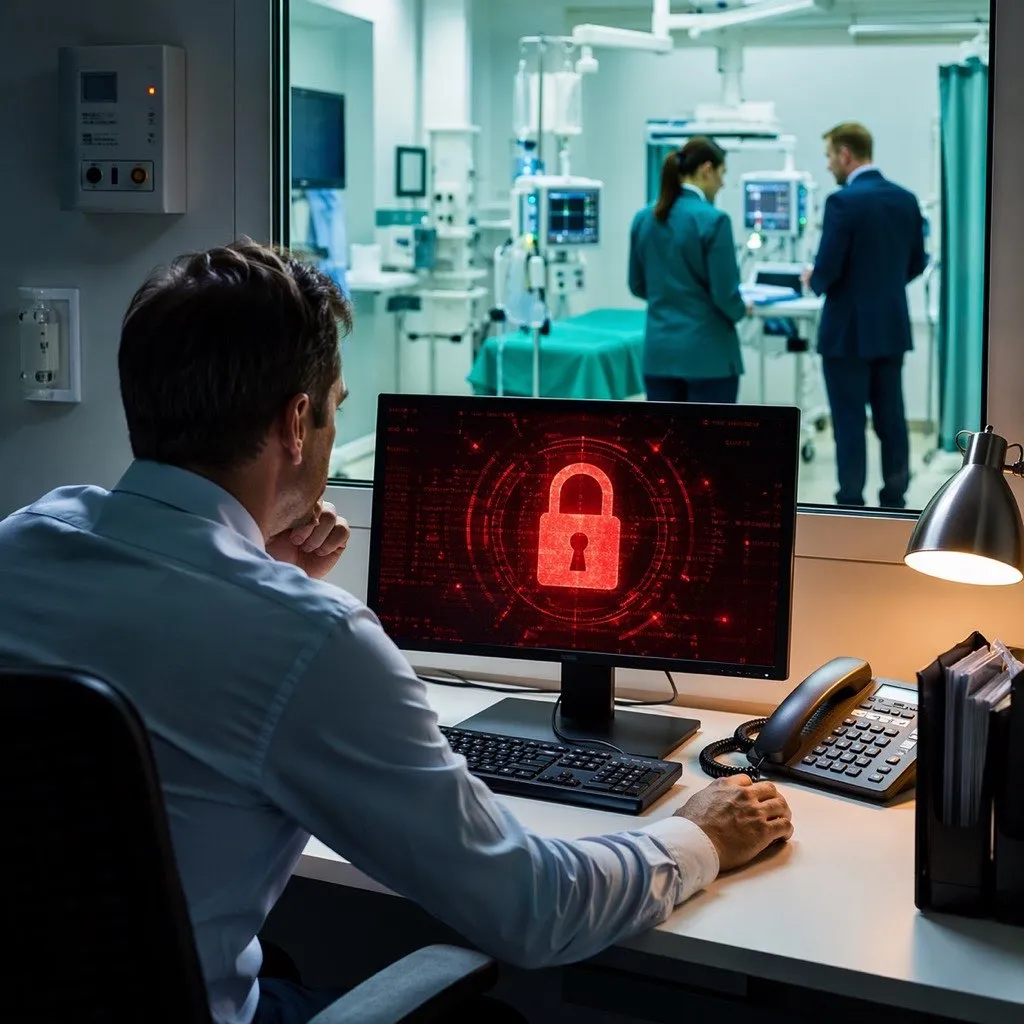
The operational impact extends far beyond financial costs. Healthcare IT News reports that ransomware downtime costs US healthcare organizations $1.9 million daily. When hospital systems go offline, patient care suffers directly: surgeries are postponed, diagnostic imaging becomes unavailable, and emergency departments must divert patients to other facilities.
Qilin, the most prolific ransomware group in Q1 2026, has specifically targeted healthcare institutions. Its attack on UK pathology lab Synnovis reportedly caused over $40 million in losses and disrupted diagnostic services across multiple hospitals. Qilin recorded 342 total victims in Q1 2026, with 131 in March alone, three consecutive months above 100, an unprecedented streak for any single group.
Advertisement
Manufacturing: The Most Targeted Sector
Manufacturing claimed the top spot as the most targeted sector in March 2026, with 76 victims. Construction followed with 53 and finance with 48. Over the full year, manufacturing accounts for approximately 14% of all ransomware attacks, making it the single most targeted industry globally.
Manufacturing environments are particularly vulnerable because of the convergence of IT and operational technology (OT) systems. Production lines that depend on connected controllers, sensors, and management systems cannot tolerate extended downtime. This urgency to restore operations gives ransomware operators significant leverage. Many manufacturing firms also operate with legacy systems that are difficult to patch and segment, creating large attack surfaces.
The Payment Paradox
Despite the escalating threat, victim payment rates are declining. Only 28% of ransomware victims paid in 2025, a record low. The median ransom payment dropped 50% from $2 million in 2024 to $1 million in 2025. In healthcare, 53% of victims who paid did so for less than the initial demand.
This declining payment rate is partly driving the volume increase. Ransomware operators compensate for lower per-victim revenue by attacking more targets, often moving downstream to smaller organizations with fewer defenses. The rise of RaaS platforms has lowered the barrier to entry, enabling less technically sophisticated actors to launch attacks at scale.
Defensive Priorities for 2026
The evolution of ransomware demands a corresponding evolution in defense. Organizations must assume breach and plan accordingly. Network segmentation, particularly between IT and OT environments, limits lateral movement. Immutable backup solutions with air-gapped copies ensure recoverability even when primary and secondary backups are targeted. Data Loss Prevention tools can detect and block exfiltration attempts, addressing the double extortion vector directly.
Incident response planning should account for the dual pressure of encryption and data exposure. Tabletop exercises that simulate double extortion scenarios help leadership teams make faster decisions under pressure. Cyber insurance policies should be reviewed for explicit coverage of extortion-related data exposure, not just system restoration costs.
Frequently Asked Questions
What is double extortion ransomware and why is it more dangerous than traditional ransomware?
Double extortion ransomware combines file encryption with data theft. Attackers steal sensitive data before encrypting systems, then threaten to publish the stolen data if the ransom is not paid. This makes backups alone insufficient as a defense because restoring systems does not prevent data exposure. Approximately 77% of ransomware attacks now use this technique.
Why are healthcare organizations disproportionately targeted by ransomware?
Healthcare organizations hold extremely sensitive patient data, operate under strict regulatory requirements, and cannot tolerate extended system downtime because it directly impacts patient care. These factors create strong incentive to pay ransoms quickly. The average healthcare breach costs $7.42 million, and ransomware downtime costs US healthcare organizations an estimated $1.9 million per day.
How can manufacturing companies protect against ransomware given their legacy OT systems?
Manufacturing firms should prioritize network segmentation between IT and OT environments to prevent lateral movement. Legacy OT systems that cannot be patched should be isolated behind firewalls with strict access controls. Immutable, air-gapped backups ensure recovery capability, and continuous monitoring of east-west traffic can detect early signs of ransomware propagation.
Sources & Further Reading
- March 2026 Ransomware Report: 808 Victims, 65 Groups — BreachSense
- March 2026 Cyber Threat Report: Ransomware and GenAI Risk — Check Point
- 46 Ransomware Statistics and Trends Report 2026 — VikingCloud
- The State of Ransomware 2026 — BlackFog
- Ransomware Downtime Costs US Healthcare $1.9M Daily — Healthcare IT News
- 100+ Ransomware Attack Statistics 2026 — Astra Security