The Deal and What It Buys
PayTabs Group — the Saudi Arabia-headquartered payment orchestration company — announced on April 14, 2026 that it has acquired 100% of TAPn’GO, a UAE-based contactless payment technology provider. Financial terms were not disclosed. PayTabs CEO and founder Abdulaziz Al Jouf positioned the deal as a strategic move to embed contactless checkout into PayTabs’ Super App — the company’s unified merchant platform covering the MENA region.
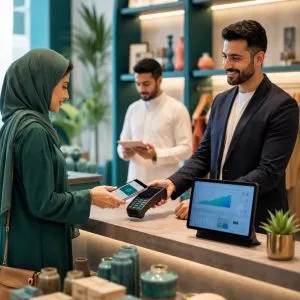
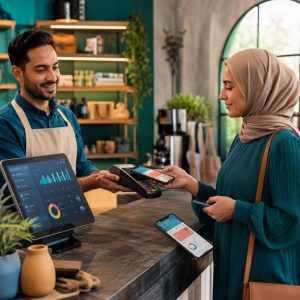
TAPn’GO’s technology converts a merchant’s smartphone or tablet into a contactless payment acceptance device. No dedicated POS terminal required. Feature set includes bill splitting, tipping, paperless receipts, and QR-code ordering — capabilities designed for hospitality, retail, and service businesses where speed of checkout and a clean digital experience drive measurable revenue. PayTabs says more than 20,000 regional businesses are lined up to adopt the integrated offering post-acquisition.
For PayTabs, the acquisition closes a specific capability gap in the Super App stack. The company already handled online payment orchestration, multi-currency acceptance, subscription billing, and an expanding set of merchant financial services. What it lacked was a first-party, POS-synchronised contactless experience that merchants could deploy on existing devices. Building that from scratch would have taken 12–18 months; buying TAPn’GO compresses the roadmap to an integration sprint.
The MENA Payments Opportunity
The market backdrop is why this deal happens now. Several structural numbers define the opportunity:
- $275.5 billion: MENA digital payments market size in 2026, per Mordor Intelligence.
- $462.4 billion: Projected market size in 2031.
- 10.92% CAGR over the 2026–2031 forecast period.
- ~25% annual growth for the contactless segment specifically — well above the overall market rate.
- 3 billion real-time transactions expected across MENA by 2028, up from roughly a third of that today.
Four macro forces are driving that trajectory. Policy-led cashless mandates in Saudi Arabia, UAE, Egypt, and increasingly the rest of the GCC are compressing the cash economy on a fixed timetable. Real-time payment rails — UAE’s Aani, Saudi Arabia’s Sarie, Egypt’s InstaPay, and regional cross-border corridors — have industrialised the rails on which contactless and super-app products run. Fintech sandboxes in Bahrain, Abu Dhabi, and Saudi Arabia have lowered the barrier to wallet and API innovation. And cross-border e-commerce flows — both intra-GCC and into North Africa — are expanding the addressable merchant base.
Why Super-Apps Are the MENA Playbook
The acquisition reflects a broader consolidation in MENA payments toward a super-app model that bundles acceptance, disbursement, payout, lending, loyalty, and adjacent services into a single merchant relationship. Three pressures push fintechs in this direction:
- Single-line-item SaaS is crowded. Stand-alone payment processors, POS apps, invoicing tools, and loyalty platforms compete intensely for merchant attention. Super-app bundles reduce vendor proliferation for SMEs who cannot manage five fintech contracts.
- Customer acquisition costs are brutal. Once a merchant is on the platform, expanding ARPU via additional services is dramatically cheaper than acquiring new logos. Super-apps turn the flywheel on cross-sell rather than hunt.
- Regulatory and compliance consolidation. PCI, KYB, AML, and local licensing requirements mean that each payments capability demands meaningful overhead. Consolidating into a single super-app reduces merchant-side compliance friction.
PayTabs is not alone in this race. Saudi Arabia’s hala, UAE’s Tabby, Egypt’s Paymob, and a wave of well-funded regional players are all building adjacent super-app propositions. Checkout.com and global payment processors are building out regional presence. The competitive dynamic favours consolidators who can close capability gaps through M&A rather than multi-year builds.
Advertisement
What TAPn’GO Integration Unlocks
For PayTabs merchants, the integration should deliver three concrete benefits in the next 12 months:
- Unified checkout across online, in-store, and on-site channels. A single reporting dashboard, a single reconciliation flow, a single customer experience.
- Lower hardware cost. Smartphone-based acceptance removes the need for dedicated POS terminals for many SME use cases, a meaningful saving given GCC terminal costs run $300–800 per unit.
- Hospitality-ready features. Tipping, split bills, QR-code ordering, paperless receipts — the core workflow needs of restaurants, cafés, and service businesses that have historically used ad-hoc fintech stacks.
For TAPn’GO itself, the acquisition solves the scaling problem that every capability-focused fintech eventually faces. As a standalone product, TAPn’GO had strong UAE traction but faced a slow march across the region. Inside PayTabs’ Super App, the product inherits distribution into Saudi Arabia, Egypt, Jordan, Bahrain, Oman, and the broader MENA merchant base instantly.
The Risks
Integration execution. Post-merger integrations are where fintech deals go to die. Sync between the TAPn’GO product stack and PayTabs’ orchestration backbone must be seamless, or merchants will experience downtime and regress to prior vendors. The 20,000-business adoption number is a commitment that requires flawless execution.
Competitive response. Every major MENA fintech just got a loud signal that PayTabs is consolidating. Expect defensive acquisitions, partnerships, and aggressive pricing from Paymob, hala, Tabby, and Stripe-adjacent international players in the next six months.
Regulatory scope. Contactless payments touch a wide surface of regulation: PCI, central-bank rules on tap-to-pay, card-scheme rules on software POS, and country-specific AML thresholds. Executing across eight-plus MENA jurisdictions requires continuous compliance investment.
Merchant experience stratification. A super-app has to be deeply good at every component, not just breadth-of-offer. If the TAPn’GO checkout works better as a standalone app than as a Super App module, merchants will notice and churn. User research and feature parity must be protected through the integration.
What to Watch
Three measurable signals will indicate whether the acquisition delivers strategic value: live adoption of the integrated Super App contactless feature across the 20,000 committed merchants within 2026; PayTabs’ revenue mix shifting more toward per-transaction fees and value-added services as TAPn’GO features drive incremental processing volume; and regional M&A response — whether other MENA super-app builders go on the offensive with their own capability acquisitions.
For the broader MENA fintech investor community, this deal is the clearest recent proof that MENA payments are entering the consolidation phase of the cycle. Expect more capability-acquisition deals, more cross-GCC M&A, and tighter bundling of previously standalone payment tools — driven by the simple economics of a $275 billion market compounding at double-digit rates toward half a trillion by 2031.
Frequently Asked Questions
Why did PayTabs buy TAPn’GO instead of building contactless in-house?
Time-to-market and feature depth. Building a first-party, POS-synchronised contactless experience on merchant smartphones would have taken PayTabs 12-18 months. Acquiring TAPn’GO — which already had working software, UAE traction, and 20,000+ merchants in the pipeline — compresses that roadmap to an integration sprint and immediately expands the Super App’s capability set.
What makes the MENA digital-payments market attractive for consolidation?
Scale and trajectory. The market is $275.5B in 2026, projected to reach $462.4B by 2031 at a 10.92% CAGR — with contactless compounding at ~25% annually. Policy-led cashless mandates, real-time payment rails (Aani, Sarie, InstaPay), active fintech sandboxes, and cross-border e-commerce flows are all tailwinds pushing consolidation.
Who competes with PayTabs in the MENA super-app race?
Saudi Arabia’s hala, UAE’s Tabby, Egypt’s Paymob, and a growing wave of well-funded regional players. Checkout.com and global payment processors are building regional presence too. The category rewards consolidators who can close capability gaps through M&A rather than multi-year internal builds — expect more defensive acquisitions in the next six months.
Sources & Further Reading
- PayTabs Group Acquires TAPn’GO to Expand Super App Contactless Payment Ecosystem — TechAfrica News
- PayTabs Group acquires 100% of TAPn’GO to boost digital payments — GCC Business News
- PayTabs TAPnGO Acquisition Expands UAE Digital Payment Tools — Fintech News UAE
- Middle East And North Africa Digital Payments Market Report 2031 — Mordor Intelligence
- Middle East & North Africa (MENA) Digital Payments Market Report 2026-2031 — GlobeNewswire
- Six Payment Trends That Will Define MENA E-commerce in 2026 — Apaya