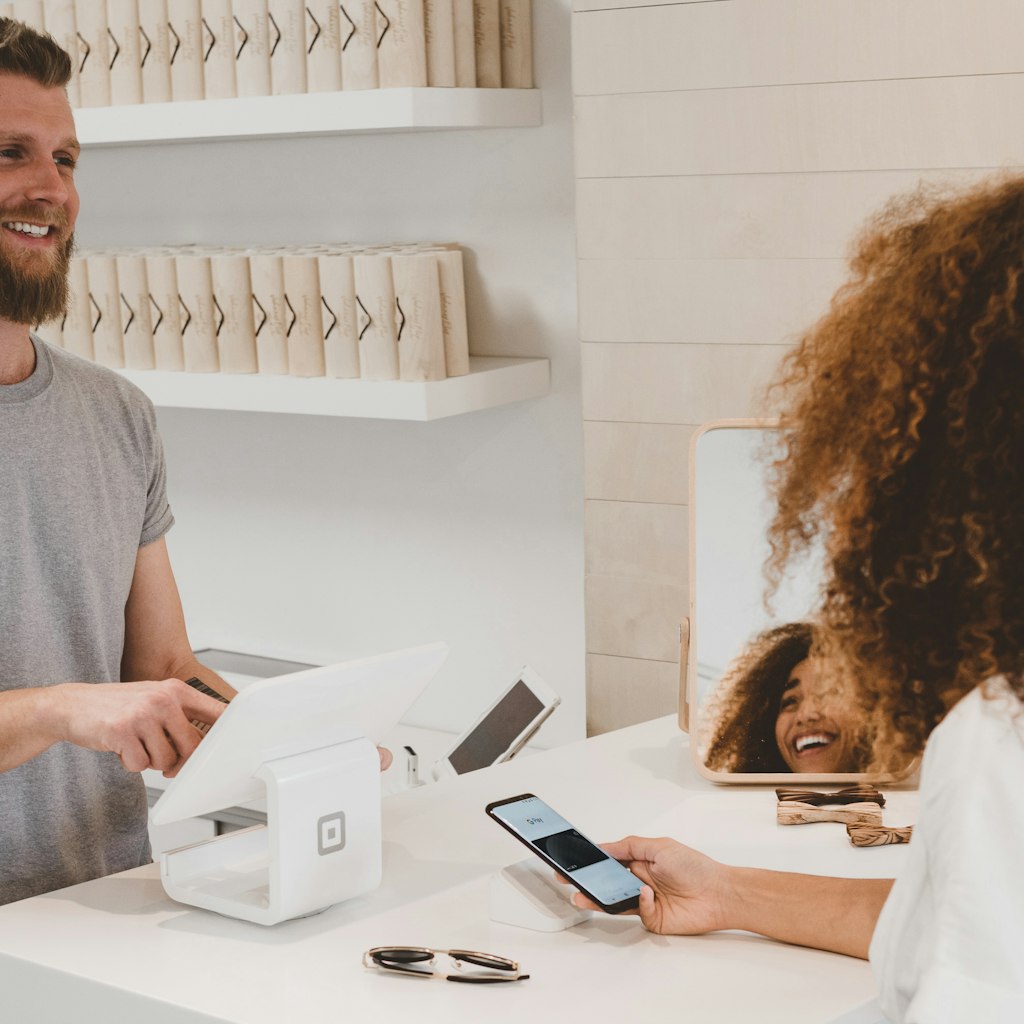
The Numbers That Tell the Story
PayPal’s decline is not speculation — it is measurable across every metric that matters.
Stock price: PayPal peaked at $306.89 in July 2021, riding the pandemic e-commerce wave. As of April 2026, shares trade around $45 — an 85% collapse in under five years. The company’s stock plunged nearly 20% on February 3, 2026 alone, the day it simultaneously fired CEO Alex Chriss and issued a disappointing 2026 profit forecast.
Active accounts: PayPal closed 2025 with 439 million active accounts, up just 1.15% year-over-year. For a payments company that once grew accounts at double-digit rates, this flatline signals market saturation. More troubling, many of those 439 million accounts sit dormant, used only when no other checkout option exists.
Revenue deceleration: Full-year 2025 revenue hit $33.2 billion, up 4% from 2024. Total payment volume reached $1.79 trillion across 26.3 billion transactions, growing 7%. Respectable figures in isolation, but catastrophic relative to the growth rates investors priced into PayPal’s 2021 valuation.
Branded checkout erosion: PayPal’s core branded checkout — where consumers see and click the PayPal button — grew in the low single digits through most of 2024 before recovering to roughly 6% in Q4. The company’s unbranded processing arm (Braintree) saw volume growth decelerate sharply as PayPal deliberately retreated from unprofitable merchant contracts.
Why Platform Wallets Are Winning
PayPal’s competitive problem is structural, not tactical. Apple Pay and Google Pay are embedded into the two operating systems that control virtually every smartphone on Earth. They do not need to convince users to download an app, create an account, or remember a password. The wallet is already there, one biometric scan away.
Apple Pay reached 65.6 million US users in 2025, capturing 49% of all US mobile wallet users and 54% of in-store mobile wallet taps. Over 650 million people use Apple Pay globally, and the service processes 10.2% of all US in-store transactions — up 14.6% year-over-year. Apple Pay is projected to reach 67 million US users by 2026.
Google Pay crossed 820 million active users globally in 2025, a 17% year-over-year increase with 5.2 billion total downloads. Google holds 21.5% of the global mobile wallet market, with massive dominance in India (62% of its user base) and accelerating growth across Southeast Asia. In the US, Google Wallet serves 35 million users with a 15% market share.
The generational shift is decisive. More than 50% of Gen Z consumers use Apple Pay or Google Pay weekly, compared to fewer than 15% of Boomers. PayPal’s core demographic is aging, while platform wallets are the default for consumers who have never written a check or carried cash.
Advertisement
The CEO Revolving Door
PayPal’s leadership instability underscores its strategic confusion. Alex Chriss took over as CEO in September 2023, replacing Dan Schulman after a period of slowing growth. The board pushed him out on February 3, 2026 — just 2.5 years into his tenure — stating that “the pace of change and execution was not in line with the board’s expectations.”
His replacement, Enrique Lores, came from an unlikely source: HP Inc., the PC and printer company. Lores had served as PayPal’s board chairman and took over effective March 1, 2026 (with CFO Jamie Miller serving as interim CEO). The choice signals a pivot toward operational efficiency and cost discipline rather than fintech innovation — a defensive posture for a company that once defined the category.
The market’s verdict was immediate, and a securities class-action investigation was launched by Hagens Berman within weeks, alleging that the company misled investors about its competitive position and growth trajectory.
The Embedded Finance Thesis
PayPal’s predicament illustrates a broader truth about fintech: standalone financial products are increasingly vulnerable to platform-embedded alternatives. When Apple embeds payments into every iPhone, Watch, and Mac, it removes the friction that was PayPal’s original value proposition. When Google integrates payments into Chrome, Android, and YouTube, the checkout button becomes invisible infrastructure rather than a branded experience.
This pattern extends beyond wallets. Embedded finance — where financial services are natively woven into non-financial platforms — is cannibalizing standalone fintech across lending, insurance, and banking. The platforms that control distribution (Apple, Google, Amazon, Shopify) capture the customer relationship, leaving pure-play fintechs to compete on processing margins alone.
PayPal’s Braintree division actually processes payments for many of these platforms behind the scenes. But unbranded processing is a commodity business with razor-thin margins, which is precisely why PayPal has been retreating from unprofitable Braintree contracts. The company is caught between a branded checkout that consumers increasingly skip and an unbranded backend that barely generates profit.
What Comes Next
PayPal is not going bankrupt. It still processes $1.79 trillion annually and generates substantial free cash flow. Venmo remains popular among younger US consumers, and the PayPal button is embedded on millions of merchant websites. But the trajectory points toward becoming a utility — a backend payments processor rather than a consumer-facing fintech brand.
New CEO Enrique Lores faces a question with no easy answer: how do you compete with companies that give away payments for free as a feature of a $1,200 phone or a free operating system? PayPal’s checkout experience is one extra step in a world that is ruthlessly eliminating steps.
The broader lesson for the fintech industry is sobering. Being first does not guarantee being last. The company that pioneered digital payments is watching its market position erode not because it built a bad product, but because the definition of “product” changed. Payments are no longer a destination — they are a layer. And the companies that own the platforms own the layers.
Frequently Asked Questions
Why is PayPal’s stock down 85% from its 2021 peak?
PayPal’s $307 peak in July 2021 was inflated by pandemic-era e-commerce euphoria. As online shopping growth normalized, PayPal’s branded checkout growth stalled, active account growth dropped to 1.15% annually, and platform-embedded wallets from Apple and Google captured the mobile payments market. The February 2026 CEO firing and weak guidance accelerated the sell-off, but the fundamental problem is that PayPal’s standalone checkout model faces structural competition from wallets built into every smartphone.
Can PayPal compete with Apple Pay and Google Pay?
PayPal retains significant advantages: $1.79 trillion in annual payment volume, 439 million accounts, widespread merchant integration, and the Venmo brand. However, it cannot replicate Apple and Google’s distribution advantage — their wallets are pre-installed on billions of devices. PayPal’s best path forward is likely strengthening its merchant-side processing (Braintree, PayPal Commerce Platform) and Venmo’s social commerce features, rather than trying to win the consumer wallet war directly.
What does PayPal’s decline mean for the fintech industry?
PayPal’s struggle demonstrates that being a fintech pioneer does not protect against platform disruption. Companies that control operating systems, devices, or major apps can bundle payments as a zero-marginal-cost feature, undercutting standalone payment providers. This dynamic threatens other independent fintechs and validates the embedded finance thesis — financial services increasingly live inside platforms rather than standing alone. Fintechs that lack platform distribution must find defensible niches or risk the same margin compression PayPal faces.
Sources & Further Reading
- PayPal Shares Plunge Nearly 20% on CEO Exit, Disappointing 2026 Profit Forecast — CNBC
- PayPal Fires CEO Alex Chriss, Poaches HP CEO Enrique Lores — Fortune
- Apple Pay Statistics 2026: Users, Market Share & Growth Rate — Capital One Shopping
- Google Pay Statistics 2025: User Base, Market Share — CoinLaw
- PayPal Statistics 2026: Revenue & Users Data — Capital One Shopping
- Big Tech’s Role in Contactless Payments — Consumer Financial Protection Bureau
- PayPal Securities Fraud Investigation 2026 — Hagens Berman
- Apple Pay vs. Google Pay Statistics 2026: Who Leads Now? — CoinLaw