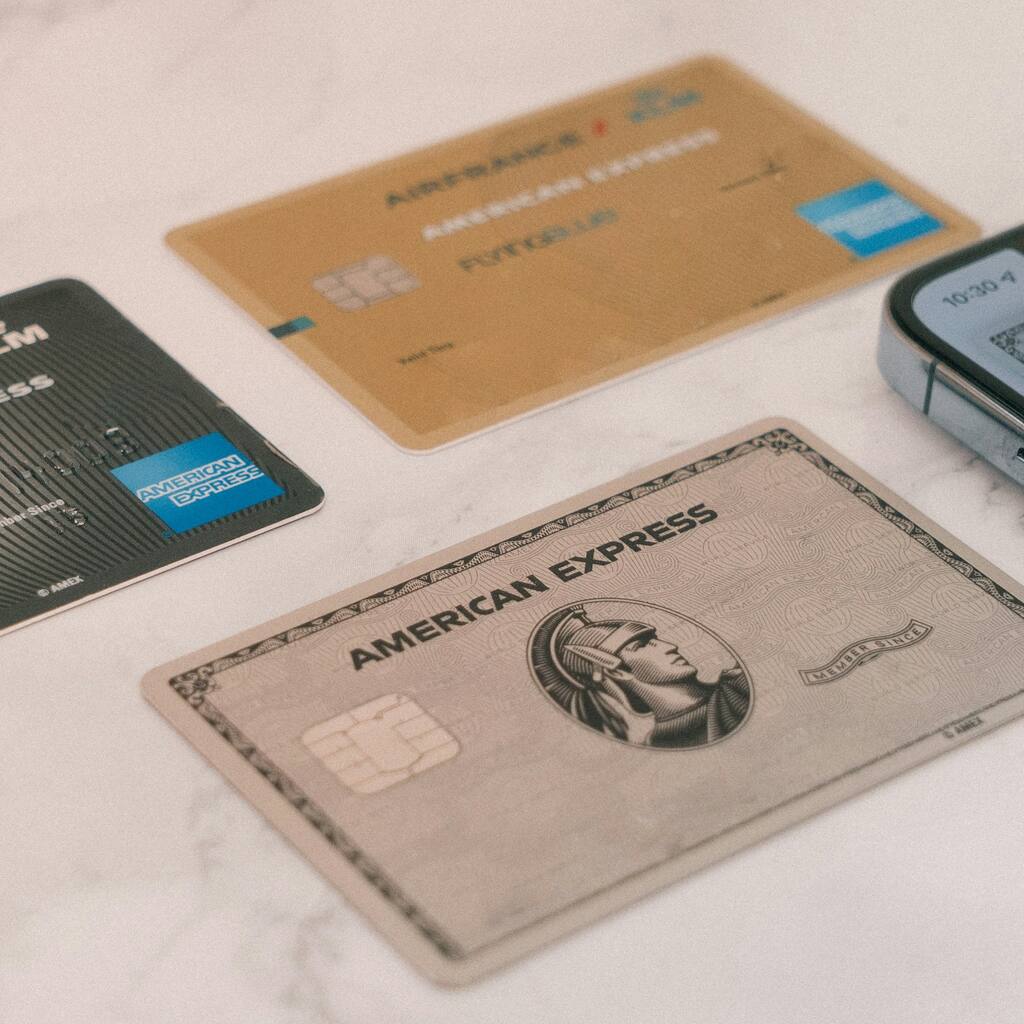
When Regulation 24-64 was signed on October 13, 2024, it did not just create a legal framework for digital banks in Algeria — it started a race. More than eleven companies reportedly expressed interest in or initiated applications for digital banking licenses within the first year of the new framework. They range from bank subsidiaries that have been operating digital products since 2018, to super-apps with eight million users, to fintech startups building the infrastructure layer that the whole ecosystem will eventually run on.
They are not competing for the same customers. Understanding who wins requires understanding who is competing for whom.
Why Everyone Rushed In at Once
Regulation 24-64 opened a market that had never formally existed. Prior to October 2024, offering banking services in Algeria required a full commercial banking license — a process that took years, required hundreds of millions of dinars in capital, and was effectively closed to startups. The new digital banking framework created a distinct license category with lower (though still substantial) barriers: a two-stage authorization process, at least 30% capital held by an existing Algerian bank, and no requirement for physical branches.
For companies already serving Algeria’s digital economy — payment apps, super-apps, telecom operators, technology companies with existing customer relationships — the new framework meant: you can now add regulated financial services to what you already offer. The rush was not driven by speculation about a new market; it was driven by companies that already had the users and wanted to monetize them through banking services.
Separately, Algeria’s fintech layer was simultaneously shaped by Instruction 06-2025 (August 2025), which created the PSP licensing framework for non-bank payment service providers. This produced a split-level competitive landscape: full digital banks (Regulation 24-64) sitting above PSP-licensed payment operators (Instruction 06-2025), with traditional banks’ digital apps competing from the other direction.
The Starting Field: Who Is Actually in the Race
Banxy is the longest-standing player and the most established digital banking brand in Algeria. Launched in 2018 by Natixis Algeria — the local subsidiary of the French banking group Natixis, established in Algeria since 1999 — Banxy predates Regulation 24-64 by six years. It has been operating under Natixis Algeria’s existing banking license, not the new digital bank framework. This is important: Banxy is not an applicant for the new license — it is an incumbent product that defined the category before the category had a regulatory home.
Banxy’s model is straightforward: a mobile-only banking experience for young Algerians who want VISA cards, real-time P2P transfers, savings accounts, currency accounts (DZD and foreign), and the ability to order a checkbook — all without visiting a branch. Account opening requires a video selfie and document photos. The technology stack was built by SBS Software, a banking technology provider. Seven-plus years in market gives Banxy a brand recognition advantage no new entrant can immediately replicate.
Yassir is the disruptor the banking industry should fear most. Algeria’s most-funded startup — $193 million raised including a $150 million Series B — Yassir built its position as a super-app: ride-hailing, food delivery, and grocery delivery, powering an estimated 3 out of 5 on-demand digital transactions in Algeria. By March 2025, Yassir counted 8 million users across Algeria, Morocco, and Tunisia, with expansions into France and Canada.
Yassir’s financial services strategy is the most sophisticated in the market. The company is pursuing payment institution authorization, with plans to offer digital savings, borrowing, and comprehensive payments to its existing user base. The critical strategic insight is that Yassir does not need to acquire banking customers — it already has them. Every ride-hailing user, every food delivery customer who has paid through the app, is a banking prospect who has already demonstrated payment behavior that can inform a credit profile. Yassir’s customer acquisition cost for financial services is effectively zero. Its data advantage over traditional banks is structural.
ESREF Pay, founded by Samir Mohammedi, operates at the PSP layer rather than the full banking layer. Positioned as Algeria’s first e-wallet designed specifically for e-commerce, ESREF Pay built a QR code payment system connecting merchants and buyers before the PSP regulation existed. Instruction 06-2025 created the formal licensing pathway it now needs to operate at scale. ESREF Pay’s differentiation is merchant-first: it built for the seller’s workflow, not the buyer’s, recognizing that merchant acceptance is the bottleneck for any digital payment system.
DFA (Digital Finance Algeria) plays the infrastructure role. As an open banking platform, DFA is building the API connectivity layer that allows banks and PSPs to interoperate, share data (with appropriate consent), and integrate financial services into third-party apps. In a market where multiple licensed players will eventually compete, the infrastructure provider can be the business that wins regardless of which consumer-facing wallet takes market share.
BaridiMob — run by Algérie Poste, the state postal service — is the most widely distributed mobile payment product in the country. With 20 million CCP (postal account) holders as its backbone and a network of 4,000+ post offices as cash-in/cash-out points, BaridiMob’s distribution advantage is impossible for a private-sector startup to replicate. The June 2025 launch of Baridi Pay — a QR contactless payment layer on top of BaridiMob — extended the postal network’s digital reach. BaridiMob is not a neobank and is not applying under Regulation 24-64 — it is a state financial service. But it occupies the mass market position that every neobank must outcompete to win volume.
Segmentation: Four Different Races Inside One Market
The Algerian neobank market is not a single race — it is four parallel competitions for distinct customer segments.
The unbanked mass market — approximately 43% of Algerian adults who lack a bank account — is the largest addressable pool and the lowest ARPU (average revenue per user) segment. BaridiMob already dominates here via postal infrastructure. PSP-licensed players targeting this segment via agent networks will compete with BaridiMob’s 4,000+ post offices and an established brand. Winning requires denser local agent presence or a superior onboarding experience — not a superior product feature set.
The urban youth segment — 18–30-year-olds in major cities with smartphones and modest digital fluency — is Banxy’s home turf and Yassir’s natural conversion pool. These users want mobile-first banking experiences, P2P transfers, and cards. Price sensitivity is high; they will churn for a marginally better UI or a referral bonus. This segment generates moderate ARPU (card interchange fees, small savings balances) but high engagement.
The SME and micro-business segment is the most commercially attractive and least served. A merchant with DZD 10–100 million in annual revenue needs invoicing, payroll disbursement, supplier payment, tax payment, and eventually working capital — not just a consumer wallet. No current digital bank or PSP has built a compelling SME offering. This segment has the highest willingness to pay and the strongest switching costs once embedded.
The diaspora segment is the most constrained by regulation. Algeria’s restrictions on DZD convertibility and foreign currency transactions mean that domestic-only players cannot legally serve remittance flows. Yassir’s expansion into France and Canada — where Algeria’s largest diaspora communities live — positions it as the one player that can eventually bridge the domestic and diaspora segments, assuming regulatory conditions evolve.
Advertisement
Product Differentiation: What Actually Separates Players
In the absence of interest rate competition (Algeria’s banking interest rate environment is regulated), neobanks differentiate on user experience, distribution, and adjacent products.
Banxy differentiates on banking depth: it is the only mobile banking product in Algeria that offers the full suite of bank account services (VISA card, checkbook, foreign currency account) from a mobile-only interface. For users who want a real bank account without visiting a branch, Banxy has no direct competitor under the existing framework.
Yassir differentiates on ecosystem integration. A user who orders lunch via Yassir, gets a ride, and pays bills through the same app has no incentive to adopt a second payment application. When Yassir adds a formal savings product and a credit line based on transaction history, it closes the financial services loop in a way that no standalone banking app can replicate.
ESREF Pay differentiates on merchant tooling. QR-code acceptance, sales reporting, and eventual settlement reconciliation are features that banks historically built poorly. A payment company that genuinely solves the merchant workflow problem — not just the consumer payment experience — earns a sticky commercial relationship.
Marketing and Customer Acquisition
Banxy’s 2018–2024 customer acquisition relied heavily on Natixis Algeria’s existing client relationships and branch referrals — ironic for a branchless bank. The limitation of this approach is low virality; bank referrals generate qualified but slow-growth user pipelines.
Yassir’s CAC advantage is structural: every new ride-hailing or food delivery user is a potential financial services convert. The referral loop runs in the opposite direction: a satisfied Yassir Pay user will recommend the super-app for rides and deliveries, generating organic growth across all product lines.
New PSP entrants will compete primarily through agent-network coverage (rural and peri-urban), promotional cashback (standard fintech acquisition playbook), and partnerships with e-commerce platforms or employers for payroll distribution.
Funding and Backing: Strategy Follows Capital
The capital structure of each player shapes its competitive strategy in ways that are often more decisive than product decisions.
Yassir ($193M raised): runway to sustain losses across multiple product lines for 3–5 years while building market position. Can afford to subsidize user acquisition and operate financial services at breakeven while the core app business grows.
Banxy (Natixis Algeria backing): bank-funded, not VC-funded. Strategic priority is profitability, not user growth at any cost. This produces a more conservative product roadmap but also eliminates the “runway cliff” risk that haunts VC-backed competitors.
PSP startups (ESREF Pay, others): typically bootstrapped or early-stage funded (sub-$5M). Must reach unit economics faster. Less room for user subsidies. More dependent on B2B or merchant revenue than consumer volume.
BaridiMob (state-backed): no commercial capital constraint. Can price services at cost or below to maintain market share. Cannot be outspent. Its constraint is agility — state procurement and IT governance cycles are slow.
The Winner’s Profile
The eventual leader of Algeria’s digital financial services market will likely not be any single neobank. The market is structurally moving toward a two-layer outcome: a state-backed infrastructure layer (BaridiMob, SATIM interbank rails) serving the mass market, and a private-sector product layer where 2–3 strong players carve out defensible niches.
Among private players, the company with the best shot at becoming the dominant digital financial services brand in Algeria is Yassir — not because of its banking product (which doesn’t yet exist in regulated form), but because it controls the daily attention and payment behavior of 8 million users. When it adds regulated financial services to that base, it will have what every fintech needs: not the best product, but the highest switching cost.
Banxy’s path to winning is narrower but real: become the premium banking experience for Algeria’s growing professional class — the doctors, engineers, lawyers, and corporate managers who want full banking features, international card acceptance, and a digital-first experience. That segment is underserved by state banks and out of reach for PSP-tier wallets.
The open market opportunity — SME financial services — is available to any player willing to build for merchants rather than consumers.
Advertisement
🧭 Decision Radar
| Dimension | Assessment |
|---|---|
| Relevance for Algeria | High — digital financial services are the infrastructure of a modern economy; which players win shapes access to credit, commerce, and economic participation for millions of Algerians |
| Action Timeline | Immediate for founders building on top of the PSP/neobank stack; 12–24 months for consumers to see the first wave of fully licensed neobank products in market |
| Key Stakeholders | Bank of Algeria (licensor), SATIM (interoperability), Yassir (dominant app ecosystem player), Natixis Algeria/Banxy (incumbent digital bank), Algérie Poste/BaridiMob (state distribution network), PSP applicants |
| Decision Type | Strategic for fintech founders choosing their segment; Tactical for consumers choosing a digital wallet |
| Priority Level | High |
Quick Take: Algeria’s neobank race started the moment Regulation 24-64 was signed, but the real competition is for the SME segment — not the unbanked mass market that BaridiMob already owns. Founders building for merchants, payroll, and working capital will find the most commercial white space. Consumers choosing a digital banking product today should recognize that Banxy offers the most complete banking service, while Yassir offers the most embedded daily-life integration — and those advantages are unlikely to reverse quickly.
Sources & Further Reading
- The Story Behind Banxy: Natixis Algérie Journey into Mobile Banking — SBS Software
- French Bank Natixis Launched Banxy, Algeria’s First Mobile Bank — IBS Intelligence
- Algerian Super App Yassir Raises $150 Million in Series B Funding — Fintech News Africa
- North African Super-App Yassir Lands $150M to Fuel Expansion — Fintech Futures
- Algeria Rolls Out New Digital Banking Rules: Opportunity or Over-Regulation? — Launch Base Africa
- Digital Banks: Banque d’Algérie Sets Licensing Conditions — Algeria Invest
- Algérie Poste Launches Baridi Pay Mobile Payment Service — DzairTube
- From Oil to Algorithms: Algeria’s Fintech Path in 2024 — The Fintech Times
- Rise of Mobile Payments, Transfers, Bank Cards: How Algeria Is Transitioning to Digital Payments — Euronews
- Exploring Local Payment Methods and Digital Finance in Algeria — Transfi





Advertisement