A Profitable Fintech Going Regional
Cairo-based Lucky closed a $23 million Series B round in April 2026, combining equity and debt, to fund expansion across North Africa and accelerate its pivot from a consumer credit network into a full neobanking platform. The round was led by existing backers Disruptech Ventures and DPI Venture Capital (via its Nclude fund), with new strategic investors Suez Canal Bank and OneStop joining. OneStop’s chairman, Mohamed Farouk, has taken over as chairman of Lucky’s board.
Two facts distinguish this round from the typical African fintech announcement. First, Lucky is reportedly profitable — a rare claim in a category where most Series B stories are built on unit economics promises rather than delivered profits. Second, the round is regionally scoped from day one: Lucky is explicitly targeting neighbouring North African markets, not just scaling deeper in Egypt.
From Cashback Rewards to Credit Rails
Lucky started in 2019 as a cashback and rewards app. The pivot into consumer credit came in 2021, when the company recognized that Egyptian consumers were more interested in deferred-payment access than in rewards points. That pivot produced instant credit lines, a dedicated payment card, and enough transaction volume to make the platform a meaningful player in Egyptian consumer fintech.
Today Lucky describes itself as a consumer credit network sitting on top of merchant partnerships. The Series B is designed to convert that position into a licensed neobanking platform — a step that requires a Payment Service Provider (PSP) license, which Lucky is actively pursuing with Egyptian regulators.
Why the PSP License Matters
In Egypt’s financial regulatory architecture, a PSP license unlocks a set of capabilities that a credit-only operator cannot access: current accounts, direct settlements with the central bank, issuance of branded debit instruments without a bank sponsor, and tighter integration with the Instant Payment Network (IPN) that the Central Bank of Egypt has been pushing since 2023.
For Lucky, the license is the bridge between “credit product with rewards” and “consumer neobank.” It is the same bridge MNT-Halan, Fawry, and Khazna have each navigated differently. MNT-Halan chose the microfinance bank route; Fawry came through acquirer licensing; Khazna partnered with an existing banking license. Lucky’s path — a PSP license layered on a profitable credit-issuance business — is the cleanest of the four in regulatory terms.
Advertisement
The North Africa Thesis
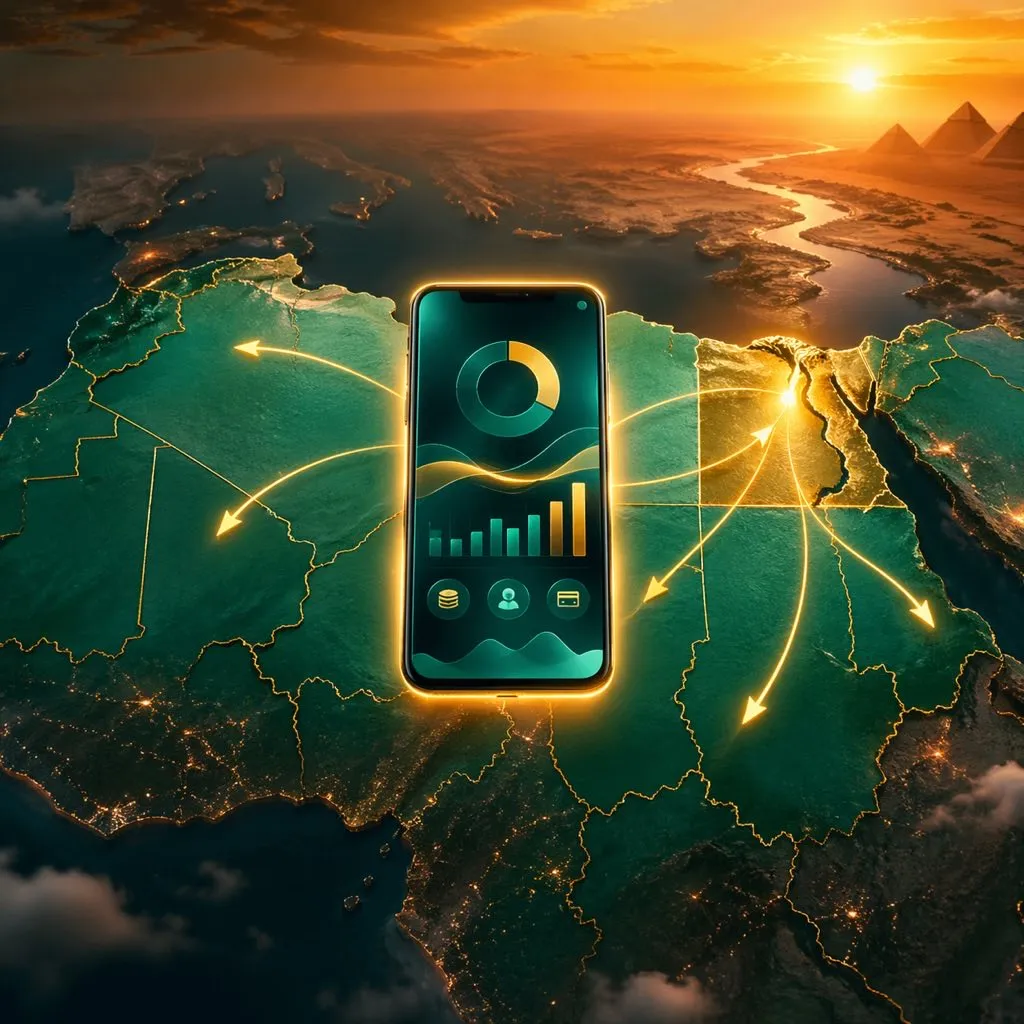
Lucky’s expansion plan points at Morocco, Tunisia, and Algeria as next-step markets. Each has a consumer credit gap that Egyptian players have studied carefully. Morocco has Bank Al-Maghrib’s instant-payment rails and a growing BNPL regulatory conversation. Tunisia has a smaller but digitally-engaged urban population and a fragmented credit landscape. Algeria’s consumer credit segment is still forming — the digital economy law, Baridi Pay, and recent merchant acceptance expansions are the enabling layer — and Egyptian fintech expertise is one of the models local operators study.
The regional play matters because consumer credit in North Africa is characterized by thin files, low formal credit bureau penetration, and high merchant informality. A platform that has already built risk models for the Egyptian market can amortize that work across neighbouring markets — provided local regulatory mandates are respected.
What Investors Priced
DPI’s participation is the signal line for institutional investors watching North African fintech. The fund has generally priced fintech conservatively and passed on rounds where profitability was only projected. Lucky’s profitability claim, combined with the Suez Canal Bank strategic check and the PSP license timeline, made the round bankable.
Terms were not fully disclosed but the mix of equity and debt suggests Lucky is managing dilution carefully while using venture debt to fund credit book growth — the same pattern African fintechs increasingly prefer over raw equity raises.
What Regional Founders Should Watch
Three takeaways for founders in adjacent markets. First, profitability before a Series B regional raise is becoming the new standard — the “growth at all costs” round is effectively closed in Africa. Second, the pairing of a strategic bank (Suez Canal Bank) with specialist VCs (DPI, Disruptech) is a proven structure for regulated fintech scale-ups. Third, a PSP or equivalent license timeline is now a check-the-box requirement for investors underwriting African neobanking stories. Founders who cannot show regulatory progress will struggle to price where Lucky just did.
Frequently Asked Questions
Why is Lucky’s Series B significant for North African fintech?
Lucky’s round is significant because the company is profitable before a regional raise — a rare combination in African fintech where most Series B stories hinge on projected unit economics. It also explicitly targets neighbouring markets (Morocco, Tunisia, Algeria), signalling a wave of intra-regional fintech consolidation rather than the usual US-style expansion pattern.
What is a PSP license and why does Lucky need one?
A Payment Service Provider license in Egypt allows a company to hold customer balances, issue payment instruments without a bank sponsor, integrate with the Instant Payment Network, and settle directly with the central bank. For Lucky, the PSP license is the bridge between its current credit-network product and a full consumer neobank, unlocking current accounts and direct deposit rails.
How does Lucky’s expansion affect Algerian startups?
Lucky has named Algeria as a target market for its regional expansion, meaning Egyptian fintech capital, product expertise, and possibly partnerships could enter the Algerian consumer credit space within 12-24 months. Algerian founders working on BNPL, consumer credit, or neobanking should accelerate their product roadmaps and regulatory engagement to establish defensible positions before Lucky or competitors arrive.
Sources & Further Reading
- Egypt’s Lucky Secures $23 Million Series B to Expand in North Africa — Wamda
- Egyptian Fintech Lucky Hits Profitability, Raises $23m Series B for North African Expansion — Launch Base Africa
- Lucky Secures $23m to Scale Credit and Neo-Banking Push — Fintech Global
- Egypt’s Lucky Secures $23m Series B to Drive Credit Expansion Across North Africa — Daily News Egypt
- Lucky Raises $23M Series B to Accelerate Digital Credit Expansion Across Egypt and North Africa — TechAfrica News