
🧭 Decision Radar
Relevance for Algeria
Medium
▾
Infrastructure Ready?
Unassessed
▾
Skills Available?
Unassessed
▾
Action Timeline
Monitor only
▾
Algerian civil-protection services, forestry services, civilian emergency-response planners
Decision Type
Educational
▾
Quick Take: Algerian civilian responders could assess the idea through a narrowly defined crew-support task. Ask for evidence matched to that task and clarify service responsibilities and operating limits before discussing deployment.
A coordinated fleet announcement, with a validation question
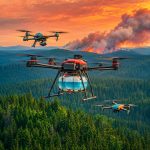
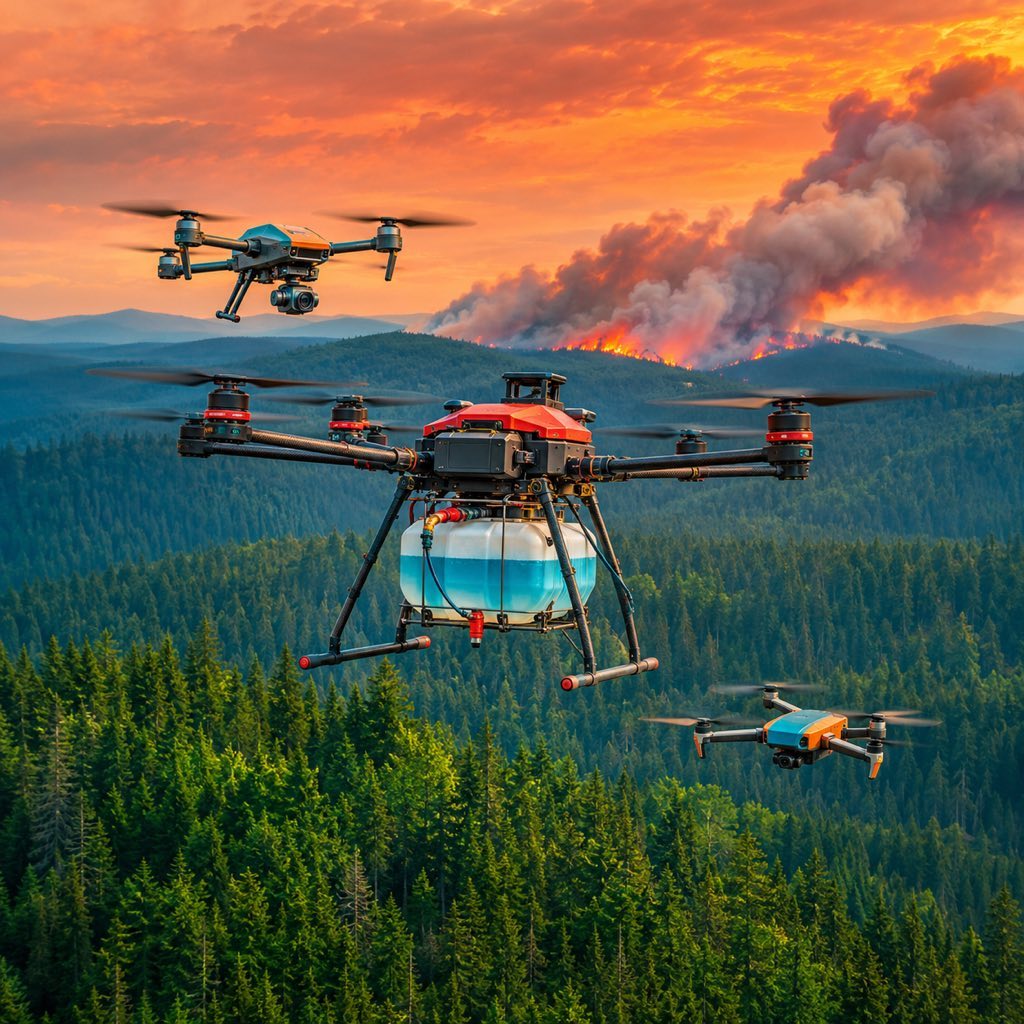
On September 5, 2026, Iwa Robotics introduced a three-platform drone line for wildfire and emergency response, according to its announcement via PR Newswire. The announcement provides a useful way to examine the division of work between aircraft. It should be read as a description of the proposed offering, with separate questions about what each platform is intended to do and what evidence would be needed before an emergency service relied on it.
The distinction matters for the Algeria-facing discussion. The useful question is how such a fleet could support civilian wildfire crews, rather than whether an announcement itself establishes operational readiness. A responsible evaluation would define the supporting task, the evidence required for that task and the circumstances in which a crew would decline to use the system. These are proposed evaluation questions, not findings about an Algerian deployment.
Iwa describes HAWK as a long-endurance reconnaissance aircraft in the manufacturer announcement. Reconnaissance is therefore the appropriate starting point when examining its stated role. A prospective user should ask what information an observation would deliver, who would interpret it and how it would enter a response decision. The description does not by itself answer those operational questions, and this article does not supply endurance figures or observation performance measurements.
Different aircraft, different evidence requirements
CANARY is intended for sensing, fire diagnostics and crew-safety information, according to MidronePro’s account of the announcement. That stated role invites a more specific discussion than a general promise of autonomous firefighting. An evaluator could ask how a diagnostic observation would be presented to a crew, how uncertainty would be communicated and who would decide whether the information justified a change in operations. The task definition should come before any claim of benefit.
PELICAN is intended for self-guided aerial suppression, according to MidronePro’s account. Intended suppression is a different proposition from observing a fire or providing diagnostic information. A prospective assessment should therefore request evidence for the suppression task separately, rather than treating a satisfactory reconnaissance demonstration as evidence for every part of the fleet. The point is methodological: each proposed use deserves a test that matches the decision a responder would make.
The evidence boundary is explicit. MidronePro reported that detailed independent performance validation was unavailable when its article was published. This is a dated limitation in the coverage, not a claim that validation can never emerge. It means the announcement should not be rewritten as a proven suppression success rate. A reader can recognize the proposed division of roles while reserving judgment on effectiveness in field conditions.
Iwa also announced field demonstrations across eight states on its second cross-country roadshow, according to the company release. Demonstration plans and independent validation belong in separate columns of any evaluation. The stated geographical reach of demonstrations does not establish a suppression result, an operational fleet count or suitability for a different operating environment. A buyer should ask what the demonstrations are intended to establish and what evidence would remain outstanding afterwards.
The service around the aircraft
RobotToday describes the offering as a managed fleet service for fire and public-safety agencies. That description changes the questions a prospective customer should bring to a discussion. Instead of asking only what an aircraft can do, ask how responsibilities would be divided between the service provider and the responding agency. A service proposal should make clear who requests a mission, who supervises it and who accepts the information or action it produces.
The fleet portal handles mission planning, telemetry, flight logs and maintenance, according to RobotToday’s profile. These are described management functions, not published field-test results. They suggest useful subjects for a demonstration: how a planned mission is recorded, how its progress can be reviewed and how maintenance status would inform a decision to proceed. The profile’s product description should remain distinct from evidence that a particular mission has succeeded.
For civilian responders considering the idea, an evaluation should connect the aircraft and service questions. Ask whether a mission record distinguishes the requested task from the achieved result. Ask how someone reviewing a flight would identify an unresolved problem. Ask what documentation would be available to support a maintenance decision. These are recommended questions arising from the stated portal functions; they are not assertions that the service already meets a particular accountability standard.
Advertisement
How Algerian evaluators could frame a limited assessment
1. Specify the crew decision before selecting the aircraft
Start with a single civilian response question that an aircraft might help answer. Then identify whether the proposed contribution is reconnaissance, diagnostics or suppression. Write down what would count as useful evidence and who would review it. Avoid a trial description that treats the whole fleet as one undifferentiated capability. This approach would allow an Algerian team to examine the announced roles without assuming local availability, permission to operate or an established record of performance. It would also keep a discussion of supporting crews tied to a defined task rather than a promotional label.
2. Ask for validation matched to the proposed mission
Request a description of the test conditions and of the outcome being measured. For a reconnaissance assessment, ask what observation would support the intended decision; for a suppression assessment, ask what evidence would establish that the intended action worked. Keep proposed tests separate from completed results in the review document. The coverage’s limitation on independent validation makes this distinction especially important. An evaluator should be able to say which statements remain manufacturer descriptions and which, if any, have been tested to the team’s satisfaction. No success rate should be inferred from an announced demonstration itinerary.
3. Define service responsibilities and operating limits
Before recommending a trial, ask for a written allocation of mission-planning, supervision, logging and maintenance responsibilities. Request a clear account of when the service would decline or stop a mission and how that decision would reach the response team. Treat local operating permissions and the suitability of a proposed site as matters to establish before use. This article makes no finding about either in Algeria. The purpose of the checklist is to keep a possible assessment bounded: a promising role description can justify questions, but those questions still need answers before anyone treats the proposal as an operational resource.
What the announcement supports today
The strongest reading is a description of complementary intended roles and of a proposed service around them. The weakest reading would collapse that description into a claim of demonstrated firefighting performance. Keeping those readings apart makes the story more useful: readers can examine the fleet concept without having to accept an unsupported conclusion about its results.
For Algeria, the connection remains a potential evaluation pathway for civilian wildfire support. The supplied evidence does not establish local availability, authorizations or field performance. A concrete next step, if a relevant team wished to explore the concept, would be a task-specific evidence request covering validation, service responsibilities and operating limits. That is a recommendation for due diligence, not a forecast of adoption.
Frequently Asked Questions
What are the intended roles of the aircraft?
Iwa describes HAWK as a reconnaissance aircraft. MidronePro’s account assigns sensing and diagnostics to CANARY and self-guided aerial suppression to PELICAN.
Does the coverage establish independently validated suppression performance?
MidronePro said detailed independent performance validation was unavailable when it published. The announced demonstrations should therefore be kept separate from claims of proven operational results.
How is the service described?
RobotToday describes a managed fleet service for fire and public-safety agencies. Its profile says the portal handles mission planning, telemetry, flight logs and maintenance.
Sources & Further Reading
🔗 Related Intelligence

Drone Factory Startups: What Firestorm Labs’ $82M Proves About Hardware Ventures

VENOM Takes Flight: Inside DARPA’s First AI-Controlled F-16 Combat Jet Test

Control Plane War: Google, AWS, and Azure Race to Own Enterprise AI Orchestration

Shield AI’s $2B Raise: The Combat-Proven AI Pilot Reshaping Defense