The Scale of Government IT Spending
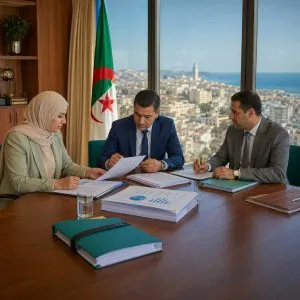
The Algerian government is, by a wide margin, the largest buyer of information technology in the country. Across 69 wilayas, dozens of ministries, hundreds of public enterprises, and major agencies like Sonatrach, Sonelgaz, and Algerie Telecom, government entities are the dominant force in IT hardware, software, services, and infrastructure purchases. Between 2010 and 2019, Algeria invested more than $3.7 billion in ICT infrastructure alone, while ICT equipment imports from 2015 to 2019 totaled $22 billion. The government’s “Algerie Numerique 2030” strategy, overseen by the High Commission for Digitalization, has earmarked over 500 digital transformation projects for 2025-2026 — reinforcing this trajectory. Every ministry has digitization targets. Every wilaya needs network infrastructure. Every public hospital needs patient management systems. The government’s IT appetite is enormous and growing.
This spending represents both an opportunity and a bottleneck for Algeria’s tech sector. Public procurement alone accounts for roughly 20% of GDP, according to the OECD’s 2019 review of Algeria’s procurement system — significantly higher than the 12% average across OECD countries. For Algerian IT companies — system integrators, software developers, hardware distributors, and consultancies — government contracts are often the difference between survival and growth. A single ministry contract can sustain a mid-sized IT company for two to three years. Yet accessing these contracts is notoriously difficult, and the procurement process itself is widely criticized as opaque, slow, and structurally biased.
The stakes are high. Government IT procurement decisions shape Algeria’s digital infrastructure for decades. A poorly chosen enterprise resource planning (ERP) system for a ministry creates a 15-year dependency. A badly designed network architecture for a wilaya cannot be easily rebuilt. These are not just purchasing decisions — they are strategic technology choices with long-term consequences for government efficiency and digital sovereignty.
How the Procurement Process Works Under Decree 15-247
Algeria’s public procurement framework is governed by Presidential Decree No. 15-247 of September 16, 2015 (the Public Procurement Code), which entered into force on December 20, 2015 and replaced the previous 2010 Code of Public Tenders. The decree was approved by the Council of Ministers on July 22, 2015 and published in the Official Journal dated September 20, 2015. Subsequent executive decrees have supplemented the framework — including Executive Decree No. 21-219 of May 20, 2021, which established standardized general administrative clauses for public works contracts — but Decree 15-247 remains the core regulatory instrument.
The process follows a structured sequence. First, the contracting authority (the ministry, wilaya, or public enterprise) defines its needs through a “cahier des charges” (specifications document). For IT procurements, this document describes the required hardware, software, services, technical specifications, and evaluation criteria. Contracts below 12 million DZD for works and supplies, or 6 million DZD for studies and services, do not require a formal procurement procedure — but most significant IT purchases exceed these thresholds.
The tender is then published in the BOMOP (Bulletin Officiel des Marches de l’Operateur Public), Algeria’s official procurement bulletin that has been operating since 1984, as well as in at least two national newspapers. Companies are given a defined period to prepare and submit bids. Bids are evaluated by a commission (commission d’ouverture des plis et d’evaluation des offres) in two phases: first, technical compliance and scoring; second, financial evaluation. The technically compliant bid with the lowest evaluated price typically wins, though the weighting between technical and financial scores varies by procurement.
The local preference margin is a significant feature. Article 83 of the Procurement Code grants a 25% preference margin to products of Algerian origin and to companies incorporated under Algerian law whose capital is held mainly by domestic residents. In practice, the margin works by increasing the price of foreign bidders’ offers by 25% for comparison purposes — meaning a local bidder offering a product at 125 DZD competes equally with a foreign bidder at 100 DZD. This margin was increased from 15% under pre-2010 rules to 25% and has been maintained ever since. It effectively locks out foreign companies bidding independently on many contracts, but it also creates incentives for “front” partnerships where foreign companies establish minimal Algerian partnerships solely to claim the preference.
Advertisement
Where the System Breaks Down
The problems with Algeria’s IT procurement are structural, not incidental. First, the specifications problem. Many cahiers des charges are written with a specific vendor’s product in mind. When a tender specifies exact hardware model numbers, particular software versions, or features that only one vendor offers, the competition is illusory. Tech companies call these “oriented tenders” — and they are common. Sometimes the orientation is deliberate (a favored vendor helped write the specifications). Sometimes it reflects genuine technical requirements that only one product meets. Distinguishing between the two is nearly impossible from outside.
Second, the evaluation timeline. While the procurement code establishes clear procedural steps, major IT procurements routinely take 12-24 months from publication to contract award. Evaluation commissions meet infrequently. Administrative approvals cascade through multiple levels. Visa requirements from financial controllers add weeks. By the time a contract is awarded, the technology landscape may have shifted — the hardware specified may be discontinued, the software version may be outdated, or the pricing may have changed significantly. For an industry where product cycles run in months, a procurement system that runs in years creates a fundamental mismatch.
Third, the transparency deficit. While the BOMOP publishes tender announcements and is required to publish award notices, the system does not systematically make evaluation reports or detailed contract values accessible. Companies that lose bids often receive minimal explanation — a brief notification that they were “not retained” without detailed scoring feedback. The ARMP (Autorite de Regulation des Marches Publics), Algeria’s public procurement oversight body, provides regulatory supervision and dispute resolution, but independent assessments — including GAN Integrity’s country risk profile — rate Algeria’s public procurement sector as carrying a high corruption risk, noting that favoritism is perceived as widespread among procurement officials. The result is a system where companies invest significant resources in bid preparation with limited visibility into how decisions are actually made.
Reforms That Would Make a Difference
Meaningful reform does not require replacing the entire procurement framework. Targeted improvements could significantly improve outcomes. First, mandatory publication of award decisions including technical and financial scores, the winning bid amount, and the evaluation commission’s reasoning. South Korea’s KONEPS (Korea ON-line E-Procurement System), launched in 2002, handles the entire procurement lifecycle electronically — from bidding through contract signing and payment. Its implementation boosted the Public Procurement Service’s integrity index score by 27.2% within three years. This level of transparency is achievable and transformative. Algeria launched an e-procurement platform in 2018, but it remains far less comprehensive than what KONEPS demonstrates is possible.
Second, Algeria should establish specialized IT procurement units within major contracting authorities. Currently, the evaluation commission typically includes generalist administrators and financial controllers who may lack the technical expertise to evaluate complex IT proposals. A dedicated digital procurement team — staffed with engineers and IT specialists — would produce better specifications, more informed evaluations, and fewer “oriented” tenders.
Third, the framework agreement mechanism (accord-cadre), already permitted under the procurement code but rarely used for IT, should be expanded. Framework agreements allow the government to pre-qualify vendors for specific categories (cloud services, networking equipment, cybersecurity) and then issue call-off orders without repeating the full procurement cycle each time. This reduces timelines from months to weeks for routine IT purchases while maintaining competitive pricing through periodic framework competitions.
Fourth, the 25% local preference should be restructured to incentivize genuine local value creation rather than just Algerian company registration. Points could be awarded for local manufacturing content, Algerian engineering staff, technology transfer commitments, and post-sale support infrastructure within Algeria. Morocco’s recent defense industrial framework offers a relevant model: its industrial compensation mechanism, introduced through the public procurement decree, requires companies signing contracts with the National Defense Administration to invest locally and transfer technology. Morocco has already launched dedicated defense industry acceleration zones and attracted $260 million in investment through this approach. Adapting similar principles to IT procurement — linking local preference margins to measurable economic contribution — would be far more effective than the current system.
Frequently Asked Questions
What is government it procurement in algeria?
Government IT Procurement in Algeria: How Technology Tenders Work and Why They Often Don’t covers the essential aspects of this topic, examining current trends, key players, and practical implications for professionals and organizations in 2026.
Why is government it procurement in algeria important for Algeria?
This topic is significant for Algeria because it intersects with the country’s digital transformation goals, economic diversification strategy, and growing technology ecosystem. The article provides specific context for Algerian stakeholders.
How does how the procurement process works under decree 15-247 work?
The article examines this through the lens of how the procurement process works under decree 15-247, providing detailed analysis of the mechanisms, trade-offs, and practical implications for stakeholders.
Sources & Further Reading
- Algeria Presidential Decree 15-247 — Public Procurement Code (Official Journal)
- Algerian Public Procurement Law and Procedure — Village Justice
- Algeria: New Code of Public Tenders — Gide Loyrette Nouel
- Public Procurement Local Preference Margin — CMS Law
- OECD Review of Algeria’s Public Procurement System (2019)
- Algeria Selling to the Public Sector — US International Trade Administration
- Algeria Digital Economy — US International Trade Administration
- BOMOP — Official Public Procurement Bulletin
- Korea KONEPS E-Procurement System — Public Procurement Service
- Morocco Defence Industry Framework — African Security Analysis
- Algeria Country Risk Profile — GAN Integrity
- ARMP Algeria — Public Procurement Regulatory Authority