From Compliance Theater to Collision Course
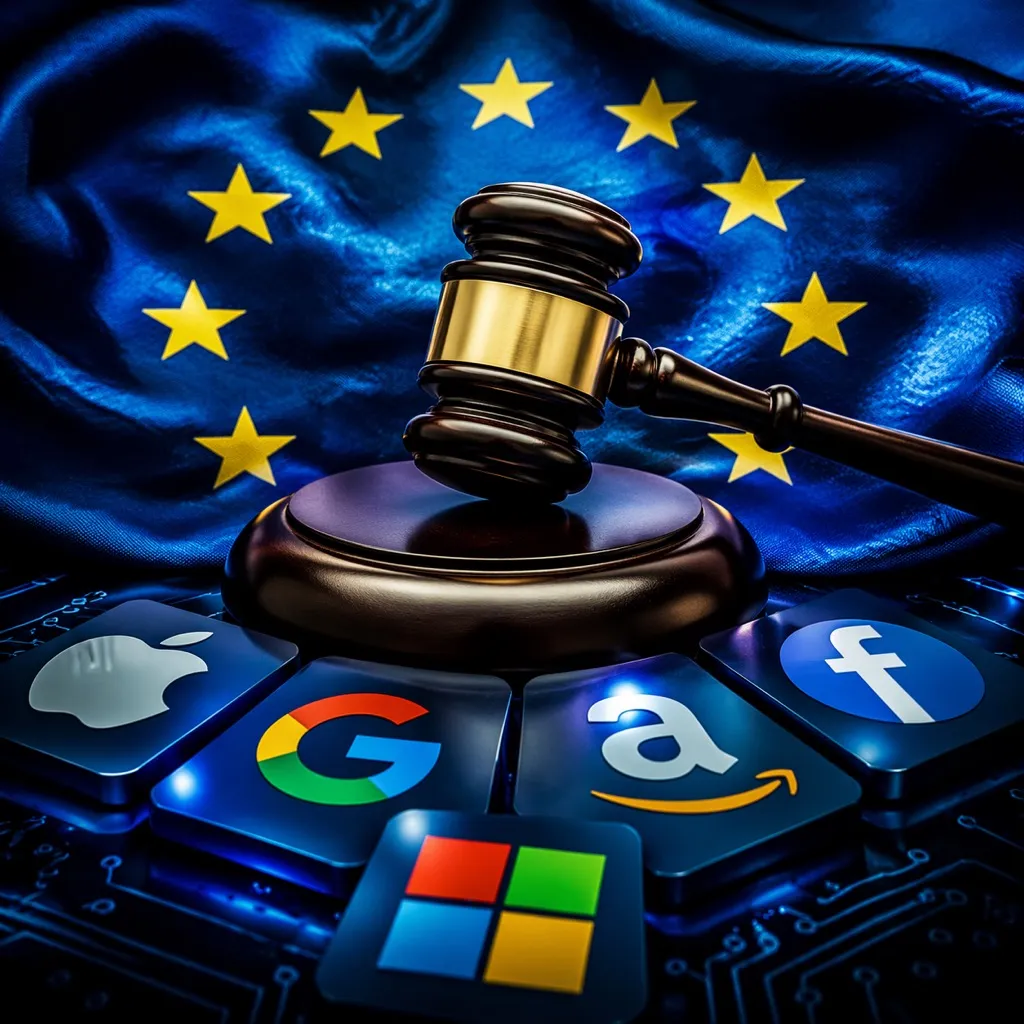
For most of the Digital Markets Act’s life so far, the story has been one of slow-motion legal choreography — gatekeeper designations in 2023 and 2024, compliance reports in 2024 and 2025, early fines in April 2025 that were notably below the statutory ceilings. That choreography ended in 2026. Teresa Ribera, the EU’s competition chief responsible for enforcing both the DMA and the Digital Services Act, has made clear that Brussels now treats enforcement, not negotiation, as the priority of the year — even at the cost of a trade war with Washington.
The escalation has been building through the last quarter of 2025 and the first quarter of 2026. EU fines against Google, Apple, and Meta for antitrust and competition violations have crossed €6 billion (roughly $7 billion) since the beginning of 2024. X was fined €120 million in December 2025 — the first fine under the Digital Services Act. The Commission has opened fresh investigations into Meta’s handling of rival AI providers on WhatsApp and Google’s use of online content for AI training. And the fines issued so far have been, in the Commission’s own framing, deliberately modest relative to what the law actually allows. The ceiling is 10% of a gatekeeper’s total worldwide turnover in the preceding financial year. Repeat infringements take that to 20%.
For a company like Apple or Alphabet, 10% of global revenue is a penalty measured in tens of billions of euros. Collective maximum exposure across the designated gatekeepers is estimated north of €100 billion.
What Changed in 2026
Three things shifted in quick succession to move enforcement from posture to action.
First, the early DMA cases closed with clear findings of non-compliance. The April 2025 decisions concluded that Apple had prevented app developers from freely steering consumers to alternative purchase channels, and that Meta’s “pay or consent” advertising model forced users to choose between handing over personal data or paying a subscription — a choice the Commission considered incompatible with DMA obligations. Both companies made business model adjustments, but the precedent was set: the Commission was willing to find actual non-compliance, not just issue warnings.
Second, the Digital Services Act machinery is now live. X’s €120 million fine in December 2025 established that the DSA’s transparency obligations have teeth. WhatsApp was designated a Very Large Online Platform in 2025, subjecting it to the most stringent DSA requirements. Gatekeeper designations continue to expand, and the Commission has signaled it will move on AI-related designations by mid-2026.
Third, and most consequentially, the political cost of going soft has risen. Inside Brussels, officials describe 2026 as the year when failure to enforce would signal regulatory surrender. Teresa Ribera’s public line — that the EU will not compromise its regulatory framework in response to external pressure — is now the default institutional position.
The Trump Retaliation Threat Is Real
What makes the 2026 moment different from previous transatlantic tech disputes is the posture of the US administration. The Trump White House has moved from diplomatic complaints to explicit retaliation threats, framing EU enforcement as discriminatory targeting of American companies and promising “immediate and substantial retaliation” if fines escalate.
The concrete tools on the table reportedly include:
- Section 301 investigations into EU digital regulations as unfair trade practices, a mechanism that historically has led to tariffs
- Targeted tariffs on European goods entering the US market
- Retaliatory fees on European services operating in American markets — Spotify, SAP, and even DHL have been mentioned as potential targets
- Diplomatic pressure linking DMA enforcement to broader trade and defense negotiations
US officials have framed the fines as a de facto tax on American innovation. The Commission has rejected that framing, arguing that the DMA applies equally to any gatekeeper meeting the thresholds — but the practical reality is that all current designated gatekeepers are American except ByteDance. That asymmetry makes the political narrative easy to weaponize in Washington, whatever the legal reality in Brussels.
Advertisement
The Platforms in the Crosshairs
Six US companies sit squarely in the 2026 enforcement cone:
- Apple — ongoing App Store and steering provisions disputes; iOS default settings under continued scrutiny
- Google (Alphabet) — Search self-preferencing, Android ecosystem obligations, and the December 2025 investigation into AI training content
- Meta — “pay or consent” advertising model, WhatsApp access for rival AI providers, ad targeting transparency
- Amazon — marketplace data use, self-preferencing of Amazon-branded products, logistics tying
- Microsoft — Teams bundling, LinkedIn data portability, cloud services gatekeeping arguments
- X (formerly Twitter) — DSA transparency obligations, content moderation systems
ByteDance’s TikTok is the lone non-US gatekeeper in the current scope, though it too faces active DSA scrutiny.
Each faces a different enforcement calculus. Apple and Meta have already absorbed non-compliance decisions and know what the process looks like; the open question is whether the next round of fines will approach statutory maxima. Amazon and Microsoft are earlier in the investigative pipeline but moving through it. Google sits in the middle, with a long history of EU antitrust scrutiny and a fresh AI-era investigation just opened.
What Gatekeepers Are Actually Doing
Behind the scenes, the compliance response has accelerated sharply. Meta announced that starting January 2026, EU users would get a new choice between full-data personalized advertising and a reduced-data alternative — a direct adjustment to the “pay or consent” model that drew the April 2025 fine. Apple has continued to adjust its App Store rules, though third-party developer complaints about fees and technical restrictions remain unresolved. Google has opened parts of Android and Search to interoperability demands, with uneven results.
All of the designated gatekeepers have expanded their Brussels-facing legal, policy, and compliance teams substantially. The cost of compliance has become a genuine line item rather than a regulatory nuisance.
Where This Goes Next
The most plausible 2026 scenarios cluster around three outcomes.
Managed escalation. Brussels issues one or two landmark fines that hit clearly above the April 2025 levels but below statutory maxima. Washington responds with Section 301 measures that are significant but narrowly targeted. Both sides leave room to negotiate a framework agreement by year-end.
Open trade conflict. A fine approaching the 10% ceiling triggers retaliatory US tariffs. The EU counter-escalates with its own measures. The dispute broadens beyond tech into agricultural and industrial trade. This is the scenario Brussels insiders talk about privately but publicly describe as avoidable.
Compliance-driven truce. Gatekeepers make sufficient concessions to allow the Commission to frame enforcement as successful without escalating fines. Washington declares the issue resolved without needing retaliation. This is the outcome US tech lobbyists are pushing for, but it requires gatekeeper concessions that go substantially beyond what has been offered so far.
The Broader Pattern
Whatever scenario plays out, the 2026 EU-US tech regulation standoff confirms a structural shift: digital regulation is now an instrument of industrial policy, not just consumer protection. The EU’s enforcement calculus is increasingly about European digital sovereignty. Washington’s retaliation calculus is about defending US technology dominance. Neither side is primarily arguing about whether individual platform practices are good or bad for users.
For companies that operate across both jurisdictions — which, at meaningful scale, is essentially every large tech firm — the implication is straightforward: plan for aggressive EU enforcement, plan for aggressive US retaliation, and assume the era of regulatory ambiguity is over. 2026 is the year the policy framework built over the last five years starts generating enforceable bills.
Frequently Asked Questions
What is the maximum DMA fine and which companies are exposed?
First-offense DMA fines can reach 10% of a gatekeeper’s total worldwide turnover in the preceding financial year; repeat infringements go to 20%. Six US companies sit squarely in the 2026 enforcement cone — Apple, Google (Alphabet), Meta, Amazon, Microsoft, and X — plus ByteDance. Collective maximum exposure across all designated gatekeepers is estimated above €100 billion.
What has already been fined and when?
EU fines against Google, Apple, and Meta for antitrust and competition violations have crossed roughly €6 billion ($7 billion) since the beginning of 2024. X was fined €120 million in December 2025 — the first fine under the Digital Services Act. April 2025 delivered the first formal DMA non-compliance findings against Apple (App Store steering) and Meta (“pay or consent” advertising).
What tools is the Trump administration threatening in retaliation?
Section 301 investigations into EU digital regulations as unfair trade practices, targeted tariffs on European goods, retaliatory fees on European services operating in the US (Spotify, SAP, and DHL have been mentioned), and diplomatic pressure linking DMA enforcement to broader trade and defense negotiations.
Sources & Further Reading
- EU readies tougher tech enforcement in 2026 as Trump warns of retaliation — The Irish Times
- EU Readies Tougher Tech Enforcement in 2026 as Trump Warns of Retaliation — European Business Magazine
- The Trump administration is getting angry as EU Big Tech fines top $7 billion in 2 years — CNBC
- Understanding the Apple and Meta Non-Compliance Decisions Under the Digital Markets Act — TechPolicy.Press
- The DMA’s Teeth: Meta and Apple Fined by the European Commission — Kluwer Competition Law Blog
- As EU DSA enforcement ramps up, 2026 will be a crucial year — MLex
- Guarding the Gates: The Digital Markets Act and Lessons in Ex Ante Regulation — CSIS