Why Singapore Is Pulling the Largest Single Colocation Bet in the Region
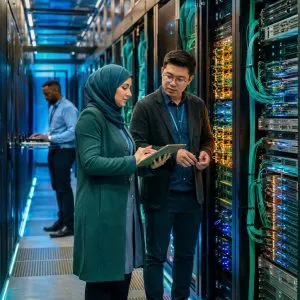
Digital Realty’s S$7 billion Singapore commitment, with S$4.3 billion specifically for new data center construction, is the largest reported single-operator colocation investment in Asia-Pacific as of May 2026. It is not a bet on Singapore’s domestic market alone — the city-state of 5.8 million people could not absorb that capacity internally. It is a bet on Singapore’s role as the connective tissue for a regional AI infrastructure boom that spans Southeast Asia, Australia, India, and Japan.
The investment reflects a structural shift in how enterprises consume cloud. For the first decade of cloud computing, hyperscalers — Amazon Web Services, Microsoft Azure, Google Cloud — built and owned the infrastructure their customers consumed. In 2026, a growing share of AI and mission-critical workloads is migrating to colocation facilities, where the operator provides the physical shell (power, cooling, connectivity, physical security) and the enterprise or cloud provider brings its own compute. Gartner projects that by 2027, organizations will use task-specific AI models three times more than general-purpose large language models — and task-specific inference workloads often demand the colocation model: dedicated hardware, predictable latency, compliance with specific data residency rules.
Singapore fits this model precisely. Its regulatory environment provides legal certainty for multinational data. Its carrier neutrality — supported by more than 20 active subsea cable landings — makes it the natural interconnection point for traffic between East Asia, South Asia, Southeast Asia, and the Pacific. Its track record on uptime, power grid reliability, and political stability justifies the premium pricing that colocation operators charge compared to public cloud compute.
What the S$7B Commitment Actually Signals
The scale and composition of Digital Realty’s Singapore investment carries several specific signals for enterprise architects and cloud strategy leaders.
The split between new builds and existing capacity: S$4.3 billion for new construction means Digital Realty is not primarily upgrading legacy facilities — it is adding fresh capacity designed from inception for AI-era power densities. Modern AI inference racks routinely draw 50-100 kW; training clusters run at 200-250 kW. Legacy colocation facilities designed for 10-20 kW racks cannot be economically retrofitted for these densities. New builds designed around liquid cooling from the ground up, higher floor load ratings, and high-capacity power distribution represent a qualitatively different product than 2018-era colocation.
The timing relative to hyperscaler land grabs: Microsoft announced approximately $5.5 billion for Singapore infrastructure in April 2026, spanning cloud capacity, cybersecurity, and skilling programs. Within the same nine-day period, both Microsoft Japan and Microsoft Singapore packages were confirmed. Digital Realty’s commitment arrives in the same window, signaling that the colocation and hyperscaler markets are not in competition — they are in parallel expansion. Enterprises that consume Microsoft Azure or AWS infrastructure in Singapore will often do so from Digital Realty’s facilities, because hyperscalers lease significant colocation capacity rather than owning all of their Asia-Pacific footprint.
The regional demand architecture: Malaysia committed MYR 28 billion ($7 billion) in data center investment by end of 2026. Amazon’s Australian presence reached nearly 1 GW (990 MW) in operational capacity. These are not isolated announcements — they are components of a regional AI infrastructure build that is proceeding faster in Asia-Pacific than in any other geography outside of Northern Virginia and Texas. Digital Realty’s Singapore hub functions as the regional core in this architecture: latency from Singapore to Kuala Lumpur, Jakarta, Manila, Mumbai, and Sydney is measured in single-digit milliseconds, making it the natural aggregation point for multi-market enterprises.
Advertisement
What Enterprise Infrastructure Leaders Should Do
1. Evaluate Colocation as the Primary AI Inference Tier Before Your Next Architecture Review
The traditional cloud architecture — provision everything through a hyperscaler API, pay for compute by the second — made sense for stateless web workloads and batch processing. AI inference at scale has different economics. A GPU instance on AWS or Azure in Singapore runs $3-6 per GPU-hour for on-demand pricing. A dedicated GPU cluster in colocation, amortized over 3 years, can run at $1.50-2.50 per GPU-hour at comparable specifications. The crossover point at which colocation beats cloud economics typically falls around 40-60% utilization over 24 months. If your AI inference workloads are stable and predictable — customer support triage, contract analysis, fraud scoring — the colocation model is worth modeling before your next infrastructure commitment. The Gartner projection that organizations will use task-specific models three times more than general-purpose LLMs by 2027 further accelerates this crossover: small task-specific models optimized for dedicated hardware outperform the same model on shared cloud compute by 15-25% in latency, which matters for customer-facing applications. Build your infrastructure decision model with three scenarios — 30%, 50%, and 70% utilization — and evaluate colocation only when the 50% scenario shows a clear 3-year total cost of ownership advantage over cloud on-demand pricing.
2. Negotiate Carrier Diversity as a Non-Negotiable Colocation SLA Term
Singapore’s carrier-neutral data centers connect to more than 20 active subsea cables. But not every facility in every provider’s Singapore campus has equal connectivity. When evaluating Digital Realty or any Singapore colocation provider, require a written commitment on the number of distinct subsea cable systems your facility connects to, the number of distinct internet exchange points (IXPs) available on-premises, and the latency SLA to your primary customer regions. A facility connected to only two or three cable systems is vulnerable to a single point of failure that the underlying Singapore reputation does not protect against. Carrier diversity is the actual infrastructure behind the “Singapore hub” narrative. Practically, this means requesting the Meet-Me Room (MMR) layout for your specific facility, not the campus-level connectivity overview that marketing materials typically show. Verify that your cage or suite has direct cross-connects available to at least three Tier-1 backbone providers without requiring cross-facility fiber hops that introduce additional latency and single-point risk. For enterprises serving Southeast Asian end users, latency commitments to Jakarta, Bangkok, and Ho Chi Minh City are more operationally meaningful than Singapore-local RTT metrics — insist that these be specified and committed in the SLA schedule rather than left as best-effort references.
3. Map Your Data Residency Requirements to Singapore’s Regulatory Framework Before Signing
Singapore’s Personal Data Protection Act (PDPA) and the Monetary Authority of Singapore’s Technology Risk Management (TRM) guidelines create specific requirements for financial and personal data. If your enterprise operates in multiple Southeast Asian jurisdictions — Indonesia’s Personal Data Protection Law (UU PDP), Thailand’s PDPA, the Philippines’ Data Privacy Act — Singapore colocation is not automatically compliant with all of them. Before committing to a Singapore colocation anchor, conduct a data flow mapping exercise that traces which data categories flow through Singapore infrastructure and whether that flow is compliant with the origin jurisdiction’s requirements. Digital Realty’s legal certainty advantage only holds where your data’s origin jurisdiction permits Singapore residency. A structured data classification exercise — mapping data types (personal, financial, health, communications) against applicable residency laws in each jurisdiction your enterprise operates — takes 4-8 weeks with a qualified privacy counsel team. This investment is non-negotiable before signing a 5-year, multi-megawatt colocation agreement in Singapore. Enterprises that discover cross-border transfer incompatibilities after signing will face either contractual penalties for premature exit or ongoing regulatory exposure — both materially more expensive than the upfront legal assessment. Build the data residency matrix before the commercial negotiation, not during it.
4. Lock In Capacity Commitments Before the 2027 Construction Backlog Arrives
Digital Realty’s S$4.3 billion in new Singapore construction will take 18-36 months to deliver. Combined with Microsoft, Amazon, and Malaysia-based build activity, the regional construction pipeline is absorbing all available specialized contractor capacity, power equipment lead times (currently 52-78 weeks for large transformers), and subsea connectivity slots. Enterprise infrastructure leaders who sign 3-5 year colocation agreements in 2026 will have priority access to new capacity and pricing before it is absorbed by hyperscaler lease-up. Organizations that wait until 2028 will be buying into a tighter market at higher prices. The Singapore premium for AI-grade colocation is rising, not falling.
The Bigger Picture
Digital Realty’s Singapore commitment is the clearest evidence yet that the AI infrastructure buildout has created a permanent, multi-decade demand signal for physical data center real estate in strategically located, politically stable jurisdictions. The hyperscaler build-or-lease dynamic that governs infrastructure economics in 2026 means that colocation operators with the right locations and the right power capacity are not intermediaries that will be disintermediated by cloud — they are foundational infrastructure that cloud providers depend on to expand faster than they can build.
For enterprise CIOs and infrastructure architects worldwide, the more important strategic question than “which cloud provider” is increasingly “where is my infrastructure physically located, who controls that physical layer, and what are the power, cooling, and connectivity specifications of that location.” Digital Realty’s $5.4 billion Singapore bet — combined with the regional investment wave from Malaysia, Australia, and Japan — is telling you that the answer to those questions in Asia-Pacific is converging on a small number of carrier-neutral, AI-grade colocation hubs. Singapore is at the top of that list. The cost of not having infrastructure there is rising faster than the cost of being in it.
Frequently Asked Questions
What is the difference between colocation data centers and hyperscaler cloud infrastructure?
Colocation data centers — like Digital Realty’s Singapore facilities — provide the physical infrastructure (building, power, cooling, security, connectivity) while clients bring their own servers, networking equipment, and software. Hyperscaler cloud infrastructure (AWS, Azure, Google Cloud) is owned end-to-end by the provider and sold to clients as virtual compute services. In 2026, many hyperscalers also lease significant capacity from colocation operators rather than building all their own facilities, making colocation a foundational layer beneath the cloud market itself.
Why is Singapore specifically attractive for AI infrastructure investment?
Singapore offers four advantages that are difficult to replicate: carrier neutrality (20+ subsea cable systems landing in-country), regulatory certainty for multinational data (PDPA, MAS frameworks that multinationals understand), political stability (consistent 5-year infrastructure investment horizon), and sub-10ms latency to all major Southeast Asian capitals. These factors combine to make Singapore the natural aggregation point for AI inference workloads serving Southeast Asia, South Asia, and Australasia simultaneously. No other single location in the region offers all four.
How should enterprise infrastructure leaders think about the build-versus-lease decision for AI workloads?
The economic crossover point between cloud (pay-per-use) and colocation (dedicated hardware, 3-year commitment) typically occurs at 40-60% sustained utilization over 24 months. AI inference workloads that are predictable — customer triage, document analysis, fraud scoring — generally justify colocation; exploratory or bursty training workloads are better served by cloud. Enterprises should model their 12-month GPU utilization pattern before committing to either model, and structure colocation agreements with 18-month exit options during the initial term to retain flexibility as AI workload patterns evolve.
—
Sources & Further Reading
🔗 Related Intelligence
Japan and Singapore: The New Regional AI Cloud Race

Singapore Agentic AI Governance: First Global Blueprint for Autonomous Systems

Singapore’s AI Skills Model: It Goes Beyond Engineers

Adani’s $100 Billion Bet: India’s Play for AI Data Center Supremacy