
🧭 Decision Radar
Relevance for Algeria
Medium, indirect
▾
Infrastructure Ready?
Partial
▾
Skills Available?
Partial
▾
Action Timeline
Define the use case first
▾
Recommended readers: Algerian agrifood buyers, agricultural project developers, climate-tech founders, investment teams
Decision Type
Educational and strategic
▾
Quick Take: The useful Algerian comparison is how to connect observations, project milestones and a defensible claim. Define what must be demonstrated before choosing a monitoring product or proposing local adaptation.
Capital for measurement and project expansion
CarbonFarm announced an oversubscribed €7 million Series A on October 13, 2026. The financing invites a practical question for anyone assessing agricultural climate technology: what connects a monitoring tool to a project that can be evaluated and financed? The useful starting point is the relationship between observation, project design and documented outcomes. A funding announcement is evidence of a financing event, while the agricultural and environmental results of any particular project require their own assessment.
Colam Impact led the round, according to CarbonFarm’s announcement. The investor information describes who backed the company; it does not establish the outcomes of every project the company may support. For a buyer, that distinction should shape the next conversation. Ask what evidence a proposed project would produce and how it would be assessed, rather than treating the financing itself as verification of a future environmental result.
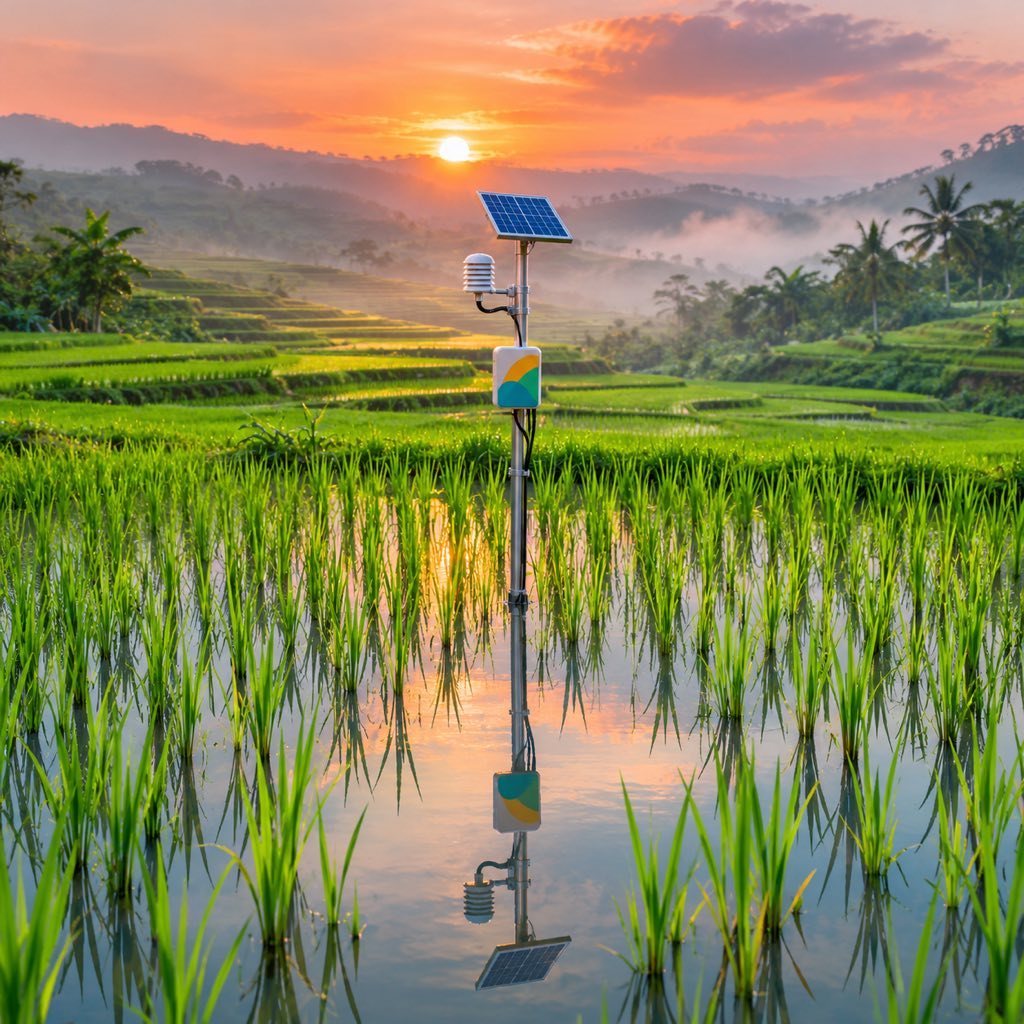
The monitoring approach is specific: CarbonFarm analyses satellite imagery with AI to monitor changes in rice cultivation. That is the verified description of the technology in this account. It does not supply a generic percentage reduction in methane or water use. Nor does it justify assuming that the same method will perform identically across crops and locations. The relevant evaluation question is what a particular observation can establish and where additional field evidence would be needed.
Geographic experience is different from completed project coverage
Suma Capital reports that CarbonFarm has operated in 19 countries. This indicates geographic experience, but it is not a count of countries in which every field or customer has been independently assessed. A prospective partner should ask which experience is relevant to its intended use and what records can be examined. Country coverage is useful background; it should not replace a close look at the conditions of the proposed project.
The large land figure needs an especially careful label. The SNV-developed TRVC project in Vietnam, in which CarbonFarm participates, targets 200,000 hectares of low-emission rice cultivation by 2028, according to Suma Capital. This is a project target, not land already covered by CarbonFarm. It also belongs to a project with a specified developer and location. Presenting it as CarbonFarm’s completed footprint would change both the ownership and the status of the claim.
For an evaluator, that distinction suggests a simple discipline: separate experience already reported from the next milestone a project intends to reach. Ask for progress records attached to the relevant project, rather than deriving achievement from the size of its target. A target may help explain the ambition behind an investment, but it cannot answer how much has been implemented or what outcomes have been demonstrated. Those are questions to resolve before using the target in an investment or purchasing decision.
Who is backing the expansion, and where it is directed
Suma Capital says it invested through SC Climate Tech Ventures I. That identifies the investment vehicle. Jeriko and Techmind renewed their backing in the Series A. The presence of returning investors adds detail to the financing story, without converting the company’s plans into completed activities. Readers should preserve that separation when judging what the investment announcement actually establishes.
CarbonFarm plans to deepen operations in Asia, Africa and Europe and expand in Latin America, according to Jeriko / Techmind. The regions describe a growth plan. They do not establish a project or customer in Algeria. For Algerian readers, the connection is therefore indirect: the case offers a way to examine how agricultural observation and project evidence are organised, rather than an announcement of a local deployment or a reason to presume one will follow.
Advertisement
Questions Algerian agrifood buyers and founders should put first
The useful comparison is a process for evaluating evidence. An Algerian buyer considering a supply-chain climate claim should ask what activity is being observed, what result is being claimed and how the two are connected. A founder considering a related product should ask the same questions before building a commercial promise around monitoring data. These are recommended lines of inquiry, not assertions about local crop coverage, available infrastructure or the current readiness of Algerian teams.
1. Define the claim before choosing the monitoring method
Write down exactly what a proposed project is supposed to demonstrate. Distinguish an observed cultivation change from a quantified environmental outcome, then ask what evidence would be required for each. Request an explanation of the method’s scope, the conditions in which it is intended to work and the review process for uncertain observations. This would help a buyer avoid ordering a broad climate promise when the proposed tool is designed to observe a narrower activity. It would also give a founder a clearer product brief: specify the claim that can be supported before choosing how to market the resulting data.
2. Tie project targets to explicit progress records
Ask the project developer to distinguish completed work, current monitoring and intended expansion in the same reporting format. Require the location and responsible project to remain attached to every coverage figure. For an Algerian buyer assessing an overseas supply-chain project, this would make the discussion more concrete: what has been implemented in the project under review, and what remains a target? Do not borrow the ambition of a larger programme as evidence for a smaller proposal. A clear progress record should let the evaluator see the difference without having to reconstruct it from an investor announcement or a promotional summary.
3. Make any local adaptation a separate evidence exercise
If an Algerian team wants to apply a similar monitoring approach, begin with a defined use case and a plan to assess whether the method fits it. Ask which observations would need local confirmation and what would count as a satisfactory result. Assign responsibility for reviewing the evidence before attaching a commercial or environmental promise to the work. This recommendation does not assume that a rice-specific approach transfers automatically to other crops or that a suitable local project already exists. It sets a boundary for experimentation: adaptation should earn its claims through evidence, rather than inherit them from an overseas financing story.
An investment case built around assessable evidence
CarbonFarm’s financing, reported geographic experience and stated expansion plans make this a story about the development of an agricultural monitoring business. The future project target helps describe the scale of ambition, provided it retains its project attribution and future status. None of those elements should be rewritten as a measured local environmental outcome.
For Algerian readers, the practical lesson is to design the evidence request alongside the proposed project. Specify the activity, the monitoring method, the outcome claim and the review responsibility before deciding whether to proceed. That approach makes the comparison useful even where the direct local connection is limited: it turns an overseas funding event into concrete questions for a potential buyer or builder, without inventing an Algerian deployment.
Frequently Asked Questions
What did CarbonFarm announce?
CarbonFarm announced an oversubscribed €7 million Series A led by Colam Impact. The company plans to deepen existing regional operations and expand in Latin America.
Is the rice-project surface already covered?
The land figure discussed here is the future target of the SNV-developed TRVC project in Vietnam, in which CarbonFarm participates. It is not presented as land already covered by CarbonFarm.
Does the announcement establish an Algerian project?
The reported facts do not establish a project or customer in Algeria. The local connection is an analytical comparison about evidence and potential adaptation, which would need its own assessment.
Sources & Further Reading
🔗 Related Intelligence
AI’s Carbon Backslide: How Hyperscaler Spending Is Reversing Green Commitments
The Environmental Regulation of Big Tech: Carbon Reporting, Scope 3 Emissions
Cotierra: USD 3 Million to Make Decentralised Biochar Repeatable

The Data Lakehouse Revolution: How Apache Iceberg and Delta Lake Are Reshaping Data