

 ALGERIATECH Editorial

Cybersecurity & Risk
Securing Remote Work in Algeria: VPN Usage, Endpoint Protection, and BYOD Challenges
The Remote Work Reality in Algeria Remote work in Algeria has evolved from an emergency response during COVID-19 into a structural feature of the labor market, particularly in the technology sector. According to the State of Algeria Dev survey, 16% of tech job offers in Algeria

Cybersecurity & Risk
Ransomware Preparedness for Algerian SMEs: A Practical 72-Hour Incident Response Playbook
The Ransomware Threat Algerian SMEs Cannot Ignore Algeria's small and medium enterprises are under siege. With over 1.2 million registered SMEs forming a major pillar of the national economy, these businesses are critical to Algeria's non-hydrocarbon growth.

Policy & Regulation
Government IT Procurement in Algeria: How Technology Tenders Work and Why They Often Don’t
The Scale of Government IT Spending The Algerian government is, by a wide margin, the largest buyer of information technology in the country. Across 69 wilayas, dozens of ministries, hundreds of public enterprises, and major agencies like Sonatrach, Sonelgaz, and Algerie

AI & Automation
PropTech in Algeria: How AI Is Disrupting Real Estate Valuation, Listings, and Urban Planning
Algeria's Housing Crisis Meets the Digital Age Algeria faces one of the most complex housing challenges in the Mediterranean basin. Between 2020 and 2024 alone, the government distributed 1.7 million housing units of various types, yet the demand shows no sign of abating — the

Policy & Regulation
Open Source as National Policy: Should Algeria Mandate Government Software Transparency?
The Cost of Proprietary Dependency Algeria's government runs on software it does not control. Across ministries, wilayas, and public enterprises, the technology stack is overwhelmingly proprietary: Microsoft Windows and Office dominate desktops, Oracle databases underpin

Skills & Careers
From Open Source Contributor to Hired: How Algerian Developers Are Building Careers Through GitHub
The Green Squares That Open Doors In a country where a computer science degree from a public university carries inconsistent weight with international employers, and where professional certifications can cost several months' salary, Algerian developers have found a credentialing

Skills & Careers
The Rise of No-Code Builders in Algeria: How Non-Technical Founders Are Creating Apps
Beyond the Developer Shortage Algeria has a developer shortage. While the country's university system produces thousands of computer science graduates each year across more than 20 institutions, that supply falls short for a market of 48 million people and an economy that is digitizing unevenly.

Policy & Regulation
Algeria’s Labor Code and Remote Work: The Legal Framework That Doesn’t Exist Yet
The Reality on the Ground Remote work in Algeria is widespread and entirely unregulated. Thousands of Algerian tech professionals -- developers, designers, data analysts, content creators, and IT support staff -- work from home for both Algerian employers and international clients.

Skills & Careers
Algeria’s IT Outsourcing Potential: Can the Country Become a Nearshore Destination for Europe?
The Market Algeria Is Missing The global IT outsourcing market is valued at approximately $540 billion in 2025, according to industry estimates from Statista and Coherent Market Insights, with nearshoring -- contracting software development and IT services to geographically

Policy & Regulation
Software and Intellectual Property in Algeria: What Developers and Startups Need to Know About IP Protection
The IP Framework Most Algerian Developers Have Never Read Algeria has a surprisingly comprehensive intellectual property framework on paper. Ordinance 03-05 of July 19, 2003, governs copyright and neighboring rights.
AI & Automation
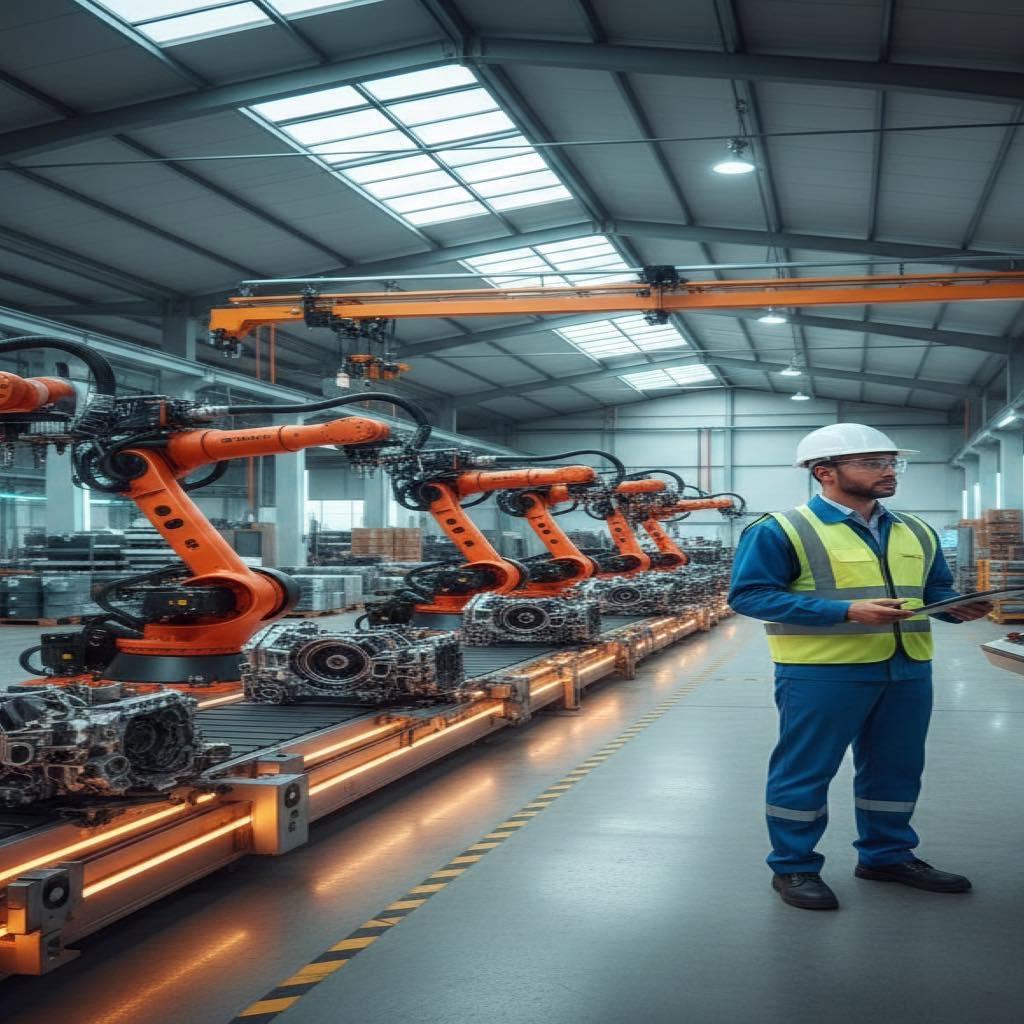
Industrial Robotics in Algeria: The State of Manufacturing Automation from Sonatrach to SNVI
Algeria's Robot Density Problem The International Federation of Robotics (IFR) tracks robot density — the number of industrial robots per 10,000 manufacturing workers — as the definitive measure of automation adoption. According to the IFR's 2024 report (covering 2023 data),