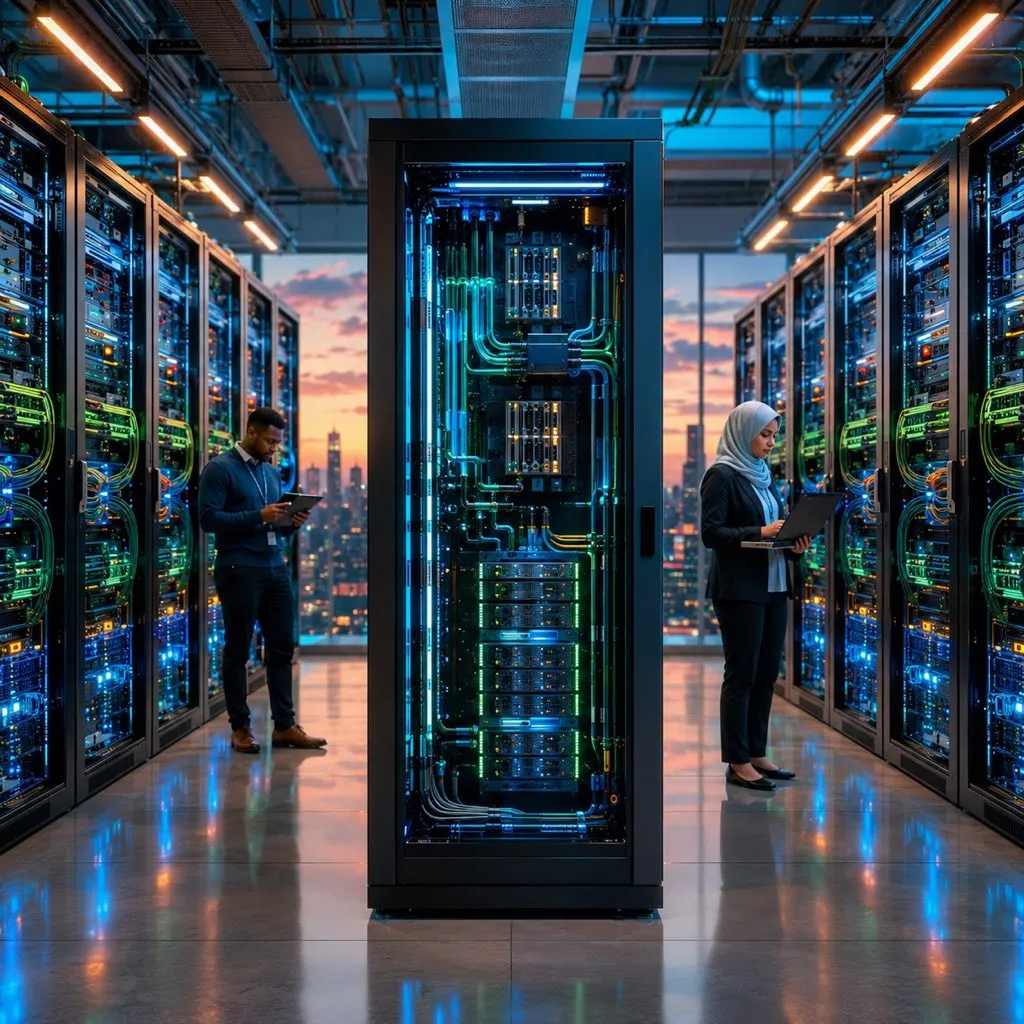
What the Akamai Deal Actually Signals
The headline number — $1.8 billion over seven years — is striking. But the more significant signal is architectural. Akamai is not a hyperscaler. It does not operate the kind of 500-megawatt mega-campus data centers that Microsoft and Google are racing to build. Akamai operates a distributed network of more than 4,000 points of presence across 135 countries, designed originally to cache and serve static web content close to users. The fact that Anthropic signed its largest-ever infrastructure contract with a CDN provider rather than a hyperscaler is a statement about where Claude’s inference workloads need to run.
Dario Amodei, Anthropic’s CEO, disclosed at the “Code with Claude” developer conference in May 2026 that Anthropic experienced 80x growth in annualized revenue and usage during Q1 2026 alone. That growth rate creates an infrastructure provisioning problem that centralized hyperscaler capacity cannot absorb fast enough — transformer lead times are running at 128 weeks, Northern Virginia interconnection queues stretch 7 years, and Microsoft alone has $80 billion in unfulfilled Azure orders because of electricity shortages, not demand weakness. Akamai’s distributed architecture sidesteps the centralized capacity bottleneck by running inference on existing edge infrastructure that already has power contracts, network connections, and physical presence in markets where hyperscaler data centers do not yet exist.
The deal supplements, rather than replaces, Anthropic’s existing compute partnerships with Google Cloud and SpaceX. Claude’s training will continue to require centralized, GPU-dense environments — that workload cannot be distributed to edge nodes. But inference — the process of running a trained model to answer a query, generate code, or complete an enterprise automation task — is increasingly separable from training. Edge inference trades raw throughput for latency: a query answered in 30 milliseconds from an edge node in Lagos or Algiers is worth more to an end user than the same query answered in 150 milliseconds from a data center in Virginia.
Why Edge Inference Is Different from Edge Compute
Edge AI inference is not the same as the “edge computing” discourse of 2018–2021, which mostly described small IoT sensors and industrial automation controllers. The 2026 version of edge inference operates at a fundamentally different scale and capability level.
Claude’s enterprise automation use case — the explicit application Akamai’s capacity is designed to support — involves processing large context windows (100,000+ tokens), executing multi-step reasoning tasks, and interfacing with enterprise APIs in real time. This is not a task for a Raspberry Pi at the factory floor. It requires GPU-accelerated compute nodes with significant memory capacity. Akamai’s edge infrastructure, upgraded over the past 18 months specifically for AI workloads, provides this at distributed locations — meaning an enterprise client in Frankfurt gets inference from a node in Germany, an enterprise client in Singapore gets inference from a node in Singapore, and neither routes their query and data through US-jurisdiction data centers.
The implications for enterprise compliance are significant. The EU’s GDPR, the EU AI Act’s provisions on high-risk AI systems, and data sovereignty regulations in markets from Saudi Arabia to Brazil all impose constraints on where AI processing can occur. Distributed edge inference — where Akamai’s node in-market processes the data without routing it to US infrastructure — provides a compliance architecture that centralized US-hosted AI inference cannot match. Anthropic’s deal with Akamai is as much a compliance infrastructure investment as it is a compute capacity investment.
Advertisement
What Enterprise CTOs and Infrastructure Architects Should Do
1. Audit Your AI Inference Routing Before the Architecture Locks In
Most enterprises that adopted Claude or other LLM APIs in 2024–2025 routed all inference through US-region API endpoints because those were the only options. As Akamai’s edge capacity comes online through 2026–2027, Anthropic will likely offer region-specific API endpoints for enterprise clients — similar to how AWS offers regional endpoints for GDPR compliance. CTOs should review their current AI API integrations and flag every workflow where data sovereignty or latency is a constraint. Document these now, before your architecture calcifies, so you can reroute to edge endpoints as they become available without a full re-architecture project.
2. Rethink “AI-Ready” Infrastructure Procurement in Terms of Network Proximity, Not Just GPU Count
The Akamai deal signals that GPU count is not the primary variable in AI infrastructure value. Network proximity — how close the inference node is to the end user or enterprise application server — is increasingly the differentiating factor for interactive AI workloads. Enterprise infrastructure architects who are currently speccing out “AI-ready” server purchases or cloud capacity expansions should include network latency to the AI API endpoint as a key procurement criterion. A GPU cluster that is 40 milliseconds closer to your application layer is worth more, for interactive enterprise automation, than a larger GPU cluster that is 120 milliseconds further away. This is a different evaluation framework than the one enterprise infrastructure teams used for batch processing or training workloads.
3. Evaluate CDN Providers’ AI Infrastructure Roadmaps as a New Vendor Category
The Akamai-Anthropic deal will not remain unique for long. Cloudflare, Fastly, and regional CDN operators have all announced AI inference roadmaps. Enterprise technology leaders should add “AI inference at the edge” to their vendor evaluation matrix as a formal category — distinct from hyperscaler cloud capacity, distinct from on-premises GPU servers. The evaluation criteria should include: number and geographic distribution of inference nodes, compliance certifications per region (SOC 2, ISO 27001, regional data sovereignty), model support (which LLMs can run at the edge), and SLA commitments for inference latency. Vendors that do not have concrete answers to these questions in 2026 will be late to the market in 2027.
4. Build Latency-Sensitive AI Features Now, Not After Edge Infrastructure Matures
The conventional enterprise technology adoption pattern — wait until the infrastructure is mature, then evaluate — does not apply to AI infrastructure. The enterprises that will capture value from edge inference are the ones building latency-sensitive AI features today: real-time enterprise copilots that respond in under 500 milliseconds, document analysis that completes during a user’s reading pause, automated enterprise workflows that chain multiple AI calls without perceptible delay. Building these features now, on current centralized infrastructure, creates the product and architectural experience that allows fast migration to edge infrastructure when regional endpoints become available. Enterprises that wait for edge infrastructure to mature before beginning product development will enter the market 18–24 months behind competitors who started building now.
5. Monitor the Akamai-Anthropic Network Topology for Regional Inference Availability
Akamai’s 4,000+ points of presence are not all equivalent. The AI inference capacity being built for Anthropic’s workloads will be concentrated initially in high-demand markets — North America, Western Europe, East Asia — before expanding to emerging markets. Enterprise technology leaders in markets not initially covered by the edge inference rollout (including much of Africa, South Asia, and Latin America) should monitor Anthropic’s and Akamai’s infrastructure announcements specifically for regional deployment timelines. The gap between centralized inference latency and edge inference latency is largest precisely in the markets furthest from US data centers — meaning the competitive advantage of edge access is greatest for enterprises in those markets, once it becomes available.
The Structural Lesson
The Akamai deal resets the mental model of what AI infrastructure looks like. The 2023–2024 era established the hyperscaler GPU cluster as the atomic unit of AI infrastructure — a concentration of 10,000+ H100s in a single location, connected to the internet via a fiber bundle. The 2025–2026 era is revealing that this architecture is the right unit for training but not necessarily the right unit for inference at global scale.
Akamai’s distributed model — inference close to users, training at scale in centralized facilities — mirrors how the internet itself was architected. The first generation of the web served content from centralized servers; the second generation added CDN layers that cached content at the edge. AI is following the same architectural arc, approximately 15 years later. The infrastructure model for intelligence is converging toward the infrastructure model for content: distributed, proximity-optimized, and increasingly invisible to the end user.
For enterprise CTOs, the implication is strategic: the hyperscaler relationship that currently defines your AI cost structure is one input to a multi-layer architecture, not the entire architecture. Regional edge inference, sovereign cloud deployments, and centralized hyperscaler training capacity will coexist — and the enterprises that understand how to compose these layers will build faster, more compliant, and more cost-efficient AI applications than those that treat the hyperscaler as the only answer.
Frequently Asked Questions
Q: Does the Akamai deal mean Anthropic is moving away from hyperscalers like Google Cloud?
No. The Akamai contract supplements, not replaces, Anthropic’s existing partnerships with Google Cloud and SpaceX. Training workloads remain centralized in GPU-dense hyperscaler facilities. The Akamai relationship specifically addresses inference workloads — running Claude to answer queries and complete tasks — where distributed proximity to users matters more than centralized compute density.
Q: Why did Akamai’s stock surge 26.58% on the deal announcement?
Akamai had been primarily known as a CDN and security company, with flat revenue growth in its legacy web delivery business. The Anthropic deal validated its strategic pivot into cloud computing and AI infrastructure, demonstrating that its distributed network architecture has a high-value application in AI inference — a market growing at 80x year-over-year for Anthropic alone. The market re-rated Akamai as an AI infrastructure company, not just a legacy CDN.
Q: What is the difference between AI training and AI inference, and why does it matter for infrastructure?
Training is the process of building an AI model from data — it requires massive, centralized GPU clusters running for weeks or months. Inference is the process of using a trained model to answer a query or complete a task — it can run on a single GPU node in milliseconds. Training requires centralization for coordination; inference benefits from distribution for latency. The Akamai deal is specifically about inference infrastructure, not training.
—
Sources & Further Reading
- Anthropic Signs $1.8 Billion Akamai Cloud Deal Amid Surging Claude AI Demand — Benzinga
- Akamai Stock AI Cloud Infrastructure Deal — CNBC
- Anthropic Inks $1.8 Billion Computing Deal with Akamai — Bloomberg
- Akamai Edge AI Inference — The New Stack
- Akamai, Anthropic Cloud Deal: AI Infrastructure — The Next Web
🔗 Related Intelligence

Edge AI and NPUs in 2026: How On-Device Inference Is Reshaping Enterprise Architecture

Edge AI Engineers: Why On-Device Inference Is 2026’s Hottest Career

Meta Deepens AI Infrastructure With 1B CoreWeave Deal

The Web Is Forking: How AI Agents Are Creating a Parallel Internet