Mohammedia Data Center: Algeria’s First Certified Cloud Facility
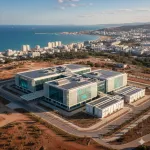
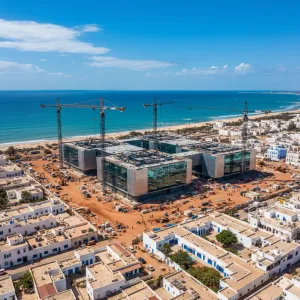
The Mohammedia data center, located in El Mohammedia southeast of Algiers, represents the operational anchor of Algeria’s sovereign cloud. Built through a partnership between the Haut Commissariat à la Numérisation (HCN) and a Huawei-led consortium, the facility was deployed in nine months and began serving government workloads as the country’s first purpose-built national data center.
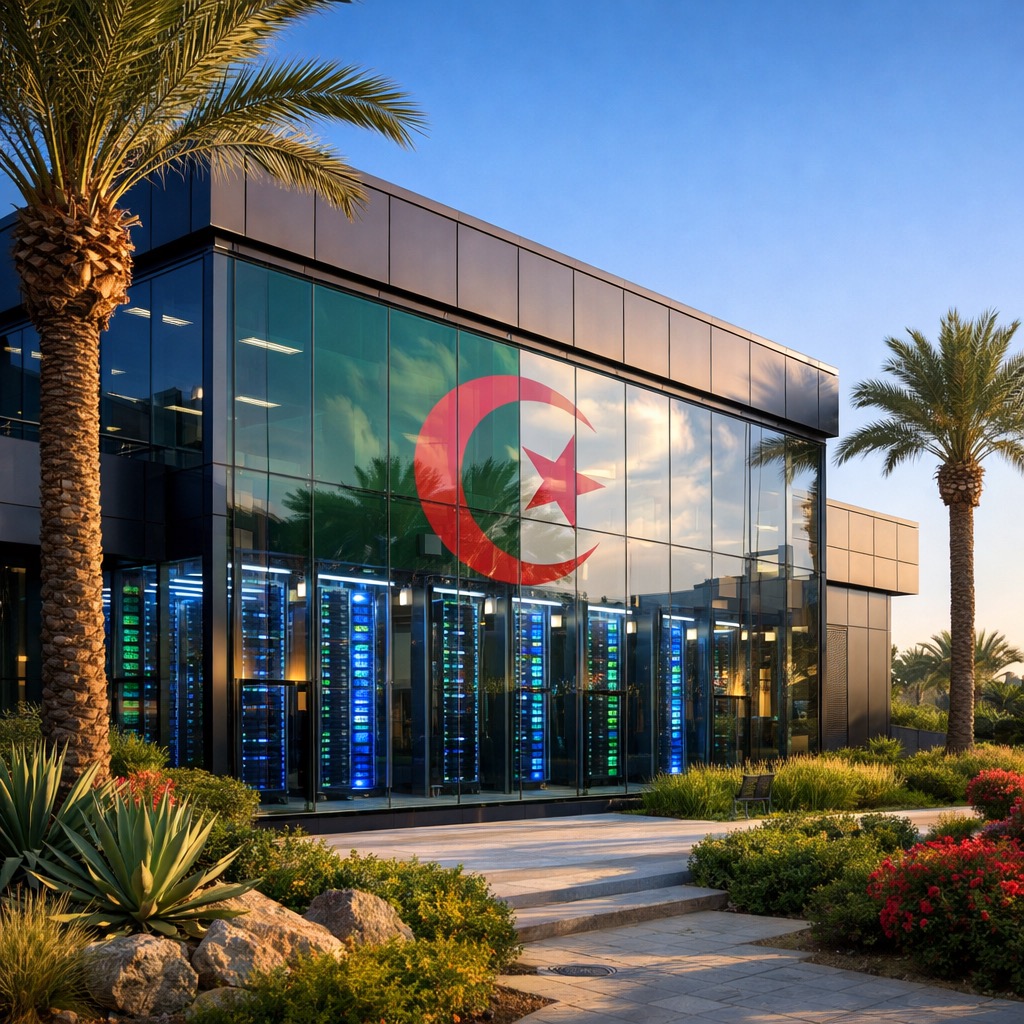
In February 2026, the Mohammedia facility became the first data center in Algeria to receive Tier III Design certification from the New York-based Uptime Institute. Tier III certification guarantees concurrently maintainable infrastructure with 99.982% expected uptime — meaning less than 1.6 hours of unplanned downtime per year. The facility features dual redundant power supply in N+1 configuration, precision cooling adapted to Algeria’s climate, and multi-operator fiber connectivity for low-latency access to national networks.
The facility hosts a range of government cloud workloads including ministerial information systems, a national database, an interactive government portal, and a national cloud platform. These services were previously scattered across aging hardware in individual ministry buildings — a setup that lacked the physical security, environmental controls, and power resilience that a dedicated data center provides.
A dedicated fiber optic network connects all 46 cabinet-level government ministries directly to the Mohammedia data center. This is purpose-built government infrastructure — not traffic routed over the public internet — providing secure, low-latency connectivity that enables ministries to run applications interactively from the centralized cloud. This consolidation marks a fundamental shift from distributed, ministry-level IT rooms to a centralized facility operating under consistent security and operational standards.
Blida Data Center: Geographic Redundancy Takes Shape
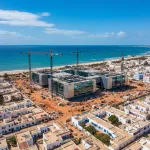
The second national data center in Blida, approximately 50 kilometers southwest of Algiers, is currently under construction. Meriem Benmouloud, the Haute-commissaire à la numérisation, launched the installation of the first unit of this second facility, which is designed to serve as both a redundancy site for Mohammedia and an expansion of sovereign cloud capacity.
The geographic separation between the two facilities is architecturally deliberate. At 50 kilometers, the Mohammedia-Blida distance falls within the practical range for synchronous data replication — where the round-trip light propagation delay through fiber (approximately 0.5 milliseconds) is small enough to maintain application performance while keeping real-time copies of data at both locations. In the event of a catastrophic incident at either site, services can fail over to the surviving facility with minimal data loss.
The Blida facility is being built with growth in mind. Algeria’s national digital transformation agenda includes over 500 projects planned for 2025-2026 implementation, with 75% focused on modernizing public services. These projects will collectively demand significant compute, storage, and networking capacity that a single data center may struggle to accommodate within a few years.
Advertisement
The Regulatory Foundation for Data Sovereignty
Algeria’s sovereign cloud strategy is backed by a layered legal framework that mandates data localization. The ARPT Decision No. 48 of November 2017 requires cloud hosting and storage service providers to establish their operations on Algerian territory and to host and store their data locally. This is not merely a guideline — it is a regulatory mandate enforced by the Autorité de Régulation de la Poste et des Communications Électroniques (ARPCE).
The framework extends further through Law 18-07 (2018), Algeria’s personal data protection law. Article 44 prohibits the transfer of personal data to a foreign state when it could harm public security or the vital interests of Algeria. Cross-border data transmission requires prior authorization from the ANPDP (National Authority for the Protection of Personal Data). E-commerce operators are separately required to host websites on Algerian territory using the .dz domain.
As of 2026, no major global hyperscaler — not AWS, not Microsoft Azure, not Google Cloud — operates a data center region on Algerian soil. The nearest hyperscaler regions sit in France and South Africa, each hundreds or thousands of kilometers away, in jurisdictions governed by their own data access laws. For Algerian government workloads, the sovereign cloud is the only option that meets both legal requirements and latency expectations.
What sovereignty costs is real: capital-intensive construction, lower utilization rates compared to commercial clouds, and the need for specialized talent commanding premium salaries in a scarce market. What it buys is control — over where data physically resides, who can access it, and under which legal authority. No foreign company can exit the Algerian market and take the infrastructure with it.
SNTN-2030: The Strategy Driving the Infrastructure
The sovereign cloud sits within the broader framework of Algeria’s National Strategy for Digital Transformation (SNTN-2030), unveiled in May 2025 by Benmouloud and structured around five strategic axes: digital infrastructure, human capital and training, digital governance, digital economy, and digital society. Two cross-cutting priorities — cybersecurity and legal framework modernization — support all five axes.
The HCN, created by Presidential Decree No. 23-314 in September 2023 as a public institution under the Presidency of the Republic, coordinates this strategy. Its mandate spans defining which workloads must be hosted on sovereign infrastructure, managing the Huawei technology partnership, overseeing facility construction, and establishing operational standards.
A flagship product of this strategy is Dzair Services, announced in October 2025 as a centralized portal for all public digital services. The platform relies on an interoperability system allowing public administrations to exchange verified data automatically — a capability that depends entirely on the sovereign cloud infrastructure running beneath it.
The SNTN-2030 sets ambitious targets: training 500,000 ICT specialists, reducing tech talent emigration by 40%, and boosting the digital sector’s GDP contribution. Achieving these targets depends on whether the physical infrastructure — now approaching readiness — can be matched by the platform services, operational maturity, and talent pipeline required to run a world-class cloud operation.
The Talent and Ecosystem Gap
Operating a Tier III data center requires skills that Algeria’s workforce has had limited opportunity to develop at scale. Facilities management, network operations, virtualization platform management, and cloud orchestration each represent distinct skill domains. Algeria’s universities produce strong IT graduates, but the gap between academic computer science education and enterprise data center operations remains significant.
Bridging this gap requires vendor-specific training (Huawei certifications in this case), hands-on operational experience, and knowledge transfer from international professionals. The HCN-Huawei partnership includes training programs for Algerian technical staff, but building a deep bench of sovereign cloud operators is a multi-year investment.
For Algeria’s private sector, the sovereign cloud creates tangible opportunities. System integrators can offer migration services. Managed service providers can deliver operational support. Software companies can build applications optimized for the sovereign platform. But this ecosystem development requires deliberate cultivation through procurement policies favoring domestic providers and training programs targeting the specific technology stack.
Frequently Asked Questions
What certification has the Mohammedia data center achieved?
The Mohammedia data center received Tier III Design certification from the Uptime Institute in February 2026, making it the first facility in Algeria to achieve this international standard. Tier III guarantees concurrently maintainable infrastructure with 99.982% expected uptime (less than 1.6 hours of unplanned downtime per year), featuring dual redundant power supply, precision cooling adapted to Algeria’s climate, and multi-operator fiber connectivity.
Which Algerian laws mandate government data localization?
Algeria enforces data localization through multiple regulations. ARPT Decision No. 48 (November 2017) requires cloud hosting providers to establish operations on Algerian territory and store data locally. Law 18-07 (2018) prohibits personal data transfer to foreign states without ANPDP authorization and blocks transfers that could harm public security. E-commerce operators must separately host on Algerian territory using .dz domains.
What opportunities does the sovereign cloud create for Algerian IT companies?
The sovereign cloud opens market opportunities across migration services (moving legacy ministry systems to the new platform), managed operations (providing ongoing support for government agencies), application development (building software optimized for the sovereign cloud stack), and training (developing curricula for the specific Huawei-based technology platform). Companies positioning now will have first-mover advantage as the ecosystem matures.
Sources & Further Reading
- Algeria’s Mohammadia Data Center Earns Global Tier III Certification — DzairTube
- Mohammadia Data Center Tier III Design Certification — Maghreb Emergent
- Algeria Launches Dzair Services to Centralize Public Digital Platforms — We Are Tech
- HCN-Huawei Data Center Agreement — WebServices.dz
- Algeria Aims for Full Digital Transformation by 2030 — We Are Tech
- Algeria Plans Over 500 Digital Projects by 2026 — MEA Tech Watch
- Data Protection and Cybersecurity Laws in Algeria — CMS Expert Guide
- Huawei Mohammadia Data Center Listing — DataCenterMap.com
🔗 Related Intelligence

Digital Algeria 2030: How the National Strategy Is Drawing Cloud Investment

Data Sovereignty in the Cloud: How Algeria’s Localization Laws Are Reshaping Enterprise IT
Algeria’s Cloud Market Will Hit $450 Million by 2035: What’s Driving the Growth
AI Infrastructure: Algeria Breaks Ground on Its First Data Center in Oran