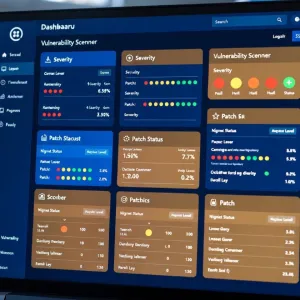
The Old SLA Model Was Built for Human Attackers
Enterprise vulnerability management has been organized around the same basic architecture for over a decade: receive CVE notifications, score severity, schedule patches by tier (critical within 30 days, high within 60 days, medium within 90 days), and measure compliance against those schedules. The model was calibrated for human attacker economics — a skilled exploit developer typically needs 4-12 weeks from vulnerability disclosure to a production-quality, weaponized exploit. The 30-day critical patch window was designed to beat that timeline with margin to spare.
Google’s May 11, 2026 disclosure eliminates that margin. The AI-built exploit targeting a 2FA bypass in a widely deployed web admin tool demonstrated a capability that the security industry had been modeling theoretically: an LLM-assisted pipeline that discovers a novel vulnerability and produces deployment-ready exploit code within a timeline that can be measured in hours, not weeks. The AI’s fingerprints were visible in the code — hallucinated CVSS scores assigned to the vulnerability it had discovered itself, unusually clean docstrings with educational commentary, and modular Pythonic structure consistent with code generation rather than hand-crafted exploit development.
SecurityWeek confirmed the operational significance: this was not a proof-of-concept demonstration or an academic red team exercise. It was a criminal group’s attempted mass exploitation campaign, intercepted before execution, using code that had been developed without any requirement for a human expert exploit developer. The distinction matters because it eliminates the talent bottleneck that previously constrained the attacker side of the equation.
Help Net Security’s analysis quantified the operational shift: for vulnerabilities in well-documented codebases with substantial training data representation, AI-assisted exploit pipelines can produce weaponizable code within 24-72 hours of the initial vulnerability discovery. For the CVSS 9.8 category of vulnerabilities — authentication bypasses, remote code execution without authentication, privilege escalation to root — this compression means that by the time a vendor issues a patch and an enterprise’s patch management process begins its approval workflow, an AI-generated exploit may already be deployed against unpatched systems.
Why 30-Day SLAs Are Now Structurally Broken for Critical Severity
The enterprise patch SLA model fails specifically at the CVSS 9.0+ end of the severity scale, for three structural reasons.
First, disclosure-to-exploit compression. The 30-day window assumed that attacker capability would constrain exploitation to a weeks-scale timeline after disclosure. AI exploit pipelines have removed that assumption. For critical authentication-related vulnerabilities in widely-deployed software, the realistic exploitation window is now 24-96 hours post-disclosure, not 30 days.
Second, approval workflow friction. Most enterprise patch management processes require change advisory board (CAB) review, testing in staging environments, maintenance window scheduling, and sign-off from multiple stakeholders before production deployment. For routine patches, this governance is appropriate. For CVSS 9.0+ vulnerabilities in internet-facing authentication systems, this workflow adds days to weeks of delay that the threat model no longer supports.
Third, detection-remediation coupling. Enterprises that cannot patch quickly tend to compensate with detective controls — monitoring, alerting, threat hunting. But AI-generated exploit code that is novel (zero-day) will not be detected by signature-based systems, and behavior-based detection requires time to train on the new attack pattern. The compensation mechanism fails precisely when the vulnerability is newest and most dangerous.
The Register’s reporting on the Google interception noted the intended scale: mass exploitation across thousands of servers simultaneously. AI-generated exploits are designed for breadth, not targeted precision — they are economic tools optimized to sweep the long tail of unpatched systems before defenders can respond.
Advertisement
What Enterprise Security Leaders Should Do About It
The following prescriptions address the patching model, the tooling layer, and the governance changes required to make velocity-based patching operationally feasible without creating unacceptable production risk.
1. Replace Time-Based Patch SLAs with Risk-Score-Triggered Velocity Targets
The metric “patch within 30 days of disclosure” is the wrong unit of measure for AI-era threat velocity. Replace it with: “CVSS 9.0+ internet-facing authentication vulnerabilities patched within 72 hours of vendor release.” This is a different SLA for a different threat tier. The 72-hour target forces a pre-authorized emergency patching workflow for the highest-risk category, bypassing CAB review that would otherwise add days. Organizations should define three tiers: Tier 0 (CVSS 9.0+, internet-facing auth/exec) = 72-hour mandatory; Tier 1 (CVSS 7.0-8.9, internet-facing) = 7-day target; Tier 2 (CVSS below 7.0 or internal only) = standard 30-day SLA. The key design principle is that Tier 0 patches bypass the standard approval workflow by pre-authorization — the CAB approves the policy once, not each patch.
2. Deploy Automated Patch Testing in Parallel with Production Authorization
The primary friction in emergency patching is testing time — enterprises fear that a rushed patch will break a production system. The solution is not to skip testing but to compress it by running automated regression suites in parallel with the authorization workflow. Organizations should maintain a continuously updated staging environment that mirrors production configurations, with automated test suites that can execute a basic regression in 4-8 hours. For CVSS 9.0+ patches, the test suite runs the moment the vendor releases the patch — not after authorization is complete. If the regression passes, production deployment begins immediately after authorization (which runs in parallel). This pattern can reduce the actual delay between patch release and production deployment from 5-7 days to under 24 hours for most critical patches.
3. Implement Compensating Controls for the Gap Period — Not as a Substitute
When a CVSS 9.0+ vulnerability is disclosed and a patch is not yet available, or when production patching cannot be completed within 72 hours due to operational constraints, compensating controls must be active for the specific attack vector. For authentication bypass vulnerabilities, this means: temporarily requiring MFA re-enrollment to ensure hardware FIDO2 keys are the active second factor (software TOTP may be bypassable by the same class of exploit), network-level blocking of anomalous authentication patterns from new IP ranges, and enhanced logging for the targeted service with real-time alerting on unusual access patterns. The critical error is deploying compensating controls as a permanent alternative to patching rather than as a short-term gap measure. Compensating controls decay in effectiveness as attackers adjust their techniques; only patching eliminates the vulnerability.
4. Instrument Your Patch Velocity as a Security Board Metric
Most enterprise security metrics reported to boards measure outcomes (number of incidents, mean time to detect) rather than operational posture (patch velocity by severity tier). In an AI-exploit environment, patch velocity for Tier 0 vulnerabilities is a leading indicator of breach probability — organizations that consistently patch CVSS 9.0+ vulnerabilities in under 72 hours have materially lower exposure to AI-driven mass exploitation campaigns than those on 30-day cycles. Security leaders should instrument this metric and report it quarterly alongside traditional incident counts. If the board can see that the organization achieved 94% of Tier 0 patches within 72 hours in Q1 2026, it can make informed risk decisions about the remaining 6% that required extended maintenance windows.
The Structural Question for Enterprise Security Architecture
The May 2026 Google interception represents a threshold event, not just a novel incident. The capability for AI to generate weaponizable zero-day exploits was widely expected by the security research community; what changed on May 11 is that it was confirmed to be in active criminal use, at scale, against real targets.
The structural question for enterprise security architects is not whether to patch faster — the answer to that is obviously yes — but whether the current enterprise architecture makes faster patching operationally achievable. Organizations with heavily customized, interdependent application stacks deployed on-premises have fundamentally harder patching problems than organizations running cloud-native services behind modern continuous deployment pipelines. The cloud-native organization can deploy a vendor patch to production in hours through an automated pipeline; the on-premises organization with manual change management processes cannot.
Cryptobriefing’s coverage of the Google AI zero-day noted that the exploit targeted a widely-deployed web administration tool — the kind of software used disproportionately by organizations that have NOT migrated to cloud-native architectures. This is not a coincidence: AI-generated mass exploitation is economically rational when the target population is large, the software is well-documented (enabling the AI to learn its vulnerability surface), and the patching velocity of the target population is low. On-premises, legacy-dependent organizations match all three criteria.
The medium-term enterprise security investment that the AI zero-day era demands is not more vulnerability scanners — it is modernization of deployment infrastructure to make rapid patching feasible. Organizations that cannot patch a critical authentication vulnerability within 72 hours because their deployment process requires a 2-week change management cycle have an architecture problem, not a security team problem.
Frequently Asked Questions
What is “patch velocity” and why does it matter more after the Google AI zero-day disclosure?
Patch velocity is the elapsed time between a vendor releasing a security patch and that patch being deployed in production across affected systems. Prior to AI-generated exploits, a 30-day critical patch window was sufficient because attackers needed weeks to develop weaponizable code after a CVE was disclosed. Google’s May 2026 disclosure confirmed that AI can compress that development timeline to hours, making the 30-day window structurally incompatible with the threat. Patch velocity for CVSS 9.0+ vulnerabilities must now be measured in hours, not days.
How can enterprises achieve 72-hour patching for critical vulnerabilities without breaking production systems?
The key is parallel execution rather than sequential: automated regression test suites run immediately when the vendor releases the patch, while the change authorization workflow runs simultaneously (not after). For organizations with pre-authorized Tier 0 emergency patching policies — where the CAB approves the policy once, not each patch — authorization adds hours rather than days. Organizations that cannot achieve this speed typically have architecture constraints (heavily customized interdependent stacks, no staging parity with production) that need medium-term investment to resolve.
What compensating controls are effective while waiting for an emergency patch to deploy?
For authentication bypass vulnerabilities of the type confirmed in the Google AI zero-day, the most effective compensating controls are: requiring hardware FIDO2 key re-enrollment as the active second factor (software TOTP may be vulnerable to the same class of exploit), network-level blocking of authentication requests from new or anomalous IP ranges, and enhanced real-time alerting on any unusual access patterns to the targeted service. These controls buy time but decay in effectiveness as attackers adjust — they are gap measures while the patch deploys, not permanent alternatives to patching.
—
Sources & Further Reading
- Hackers Used AI to Develop First Known Zero-Day Exploit — The Hacker News
- Google Detects First AI-Generated Zero-Day Exploit — SecurityWeek
- AI Vulnerability Exploitation and Initial Access — Google Cloud Threat Intelligence
- Google Says Criminals Used AI-Built Zero-Day in Planned Mass Hack Spree — The Register
- Google AI Zero-Day Exploit 2FA Bypass — CryptoBriefing
- Google AI Vulnerability Exploitation — Help Net Security
🔗 Related Intelligence

AI Zero-Day Factories: How APT Groups Now Automate Exploit Development at Scale

OpenAI Daybreak: AI-Native Vulnerability Detection Is Collapsing Enterprise Patch Cycles

Six Zero-Days Under Active Attack: Inside February 2026’s Most Dangerous Patch Tuesday

Microsoft June 2026 Patch Tuesday: 198 Vulnerabilities and 3 Actively Exploited Zero-Days