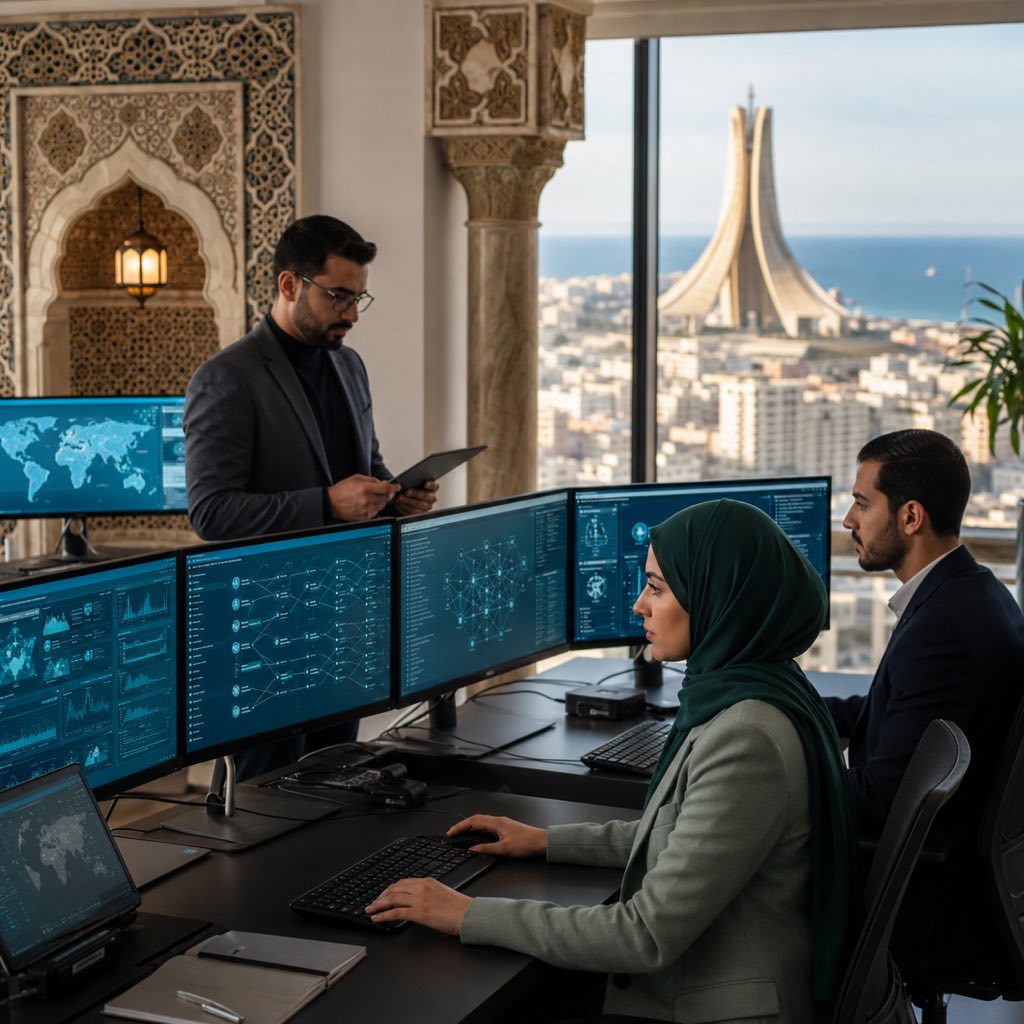
The 200,000-Role Gap Sitting Above Algeria
Africa’s cybersecurity talent shortage is structural, not cyclical. According to the EcoFinAgency’s 2026 report on African business cyber risks, cyber risks now rank as the top concern for African businesses, above macroeconomic volatility and supply chain disruption. The 200,000+ unfilled roles figure from the TechTrendsKE analysis is a conservative estimate — it covers formal cybersecurity positions, excluding the much larger population of IT generalists who cover security responsibilities without the skills or tools to do so effectively.
Algeria sits within this continental gap but with its own specific dynamic. Three forces are converging: Decree 26-07 (January 2026) mandating new cybersecurity units in every public institution, the expansion of private-sector digital infrastructure (cloud adoption, fintech API layers, e-government services), and a surge in Algerian-targeting cyber incidents documented by DZ-CERT in 2025-2026. Each of these forces creates new demand for cybersecurity skills that the current Algerian higher education and professional certification system cannot immediately absorb.
IT News Africa’s analysis of 2026 cybersecurity trends identifies the skills gap as the primary constraint on African organizations’ ability to implement even basic security controls — not budget, not technology, but human capacity. Organizations that lack trained security personnel cannot evaluate tools, configure them correctly, or respond to incidents when detection systems generate alerts.
For Algerian companies, the implication is practical: you cannot hire your way out of this gap if you are competing for the same certified professionals as Algeria’s banking sector, telecommunications operators, and public-sector institutions, all simultaneously mandated by Decree 26-07. The only viable path is building your own pipeline.
Why Standard Hiring Will Not Solve This in Time
The certified professional market in Algeria is small. Algeria has produced a limited number of CISSP, CEH, CompTIA Security+, and CISM holders relative to the size of its formal economy. Demand for these profiles has been rising faster than certification throughput for at least three years, driven by banking sector compliance requirements and, more recently, by Decree 26-07’s mandate to staff new public-sector cybersecurity units.
PECB’s 2026 analysis of African cybersecurity and AI trends identifies certification-based hiring as a necessary but insufficient strategy: the bottleneck is not access to certification exams but the pipeline of candidates with the foundational technical skills to pass them. Algeria’s IT education system produces a large number of computer science and networks graduates annually — the raw material for cybersecurity careers — but comparatively few graduate programs systematically prepare students for security-specific roles.
The result is a skills mismatch rather than an education deficit. Algeria has enough technically grounded graduates; it lacks structured pathways from graduation to operational cybersecurity readiness. Companies that understand this distinction can build pipelines rather than competing for a small pool of already-certified professionals.
Advertisement
What Algerian Companies Should Do to Close the Gap
The following playbook addresses three parallel tracks: university pipeline building, internal promotion of sysadmins and network engineers, and engagement with Algeria’s emerging certification infrastructure.
1. Engage CCA2026 and University Partners Before Competitor Firms Do
The University of Sétif and its engineering school have launched the Conference on Cybersecurity and Applications (CCA2026) — a research and industry-linkage event specifically designed to connect Algerian academic cybersecurity work with private-sector practitioners. This is the most direct access point for companies seeking to identify talent before it enters the certified professional market. Sending a technical recruiter to CCA2026 with a clear internship or junior analyst offer is measurably more effective than posting on LinkedIn for an “experienced CISSP.” Other engineering universities (ENSIA in Sidi Bel Abbes, USTHB in Algiers) have active cybersecurity research groups. Algerian companies that build relationships with thesis supervisors and offer final-year project sponsorships gain first-look access to strong candidates.
2. Build an Internal Sysadmin-to-Analyst Promotion Track
The most cost-effective cybersecurity hiring strategy for Algerian companies is not external recruitment — it is structured internal promotion. Linux and Windows sysadmins, network engineers, and help desk staff with 2-3 years of experience already understand the company’s infrastructure, know the normal baseline, and have the technical foundation for security-specific training. A structured 6-month upskilling track combining Security+ or CompTIA CySA+ self-study (materials cost approximately 15,000-25,000 DZD per candidate) with hands-on labs using open-source platforms (TryHackMe, HackTheBox) and one internal project (deploying a SIEM or running a vulnerability scan against company assets) produces an analyst ready for a junior security operations role. The promoted sysadmin also brings cultural knowledge of the organization that an external hire takes 12-18 months to acquire. For companies with 3+ eligible internal candidates, this track is often faster and cheaper than hiring externally.
3. Use ASIS Algeria’s Certification Framework as a Hiring Benchmark
ASIS Algeria’s certification programs provide a structured framework that Algerian employers can use both for hiring and for setting internal upskilling milestones. The ASIS certification pathways — from foundational security certifications to specialist tracks — align with the operational roles that Decree 26-07’s cybersecurity units require. Algerian companies that build job descriptions around ASIS-recognized competency levels gain two advantages: candidates understand what is expected of them and can self-screen, and HR departments have objective criteria for evaluating technical applicants without requiring deep security expertise in the hiring manager. ASIS Algeria maintains a directory of certified individuals that HR teams can use as an initial outreach list for specialist roles.
4. Hire Junior Analysts at Graduation and Invest in Certification Sponsorship
Junior analyst hiring — candidates at or within 12 months of graduation, with foundational networking and operating systems knowledge but no formal security certification — is the most scalable pipeline option in Algeria’s current market. The cost of sponsoring a CompTIA Security+ or CEH certification for a junior analyst is approximately 30,000–60,000 DZD including exam fees and study materials. This is less than 10% of the cost differential between a junior and a certified mid-level hire over 12 months. Companies that sponsor certifications with a 24-month employment commitment agreement build a pipeline of certified staff at predictable cost while reducing external hiring dependency.
5. Partner with DZ-CERT for Threat Intelligence Sharing and Staff Training
DZ-CERT conducts training programs and publishes advisories that small cybersecurity teams in the private sector can leverage without building internal research capacity. Companies that formally register as DZ-CERT participants gain access to sector-specific threat intelligence that individual consultants and certification programs do not provide — particularly relevant for Algerian-targeting campaigns. This partnership also gives junior security staff exposure to national-level incident response methodology, accelerating their operational development faster than purely certification-based training.
The Structural Lesson for Algerian Hiring Managers
The 200,000-role gap across Africa is not going to be filled by certification programs alone. Algeria’s portion of that gap — estimated at several thousand roles by analysts tracking Decree 26-07 implementation — will take 5-7 years to close through normal university-to-certification pipeline flows. Companies that wait for the market to self-correct will operate with chronic security understaffing throughout that period.
The Algerian companies that will be best positioned in 2028-2030 are those that treat cybersecurity talent as something to cultivate, not something to buy. The internal sysadmin promotion track costs less than one external hire. The CCA2026 relationship costs a recruiter’s travel expense. The junior analyst certification sponsorship costs less than a month of a certified mid-level analyst’s salary. None of these investments is large — but each builds a pipeline that compounds over time, unlike one-time external hires that leave when a competitor offers more.
Frequently Asked Questions
How severe is Algeria’s cybersecurity skills shortage compared to the rest of Africa?
Algeria shares the continental pattern identified in the TechTrendsKE 2026 report — at least 63% of Sub-Saharan African organisations lack adequate cybersecurity professionals, with 200,000+ unfilled roles continent-wide. Algeria’s specific pressure is amplified by Decree 26-07, which is creating simultaneous demand across all public institutions while the certified professional pool — CISSP, CEH, CISM holders — remains small relative to formal economy size. Banking sector compliance requirements have absorbed a significant portion of existing certified talent over the past three years.
What is the fastest path for an Algerian sysadmin to become a junior security analyst?
A structured 6-month track combining CompTIA Security+ or CySA+ self-study (15,000–25,000 DZD for materials) with hands-on labs on TryHackMe or HackTheBox and one internal security project — deploying a SIEM or running a vulnerability scan — produces an analyst ready for a junior security operations role. This timeline assumes 8-10 hours per week of study alongside normal work duties. Company-sponsored study time during business hours reduces the timeline to approximately 4 months for motivated candidates with a solid networking foundation.
What role does CCA2026 play in Algeria’s cybersecurity talent ecosystem?
CCA2026 (Conference on Cybersecurity and Applications), launched by the University of Sétif’s engineering school in 2026, is the primary industry-academic bridge in Algerian cybersecurity. It connects researchers, final-year students, and private-sector practitioners in a structured setting specifically designed to facilitate hiring and partnership relationships. For private-sector companies, sending a technical recruiter with a clear internship or junior analyst offer to CCA2026 is currently the most direct access point to identify strong candidates before they enter the certified professional market.
—
Sources & Further Reading
- Critical Cybersecurity Skills Gaps Threatening Africa’s Digital Growth — TechTrendsKE
- Cyber Risks Top Concerns for African Businesses in 2026 — EcoFinAgency
- 8 Key Trends That Will Define Africa’s Cyber Security Landscape in 2026 — IT News Africa
- Cybersecurity and AI Trends for 2026 in Africa — PECB
- Launch of the Conference on Cybersecurity and Applications CCA2026 — University of Sétif
🔗 Related Intelligence

Cybersecurity Careers Algeria: How the 2025-2029 Strategy Reshaped Demand

The Global Cybersecurity Skills Crisis: What Algeria Must Teach Now

Africa’s Cybersecurity Skills Crisis: Closing the 3,153 Attacks-Per-Week Talent Gap

Algeria’s New Cybersecurity Competency Certifications: An Employer Recognition Guide