🧭 Decision Radar
Relevance for Algeria
Medium
▾
Infrastructure Ready?
Unassessed
▾
Skills Available?
Unassessed
▾
Action Timeline
Monitor only
▾
Algerian farm operators, agricultural equipment buyers, agricultural training providers
Decision Type
Operational
▾
Quick Take: For an Algerian farm considering autonomy, ask for a complete operating demonstration and a written account of human responsibilities. The reported commercial activity is a starting point for evaluation; it establishes neither local approval nor a quantified saving.
An award for the work between spraying runs
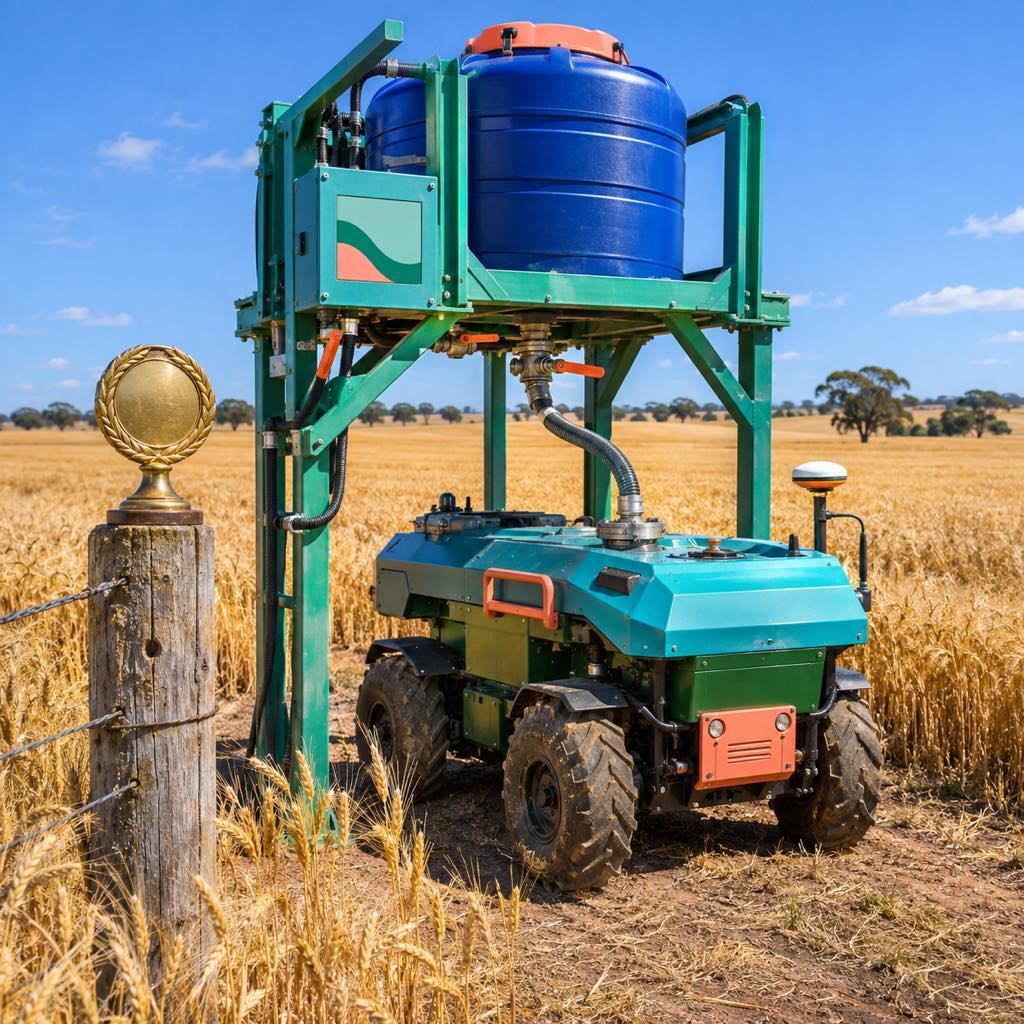
SwarmFarm AutoFill won the Henty Machine of the Year Award on September 22, 2026, according to Region Riverina. The useful editorial angle is the refilling step itself. A purchase decision should examine how a machine returns to productive work after a stop, rather than treating its ability to move through a field as a complete description of autonomy.
The award followed an assessment of eight shortlisted entries by an independent panel of five regional primary producers, Region Riverina reports. That establishes the context of the recognition. It does not establish a measured saving, a universal operating advantage or suitability for every farm. An award can justify closer examination without replacing the operator’s own acceptance criteria.
This is a story about recognition and reported commercial progress, not a claim that the product has just launched. For an agricultural buyer, the distinction changes the questions worth asking: what has been used, what remains scheduled, and which parts of the proposed workflow have actually been documented? None of those questions should be answered by extrapolating from the award alone.
Reported commercial use, with clear limits
Henty Machinery Field Days reports 14 AutoFill systems deployed with commercial customers. This is a deployment figure from its September exhibitor coverage. It should be read as reported commercial presence, without turning it into a current inventory or an independently audited measure of customer satisfaction.
The same coverage describes a further 30 systems scheduled for delivery in the coming months. Scheduled delivery belongs in a separate category from deployment. A prospective customer should ask whether a quoted machine is available, what an installation requires, and how delivery commitments would be confirmed. The reported schedule alone cannot answer those procurement questions.
Henty also reports more than 1500 automated refill events during commercial field operations. This provides a concrete activity measure. It is not, by itself, an operating success rate: the reported count does not supply a comparable record of attempted cycles, interruptions or human interventions. It should not be converted into a reliability percentage or a forecast of labour savings.
Taken together, the reported deployments, future deliveries and refill events describe different things. They should remain separate in an investment memo. Combining them into a single impression of proven scale would obscure exactly the information a buyer needs to assess execution risk.
The task extends beyond connecting a tank
The Riverine Grazier reports that AutoFill measures, mixes and loads products before the robot resumes work. That description suggests evaluating the handover between replenishment and field work as a sequence. The buyer should request a demonstration of the complete sequence, including the conditions under which an operator must take responsibility again.
The same outlet says AutoFill can also connect to self-propelled or tow-behind machines. This is a reported connection capability, rather than confirmation that every existing machine will work with it. Any compatibility assessment should identify the exact equipment, the proposed connection and the evidence supporting that specific pairing.
The Riverine Grazier places the development period at more than five years. Development duration supplies background, not a substitute for acceptance testing. A long development effort should prompt detailed questions about what has been learned and documented; it should not be treated as automatic proof that every operational exception has been resolved.
Advertisement
What Algerian farm operators should put in an evaluation
1. Specify the whole operating cycle
Start with the work the farm wants completed, then describe every transition that must happen before the machine can continue. Ask the supplier to show the movement from field task to refilling and back, and to identify the moments that still require a person. Record what counts as a completed cycle and what would interrupt acceptance. This is a proposed evaluation method, not a claim about demonstrated local performance. For an Algerian buyer, its value is to keep an attractive autonomy label from displacing the practical question of who remains responsible when the normal sequence stops.
2. Request evidence on handling and exceptions
Ask how the proposed installation would handle the products and equipment the operator intends to use. Request written procedures for preparation, loading, interruption and resumption, together with a clear assignment of responsibilities. Seek evidence for each relevant use rather than assuming that the reported ability to mix and load products covers every application. The available claims establish no approval for a particular chemical or autonomous system in Algeria. A feasibility review should therefore keep technical capability, safe operating procedures and any applicable permissions as distinct questions to resolve before an operational commitment.
3. Build an operating case before a purchase case
Request an explanation of costs, support, maintenance and intervention requirements specific to the proposed installation. Ask for operating records that distinguish completed refills from attempted refills, and routine replenishment from exceptional stops. Compare the supplier’s account with the buyer’s own work requirements before assigning a value to reduced waiting or changed staffing. No quantified saving is established by the supplied claims. A disciplined decision can still move forward as an information-gathering exercise, with adoption conditional on evidence rather than on a borrowed productivity assumption.
A practical acceptance record could separate observed behaviour, supplier statements and unanswered questions. For every relevant stage, ask the evaluator to record what was shown, what supporting document was provided and what still needs a further demonstration. Avoid treating silence about an exception as evidence that the exception cannot occur. This would make the eventual recommendation reviewable by someone who did not attend the demonstration and would help keep enthusiasm for the concept separate from the proposed installation’s actual evidence.
The buyer should also decide in advance what would lead to postponement. An unclear responsibility, undocumented compatibility or an unresolved handling question should have an explicit consequence in the evaluation process. This is not a finding that such problems exist in AutoFill; it is a suggested way to avoid a purchase decision resting on assumptions. If the evidence supports only a limited trial, describe that limit clearly. If it supports a broader commitment, explain which questions have been resolved and retain the records that support that judgment.
The relevant boundary is between tasks
The strongest lesson for Algeria is a question about workflow design, not a forecast of local adoption. If autonomy is the objective, an evaluation should include the supporting tasks that let the main machine continue. An impressive field demonstration would remain incomplete as purchasing evidence if the buyer had no clear account of replenishment, responsibility and recovery from interruptions.
AutoFill’s recognition gives that question a concrete example. The reported commercial figures justify asking for operational detail, while their limits explain why a local decision still needs its own evidence. Treat the award as a reason to investigate the workflow, and keep deployment, delivery intentions and performance proof in separate columns until the proposed installation can be judged on its own terms.
Frequently Asked Questions
What did AutoFill win?
It won the Henty Machine of the Year Award. The recognition is the news event, rather than an initial product launch.
Are the scheduled systems already deployed?
No: the coverage distinguishes deployed systems from prospective deliveries. The schedule should remain a forward-looking statement.
Does the award establish readiness for Algeria?
No local readiness or approval is established in the supplied claims. A buyer would still need evidence specific to the equipment, products and operating procedures proposed.
Sources & Further Reading
🔗 Related Intelligence

AI Agent Frameworks Compared: LangChain vs CrewAI vs AutoGen vs LlamaIndex

Self-Driving Robot Labs: When AI Runs the Experiments

Beyond Copilot: Cursor, Windsurf, and the 2026 AI IDE Arms Race

Emerald AI’s $150M Series A: Betting That the Grid, Not the Chip, Is the Real AI Bottleneck