🧭 Decision Radar
Relevance for Algeria
Medium
▾
Infrastructure Ready?
Partial
▾
Skills Available?
Partial
▾
Action Timeline
6-12 months
▾
Ministry of Post and Telecommunications, Ministry of Energy, Sonelgaz, ARPCE, Algeria Venture, enterprise IT and cloud procurement leads
Decision Type
Operational
▾
Quick Take: Two straight years of US electricity demand records, concentrated in strained regions like Texas, is now a direct cost and reliability input for anyone running AI workloads on US-hosted cloud infrastructure — and a competitive opening for power-rich, under-tapped markets like Algeria to court the hyperscaler capacity that a strained US grid can no longer absorb as easily.
Two Consecutive Record Years, Not One Spike
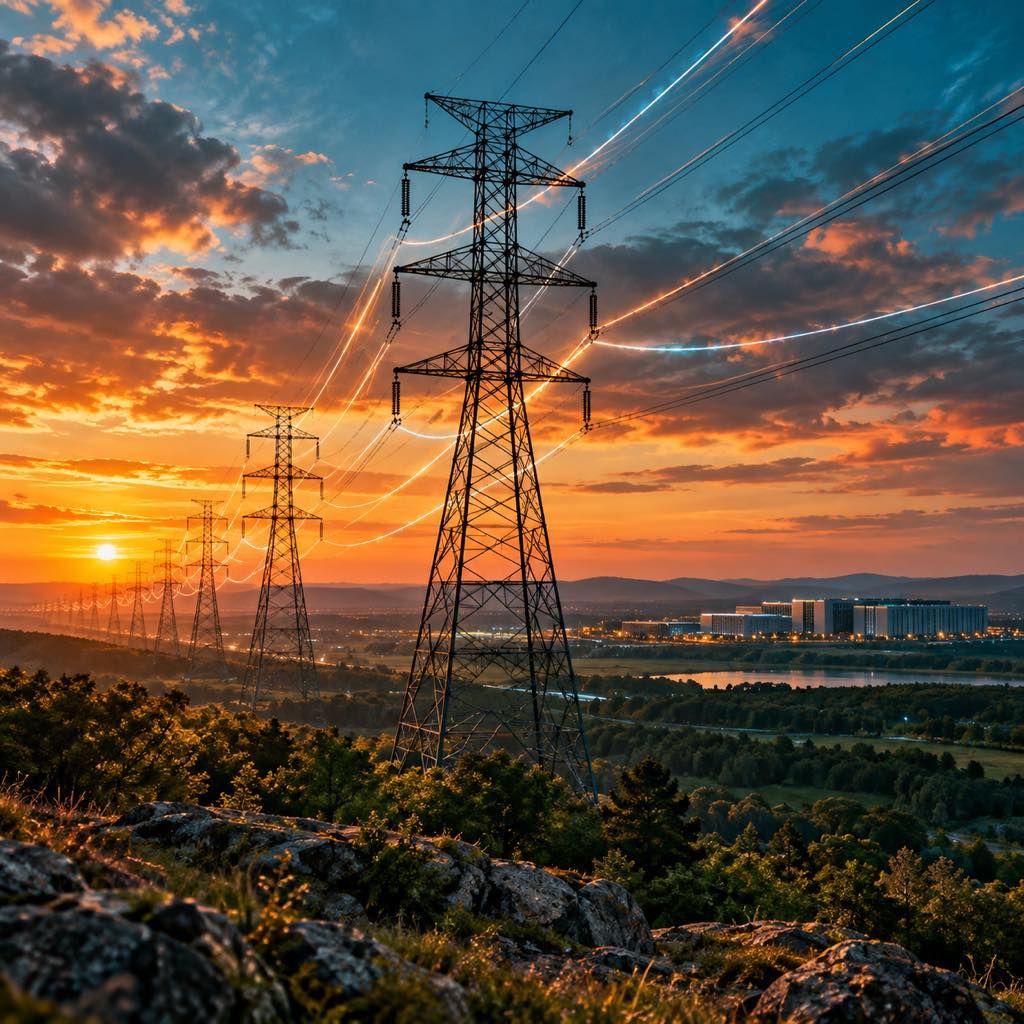
Electricity demand forecasts are usually dull reading — incremental growth, seasonal noise, the occasional weather-driven spike. The EIA’s latest outlook is not that. It projects US power consumption rising in a straight line through two consecutive record-breaking years: 4,270 billion kWh in 2026, then 4,349 billion kWh in 2027, both above the already-record 4,195 billion kWh logged in 2025. The EIA separately confirms electricity sales alone reaching 4,135 billion kWh in 2026 and 4,211 billion kWh in 2027, roughly 2% annual growth each year.
The EIA attributes the surge to two overlapping forces: data centers built specifically for AI and cryptocurrency workloads, and a broader electrification trend as homes and businesses shift more heating and transportation load onto the grid and off fossil fuels. Sector by sector, the EIA expects 2026 power sales of 1,527 billion kWh to residential consumers, 1,542 billion kWh to commercial customers, and 1,059 billion kWh to industrial customers — growth spread across the whole economy, not concentrated in a single category. A related American Public Power Association analysis of the same EIA outlook notes commercial-sector electricity sales are on track to exceed residential-sector sales for the first time in 2026.
Where the Strain Shows Up First
National totals mask the real story, which is regional and acute. The West South Central region — anchored by Texas — accounts for the largest share of total US electricity sales growth in the EIA’s forecast, and it is also where the AI data center buildout has run furthest ahead of the grid’s ability to absorb it.
ERCOT, the Texas grid operator, is now considering roughly 474 gigawatts of connection requests — more than five times Texas’s record peak electricity demand for ERCOT — with data centers responsible for approximately 90% of that requested new load, according to Governor Abbott. The mismatch between requested and deliverable capacity became untenable enough that Texas paused the process: Governor Greg Abbott directed the Public Utility Commission of Texas and ERCOT to conduct a comprehensive audit and verification of every data center project moving through the interconnection queue, citing data centers’ failure to comply with a state survey on water and power usage. ERCOT suspended its “Batch Zero” large-load classification notifications — the mechanism for evaluating a group of proposed data centers together — that had been scheduled for 7 August 2026, pending that review.
This is not a rejection of data centers. Senate Bill 6, signed into law in 2025, already established disclosure and curtailment obligations for large loads of 75 MW or more; the current pause is a tightening of verification, not a reversal of the buildout.
Coal Down, Gas Steady
The generation mix shifting to meet this demand tells its own story. The EIA expects coal’s share of US power generation to decline from 17% in 2025 to 16% in 2026 and 14% in 2027, while natural gas holds steady at 40% across all three years. In practice, incremental AI-driven demand is being met overwhelmingly by natural gas and new capacity additions rather than by a coal resurgence, reinforcing gas’s position as the marginal fuel for US grid growth through the AI buildout.
Advertisement
What This Means for Global Businesses Relying on US Cloud Infrastructure
For any business — Algerian or otherwise — that depends on US-hosted cloud infrastructure, this is not an abstract domestic US energy story. It is a direct input into cloud pricing, reliability, and where hyperscalers site the next generation of AI capacity.
1. Expect cloud AI pricing pressure to persist, not fade, through 2027
Rising wholesale electricity costs in constrained US regions, combined with the interconnection delays now hitting Texas specifically, put continued upward pressure on the cost of running AI workloads in US data centers. Algerian and African businesses budgeting for US-hosted AI services (cloud inference, training, API access) should plan for pricing that reflects real power scarcity, not the assumption that compute costs will simply follow historical software-cost curves downward.
2. Reliability risk is now geographically concentrated — diversify hosting accordingly
With ERCOT’s queue five times oversubscribed and a state-level audit pausing new connections, Texas-sited cloud capacity carries elevated near-term reliability and expansion risk relative to less strained US regions. Algerian enterprises with meaningful dependence on a single US region for critical AI or cloud workloads should map that exposure and consider multi-region or multi-provider redundancy.
3. Watch this as the leading indicator for when — and where — hyperscalers will next expand into new markets
Grid strain in the traditional US hubs is one of the forces pushing hyperscalers to diversify data center siting globally, including toward regions with underused power capacity. Algeria’s gas-plus-solar power profile is a genuine asset in that conversation; national planners should track EIA and ERCOT-style capacity data as an early signal of where global cloud investment is likely to look next, and position accordingly rather than reactively.
The Structural Takeaway
Two consecutive record years of US electricity demand, concentrated in a handful of grid regions already straining under existing load, confirms that AI’s power appetite is now a first-order variable in global cloud economics — not a side effect. For any country or company planning around foreign-hosted AI infrastructure, the EIA numbers are a reminder that the physical grid, not the software layer, is increasingly the constraint that will determine cost, availability, and where the next wave of capacity gets built.
Frequently Asked Questions
How much is US electricity demand expected to grow in 2026 and 2027?
The EIA forecasts US power consumption rising from a record 4,195 billion kWh in 2025 to 4,270 billion kWh in 2026 and 4,349 billion kWh in 2027 — two consecutive record years, driven substantially by AI and cryptocurrency data centers alongside broader electrification of heating and transportation.
Why is Texas the epicenter of the strain?
ERCOT, the Texas grid operator, is fielding about 474 GW of connection requests — more than five times the grid’s actual peak demand — with data centers responsible for roughly 90% of that. Governor Greg Abbott ordered a comprehensive audit of data center projects in August 2026, and ERCOT suspended its “Batch Zero” large-load classification process pending that review.
What does this mean for businesses outside the US relying on US cloud infrastructure?
Rising and geographically concentrated power constraints put continued upward pressure on US cloud AI pricing and raise regional reliability risk, particularly for capacity sited in Texas. It also strengthens the case for power-rich markets like Algeria to position themselves for hyperscaler expansion as US grid constraints push global cloud investment to diversify.
Sources & Further Reading
- US power use to beat record highs in 2026 and 2027 as AI use surges, EIA says — via Lee Enterprises
- US Power Use Hits Record Highs in 2026-2027 on AI Demand — Hoodline
- Facing an estimated 474 GW of interconnection requests, Texas hits pause on data centers — Utility Dive
- Governor Abbott Directs Comprehensive Data Center Audit — Office of the Texas Governor
- EIA expects record electricity generation in 2026 and 2027 — Press Release
- EIA Sees Commercial Sector Electric Sales Exceeding Residential Sector for First Time in 2026 — American Public Power Association
🔗 Related Intelligence

EPRI: US Data Centers Could Eat 17% of National Power by 2030 — The Grid Is Now the AI Bottleneck
AI’s Energy Crisis: The Trillion-Dollar Power Problem Behind the AI Boom
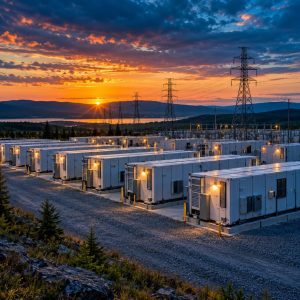
Global Energy Transition Investment Hit a Record $2.3 Trillion as AI Data Centers Reshape Where the Money Goes