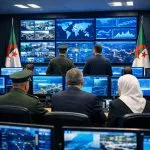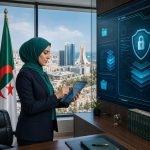
A National Mandate That Creates a Market
When the Official Gazette published Presidential Decree No. 26-07 on January 21, 2026, the headline was governance. The lasting effect is economic. By requiring every public institution, administration, and supervised agency to build a dedicated cybersecurity structure, the decree turns a strategic ambition into hundreds of simultaneous, well-defined procurement needs — and it does so on a recurring basis, because security is an operating function, not a one-time project.
According to Ecofin Agency’s reporting on the decree, the new unit must be kept separate from the team that handles the technical day-to-day management of IT systems, and it reports directly to the head of the institution. That separation matters commercially: it means institutions now need dedicated tooling, dedicated staffing, and outside expertise — not just an extra task added to an overstretched IT desk. Each of those gaps is a service line a local provider can fill.
The timing aligns with rising demand. Kaspersky data cited across coverage of the decree shows Algeria faced more than 70 million cyberattacks in 2024, ranking 17th globally among the most-targeted countries, with over 13 million phishing attempts blocked and nearly 750,000 malicious email attachments neutralized. As public services digitize, building in-house and partner capacity to manage that volume is exactly the kind of structured, budgeted work the decree now formalizes.
What the Decree Requires — and the Services It Implies
The decree is precise about each unit’s missions, and each mission maps to a market opportunity for Algerian providers:
- Policy and governance — units must develop and oversee the institution’s cybersecurity policy. This creates demand for advisory and vCISO-style services, policy frameworks, and governance consulting.
- Risk mapping — units must build a risk map covering information systems and personal data. This is recurring assessment work: gap analyses, asset inventories, and risk registers.
- Remediation plans — identified risks require structured remediation, opening implementation and integration projects for local engineering firms.
- Continuous monitoring and audits — the decree calls for ongoing monitoring and regular audits, the textbook profile of a managed security service provider (MSSP) or SOC-as-a-service contract.
- Incident reporting — units must notify competent authorities of incidents without delay, which favors providers who can deliver incident-response retainers and forensics.
There is also a procurement dimension with direct commercial weight. Per We Are Tech Africa, units are expected to coordinate with public procurement and internal security bodies to integrate cybersecurity clauses into outsourcing contracts. In practice, that means security requirements become a standard part of public tenders — and vendors who can demonstrate compliance-ready offerings will have a structural advantage in bidding.
This sits within a coherent national framework. Algeria’s first National Strategy for Information Systems Security 2025-2029, published March 3, 2026 by the Agence de la Sécurité des Systèmes d’Information (ASSI) and validated by President Abdelmadjid Tebboune, sets the direction; Decree 26-07 supplies the operational mandate that pulls budgets and tenders toward it.
Advertisement
Sizing the Opportunity
The market math is encouraging for local firms. According to Statista’s Algeria cybersecurity forecast, the national cybersecurity market is projected to grow at a 7.24% CAGR through 2024-2029, reaching a volume of US$183.40 million by 2029. A public-sector mandate of this breadth is precisely the kind of demand catalyst that can push actual growth toward — or above — that baseline, because it converts discretionary security spending into mandated, line-item budgets.
The services mix favors recurring revenue. Globally, the managed security services provider (MSSP) market is valued at US$286.13 billion in 2026 and projected to reach US$596.24 billion by 2035 at an 8.5% CAGR — a signal that the highest-growth segment worldwide is managed, subscription-style security, not one-off product sales. Algerian providers who build MSSP and SOC-as-a-service capabilities are positioning for the same structural tailwind, now with a domestic public-sector customer base mandated to buy.
What Algerian Cybersecurity Firms Should Do
The decree rewards providers who move from product reselling toward structured, compliance-aligned services. Here is how to position for the demand it creates.
1. Package your offering around the decree’s five missions, not around products
Map your catalog directly to policy development, risk mapping, remediation, monitoring/audit, and incident reporting. A public institution standing up a unit will buy against those headings — a vendor whose proposal mirrors the decree’s language is far easier to evaluate and approve. Build a named service for each mission, with a clear deliverable, timeline, and recurring component, rather than selling boxes and licenses.
2. Build MSSP and SOC-as-a-service capacity for the recurring lines
Continuous monitoring and regular audits are explicitly required and are inherently recurring. That is where durable revenue lives. Invest in a managed detection-and-response capability you can offer as a multi-year contract, with clear service levels. The global shift toward managed security (8.5% CAGR) confirms this is the segment to anchor on — and a mandated public-sector buyer makes it viable to build that capacity locally.
3. Make compliance-readiness your differentiator in public tenders
Because cybersecurity clauses are being woven into outsourcing contracts, the firms that win will be the ones who can show, on paper, that their service meets the decree’s requirements and aligns with the 2025-2029 national strategy. Prepare a compliance dossier, reference architectures, and audit-ready documentation now. Pursue recognized certifications (ISO 27001 for your own operations; CISSP/CEH for your staff) so your bids clear procurement scrutiny without friction.
4. Invest in the talent pipeline you will need to deliver
Hundreds of institutions standing up units at once will tighten the market for skilled analysts. Providers who can supply trained people — or train them — will out-deliver competitors. Partner with universities and the national cybersecurity school, run apprenticeships, and build internal academies. Training itself becomes a billable service line as institutions need their own unit staff brought up to speed.
The Bigger Picture
Decree 26-07 is best read not as a compliance burden but as a demand signal. Algeria is investing in digital resilience at the same moment its public services are moving online, and the decree converts that investment into structured, budgeted, recurring work that local firms are well placed to win. The providers who benefit most will be those who stop thinking like product resellers and start operating like service partners — mapping their offering to the decree’s missions, building managed-service capacity, and arriving at every tender with compliance-readiness already in hand. The national strategy sets the destination; the decree opens the road; and for Algeria’s growing cybersecurity industry, it marks the moment a national priority became a market.
Frequently Asked Questions
What does Decree 26-07 require?
Signed January 7, 2026 and published January 21, 2026, Decree 26-07 requires every Algerian public institution, administration, and supervised agency to create a dedicated cybersecurity unit. The unit must be separate from the technical IT-management team and report directly to the head of the institution, with missions covering policy, risk mapping, remediation, monitoring, audits, and incident reporting.
Why does the decree create a market opportunity?
Because each unit needs dedicated tooling, staffing, and outside expertise — and because monitoring and audits are recurring by nature. This converts security spending into mandated, budgeted line items across hundreds of institutions, favoring providers who offer managed services (MSSP/SOC), audits, and training. Algeria’s cybersecurity market is projected to reach US$183.40 million by 2029.
How should a local cybersecurity firm position itself?
Map your services directly to the decree’s five missions, build recurring managed-detection-and-response capacity, prepare compliance-ready documentation aligned with the 2025-2029 national strategy, and invest in the analyst talent pipeline. Recognized certifications (ISO 27001, CISSP, CEH) help bids clear public-procurement scrutiny.
Sources & Further Reading
- Further Reading
- Algeria Orders Cybersecurity Units in Public Sector Amid Surge in Cyberattacks — Ecofin Agency
- Algeria Adopts New Cybersecurity Framework as Digital Risks Rise — We Are Tech Africa
- Algeria Officially Publishes Its First National Information Systems Security Strategy — Africa Cybersecurity Mag
- Cybersecurity — Algeria Market Forecast — Statista
- Managed Security Services Providers (MSSP) Market Size & Report — Business Research Insights
🔗 Related Intelligence
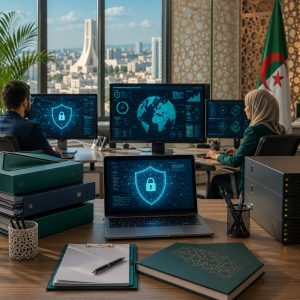
Decree 26-07: Algeria’s Cybersecurity Units Mandate — What Enterprises Must Do Now

Presidential Decree 26-07: Algeria Mandates Dedicated Cybersecurity Units Across Every Public Institution
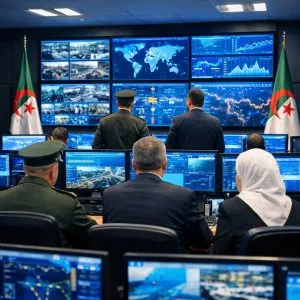
Algeria Establishes Mandatory Cybersecurity Units in Public Sector
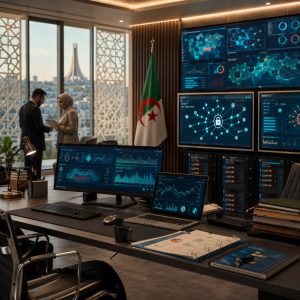
Decree 26-07: Why Every Algerian Public Institution Must Now Build a Cybersecurity Unit