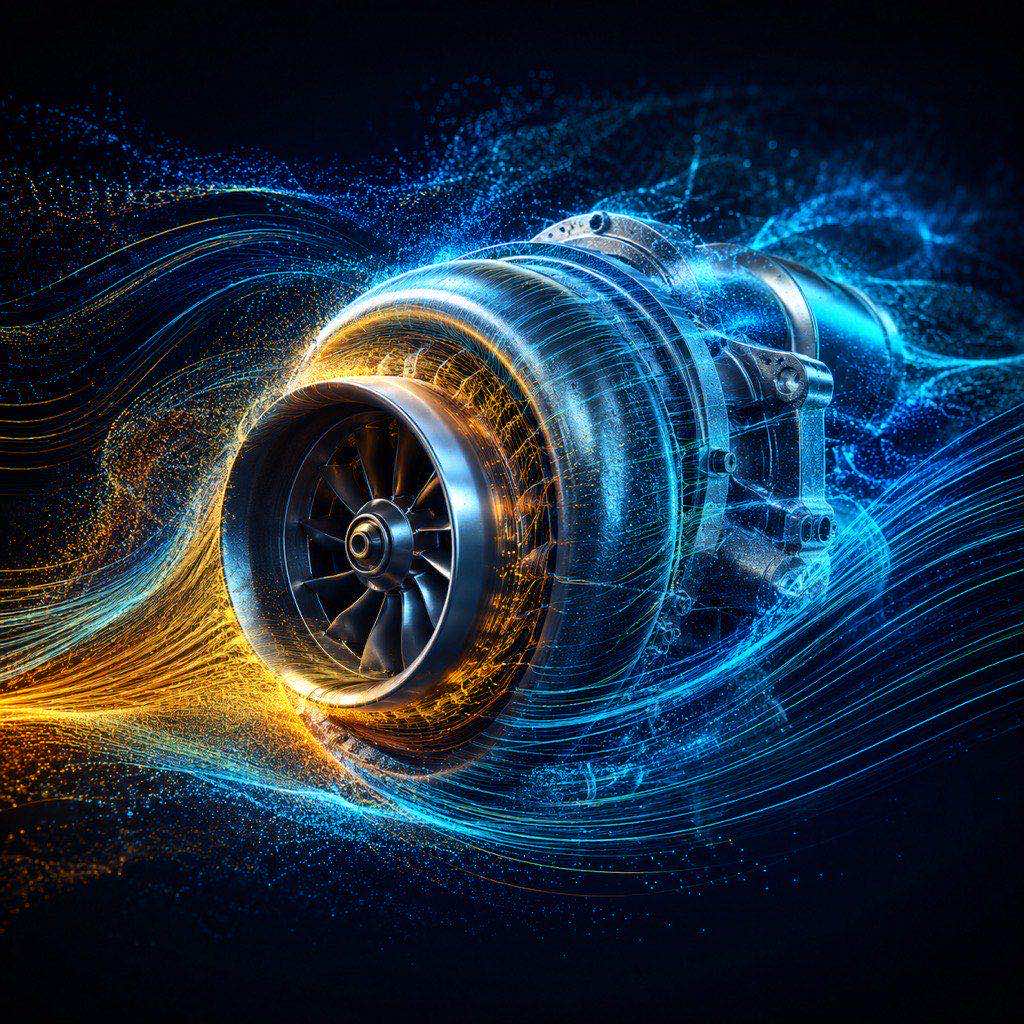
When engineers at a major aerospace firm need to test how airflow behaves around a new wing design, the classical approach requires setting up a computational fluid dynamics (CFD) solver, waiting hours or days for the simulation to converge, reviewing results, adjusting parameters, and running the solver again. Multiply that cycle by dozens of design variants, and months disappear before a single prototype is built.
PhysicsX, a London-based AI startup founded in 2019, has built a platform that collapses that process from days into seconds — and on June 8, 2026, it announced a $300 million Series C round led by Singapore’s Temasek, valuing the company at approximately $2.4 billion. The round signals that “physics AI” — training deep neural networks on physical equations governing aerodynamics, heat transfer, structural mechanics, and semiconductor behavior — is emerging as the next major vertical in enterprise deep tech, distinct from but inspired by the large language model (LLM) revolution.
From Formula 1 Pit Lanes to a $2.4B Platform
PhysicsX was co-founded by Jacomo Corbo, who previously built McKinsey’s QuantumBlack AI division, and Robin Tuluie, who spent years as head of R&D at Renault Alpine F1 and as vehicle technology director at Bentley Motors. The Formula 1 world is an especially demanding testbed for simulation: teams run thousands of aerodynamic simulations per week to gain milliseconds per lap. It was here that the founders experienced first-hand how classical simulation pipelines — powerful but slow — become the bottleneck constraining engineering creativity.
The company emerged from stealth in 2023 after raising a $32 million Series A led by General Catalyst. Its Series B, completed less than a year before this latest round, valued the company at roughly $1 billion. The jump to a $2.4 billion valuation in under twelve months — combined with tripled booked revenue, doubled recognized revenue, a doubling of its customer count, and employee headcount growing from 150 to over 350 — tells a story of genuine enterprise traction, not just investor enthusiasm.
What PhysicsX Actually Builds: Large Physics Models
The company’s core product is what it calls an AI-native engineering platform built around “Large Physics Models” (LPMs) — an explicit analogy to large language models, but trained on the governing equations of physical systems rather than text. Where a transformer model learns statistical patterns across billions of words, a Large Physics Model learns the underlying mathematics of how heat dissipates through a turbine blade, how stress propagates through a chassis under impact, or how electromagnetic fields distribute inside a semiconductor package.
The practical result is stark: instead of running a finite element analysis (FEA) solver for six hours to get a stress map on a new alloy component, an engineer queries a trained PhysicsX model and receives a high-fidelity prediction in seconds. The platform is designed to integrate into existing engineering workflows rather than replace them wholesale — it works alongside tools like ANSYS and COMSOL, accelerating the simulation-heavy steps while preserving the engineer’s review and judgment.
Target industries for the platform span aerospace and defense, semiconductors, industrial machinery, automotive, energy, and materials manufacturing. The aerospace application is particularly well-documented: the company has demonstrated compressing aircraft design cycles from months to days, allowing engineering teams to evaluate thousands of design variants where they previously managed a handful.
Beyond initial design, the platform extends into operational digital twins — persistent AI models that mirror real-world equipment and predict behavior under live operating conditions, enabling predictive maintenance and real-time optimization. This lifecycle approach, from early-stage design through in-service monitoring, differentiates PhysicsX from point-solution competitors that target only one phase.
Who Backed the Round and Why It Matters
Temasek, Singapore’s sovereign wealth fund, led the Series C — a significant signal. Temasek manages over $280 billion in assets and is not known for speculative bets; its participation typically indicates confidence in commercial maturity. The fund’s focus on industrial transformation in Asia-Pacific also hints at PhysicsX’s planned Singapore office expansion, which will serve as its Asia headquarters.
New co-investors M&G Investments and Intrepid Growth Partners joined alongside existing backers increasing their stakes: NVIDIA, Applied Materials, Atomico, General Catalyst, Siemens, NGP, July Fund, and Radius. The presence of NVIDIA and Applied Materials — two companies whose revenues depend directly on the semiconductor supply chain — is noteworthy. Both have strong incentives to see chip design and fabrication simulation become dramatically faster: it directly accelerates their own customers’ product cycles.
Siemens, a decades-long incumbent in industrial simulation software, investing in a competitor-adjacent startup reflects a broader industry dynamic: traditional CAE (computer-aided engineering) vendors are increasingly investing in or acquiring AI-native players rather than attempting to build physics AI organically.
The $300 million will fund three primary objectives: global expansion (including the new Singapore office and accelerated US growth), broader platform capabilities, and frontier research into ever-larger and more capable physics AI models — a direct parallel to how OpenAI and Anthropic invest their capital into scaling compute and model research.
Advertisement
The Physics AI Thesis: Why This Moment, Why Now
Classical simulation software has been the backbone of hardware engineering for fifty years. Tools like ANSYS, COMSOL, NASTRAN, and OpenFOAM are extraordinarily capable but computationally expensive: they discretize physical domains into millions of mesh elements and solve coupled differential equations iteratively, requiring specialized high-performance computing clusters and deep expertise to operate.
Three converging trends are creating the conditions for physics AI to displace — or more accurately, dramatically augment — this classical stack:
First, training data abundance. Decades of CFD and FEA runs have produced vast datasets of simulation results. These datasets, which previously sat underutilized on engineering servers, are now the training signal for physics AI models. The models learn to approximate the solver’s output without rerunning the full calculation.
Second, GPU infrastructure. The same GPU ecosystems built for LLM training are applicable to physics AI. NVIDIA’s investment in PhysicsX is not accidental — the company’s hardware is the compute substrate for both types of models.
Third, the enterprise AI adoption wave. Engineering organizations that spent 2023–2025 experimenting with LLMs for documentation and code generation are now asking what AI can do for their core technical workflows. Simulation is the highest-value target: speeding it up by orders of magnitude translates directly into shorter product development cycles, lower compute costs, and — in safety-critical industries — more thorough design exploration before physical testing.
The company’s revenue more than quadrupling over two years, against this backdrop, suggests it is hitting product-market fit at scale.
Competitive Landscape and Risk Factors
PhysicsX is not operating in a vacuum. Ansys (recently acquired by Synopsys in a $35 billion deal), Cadence Design Systems, and Siemens Digital Industries all have active AI-augmented simulation programs. A number of well-funded startups — including Luminary Cloud (CFD-focused cloud HPC), Monolith AI (test data-driven surrogate models), and Pasteur Labs (scientific machine learning) — are pursuing adjacent positions.
The key differentiator PhysicsX emphasizes is its “AI-native” architecture: rather than bolting AI onto a classical solver, it trains models that are fundamentally physics-grounded from the start. The Large Physics Model branding also positions the company for a potential future where LPMs become as commoditized as foundation LLMs — enabling a platform ecosystem of third-party applications, fine-tuned domain models, and API integrations.
Risk factors include the difficulty of convincing heavily regulated industries (aerospace, defense, energy) to trust AI predictions for safety-critical design decisions, the need to maintain simulation accuracy within tight engineering tolerances, and the talent competition for the rare engineers who combine deep ML expertise with physical domain knowledge.
What Engineering Teams Should Do
1. Identify your highest-cost simulations and quantify the bottleneck
Before evaluating physics AI platforms, engineering leaders should build an internal audit of where simulation time is actually concentrated. In most organizations, 20% of simulation runs consume 80% of compute time — typically the full-system, high-fidelity solves that happen late in the design cycle. These are the highest-leverage targets for AI acceleration. Quantify both compute cost and calendar time: a six-hour CFD run on a 128-core cluster costs real money, but the true cost is the engineering iteration speed it constrains. This audit gives you a business case for piloting physics AI and a clear success metric.
2. Pilot a physics AI tool alongside your existing classical FEA/CFD stack
Rather than replacing your classical simulation tools, start with a parallel track: run the same design scenarios through your existing solver and a physics AI surrogate simultaneously, and measure accuracy versus speed trade-offs. PhysicsX and similar platforms are designed to integrate into existing workflows, not mandate a full stack replacement. A three-month pilot on a non-safety-critical subsystem — say, thermal management in a power electronics module or aerodynamic drag prediction on an interior component — generates concrete data on whether the accuracy is within your engineering tolerances. Most organizations find that for early-stage design exploration (where you need directionally correct answers fast), physics AI is already compelling; for final sign-off simulations, classical tools remain the standard.
3. Build internal ML expertise in simulation domains now, before the talent gap widens
The engineers who can train, validate, and deploy physics AI models are scarce today and will become scarcer as adoption accelerates. Engineering organizations that wait until physics AI is proven at scale will find themselves competing for talent against well-funded incumbents. The practical investment is modest: identify two or three engineers with both domain knowledge (CFD, FEA, electromagnetics) and Python/ML familiarity, give them dedicated time to experiment with open-source scientific ML frameworks (PyTorch-based JAX, DeepXDE, or NVIDIA Modulus), and build internal competency before a full commercial deployment. Universities in engineering-heavy economies should similarly begin incorporating physics-informed machine learning into curricula.
The Bigger Picture: Physics AI as the Next Deep-Tech Wave
The LLM wave of 2022–2025 demonstrated that training massive neural networks on domain-specific data could produce capabilities that surprised even domain experts. Physics AI is the next application of that insight to the physical world: instead of predicting the next word, models predict the next state of a physical system.
The implications extend far beyond faster simulations. As Large Physics Models scale, they could enable design optimization over search spaces that are currently computationally intractable — automatically discovering novel airfoil geometries, materials compositions, or chip architectures that human engineers would never have time to explore manually. In manufacturing, real-time AI twins could run thousands of “what if” scenarios as a factory floor operates, adjusting parameters to maximize yield without stopping production.
PhysicsX’s $2.4 billion valuation at Series C places it in the company of a small number of deep-tech startups that have reached genuine enterprise scale in a single product domain. Alongside quantum computing players and advanced robotics startups, it represents the maturation of AI beyond software and into the engineering of physical things — which is, ultimately, where most of the world’s economic value is actually produced.
For investors, the signal is clear: vertical AI platforms that go deep into a specific technical domain, build proprietary training data moats, and integrate into high-value enterprise workflows are the most defensible AI businesses of the next decade. PhysicsX appears to have checked all three boxes.
Frequently Asked Questions
Q: What is the difference between physics AI and classical simulation software like ANSYS or COMSOL?
Classical simulation tools (ANSYS, COMSOL, NASTRAN) solve physical equations numerically by dividing a domain into a mesh of elements and iterating to convergence — a process that is highly accurate but computationally slow, often requiring hours to days per run on powerful servers. Physics AI approaches like PhysicsX’s Large Physics Models train deep neural networks on the outputs of these classical solvers (or on real sensor data), learning to approximate the solver’s behavior. Once trained, the AI model can produce a prediction in seconds rather than hours, enabling engineers to explore far more design variants. The trade-off is that AI models require careful validation within specific domain ranges and are not yet suitable as the sole basis for safety-critical sign-off, which still requires classical simulation.
Q: Who are the main investors in PhysicsX and what does their involvement signal?
The Series C was led by Temasek, Singapore’s sovereign wealth fund, with co-investors including NVIDIA, Applied Materials, Siemens, General Catalyst, Atomico, M&G Investments, Intrepid Growth Partners, and others. The combination is strategically meaningful: Temasek provides long-term institutional capital and Asia-Pacific market access; NVIDIA and Applied Materials are direct infrastructure and semiconductor ecosystem players with commercial incentives to see engineering simulation accelerate; and Siemens — a decades-long incumbent in industrial simulation — investing alongside a potential competitor signals that even traditional players see AI-native simulation as inevitable rather than avoidable.
Q: How does PhysicsX’s “Large Physics Model” concept differ from general-purpose AI models?
General-purpose large language models (GPT-4, Claude, Gemini) are trained on text and are stateless — they do not inherently understand that a wing generating more lift will also generate more drag, or that increasing temperature in a combustion chamber changes fluid viscosity. Large Physics Models are trained on physics simulation data and are constrained or guided by governing equations (Navier-Stokes for fluid dynamics, Maxwell’s equations for electromagnetics, etc.), making their outputs physically consistent rather than statistically plausible. This domain specificity is both a strength (high accuracy within their training distribution) and a limitation (they do not generalize beyond the physics domains they were trained on, unlike general-purpose AI).
Sources & Further Reading
- Further Reading
- PhysicsX announces $300M Series C to accelerate physics AI for industrial engineering — PhysicsX Newsroom
- Temasek leads UK’s AI firm PhysicsX $300M Series C funding — TechNode Global
- PhysicsX Temasek $300M Series C: AI simulation — The Next Web
- PhysicsX raises $300M Series C — The SaaS News
🔗 Related Intelligence

Project Prometheus: Bezos Raises $10B for Physical AI — What It Means for Founders
AI Compute Scaling: Why Training AI Costs Billions

AI Price War: How Falling Inference Costs Are Reshaping the Model Economy

Physical Intelligence: The Hardware-AI Startup Wave Hitting $230M Rounds in May 2026