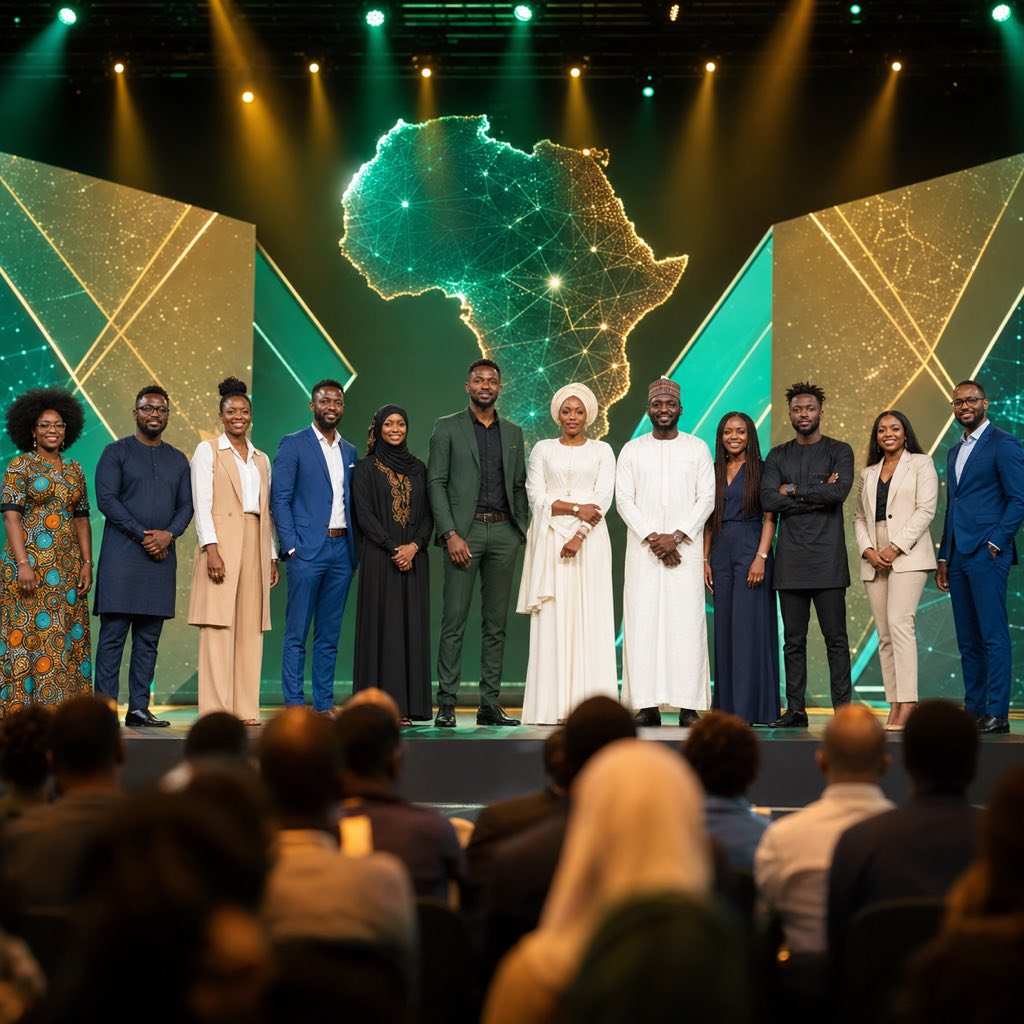
Why Class 10 Is a Different Kind of Signal
Google for Startups Accelerator Africa Class 10 received nearly 2,600 applications to select 15 ventures — a ratio of roughly 173 applications per accepted startup. That selectivity matters for two reasons. First, it means the 15 chosen companies represent the top fraction of a continent-wide pool that is itself growing rapidly: TechCabal’s analysis of Africa’s AI builders found 207 active AI startups across Africa in 2025, up 99% from 2022. Second, the sector distribution of the cohort is not random — it reflects where Africa’s AI market is actually creating returns.
The three-month hybrid program provides mentorship from experienced industry experts, technical workshops on AI and cloud technologies, and resources to prepare participants for subsequent funding rounds. Since 2018, the program has backed 106 startups across 17 African nations. Class 10 spans 10 countries, with Nigeria (4 startups), Kenya (4), and South Africa (2) leading the geographic distribution, and Angola, Uganda, Senegal, Ivory Coast, and Tanzania each contributing one company.
The sector breakdown reinforces a finding from TechCabal’s data: fintech and agritech now dominate Africa’s AI investment landscape, with 22 and 20 active startups respectively in those categories, while education AI grew from 2 companies in 2022 to 14 by 2025. Class 10 mirrors this exactly — fintech infrastructure and payments dominate the Nigerian cohort, while agritech and mobility define the East African representation.
The 15 Startups and What They Actually Build
Understanding what these companies do is more useful than simply counting them. The cohort breaks into four thematic clusters.
Fintech Infrastructure (Nigeria-led): Bani builds cross-border payments infrastructure for Africa’s fragmented currency landscape. MasteryHive AI focuses on transaction reconciliation, fraud detection, and AML monitoring — the compliance layer that most African fintech companies build poorly or buy expensively from international vendors. Regxta provides alternative data-driven credit scoring specifically for unbanked micro businesses, addressing the creditworthiness gap that prevents millions of Africans from accessing formal lending. Termii provides communications infrastructure for financial messaging, the plumbing beneath SMS-based banking and verification systems.
Agriculture, Mobility, and Logistics: VunaPay (Kenya) provides fintech and payments infrastructure for agricultural cooperatives — the financial layer that allows smallholder farmers to access input financing and sell produce through formal channels. Emaisha Pay (Uganda) focuses on agro-trader produce management and trade financing. ANDA Africa (Angola) addresses moto-taxi formalization, bringing mobility and fintech to an informal transport sector that dominates urban mobility across the continent. Safiri (Tanzania) builds transportation and logistics infrastructure.
Data, Analytics, and Retail: Duck (Kenya) provides real-time data intelligence for retail visibility — the kind of shelf availability and demand forecasting infrastructure that FMCG companies use extensively in developed markets but have been unable to deploy cheaply in African retail environments. Coamana (Kenya) digitizes informal food markets. Maad (Senegal) operates an omnichannel market expansion platform. ReportsAI (Kenya) focuses on data analysis and compliance reporting for impact organizations. Loop (South Africa) digitizes mobility and payments. Meditect (Ivory Coast) provides pharmacy digitization software.
AI Infrastructure: Vambo AI (South Africa) stands out as the cohort’s most foundational company — building multilingual AI infrastructure for African languages. This is the layer that every other African AI company eventually needs: if you cannot process Swahili, Yoruba, Amharic, or Zulu inputs natively, your AI products cannot serve the majority of African users in their primary language.
Advertisement
What This Cohort Tells Founders and Investors
1. Local Data Moats Are the Defensible Advantage That Global Platforms Cannot Buy
The companies selected for Class 10 are winning not because they replicate Silicon Valley products for African markets, but because they solve problems that require African data to solve. TechCabal’s analysis found a 73% survival rate for companies tracked from 2022 to 2025 — significantly higher than global early-stage startup survival rates — suggesting that the local market knowledge embedded in these companies creates durability. MasteryHive AI’s AML training data for African transaction patterns, Regxta’s alternative credit data on unbanked micro businesses, and Vambo AI’s African language corpus are not things that any international incumbent can replicate by launching a local office.
2. The Infrastructure Layer Is Where the Multiplier Effect Lives
Vambo AI’s inclusion in Class 10 reflects a broader structural insight: the startups building language and payment infrastructure are worth more in aggregate than individual applications, because they enable every other company in the ecosystem. Africa’s 207 AI startups are 67% early-stage, meaning most have not yet found distribution. Infrastructure companies — multilingual AI, payments rails, identity verification — provide the substrate those companies need to scale without rebuilding from scratch. Investors who back the infrastructure layer capture asymmetric upside when the application layer matures.
3. Geography Is Shifting — The Big Three Are Not the Only Story
Nigeria, Kenya, and South Africa dominate the headlines, but Class 10 includes Angola, Uganda, Senegal, Ivory Coast, and Tanzania. TechCabal’s data shows Egypt growing 267% to 11 AI startups, and Tunisia reaching 11. The next generation of African AI exits will likely come from companies that built early in second-tier markets, where competition is lower and institutional demand from governments and telcos is proportionally higher. Founders and regional funds that overlook these markets in 2026 may find the best opportunities have already been taken by 2028.
4. The 2,600-Application Funnel Is a Quality Signal for Your Fundraising Pitch
For any African AI startup outside this cohort, the 2,600 application volume at Class 10 is relevant competitive intelligence. Investors know this program is selective. A Class 10 application rejection is not dispositive — the selectivity means many excellent companies did not make the cut. But the program’s thesis — Google backing AI-first, seed-to-Series A companies — is a public articulation of what the highest-profile tech accelerator on the continent is optimizing for. Founders who have not yet applied to Class 11 should study the Class 10 portfolio as a map of what Google considers fundable.
Regional Benchmarks and What Comes Next
Africa’s AI ecosystem is growing faster than most benchmarks suggest. The 99% growth from 104 to 207 active AI startups between 2022 and 2025 outpaces most regional comparisons, and the early-exit data — only 3 acquisitions recorded against 18 confirmed defunct companies — signals a market still in the value-creation phase, not the value-harvest phase. The Africa Business analysis of judgment-driven startups argues that Africa’s next category-defining companies will be built on local knowledge and market context, not on access to frontier models that any well-funded competitor can also use.
Class 10’s 15 companies will all participate in Google’s technical workshops on AI and cloud infrastructure and receive introductions to global investor networks. For the 14 that survive through Series A, the program history of 106 companies across 17 nations provides a community with real exit and fundraising learnings embedded in it. For the continent’s broader AI ecosystem, each cohort provides a new set of proof points that fundable, scalable AI companies can emerge from African market contexts.
Frequently Asked Questions
How many startups has Google for Startups Accelerator Africa supported since 2018?
Since launching in 2018, Google for Startups Accelerator Africa has supported 106 startups across 17 African nations through its cohort programs. Class 10, announced in April 2026, is the most selective cohort yet with nearly 2,600 applications for 15 spots. The program offers a three-month hybrid format combining mentorship from industry experts, technical workshops on AI and cloud technologies, and preparation support for subsequent funding rounds.
What sectors dominate the Google Africa Class 10 cohort?
Fintech infrastructure leads the cohort with four Nigerian companies (Bani, MasteryHive AI, Regxta, Termii) plus multiple fintech-adjacent startups. Agritech and agricultural fintech are represented by VunaPay (Kenya), Emaisha Pay (Uganda), and Coamana (Kenya). Mobility and logistics appear across three companies (Loop, ANDA Africa, Safiri). Vambo AI (South Africa) represents the AI language infrastructure layer. This distribution mirrors TechCabal’s finding that fintech (22 startups) and agriculture (20 startups) are Africa’s two largest AI verticals by company count.
Is Africa’s AI startup ecosystem growing or consolidating?
Africa’s AI startup ecosystem is firmly in growth mode. TechCabal’s tracking shows 207 active AI startups in 2025, up 99% from 104 in 2022, with a 73% survival rate for companies tracked across the period. Education AI grew from 2 companies to 14; legal AI emerged from zero. Only 3 acquisitions have been recorded against 18 confirmed defunct companies, suggesting most value creation is still ahead. The Big Three markets (Nigeria, Kenya, South Africa) continue to lead, but Egypt’s 267% growth and Tunisia’s 11-startup ecosystem signal that the geographic base is broadening.
Sources & Further Reading
- 15 African AI Innovators Join Google for Startups Accelerator Africa Class 10 — Disrupt Africa
- Africa’s AI Builders: 207 Startups and One Continent’s Bet — TechCabal
- Three AI Startups to Watch in 2026 — Connecting Africa
- Why Africa’s Next Great Startups Will Be Built on Judgment — African Business
- Why Algeria Is Positioned to Become North Africa’s AI Leader — New Lines Institute
🔗 Related Intelligence

Google’s Africa Accelerator Class 10: 15 AI-First Startups, 2,600 Applications, 8 Countries

Africa’s AI Map: 207 Startups, Three Hubs, and the New Builders Behind Them

Looking East: Why Africa’s AI Startups Are Choosing Alibaba Over Silicon Valley

Africa’s $10B AI Initiative: 40 Million Jobs by 2035 and the Infrastructure Bet Behind It