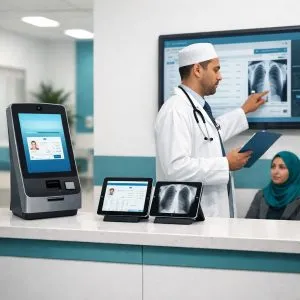
Algeria’s healthcare numbers look reasonable on paper. The country has approximately 1.66 physicians per 1,000 people, placing it among just seven African nations that meet the World Health Organization’s recommended doctor-to-population ratio. Total healthcare infrastructure spans 23,000 private practices, over 9,700 specialized clinics, and 240,000+ professionals in the public sector alone.
The problem is geography.
Private medical practice is concentrated almost entirely in northern urban centers — Algiers, Oran, Constantine. The further south or deeper into the interior you go, the more the doctor-density numbers collapse into a healthcare access problem that has persisted for decades. Algeria’s “Santé de Proximité” model — mobile medical units and organized primary care facilities for remote populations — is the government’s acknowledgment of how wide this gap remains.
Forty-three healthtech startups are now building the digital layer that could start closing it.
Algeria’s Healthcare Access Problem
The structural issue is not a shortage of doctors nationally. It is a distribution failure. Algeria is training physicians — its 46,200 doctors represent genuine healthcare investment — but those doctors concentrate where private practice is most economically viable: the north, the cities, the coasts. Rural and southern wilayas see the consequences in longer travel times, delayed diagnoses, and preventable disease progression.
Compounding this is brain drain. Algeria faces an ongoing exodus of qualified physicians to France in particular, thinning the specialist pool that remains. The rural-urban disparity in sanitation access is one proxy measure: 99% of urban Algerians have access to improved sanitation versus 82% in rural areas — a gap that correlates with overall healthcare access quality.
The National Digital Health Strategy (2023–2027) formally acknowledges this and assigns digital tools a role in the solution. Health expenditure per person is projected to reach $814 annually by 2026, according to industry analysis by ReportLinker — a figure that reflects purchasing-power-adjusted estimates rather than current-USD figures (WHO Global Health Expenditure Database puts Algeria’s current-USD per-capita spending closer to $215 based on 2020–2021 data, the most recent years with comprehensive reporting). The Medical Technology market is forecast to grow at 3.48% annually to reach nearly $2 billion by 2029. The policy and market conditions for digital health are converging.
The Healthtech Startup Landscape
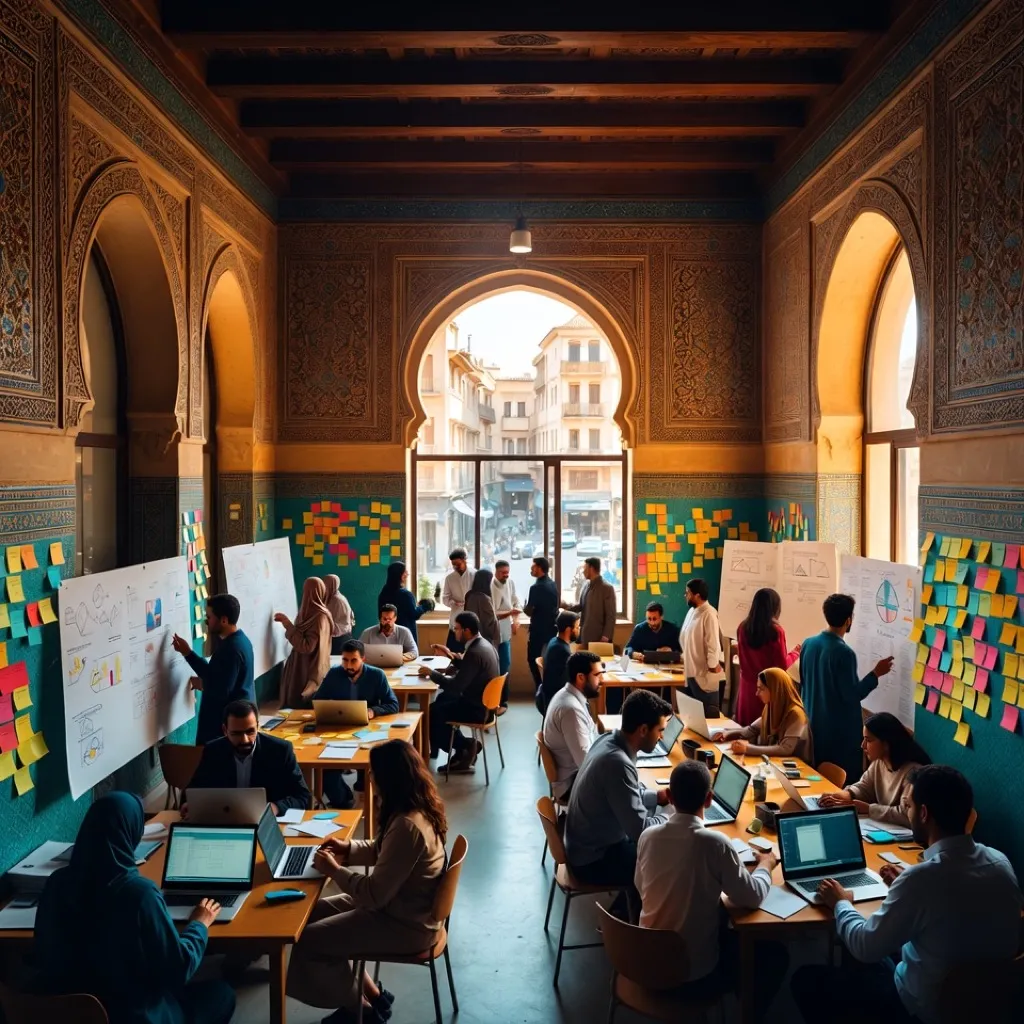
Forty-three healthtech startups operate in Algeria as of September 2025, across telemedicine platforms, pharmacy technology, electronic health records, diagnostics, and pharmaceutical B2B marketplaces. Approximately four new healthtech companies have launched annually over the past decade — a pace that is accelerating as the national startup label framework provides regulatory legitimacy and the Algerian Startup Fund (ASF) provides early capital.
The segment divides into four operational categories:
Telemedicine and appointment platforms focus on connecting patients with physicians remotely, primarily through booking interfaces and video consultation. Pharmacy technology addresses the supply chain and patient-pharmacy interface. Electronic health records (EHR) and practice management software target clinics and doctors directly. Diagnostic and preventive health tools are the newest category, often incorporating AI for patient triage or screening.
Founder Profiles and Key Platforms
Beesiha is the most prominent Algerian telemedicine marketplace. The platform allows patients to search doctor profiles, book appointments online, and access remote consultations. It also manages appointment histories, prescriptions, and consultation records — positioning it as an end-to-end patient care management tool rather than just a booking layer. For Algeria’s urban population of smartphone users, Beesiha addresses the core friction in seeking medical attention: appointment scheduling and practitioner discovery.
Chifa Mobile takes the supply side of the pharmacy equation. Rather than connecting patients to pharmacies, it gives pharmacists remote management capability: invoice monitoring, operational statistics, customer management, and insurance status verification. In a country where CNAS (the national health insurance fund) covers approximately 73% of the population, the ability to manage insurance interactions digitally is not a convenience — it is an operational requirement for pharmacies handling high volumes of insured patients.
DzairPharm operates the B2B pharmaceutical marketplace, connecting pharmaceutical companies with clinics, hospitals, and medical professionals across specialties. The play is supply chain efficiency in a sector where procurement has historically been opaque and manual.
Santymed and Dentisium approach the problem from the practice management side. Santymed provides an EHR system covering patient files, appointments, prescriptions, and consultations. Dentisium focuses specifically on dental practices, combining administrative workflow optimization with appointment scheduling — a vertical SaaS approach that reflects the growing pattern of specialty-specific software in Algerian healthcare.
The 2025 Algeria Startup Challenge surfaced three more notable entrants. SanoX built a healthcare chatbot for patient triage — helping route patients to the appropriate care level before they arrive at a clinic. Mindcare developed a teleconsultation and mental health platform, and Nafsia Clinic takes a culturally adapted approach to tele-therapy, specifically designed for MENA users accessing private encrypted mental health sessions. DiagWear represents the hardware edge: smart disposable diapers with integrated health screening sensors, a preventive diagnostics play targeting infant health monitoring.
Advertisement
The Regulatory Environment
Algeria’s telemedicine regulation remains in a transitional state. The National Digital Health Strategy 2023–2027 provides policy direction, but the underlying health law has not yet been updated to comprehensively authorize electronic medical files at the national level or standardize digital data exchange between health professionals.
In practice, this creates a regulatory gray zone that most startups navigate carefully. Appointment booking platforms (the Beesiha model) operate on established ground — scheduling is not medical practice. Remote consultations occupy more ambiguous territory: no specific legislation authorizes or prohibits them, but without a legal framework for digital prescriptions or standardized CNAS reimbursement for telehealth sessions, revenue models remain constrained.
The Ministry of Health is the primary regulatory authority. COSOB handles stock market access for startups seeking capital. The Ordre National des Médecins governs physician conduct. No single body has yet issued comprehensive telemedicine guidance — which means startups must build products that work under the current regulatory reality while preparing for the eventual framework that the 2023–2027 strategy implies.
Business Models That Work
Three business model approaches show commercial viability in the current environment:
B2B SaaS for clinics and pharmacies is the most financially stable path. Dentisium and Santymed both sell software subscriptions directly to healthcare professionals. The customer is a doctor or clinic administrator, not a patient navigating trust issues or payment friction. Regulatory exposure is minimal. Chifa Mobile takes the same approach with pharmacies. This model generates predictable recurring revenue with lower customer acquisition costs than consumer health apps.
Marketplace and appointment platforms (Beesiha’s approach) work in urban centers where patient digital literacy and smartphone penetration are highest. The challenge is monetization: charging patients for booking creates friction; charging physicians for lead generation is the more sustainable model. B2C requires volume, which in Algeria currently means targeting the urban north first.
Public sector partnership is the highest-ceiling, highest-friction path. Selling EHR systems or diagnostic tools to public hospitals — particularly as part of the SNDS 2023–2027 digitization push — creates the scale that could genuinely close the rural gap. But government procurement cycles are slow, contract terms are complex, and payment timelines are unpredictable. Startups that survive long enough to land a public hospital deployment, however, gain both revenue and credibility that private-sector wins cannot match.
Challenges and Barriers
Connectivity in rural areas remains the fundamental bottleneck. Telemedicine requires reliable internet. Algeria has 35.5 million internet users, but the population who needs telemedicine most — rural and remote communities — is also the population with the least stable connectivity.
Trust in digital health consultations is a cultural and generational challenge. Algerian patients accustomed to in-person consultations often do not view a video call with the same weight as a physical examination — particularly for chronic conditions or diagnostic concerns. Building that trust requires both platform reliability and visible medical professional endorsement.
Payment integration affects consumer-facing platforms acutely. Digital payment penetration remains limited, and many Algerians prefer cash or bank transfer for healthcare costs. Platforms that require card-on-file for booking face abandonment where cash-friendly alternatives exist.
CNAS reimbursement integration is the biggest structural gap. Until telemedicine consultations can be reimbursed through the national insurance system, the financial model for patient-facing telemedicine requires users to pay out of pocket — limiting the addressable market to those who can afford private consultations anyway.
Frequently Asked Questions
What is algeria’s healthtech startups?
Algeria’s Healthtech Startups: Telemedicine, Diagnostics, and the Rural Healthcare Gap covers the essential aspects of this topic, examining current trends, key players, and practical implications for professionals and organizations in 2026.
Why is algeria’s healthtech startups important for Algeria?
This topic is significant for Algeria because it intersects with the country’s digital transformation goals, economic diversification strategy, and growing technology ecosystem. The article provides specific context for Algerian stakeholders.
How does the healthtech startup landscape work?
The article examines this through the lens of the healthtech startup landscape, providing detailed analysis of the mechanisms, trade-offs, and practical implications for stakeholders.
Sources & Further Reading
- Top Healthtech Startups in Algeria — Tracxn
- Physicians per 1,000 People — Algeria — World Bank
- Only 7 African Nations Meet the WHO’s Recommended Doctor-to-Population Ratio — Intelpoint
- Dynamics of the Geographical Distribution of Private Physicians in Algeria — Cybergeo
- DPA Digital Digest: Algeria 2025 Edition — Digital Policy Alert
- Algeria Health Sector Market Overview — HERMS Global
- Algeria Healthcare Industry Outlook 2022–2026 — ReportLinker
- Global Health Expenditure Database — WHO
- Algeria Healthcare System — Expat Financial