
The 207 Companies and the Talent Equation
TechCabal’s April 2026 analysis of Africa’s AI ecosystem tracks 207 AI startups across 17 African countries — a 99% increase from 104 companies in 2022, with a 73% survival rate from the 2022 cohort. The geographic concentration is pronounced: Nigeria (50 startups), South Africa (49), and Kenya (31) account for 63% of the total. Egypt has grown 267% to reach 11 companies. Seventeen countries are represented.
The sector breakdown reveals where African founders see the highest-value AI applications: finance (22 startups), agriculture (20), healthcare (20), and education (14) together represent 37% of the ecosystem. These are not abstract technology plays — they are bets on vertical AI in sectors where local market knowledge is the primary competitive advantage.
The challenge is the talent infrastructure required to build and deploy the agentic AI systems that enterprise clients in these verticals increasingly expect. Machine learning engineers, NLP specialists, MLOps practitioners, and AI researchers remain scarce across Africa in 2026, with global AI talent demand outstripping supply by a 1:3.6 ratio, and Africa facing the steepest shortfall of any major region. Building a 10-person AI engineering team in Lagos or Nairobi that can architect and maintain production-grade agentic workflows is a multi-year project — time that startups competing for enterprise contracts cannot afford.
The Emerging Division of Labour
The response that is taking shape across a growing cohort of African startups is a structural separation of responsibilities: African teams own the market layer, Asian partners own the AI factory.
The market layer encompasses everything that requires local knowledge and physical presence: understanding client workflows, managing regulatory compliance in specific African jurisdictions, building trust with enterprise buyers, integrating AI outputs into local operational contexts, and fine-tuning model behaviour for African data distributions. No team in Bangalore or Manila can replace this. African founders who have spent years in their verticals — understanding how mobile money reconciliation actually works in Tanzania, or how agricultural credit assessment functions in Ghana — hold an information advantage that is not transferable.
The AI factory layer is where the outsourcing logic applies. Asian technology outsourcing partners — particularly in India, where the AI services industry is mature and mid-market pricing is accessible — can architect agentic AI systems, manage model training pipelines, build the MLOps infrastructure for production deployment, and maintain the automation agents that handle repetitive enterprise workflows. The division is not temporary workaround; it is a deliberate capital allocation strategy. Engineering a sophisticated agentic fraud detection system from scratch requires six to twelve months of specialized AI engineering. Outsourcing that construction and deploying in three months is not cutting corners — it is optimizing for the variable that determines startup survival: speed to revenue.
African Business’s 2026 analysis of AI adoption in emerging markets frames the underlying logic precisely: “AI must pay for itself early or it doesn’t survive.” African startups do not have the runway to pursue three-year R&D cycles. The outsourcing model compresses the time between client commitment and deployed automation — the interval that determines whether a startup reaches its next funding milestone.
Advertisement
What Founders Should Do About It
1. Define the Intellectual Property Boundary Before the First Contract
The risk in the Asia-outsourcing model is not operational — it is IP. When an Asian partner architects the agentic workflow, trains the base model, and manages the MLOps infrastructure, the startup risks becoming a distribution layer on top of technology it does not own or deeply understand. The mitigation is a clearly defined IP boundary negotiated before work begins: African founders should retain ownership of the training data (derived from local market operations), the fine-tuned model weights for their specific vertical, the client integration code, and the business logic layer that translates African market context into system behaviour. The outsourced component — the base model architecture, the orchestration framework, the generic deployment tooling — is commodity. What is proprietary is the local data and the market-specific fine-tuning.
2. Raise More or Raise Less — Avoid the Middle
The Asia-outsourcing model changes the funding equation. A startup that has successfully deployed an agentic AI system — even one built by an Asian partner — can demonstrate production-grade AI capability to investors without the 18-month engineering hiring cycle that previously gated this milestone. This compresses the time to Series A readiness. But the compression also creates a trap: founders who raise a standard pre-seed of $500K and spend half on outsourced AI development often find themselves in a thin capital position when the client integration phase demands more customization than the initial contract anticipated. The cleaner strategies are either raising less (bootstrap with the outsourcing model, reach early revenue, then raise Series A with proven traction) or raising more (structured bridge to $2-3M that funds both outsourced AI construction and the in-house engineering team that will eventually absorb the technology). The middle — $500K-$1.5M rounds that try to do both simultaneously — is the hardest funding position to execute from.
3. Build Your Own AI Capability in Year Two
The outsourcing model is a legitimate acceleration strategy for Year One. It is a dangerous dependency in Year Three. The startups that will dominate African AI verticals in 2028-2030 will be those that used outsourcing to reach revenue, then used revenue to hire and train in-house AI engineers who gradually absorbed the technical depth from their Asian partners. The transition plan should be designed into the outsourcing contract: knowledge transfer obligations, documentation standards, model handover protocols, and training provisions for junior in-house engineers embedded with the Asian team during construction. The Asian partner is not a permanent vendor — they are a technical university that the startup is paying to attend while simultaneously building client revenue. Founders who frame it this way negotiate better contracts and start the in-house capability build earlier.
4. Target Google for Startups Accelerator and Similar Programs for Compute Subsidies
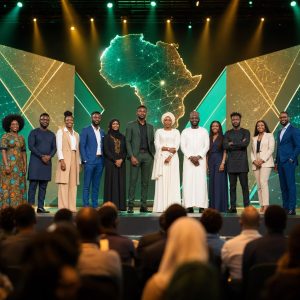
Compute costs are the silent constraint on African AI startups that partner with Asian AI firms. The outsourced construction of a production agentic system requires substantial GPU compute for training and fine-tuning — costs that typically fall on the African startup as the contracting party. Google for Startups Accelerator Africa — AI First provides Google Cloud credits, technical mentorship, and network access to AI startups that meet its cohort criteria. Fifteen African AI innovators joined Class 10 in April 2026. Microsoft for Startups, AWS Activate, and Anthropic’s similar programs offer compute subsidies on comparable terms. For a startup outsourcing AI construction to Asia, securing $50K-$200K in cloud credits meaningfully reduces the cost of the outsourced engagement — making the model more accessible at the pre-seed stage.
The Bigger Picture
The Asia-Africa AI outsourcing model raises a legitimate long-term question: if African startups consistently outsource the AI construction layer, do African engineers ever develop the deep technical capability required for the continent to build foundational AI systems? The concern is real. Three acquisitions in Africa’s entire AI ecosystem since 2022 — InfiniLink, Libryo, and Safiyo AI, all growth-stage companies — suggest that the exit market remains thin, and that the value creation in African AI has not yet reached the scale that attracts foundational model investment.
But the pragmatic counter is equally legitimate. The alternative to outsourcing is not building foundational AI in Africa — it is not building at all. A startup that survives, reaches revenue, and gradually builds AI capability is categorically better for Africa’s long-term AI ecosystem than a startup that attempted to build in-house, ran out of runway in month 18, and dissolved. The Singapore model — where the country built its technology ecosystem through systematic technology transfer agreements before developing indigenous innovation capability — is instructive. Africa’s current outsourcing wave is not a concession; it is a step in a sequenced strategy. The question is whether the handover protocols are negotiated well enough to make that sequence real.
Frequently Asked Questions
Which Asian countries are African startups primarily partnering with for AI outsourcing?
India is the primary destination, benefiting from a mature technology outsourcing industry, English-language communication, and mid-market pricing that is accessible at the pre-seed stage. The Philippines provides a secondary hub, particularly for AI data annotation and customer-facing AI support workflows. Chinese AI firms, particularly those with established Africa operations, are emerging as a third option — though they raise data sovereignty questions for startups working with sensitive financial or health data in regulated African markets.
What does the typical outsourcing contract look like in cost terms?
Costs vary significantly by scope. A basic agentic AI system — document processing automation, workflow orchestration for a single business process, integration with two or three enterprise systems — typically runs $30,000-$80,000 as an outsourced build. A more complex system involving multi-step reasoning, custom model fine-tuning, and production-grade MLOps infrastructure will range from $100,000-$300,000. These figures are substantially below the cost of hiring and maintaining an equivalent in-house AI engineering team for 12-18 months, which is why the outsourcing model makes financial sense for early-stage startups — particularly when compute subsidies from Google for Startups or AWS Activate can offset part of the infrastructure cost.
How do African startups avoid becoming permanently dependent on their Asian AI partners?
The mitigation requires deliberate contract structuring: ownership clauses for training data, fine-tuned model weights, and business logic code; documentation standards that make the system comprehensible to non-expert engineers; embedded learning provisions where junior in-house engineers work alongside the Asian team during construction; and staged handover milestones that transfer operational responsibility to the African team before the contract ends. Startups that treat the outsourcing engagement as a paid technical education — paying for both the AI system and the capability transfer — come out of Year One with both a deployed product and a team that can maintain and extend it.
Sources & Further Reading
- Africa’s AI Builders: 207 Startups and One Continent’s Bet — TechCabal Insights (April 2026)
- OpenAI Agents Explained: What African Startups Can Build With Agentic AI — Tech In Africa (2026)
- AI Begins to Take Root in Emerging Market Firms — African Business (March 2026)
- 15 African AI Innovators Join Google for Startups Accelerator Africa Class 10 — Disrupt Africa (April 2026)
- Three AI Startups to Watch in 2026 — Connecting Africa
- 20 African Startups to Watch in 2026 — Techpoint Africa
🔗 Related Intelligence

Africa’s AI Map: 207 Startups, Three Hubs, and the New Builders Behind Them

Looking East: Why Africa’s AI Startups Are Choosing Alibaba Over Silicon Valley

Africa’s $10B AI Initiative: 40 Million Jobs by 2035 and the Infrastructure Bet Behind It
Google Accelerator Africa Class 10: The 15 AI Startups Picked to Lead the Continent