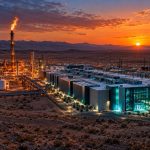
The Energy Problem That Is Blocking Africa’s Data Center Boom
Africa needs between $10 billion and $20 billion in data center investment by 2030 to keep pace with demand growing at 20–25% annually. Power demand from the sector is projected to reach 8,000 GWh on the continent by the end of the decade. Yet the continent’s total operational capacity today stands at roughly 360 MW — a figure documented by the Zawya Africa data centre market analysis — while global installed capacity runs above 60 GW. That gap is not primarily a financing problem. It is an energy reliability problem.
Nigeria, the continent’s largest economy, engineers its backup power systems for extended primary use rather than emergency coverage, because grid stability cannot be taken for granted. Hyperscale operators — the Microsofts, Amazons, and Google Clouds building 100 MW+ campuses — will not sign a lease without a guaranteed power availability commitment. Intermittent solar and wind cannot make that commitment unilaterally. You need dispatchable baseload power, and in Africa that means natural gas.
NJ Ayuk of the African Energy Chamber stated it directly: “AI data centers require constant, reliable power at scale, and natural gas is the only resource Africa has today that can deliver that immediately.” That statement is the strategic opening Algeria needs to exploit.
Algeria’s Structural Advantages Over Its African Rivals
Algeria holds approximately 159 trillion cubic feet (TCF) of proven natural gas reserves and is the second-largest gas supplier to Europe after Norway, according to U.S. Energy Information Administration data. Sonatrach’s production runs at approximately 106 billion cubic meters per year. The government has committed $60 billion in energy sector investment between 2025 and 2029 to expand oil, gas, and hydrogen output.
That capital is being deployed on infrastructure that already exists. Algeria’s gas transmission grid — built over decades to serve both domestic consumption and European export — is not a project on paper. It is in the ground, operating today. Compare that to Mozambique, which expects to export 13+ million tons of LNG annually once its projects come online, or Senegal and Mauritania, whose offshore fields are still ramping up. Those are promising stories. Algeria’s is a present-tense story.
The specific data center advantage comes from three angles:
Proximity to European demand. Hyperscale operators expanding into Africa are simultaneously trying to serve European customers with lower latency. Algeria’s northern coast is closer to the southern European internet exchange points than any other major African gas economy. A data center campus near Oran or Annaba can reach Marseille in under 30ms.
Existing grid architecture. Algeria’s high-voltage transmission network already reaches its industrial zones. Unlike sub-Saharan markets, an operator does not need to build dedicated transmission lines from a gas field to a data center site — the distribution infrastructure is there.
Gas-to-power economics. On-site gas-fired generation for a 50–100 MW data center campus does not require feeding into a national grid with reliability caveats. Sonatrach can supply gas under a direct industrial contract. The economics — power at $0.04–0.07 per kWh for large industrial consumers — compare favourably against diesel backup economics in West Africa at $0.25–0.35 per kWh. According to JLL’s 2026 Global Data Center Outlook, construction costs for new data center capacity have risen to $11.3 million per MW in 2026 — a 7% CAGR from 2020 — making cheap, reliable operating power the decisive long-term differentiator over upfront capital costs.
Advertisement
What Algerian Policymakers and Sonatrach Should Do Now
Africa’s installed data center pipeline sits at just 1.2 GW total (operational + under construction + planned), according to the Zawya Africa data centre market analysis. That is the entire opportunity being contested by every market on the continent. The window to establish Algeria as the preferred anchor location is roughly 2026–2028 — after that, sites in Kenya, South Africa, and Egypt will have absorbed most of the committed hyperscaler capex.
1. Create a dedicated “Digital Energy Zone” designation for data center campuses
Algeria’s investment code currently handles data infrastructure under general industrial investment categories. A specific regulatory designation — with streamlined permitting, a guaranteed gas supply agreement pathway through Sonatrach, and a power availability SLA framework — would remove the two largest blockers hyperscale operators cite: energy certainty and regulatory timeline. Singapore established its data center certification programme in 2009; the result was a decade-long run as Asia’s dominant hyperscale hub. The framework need not be invented from scratch — it can be adapted.
2. Commission Sonatrach to develop a standardised “Data Center Gas Supply” contract template
Hyperscale operators run repeatable procurement playbooks. The fastest way to accelerate deals is to give them a contract they recognise. Sonatrach should work with an international energy law firm to develop a model industrial gas supply agreement that covers: pricing indexed to Henry Hub or TTF with a floor/ceiling band, take-or-pay minimums aligned to data center ramp-up curves, force majeure provisions, and a 15–20 year term. That document, published publicly, signals that Algeria is ready to transact — not still in concept phase.
3. Target the second-tier hyperscalers, not just AWS and Microsoft
The Tier 1 hyperscalers have existing Africa strategies anchored in South Africa and Kenya. Convincing them to add Algeria as a third African region is a multi-year sales cycle. The faster path is the Tier 2 operators: Oracle Cloud (which has a stated strategy of adding regions faster than competitors), CoreWeave and Lambda Labs (GPU cloud operators with acute power needs), and regional champions like Liquid Intelligent Technologies. A focused Invest Algeria roadshow at Data Centre World or at Africa Tech Summit targeting these operators would cost less than $200,000 and could generate qualified anchor-tenant conversations within six months.
4. Pair the gas story with a renewable hybrid commitment
European hyperscalers operate under sustainability commitments that require 100% renewable energy matching. A data center campus powered purely by gas will create procurement friction with operators’ ESG teams. Algeria’s Saharan solar potential is among the highest in the world — the DESERTEC framing has been discussed for decades but never operationalised at scale. A hybrid model — gas provides the reliable baseload, solar covers the renewable energy certificate (REC) requirement — solves both the reliability and sustainability constraints simultaneously. The 1,000 MW solar project near M’Sila demonstrates that utility-scale solar is already on Algeria’s development roadmap.
The Structural Lesson
Algeria has a rare asset: dispatchable, cheap, abundant energy that sits inside a country with Mediterranean fiber connectivity, a large pool of engineering graduates, and proximity to European markets. That combination does not exist anywhere else on the African continent in the same configuration.
The risk is not that Algeria lacks what hyperscale operators need. The risk is that Algeria takes too long to package what it has into a proposition operators can act on in a 12-month decision cycle. The $10–20 billion in African data center investment projected through 2030 will flow to the countries that reduce decision friction first. Algeria’s natural gas advantage is a durable structural edge — but only if the commercial and regulatory scaffolding is built around it quickly enough for the current investment cycle.
Frequently Asked Questions
Why can’t Algeria simply use solar energy to power data centers instead of gas?
Solar is intermittent — it produces nothing at night and less during cloud cover. Hyperscale data centers require 99.999% power availability, which solar cannot guarantee without massive battery storage that does not yet exist at the scale needed. Gas provides the dispatchable baseload; solar can be layered on top to satisfy renewable energy certificate requirements for operators’ ESG commitments.
How does Algeria’s gas infrastructure compare to other African countries competing for data center investment?
Algeria holds 159 TCF of proven reserves and already operates an extensive domestic transmission grid. Nigeria has larger reserves (200+ TCF) but suffers severe grid reliability problems. Mozambique, Senegal, and Mauritania have major gas projects but are earlier-stage. South Africa and Kenya are the current hyperscale leaders but have no significant gas-to-power advantage — their appeal is market size and connectivity. Algeria uniquely combines gas reserves, existing transmission infrastructure, and Mediterranean latency advantages.
What would a hyperscale data center campus in Algeria actually look like economically?
A 100 MW campus represents roughly $1.1–1.2 billion in construction cost at the current $11 million per MW benchmark (JLL 2026 data). Leased over a 15-year term with gas-fired power at industrial rates, the operating economics are competitive with equivalent sites in Southern Europe. Annual recurring revenue to a landlord/operator would run $60–100 million at standard colocation pricing, with the gas supply contract generating additional upstream revenue for Sonatrach.
—
Sources & Further Reading
- Can Africa’s Natural Gas Power the Continent’s Digital Future? — World Oil
- Africa Data Centre Market 2026: Structural Growth, Energy Constraints — Zawya
- Algeria Sets Out $60B Energy Drive Through 2029 — Türkiye Today
- Algeria Oil and Gas Hydrocarbons — U.S. Commercial Service
- 2026 Global Data Center Outlook — JLL
🔗 Related Intelligence
Algeria’s Gas Advantage: Powering the AI Data Center Boom in Africa
Data Center Cooling in a Desert Nation: Algeria’s Unique Infrastructure Challenge

Upstream to Cloud: How Algeria’s Oil & Gas Sector Is Embracing Digital Infrastructure
Algeria’s Grid Modernization: How the National Electricity Control System Overhaul Unlocks Data Center Expansion