The Acquisition That Defines the Neocloud Category
On May 5, 2026, IREN Ltd. announced it would acquire Mirantis Inc. in an all-stock transaction valued at $625 million. The deal — which combines a bare-metal GPU infrastructure operator with a Kubernetes management software company — is the clearest expression yet of a competitive thesis that has been forming in the AI infrastructure market since 2024: the neocloud.
A neocloud is not a traditional cloud provider. It does not abstract away infrastructure behind elastic APIs the way AWS, Azure, and Google Cloud do. Instead, it offers direct access to specialized hardware — typically GPU clusters for AI training and inference — with software layers that are thinner, faster, and more configurable than those of the hyperscalers. The customers are AI companies, research labs, and enterprises running workloads that require raw compute performance rather than managed services.
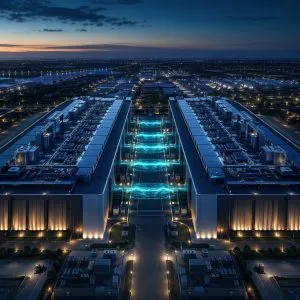
IREN is a representative neocloud. Founded in 2018 as Iris Energy, an Australian bitcoin mining company, it rebranded in early 2024 as IREN to reflect its pivot to AI infrastructure. Its flagship campus in Sweetwater, Texas, carries 2 gigawatts of electricity capacity with the potential to host 700,000 liquid-cooled NVIDIA GPU cards. In November 2024, IREN won a $9.7 billion contract from Microsoft to provide 200 megawatts of AI computing capacity — a deal that validated the neocloud model at hyperscaler scale.
Mirantis has its own origin story. The company made its name by commercializing OpenStack, the open-source cloud platform that many large enterprises and telcos deployed as private cloud infrastructure in the 2013-2018 era. As the OpenStack market matured, Mirantis pivoted to Kubernetes — specifically to the problem of managing Kubernetes at enterprise scale across multiple clusters, clouds, and on-premise environments. The result was k0rdent: a centralized management platform for Kubernetes fleets.
What k0rdent Actually Does
k0rdent is the technical centerpiece of the IREN acquisition, and understanding what it does is essential for understanding why IREN paid $625 million for it.
Managing a single Kubernetes cluster is a solved problem — the tools are mature and the talent pool is large. Managing dozens or hundreds of Kubernetes clusters, running across multiple bare-metal sites, multiple cloud providers, and multiple geographic regions, is a significantly harder problem. k0rdent addresses this through three capabilities:
Centralized cluster management. k0rdent provides a single control plane for administering multiple Kubernetes clusters — provisioning new clusters, updating configurations, applying security policies, and monitoring health across the entire fleet. The Services Controller component extends each cluster with external tools (load balancers, storage backends, monitoring agents) without requiring manual configuration at each site.
Template-based cluster replication. Administrators can save proven cluster configurations as templates and replicate them across new deployments. For IREN’s use case — spinning up new customer workload environments on its bare-metal GPU infrastructure — this capability dramatically reduces the time from customer contract to running production environment.
AI-specific infrastructure features. k0rdent includes GPU virtualization and inference autoscaling capabilities purpose-built for AI workloads. As AI model serving becomes the primary use case for enterprise Kubernetes deployments, these features position k0rdent as a specialized AI cloud operating layer rather than a general-purpose Kubernetes management tool.
Crucially, Mirantis CTO Shaun O’Meara confirmed at the acquisition announcement that k0rdent remains open source. This matters for enterprise customer adoption: organizations can evaluate and run k0rdent without vendor lock-in commitments, which accelerates the trust-building that enterprise sales require.
Advertisement
Three Signals Hidden in the Deal Structure
The $625 million all-stock transaction contains strategic signals that extend beyond the specific assets acquired.
1. Signal: Vertical Integration Is the Neocloud Moat
Hyperscalers have software moats — decades of proprietary services, APIs, and managed offerings built on top of commodity hardware. Neoclouds have hardware moats — purpose-built GPU infrastructure at a cost structure that hyperscalers cannot match because they must maintain backward compatibility with years of existing workloads. The IREN-Mirantis deal adds a software layer to IREN’s hardware moat, creating a combined offer that neither pure infrastructure operators nor pure software vendors can replicate quickly.
Mirantis had raised approximately $220 million from Intel, Goldman Sachs, and other investors before the IREN acquisition. The $625 million valuation — nearly 3x the total capital raised — reflects the strategic premium IREN was willing to pay for software control over its own infrastructure stack.
2. Signal: Enterprise Customer Acquisition Is Faster Through Software
IREN’s existing customer acquisition path requires enterprises to evaluate bare-metal GPU providers, negotiate capacity contracts, and then separately provision and manage the Kubernetes infrastructure to run their AI workloads. Mirantis’s 1,500+ enterprise customers are already running Kubernetes on infrastructure they control — and k0rdent’s management layer can now point at IREN’s GPU capacity as a deployment target. The acquisition converts a software customer base into a pipeline of infrastructure leads.
3. Signal: The Microsoft Contract Validates the Model Before the Software Acquisition
The $9.7 billion Microsoft deal from November 2024 established that a non-hyperscaler bare-metal provider can win enterprise-scale contracts from the world’s second-largest cloud company. The Mirantis acquisition follows that validation — it is IREN moving to close the software gap that would otherwise prevent it from serving enterprise customers who need more than raw GPU hours.
What Comes Next for Enterprise Cloud Buyers
The neocloud category is now large enough to deserve a formal vendor evaluation framework. Enterprise CTOs sourcing AI compute infrastructure in 2026 should assess neoclouds on five dimensions: bare-metal GPU availability and capacity planning (can they guarantee the GPUs you need, when you need them?), Kubernetes management stack (what does the orchestration layer look like — do they use k0rdent, a proprietary alternative, or leave it to the customer?), network fabric (InfiniBand or Ethernet between GPUs — this determines training throughput), power reliability and SLA guarantees (a 2-gigawatt campus means nothing if the power is unreliable), and enterprise contract flexibility (can you commit to capacity in tranches, or must you sign for all capacity upfront?).
For the hyperscalers, the IREN-Mirantis deal is a signal worth monitoring. The combined entity can now offer enterprise AI cloud deployments end-to-end — from physical GPU provisioning through Kubernetes cluster management through AI inference autoscaling — at a price point that reflects the hardware cost advantage of a purpose-built, single-workload infrastructure operator. As AI compute cost becomes a first-order competitive variable for enterprises, the neocloud value proposition becomes harder for hyperscalers to match without restructuring their own cost models.
The Algerian context is indirect but real: as global AI cloud pricing shifts due to neocloud competition, Algerian enterprises that rely on hyperscaler AI services will benefit from price pressure generated by deals like IREN-Mirantis. And as neoclouds mature their enterprise offerings, they become viable alternatives for regional providers seeking AI infrastructure partnerships without full hyperscaler dependency.
Frequently Asked Questions
What is a neocloud and how does it differ from AWS, Azure, or Google Cloud?
A neocloud is a specialized AI infrastructure provider that offers direct access to GPU compute — typically bare-metal servers rather than virtualized instances — without the broad managed service layers that define hyperscaler cloud platforms. Neoclouds trade feature breadth for hardware performance and cost efficiency: enterprises get closer to raw GPU performance, avoid the overhead of hyperscaler abstraction layers, and often pay lower per-GPU-hour rates. The tradeoff is less managed infrastructure — customers must bring their own orchestration (like Kubernetes with k0rdent) rather than relying on proprietary managed services.
Why did IREN pay $625 million for Mirantis rather than building its own Kubernetes layer?
Building enterprise-grade Kubernetes management software takes years and requires maintaining a customer base that provides real-world testing and feedback. Mirantis’s k0rdent already has 1,500+ enterprise customers and open-source community adoption across the Kubernetes ecosystem. The $625 million all-stock deal buys proven software, a global enterprise customer base, and a development team with deep Kubernetes expertise — all of which would take 3-5 years and significant capital to replicate organically. The acquisition premium over Mirantis’s $220 million in total raised capital reflects the strategic value of that head start.
How does k0rdent remaining open source affect enterprise adoption?
Open-source licensing eliminates the initial vendor lock-in concern that slows enterprise software adoption. Enterprise customers can evaluate k0rdent, run it in their environments, and build internal expertise before committing to IREN’s commercial infrastructure. This “land via open source, expand via infrastructure” model is established practice in the cloud-native ecosystem — HashiCorp, Confluent, and Elastic all used similar paths. For IREN, it accelerates k0rdent adoption while building the trust and technical integration that makes IREN’s bare-metal GPU capacity the natural next step for k0rdent enterprise customers.
—
Sources & Further Reading
- AI Data Center Operator IREN to Acquire Mirantis for $625M — SiliconAngle
- IREN Announces Acquisition of Mirantis to Strengthen AI Cloud Delivery — GlobeNewswire
- Neocloud IREN Buys OpenStack Champion Mirantis — The Register
- IREN to Buy Mirantis for $625M to Strengthen Bare-Metal GPU and Kubernetes Stack — SDxCentral
- Can IREN Build a Full-Stack AI Cloud? The Mirantis Acquisition Makes the Case — Futurum Group