Why AI Memory Is Eating Everything Else
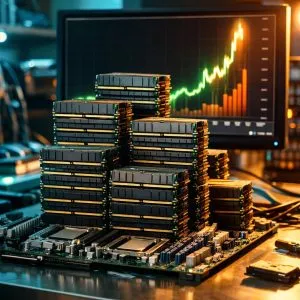
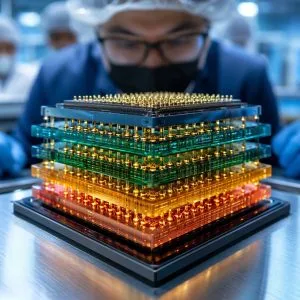
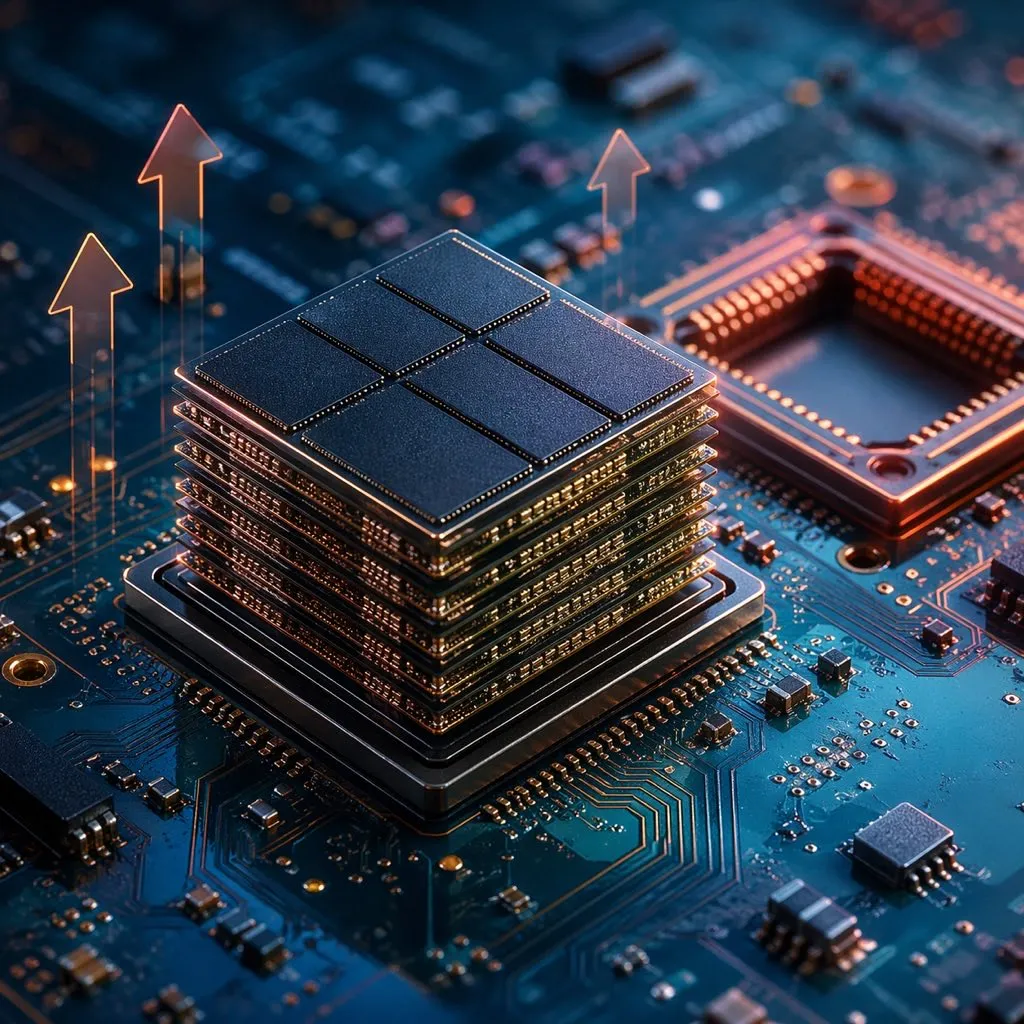
Modern AI accelerators do not use standard server DRAM. They use HBM — High Bandwidth Memory — stacks bonded directly to the GPU or accelerator package. HBM delivers the 3-5 TB/s memory bandwidth that large language model inference and training demand; traditional DDR5 cannot approach it.
HBM is also fabricated on the same DRAM production lines that serve servers, PCs, and phones, and it requires expensive advanced packaging (TSV, 2.5D interposers). Every wafer allocated to HBM is a wafer not producing standard DRAM.
As Samsung, SK Hynix, and Micron responded to unprecedented HBM orders from NVIDIA and AMD through 2024-2025, they progressively reallocated capacity. According to Samsung warnings reported by Network World, memory shortages are now being described as “industry-wide” with price surges expected across 2026. SHI’s 2026 memory shortage strategic outlook and IDC’s memory-crisis analysis both concur: this is not a short-lived spike.
Where the Pricing Impact Shows Up
The shortage ripples through several markets simultaneously:
Server DRAM (DDR5 RDIMM)
The memory that populates cloud servers. Spot and contract prices have been moving up through late 2025 and into 2026 as hyperscaler order volumes compete with enterprise server OEMs. tech-insider.org’s breakdown of the 2026 memory chip shortage highlights how AI and consumer electronics are colliding for the same pool of DRAM supply.
HBM3 / HBM3E / HBM4
The category actually in structural shortage. Allocated months in advance to NVIDIA, AMD, and custom-silicon programs. Enterprise buyers essentially cannot acquire HBM directly — it flows through accelerator vendors and hyperscaler procurement.
Consumer DRAM (DDR5 UDIMM, LPDDR)
PC and smartphone memory is collateral damage. IDC’s analysis of the global memory shortage crisis flags rising PC and smartphone pricing as a secondary effect, with DRAM content per device being squeezed to protect margins.
SSD NAND flash
Slightly different dynamic but linked — as memory vendors reallocate fab resources, NAND capacity planning is also affected, and enterprise SSD pricing has firmed up alongside DRAM.
Advertisement
How It Reprices Cloud
Cloud instance prices reflect hardware costs with some lag. Three channels bring the DRAM crunch into cloud bills:
- New instance generations cost more to deploy. When AWS, Azure, or Google Cloud refreshes their fleet, the memory BOM is a larger share of total server cost. Reserved-instance pricing on new generations tends to come in higher than prior-gen equivalents.
- GPU instances get repriced upward. AI instances carry HBM in the accelerator — and HBM is the exact category in shortage. Hyperscalers have been quietly tightening discounts and raising list prices on GPU instance families.
- Memory-heavy workloads (R-family, X-family) see the most direct pressure. In-memory databases, real-time analytics, and large-cache workloads that live or die on RAM capacity are most exposed.
The effect is not always visible as a published price increase. Often it appears as withdrawn discounts, shorter commitment incentives, and reduced willingness to negotiate large enterprise deals.
The Secondary Effects Enterprise Buyers See
Beyond sticker prices, the crunch manifests in operational ways:
- Longer lead times for on-prem servers. Enterprise server OEMs have quoted lead times stretching from weeks to multiple months for memory-dense configurations.
- DRAM capacity rationing. Some cloud providers have become stricter about bursting memory-heavy workloads into specific regions, effectively rationing capacity.
- Pressure on 3-year refresh cycles. Enterprises that were planning a 2026 server refresh are looking at delaying (extending lifecycles) or accelerating (buying ahead of further price increases) — both strategies have been reported.
- Used server market tightening. Legitimate secondary-market gear has become more valuable as new-equipment prices rise.
A Playbook for 2026
Three moves make sense for most IT buyers:
1. Lock commitments on memory-heavy workloads now
If you are running in-memory databases (SAP HANA, Redis at scale, large-cache analytics), 3-year reserved pricing today is likely cheaper than 1-year pricing in 12 months. Lock in.
2. Right-size AI cloud usage
Audit your GPU instance utilization. Underused GPU reservations are expensive when the underlying HBM is scarce — right-sizing frees capacity and reduces bill exposure.
3. Budget conservatively for 2027
Most forecasts suggest the shortage persists into 2027, with eventual relief as new fab capacity (Samsung, SK Hynix, Micron, and expanding HBM packaging lines) comes online. But the relief lags. Plan cloud budgets with 5-15% headroom beyond 2025-level spend assumptions.
The DRAM crunch is a reminder that “cloud is software” is only half true. Underneath every instance sits physical silicon, and the physical silicon market is in its tightest state in over a decade.
Frequently Asked Questions
Why is DRAM in shortage when there isn’t a pandemic or specific supply shock?
Unlike past shortages triggered by disasters or pandemic demand, the 2026 DRAM crunch is driven by structural reallocation: memory manufacturers are prioritizing HBM (High Bandwidth Memory) production for AI accelerators, which uses the same DRAM fab capacity. As more wafers go to HBM, less standard DRAM is produced, tightening supply across servers, PCs, and smartphones.
Will DRAM prices come back down in 2027?
Forecasts vary, but most analysts including IDC and major industry publications expect some easing in 2027 as new fab capacity and HBM packaging lines come online. However, the relief is likely gradual rather than sharp. Budget conservatively — assume 2027 memory pricing remains elevated compared to 2023-2024 levels, even if it improves from 2026 peaks.
Does this affect cloud customers who don’t use AI?
Yes. Cloud providers refresh their fleets with more expensive memory, which feeds into instance pricing for general-purpose compute, memory-optimized instances, and even storage (since DRAM is used in SSD controllers). Non-AI workloads see indirect but real pricing pressure through reserved-instance renewals, lost discounts, and memory-dense instance family repricing.