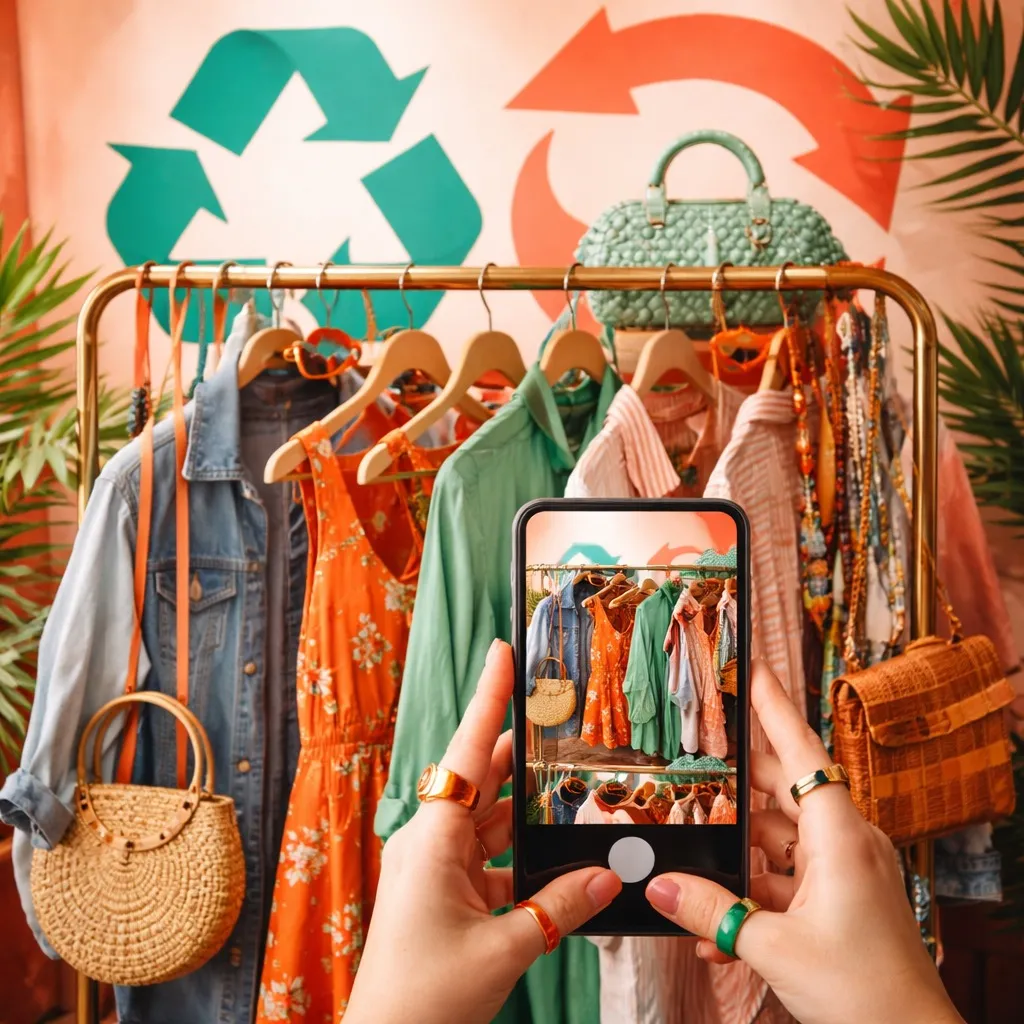
Why eBay Paid $1.2 Billion for a Gen Z Resale App
On February 18, 2026, eBay announced it would acquire Depop — the London-born, Gen Z-favorite resale marketplace — from Etsy for approximately $1.2 billion in cash. The deal, expected to close in Q2 2026, was not a surprise to anyone tracking the recommerce sector. What it confirmed was definitive: secondhand commerce has become too large, too fast-growing, and too culturally embedded to remain peripheral.
Depop hit approximately $1 billion in gross merchandise sales in 2025, with nearly 60% year-over-year growth in the US market. The platform had over 35 million registered users, 7 million active buyers (nearly 90% under 34), and 3.2 million active sellers. eBay CEO Jamie Iannone described it as “an amazing brand” and an opportunity to “advance one of our newest and fastest-growing Focus Categories” while reaching a younger demographic across the expanding recommerce landscape.
For eBay, the logic was existential. The company generated $79.6 billion in GMV in 2025, with recommerce accounting for over 40% of that volume. But its user base skewed older. Depop delivers what eBay cannot build organically: a mobile-first, social-commerce platform with cultural credibility among the generation that treats secondhand not as a compromise but as a first choice.
Etsy had acquired Depop for $1.625 billion in 2021 but struggled with integration. Depop became a 350-basis-point drag on Etsy’s adjusted EBITDA margins, prompting the divestiture. eBay’s lower price reflects both Etsy’s missteps and eBay’s stronger strategic fit — shared recommerce DNA, authentication infrastructure, and global logistics networks.
The $230 Billion Recommerce Market
The Depop deal is one data point in a much larger transformation. According to estimates from market research firms including Business Research Company and GlobalData, the global recommerce market exceeds $230 billion in 2026. Secondhand apparel alone is projected to reach $486 billion by 2031, growing at a 16% compound annual rate according to ResearchAndMarkets.
The growth rate is the headline: recommerce is expanding four to five times faster than overall e-commerce, which grows at 8-10% annually.
The demographic driver is unmistakable. Over 90% of US consumers have purchased a secondhand item in the past year, according to the 2025 OfferUp Recommerce Report. Among Gen Z, more than half now check resale platforms before looking at new retail options. Nearly half of Gen Z consumers sold a pre-owned item for the first time in 2025. The generation treats resale not as a fallback but as a default.
Economics reinforces the cultural shift. A Gen Z consumer earning $35,000 a year can access designer fashion, quality electronics, and premium home goods at 30-70% discounts through resale platforms. In an era of persistent inflation and housing cost pressure, recommerce is not just sustainable — it is rational.
Advertisement
Technology as the Trust Infrastructure
Recommerce’s growth has been enabled by technology that addresses the fundamental challenge of resale markets: trust.
AI-powered authentication has transformed luxury resale. Companies like Entrupy use machine learning trained on millions of microscopic images to authenticate luxury goods, analyzing material composition, stitching patterns, and hardware details with 99.86% accuracy across major luxury brands. eBay’s Authenticity Guarantee program routes watches, sneakers, and handbags through physical authentication centers supported by AI pre-screening. Combining Depop’s volume with eBay’s authentication infrastructure could create the most trusted resale platform in the market.
AI pricing and listing automation removes friction. Computer vision identifies a garment’s brand, category, and condition from photos. Natural language models generate descriptions. Sellers can list items in under 60 seconds, compared to the 5-10 minutes required by manual entry.
The EU’s Digital Product Passport (DPP) regulation is building the infrastructure for the next phase. The EU will establish a central DPP registry by July 2026, with mandatory digital passports for batteries beginning February 2027 and textiles by mid-2027. These passports will embed verifiable information about materials, manufacturing, and repairability directly into products — dramatically reducing the information asymmetry that has historically undermined used goods markets.
The Competitive Landscape
The eBay-Depop combination enters a crowded field. Vinted, the European recommerce giant, has surpassed 100 million registered users with a zero-commission model that drives high engagement across 20+ countries. ThredUp, the largest managed online resale marketplace in the US, reached approximately 1.65 million active buyers and positive annual cash flows for the first time in 2025. Poshmark, acquired by South Korean tech conglomerate Naver for $1.2 billion in 2023, serves 80 million registered users across the US, Canada, and Australia. Back Market, the refurbished electronics leader valued at approximately $5.5 billion, cleared $3.5 billion in GMV in 2025 with 32% year-over-year growth.
Major brands are not ceding ground. Nike Refurbished, Patagonia’s Worn Wear, and Lululemon’s Like New programs let brands capture resale margins and control secondhand brand presentation. Amazon Renewed offers Prime-eligible certified refurbished electronics. The line between new and secondhand retail is blurring.
Consolidation is likely. The market has dozens of vertical specialists and geographic players, many lacking the scale to build the authentication, logistics, and AI technology needed to compete long-term. The eBay-Depop deal may be the first of a wave.
The Environmental and Economic Equation
The environmental case is compelling. The fashion industry produces an estimated 92 million tonnes of textile waste annually and accounts for 2-8% of global carbon emissions, according to UNEP. ThredUp estimates that buying a used garment instead of new reduces its carbon footprint by 82%. At the market’s current scale, recommerce displaces tens of billions of dollars in new production annually.
Recommerce is also an economic equalizer. It gives lower-income consumers access to higher-quality goods at affordable prices, and it gives ordinary people a way to monetize possessions they no longer use. For small sellers, resale has become a legitimate income source, with top sellers on Depop and Poshmark generating six-figure annual revenues.
The regulatory tailwind is strengthening. Beyond DPPs, right-to-repair legislation in the EU and several US states extends product lifespans. Extended producer responsibility laws make manufacturers financially responsible for end-of-life handling. France’s anti-waste law already requires certain retailers to donate or resell unsold inventory rather than destroying it.
Frequently Asked Questions
What is recommerce and how does it differ from traditional resale?
Recommerce (reverse commerce) refers to the organized, technology-enabled buying and selling of previously owned goods through digital platforms. It differs from traditional resale — garage sales, pawn shops, informal classifieds — in its use of AI for authentication and pricing, integrated payment systems, buyer protection policies, and optimized logistics. Modern platforms like eBay, Depop, and Vinted create an experience approaching the convenience and trust of buying new, while offering 30-70% price advantages. The global recommerce market exceeds $230 billion in 2026, growing four to five times faster than overall e-commerce.
Why did eBay acquire Depop instead of building its own Gen Z platform?
eBay acquired Depop for $1.2 billion because cultural credibility with Gen Z consumers cannot be manufactured through marketing campaigns or platform redesigns. Depop’s 35 million registered users, mobile-first social commerce experience, and brand authenticity represent assets that would take years and far more investment to build organically. eBay already generates $79.6 billion in GMV with over 40% from recommerce, but its user demographic skews older. Depop provides a direct pipeline to consumers aged 18-34 who are forming their commerce habits now. Combined with eBay’s authentication technology and global logistics, the merged entity becomes the most comprehensive recommerce platform in the world.
How will EU Digital Product Passports change secondhand shopping?
The EU’s Digital Product Passport regulation will embed digital identifiers in products containing verified information about materials, manufacturing, repairability, and recycling instructions. The EU will establish a central DPP registry by July 2026, with mandatory passports for batteries from February 2027 and textiles from mid-2027. For secondhand buyers, DPPs eliminate the biggest barrier to used goods purchases: uncertainty about what you are buying. Scanning a product will instantly verify its origin, material composition, and repair history. Platforms that integrate DPP data into their discovery and listing flows will gain a significant competitive advantage as the regulation expands across product categories.
Sources & Further Reading
- eBay to Acquire Depop from Etsy — eBay Inc. — Official acquisition announcement with deal terms, Depop metrics, and strategic rationale
- Etsy Sells Depop to eBay for $1.2 Billion — CNBC — Deal analysis, Etsy’s strategic reset, and market reaction
- eBay Inc. Reports Fourth Quarter and Full Year 2025 Results — eBay’s $79.6B GMV, 40%+ recommerce share, and financial position
- ThredUp 2025 Resale Report — Secondhand market sizing, consumer behavior trends, and growth projections
- Secondhand Apparel Market Analysis Report 2026 — ResearchAndMarkets — $486B market projection by 2031 with 16% CAGR
- EU Digital Product Passport — European Commission — DPP regulation framework, timeline, and product categories
- Back Market Clears $3.5 Billion in 2025 GMV — Refurbished electronics market leader performance and growth
- UNEP: Sustainable Fashion and Textile Waste — 92 million tonnes textile waste, fashion industry emissions data