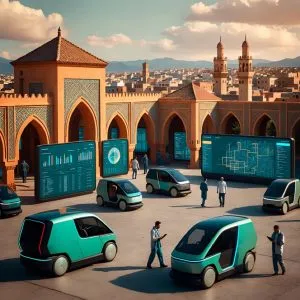
Every conversation about Algerian startups eventually lands on delivery apps. Yassir, TemTem, Ecotrack — the consumer-facing, last-mile layer gets the headlines and the funding. But beneath the surface of food delivery and e-commerce fulfillment lies a vastly larger, more complex, and more consequential problem: Algeria’s business-to-business logistics infrastructure remains stubbornly analog.
The geography tells the story before the numbers do. Algeria is the largest country in Africa by land area — 2.38 million square kilometers, stretching from the Mediterranean coast to the deep Sahara. Its road network, the densest in Africa at over 112,000 kilometers of paved highway, is concentrated in the northern coastal strip where roughly 70% of the population lives. The south is served by a handful of arterial routes that must cover distances comparable to crossing Western Europe. Port infrastructure is congested: the Port of Algiers handles 10 to 12 million tons of cargo annually across a container terminal managed by DP World, while ports at Oran, Bejaia, and Skikda operate at or near capacity.
Moving goods across this geography — from factory to warehouse, warehouse to retailer, farm to export terminal — is expensive, slow, and opaque. Algeria scored just 2.5 out of 5 on the World Bank’s 2023 Logistics Performance Index, reflecting persistent friction in customs, infrastructure quality, and shipment tracking. Most of this inefficiency is not in the last mile. It is in the middle mile: the B2B backbone of warehousing, freight, fleet management, and cold chain that makes an economy function.
A new generation of Algerian startups is targeting this middle mile. They are less glamorous than delivery apps but potentially far more transformative.
The Warehouse Problem: Fragmented, Informal, and Analog
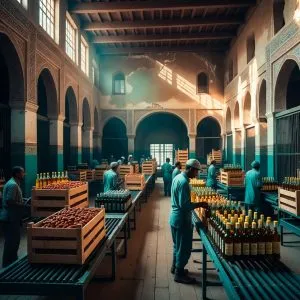
Algeria’s warehousing sector is a patchwork of state-owned logistics zones, private facilities of wildly varying quality, and informal storage operations that barely deserve the name. Outside the industrial zones of Rouiba-Reghaia — a 1,000-hectare complex east of Algiers housing over 200 industrial units and employing 27,000 workers — and a handful of other clusters around Oran and Constantine, modern warehouse space is scarce.
The consequences ripple through the entire supply chain. Manufacturers cannot find suitable storage near their markets. Importers hold inventory in containers at ports because warehouse space is unavailable or unreliable, contributing to port congestion. Retailers operate with minimal inventory buffers, leading to frequent stockouts. Food producers lose significant percentages of their output to spoilage because of inadequate storage conditions.
What Startups Are Building
Warehouse management systems (WMS). The most immediate opportunity is software. The vast majority of Algerian warehouses — even those operated by large FMCG distributors and pharmaceutical wholesalers — rely on manual tracking, paper-based inventory systems, or at best, basic spreadsheets. Startups building Arabic-French bilingual WMS solutions tailored to Algerian business practices are finding receptive customers among mid-size distributors who are losing money to inventory errors, order fulfillment delays, and shrinkage. The pitch is straightforward: if you are already losing 3-5% of inventory value to errors, a modern WMS pays for itself in months.
On-demand warehousing platforms. Inspired by Flexe in the United States and Stord globally, a few Algerian startups are building marketplace models that connect businesses needing temporary or overflow storage with warehouse operators who have spare capacity. The model is particularly relevant during seasonal peaks — Ramadan (when FMCG demand spikes), the agricultural harvest season, and the back-to-school period.
Fulfillment-as-a-service. E-commerce sellers in Algeria face a classic chicken-and-egg problem: they need warehousing and fulfillment infrastructure to scale, but they cannot afford dedicated warehouse space until they have scale. Maystro Delivery, founded in 2019 in Kouba, Algiers, has emerged as a significant player here — operating 16 warehouses across Algeria and Tunisia, with over 500 employees and 600 drivers serving more than 2,000 business clients. The company handles warehousing, order preparation, packaging, cash collection, and delivery in a single integrated service, claiming 75% of orders delivered within 24 hours. Ecotrack, founded in 2020, offers similar e-commerce logistics covering all 58 wilayas with stock management, order preparation, and cash-on-delivery services — all built and developed entirely in-house in Algeria.
Fleet Management: Digitizing Algeria’s Trucking Industry
Algeria’s freight transport sector is dominated by small operators. The vast majority of Algeria’s trucking capacity is controlled by owner-operators running fleets of one to five vehicles. There is no dominant national carrier comparable to what exists in more mature markets. The sector is fragmented, informal, and overwhelmingly analog.
Truck drivers navigate using personal knowledge and phone calls. Dispatching is manual. Load optimization is nonexistent — trucks frequently return empty from deliveries, wasting fuel and capacity. Maintenance is reactive rather than preventive. Insurance and compliance documentation is paper-based.
The Digitization Opportunity
GPS tracking and fleet visibility. The most basic need — knowing where your trucks are — remains unmet for most Algerian fleet operators. Algeofleet, founded in 2007 in Baba Hassen near Algiers, is one of the established players in this space. Their internally developed ACTIVEGPS platform provides real-time vehicle tracking via GPS/GPRS with web and mobile dashboards, geofencing alerts, RFID-based driver management, and route history analysis. Their model — GPS tracking hardware bundled with a software subscription — represents the foundational layer of fleet digitization that Algeria’s trucking sector still needs to adopt widely.
Fuel management. Fuel is the single largest operating cost for Algerian trucking companies, and fuel theft or diversion is a persistent problem. Startups building fuel monitoring systems — using flow sensors, tank-level monitors, and consumption analytics — offer fleet operators a way to cut costs by 10-15%. The ROI is immediate and tangible, which makes this one of the easier sells in the logistics-tech space.
Driver management and compliance. Algeria’s road safety record is a serious concern. The country recorded over 22,900 traffic accidents in 2022, with a fatality rate of approximately 21.8 per 100,000 population — well above the global average and among the highest in the MENA region. Startups building driver behavior monitoring systems — tracking harsh braking, speeding, fatigue indicators, and seat belt usage — address both a safety imperative and a commercial one, as insurance companies are beginning to explore telematics-based discounts. The challenge is cultural: many owner-operators resist monitoring as an intrusion.
Predictive maintenance. Connected vehicle diagnostics that predict breakdowns before they happen represent a more advanced play. By monitoring engine parameters, tire pressure, brake wear, and other indicators via IoT sensors, startups can help fleet operators shift from reactive to preventive maintenance — reducing downtime, extending vehicle life, and preventing the roadside breakdowns that are a daily reality on Algeria’s highways.
Cold Chain: The Agricultural Export Imperative
Algeria’s agricultural sector is substantial — dates, citrus fruits, vegetables, olive oil, and seafood are all produced at scale. Olive oil production alone reached 85,000 tons in the 2024/2025 season, with a record 150,000 tons projected for 2025/2026. The Deglet Nour date variety from Biskra-Tolga holds a Geographical Indication designation since 2016. Yet agricultural exports remain far below their potential — 99% of olive oil production stays in the domestic market — and the cold chain gap is a primary reason.
The cold chain — the continuous temperature-controlled supply chain from farm to consumer — is weak at every link in Algeria. On-farm cold storage is rare outside the largest operations. Refrigerated transport is scarce and expensive. Cold storage facilities at wholesale markets are insufficient. And the cold chain infrastructure at export terminals falls short of international phytosanitary and food safety standards.
The result: Algeria loses an estimated 20-30% of perishable agricultural output to post-harvest spoilage, consistent with broader North African averages documented by the FAO. For a country whose non-hydrocarbon exports reached $7 billion in 2024 — up 45% year-on-year — but where agricultural products remain a small fraction, this waste represents both an economic and a food security failure.
Cold Chain Startups
Temperature monitoring and traceability. The simplest and most scalable cold chain innovation is monitoring: IoT sensors that track temperature, humidity, and location throughout the supply chain, with alerts when conditions deviate from acceptable ranges. Startups deploying battery-powered sensors in refrigerated trucks, cold rooms, and shipping containers provide exporters with the continuous monitoring records that European and Gulf importers increasingly require as a condition of purchase.
Shared cold storage. Building cold storage facilities is capital-intensive, but the demand is clear. A few startups are pursuing asset-light models — leasing or partnering on cold room construction, then selling storage-as-a-service to multiple agricultural cooperatives and food processors. The Mitidja plain (Algeria’s most productive agricultural zone) and the date-producing regions around Biskra and Touggourt are natural markets.
Pre-cooling and pack-house operations. The gap between farm harvest and entry into the cold chain is where most spoilage occurs. Startups building mobile pre-cooling units — containerized systems that can be deployed to farms during harvest season — address a critical bottleneck. These units rapidly bring produce to the required temperature before it enters refrigerated transport, dramatically extending shelf life.
Freight Matching: Algeria’s Uber-for-Trucks Moment
The freight matching model — platforms that connect shippers who need to move goods with carriers who have available capacity — has produced major startups in comparable markets. Egypt’s Trella raised over $55 million in total funding and operates across four countries. Saudi Arabia’s TruKKer raised over $230 million across multiple rounds, including a $100 million pre-IPO round in 2022, and now connects over 60,000 transporters with 1,200+ businesses across nine countries. The fundamental problem these platforms solve — matching fragmented supply with fragmented demand, reducing empty miles, and bringing price transparency to opaque markets — applies with full force to Algeria.
The Algerian freight matching space is still nascent. Several startups are building platforms targeting the major intercity corridors — Algiers-Oran, Algiers-Constantine, Algiers-Setif — handling load posting, carrier matching, and basic tracking. The specialized opportunity in temperature-controlled freight for agricultural goods is particularly compelling, connecting farms and cooperatives with refrigerated transport for perishable goods.
The broader challenge for Algerian freight matching startups is payments and trust. The trucking sector operates largely on cash, with payment terms that can stretch to 60-90 days. Shippers are wary of entrusting cargo to unknown carriers. Carriers are wary of shippers who pay late or dispute charges. Building the trust layer — through ratings, escrow payments, insurance, and dispute resolution — is as important as building the matching algorithm.
Advertisement
Customs and Port Logistics: The Final Frontier
Algeria’s ports are the arteries of its import-dependent economy. Approximately 95% of Algeria’s foreign trade by volume moves by sea, and the customs clearance process remains one of the most significant friction points in the entire supply chain.
Customs clearance in Algeria involves multiple government agencies (customs, commerce ministry, health inspectors, standards bodies), stacks of paper documentation, and processing times that can stretch from days to weeks. The digitization of customs procedures has been a long-running government project — the original SIGAD system (Systeme d’Information et de Gestion Automatisee des Douanes) was first deployed in 1995 and is now being replaced by the new ALCES platform (Algerian Customs Electronic System), which aims to digitize all customs procedures and facilitate electronic data interchange between all foreign trade stakeholders.
Customs brokerage platforms. Startups building digital customs brokerage platforms — automating document preparation, tracking clearance status in real-time, and providing cost estimates before shipments arrive — are addressing a pain point that affects virtually every business in Algeria that imports or exports goods. The opportunity is real, but startups must navigate the delicate politics of a sector where established customs brokers have significant entrenched interests.
Port community systems. The broader vision — shared digital platforms that connect all stakeholders in port logistics (shipping lines, terminal operators, customs, freight forwarders, truckers, warehouse operators) — remains aspirational in Algeria. But the components are being built piece by piece, and the government’s push toward trade facilitation provides a favorable policy backdrop.
Regional Benchmarks: Learning from Neighbors
Egypt is the most relevant benchmark. With a population three times Algeria’s and a similarly fragmented logistics sector, Egypt has produced several logistics-tech startups that have raised significant funding and achieved meaningful scale. Trella (freight matching) raised over $55 million in total funding. Bosta (last-mile and fulfillment) has completed over 10 million shipments and recently launched the largest automated sorting machine in the Middle East. Flextock (fulfillment-as-a-service) raised a $12.6 million Series A in February 2026 to scale its unified commerce infrastructure across MENA. The Egyptian logistics-tech ecosystem benefits from a deeper venture capital market, a larger domestic market, and stronger connections to global logistics networks.
Saudi Arabia offers lessons in how government-driven logistics modernization can create startup opportunities. The Kingdom’s National Industrial Development and Logistics Program (NIDLP), one of 13 Vision 2030 programs, has invested heavily in logistics zones, port modernization, and digital trade infrastructure — including a dedicated National Transport and Logistics Strategy and a Saudi Logistics Academy. Startups like TruKKer have scaled rapidly on the back of this infrastructure investment.
Morocco demonstrates how trade-oriented logistics policy can benefit startups. The Tanger Med port complex handled over 10.2 million TEUs in 2024 — ranking 17th worldwide and first in Africa and the Mediterranean — catalyzing an entire logistics ecosystem around it, including tech-enabled freight forwarding, customs brokerage, and supply chain visibility platforms.
Algeria has scale advantages (largest country in Africa, strategic Mediterranean position, significant trade volumes) but ecosystem disadvantages (less VC funding, slower regulatory reform, less developed digital infrastructure).
What Success Looks Like
The logistics-tech startups that will win in Algeria share several characteristics.
They solve problems that cost money today. The most fundable logistics-tech startups are not those promising futuristic supply chain optimization but those eliminating waste that businesses already recognize and quantify: fuel theft, inventory shrinkage, spoilage, empty truck miles, customs delays. The ROI must be immediate and provable.
They navigate the informal economy. Algeria’s logistics sector operates significantly in the informal economy — cash payments, unregistered operators, undocumented transactions. Startups that insist on full formalization from day one will struggle. Those that meet the market where it is — accepting cash while building pathways to digital payments, onboarding unregistered truckers while helping them formalize — will build the largest networks.
They build for Algeria’s geography. A logistics platform optimized for the compact geography of Singapore or the Nile corridor of Egypt will not work for a country that spans the Mediterranean to the Sahara. Algerian logistics-tech must account for the vast distances, sparse infrastructure in the south, and the concentration of economic activity in the northern coastal strip.
They partner with the state. Unlike pure consumer-tech startups that can operate independently of government, logistics-tech startups inevitably intersect with public infrastructure — ports, highways, customs, regulatory frameworks. The most successful will be those that position themselves as partners to government modernization efforts rather than disruptors of established systems.
Talent and Technology Constraints
Building logistics-tech in Algeria requires navigating a talent landscape that is deep in some areas and thin in others.
Algeria’s engineering universities — particularly ESI (Ecole Nationale Superieure d’Informatique), USTHB (Universite des Sciences et de la Technologie Houari Boumediene), and the University of Constantine — produce strong computer science graduates by regional standards. Software development talent is available, if competitive to recruit. Algerian developers are increasingly working remotely for European and Gulf companies at salary levels that local startups struggle to match.
Where the talent gap bites hardest is at the intersection of software and logistics domain expertise. Building a warehouse management system requires not just coding ability but deep understanding of inventory management, order fulfillment workflows, and the specific quirks of Algerian distribution networks. Fleet management platforms need engineers who understand vehicle telematics, cellular connectivity across Algeria’s varied terrain, and the operational realities of a fragmented trucking industry. Cold chain solutions demand expertise in refrigeration engineering, food safety standards, and agricultural supply chains.
This cross-domain talent barely exists in Algeria today. Most logistics-tech founders bridge the gap through founding teams that combine a technical cofounder with a logistics industry veteran — but finding that combination is difficult in a market where the tech and logistics worlds have historically operated in separate orbits.
On the technology side, Algeria’s mobile connectivity provides a workable foundation. Over 91% of mobile connections are now broadband (3G, 4G, or 5G), and there were 54.8 million cellular connections in Algeria at the start of 2025 — equivalent to 116% of the population. The remaining connectivity gaps — in the deep south, along rural routes, and inside warehouse structures with poor signal — are real but manageable with offline-first design and periodic sync architectures.
Payment infrastructure remains a bigger constraint. Algeria’s CIB interbank cards and the BaridiMob mobile money service — recently upgraded with Baridi Pay, a QR-code-based contactless payment system launched in June 2025 — are expanding digital payment options. But cash still dominates B2B logistics transactions. Startups must build their own payment reconciliation systems or partner with the growing number of fintech companies working to digitize commercial payments.
The Road Ahead
Algeria’s logistics sector is at an inflection point. The government’s stated commitment to economic diversification beyond hydrocarbons requires a logistics infrastructure that can support manufacturing, agricultural exports, and intra-African trade. The current infrastructure cannot do this.
Several macro trends are converging to create a favorable window for logistics-tech startups.
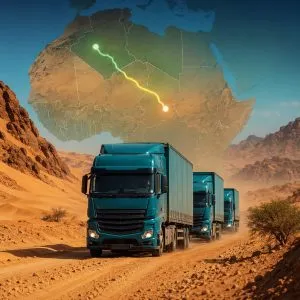
AfCFTA and intra-African trade. The African Continental Free Trade Area, which Algeria has ratified and for which it has finalized its Schedules of Tariff Concessions, promises to reshape trade flows across the continent. Algeria’s geographic position — bridging North Africa and the Sahel, with road connections to Niger, Mali, and Tunisia — could make it a critical logistics corridor if the infrastructure exists to support it. The Trans-Saharan Highway, connecting Algiers to Lagos, is over 90% complete, with Algeria’s 2,400-kilometer section fully finished. Startups that build cross-border logistics capabilities now will be positioned for a market that barely exists today but could be transformative within five years.
Agricultural export diversification. Algeria’s government has identified agricultural exports as a priority sector for economic diversification. Dates, olive oil, and citrus already have established export markets. With olive oil production projected to reach a record 150,000 tons in 2025/2026 — potentially generating the country’s first significant exportable surplus — the need for cold chain infrastructure, quality traceability, and customs logistics has never been more urgent.
E-commerce growth. Algeria’s e-commerce sector is projected to reach $1.5-1.9 billion in revenue in 2025, with user penetration expected to grow from 16.3% to 19.4% by 2029. Yassir’s acquisition of the Uno hypermarket chain from Cevital in 2026 — rebranding stores as “Yassir Market” — signals the convergence of physical retail, e-commerce, and logistics infrastructure. Every e-commerce order requires warehousing, fulfillment, and delivery infrastructure. The logistics-tech startups that serve this growing market will scale alongside it.
The opportunity is not marginal — it is structural. Every percentage point reduction in logistics costs represents billions of dinars in economic value. The startups building warehouse management systems, fleet tracking platforms, cold chain monitoring solutions, and freight matching marketplaces are not just building businesses. They are building the infrastructure that Algeria’s economic diversification depends on.
Frequently Asked Questions
Why is last-mile delivery getting all the attention when middle-mile logistics is the bigger problem?
Last-mile delivery is consumer-visible and easier to understand. When you order food through Yassir or TemTem, you see the delivery in action. Middle-mile logistics — moving goods between warehouses, factories, and retailers — is invisible to consumers but accounts for a much larger share of total logistics costs. The startups tackling warehousing, fleet management, and freight matching are solving problems that directly impact the cost of every product on every shelf in Algeria.
How do Algerian logistics-tech startups compete with international software providers?
International WMS, fleet management, and freight platforms typically do not support Algeria’s specific requirements: Arabic-French bilingual interfaces, CIB and BaridiMob payment integration, compliance with Algerian customs and regulatory frameworks, and the operational realities of a cash-heavy informal economy. Local startups that understand these nuances have a structural advantage over global incumbents.
What is the cold chain gap costing Algeria in concrete terms?
Algeria loses an estimated 20-30% of perishable agricultural output to post-harvest spoilage. With olive oil production projected at 150,000 tons for 2025/2026 and date exports growing, each percentage point of spoilage prevention translates into millions of dollars in preserved value. Beyond economics, the food security implications are significant for a country that still imports substantial quantities of food.
Sources & Further Reading
- World Bank Logistics Performance Index 2023 — Global Rankings
- Logistics Cluster — Algeria Port and Road Network Assessment
- WCO News — Algeria Launches New Customs Information System (ALCES)
- Tralac — Status of AfCFTA Ratification
- Ecofin Agency — Algeria Expects Record Olive Oil Output in 2025/2026
- Africanews — Trans-Saharan Highway Linking Algiers to Lagos Nears Completion
- WeeTracker — Yassir Acquires Uno Hypermarkets to Expand Omnichannel Retail in Algeria
- WeAreTech Africa — Maystro Delivery Streamlines E-commerce Logistics
- DataReportal — Digital 2025: Algeria
- Disrupt Africa — Flextock Raises $12.6M Series A for E-Commerce Infrastructure
- WHO — Road Safety Algeria 2023 Country Profile
- TruKKer — Saudi Logistics Startup Raises $100M Series C