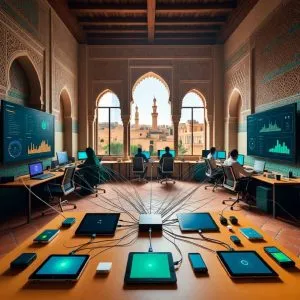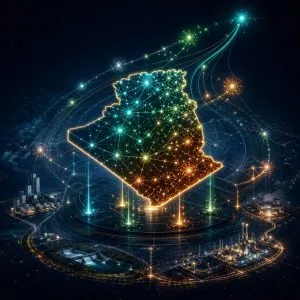
Algeria has 27.5 million social media users and 25.4 million YouTube viewers. Scroll through Instagram, TikTok, or YouTube on any evening for proof: comedy sketches in Darja, cooking tutorials, fashion hauls, tech reviews, and political commentary stream out of bedrooms, cafes, and makeshift studios from Algiers to Tamanrasset. The creative energy is undeniable.
But there is a problem. Almost none of that energy generates sustainable income for its creators.
While influencer marketing deals exist, the monetization infrastructure that supports creator economies in the United States, Europe, or even neighboring markets like Egypt and Morocco remains largely absent in Algeria. PayPal functionality for Algerian users is severely restricted. YouTube monetization payouts are complicated by banking limitations. Patreon and similar patronage platforms are effectively inaccessible. And the local digital advertising market, while growing toward an estimated $270 million, is small relative to the audience sizes Algerian creators command.
This article explores the current state of Algeria’s creator economy, with a particular focus on podcasting. It examines who is creating, how they are (or are not) making money, what structural barriers exist, and what models could work in the Algerian context.
The Algerian Podcast Scene in 2026
Growth From a Small Base
Five years ago, Algerian podcasting barely existed. A handful of diaspora-produced shows addressed Algerian topics from Paris or Montreal, but locally produced podcasts were rare. By 2026, the landscape has shifted. Dozens of Algerian podcasts now publish regularly on Spotify, Apple Podcasts, YouTube, and other platforms, spanning a wide range of content:
- Business and entrepreneurship: Shows like DINIRO cover Algeria’s startup scene, business advice, and economic analysis
- Technology: Tech review podcasts, developer community shows, and digital transformation discussions
- Culture and society: Conversations about Algerian identity, diaspora life, social issues, and cultural trends, including platforms like Algeria Chat
- Sports: Football analysis, particularly around the Algerian national team and domestic league
- Education: Academic content, language learning (particularly English and French), and career advice
- Comedy and entertainment: Conversational comedy shows, often in Darja, that attract large YouTube viewerships
- Religion and personal development: Quran recitation and Islamic scholarship, which dominate Algeria’s podcast charts
One revealing finding: Algeria’s top-charting podcasts on major platforms are overwhelmingly not locally produced. The most popular shows are from Saudi and Egyptian creators, such as Yasser Al-Hazimi’s personal development content, the interview podcast Finjan with Abdulrahman Abomaleeh, and the Egyptian science show El Daheeh. The highest-ranking Algerian creator on podcast charts is Sheikh Yaseen Al-Jazairi, known for Quran recitation in the Warsh narration style. This underscores both a demand-side opportunity and a supply-side gap for locally produced, non-religious Algerian podcast content.
The YouTube-First Model
Unlike markets where podcasts are primarily audio experiences consumed through Apple Podcasts or Spotify, Algerian podcasts are overwhelmingly YouTube-first. The reasons are practical:
- YouTube is where the audience is. With 25.4 million users (53.4% of the population) and growing at over 20% year-over-year, YouTube is one of Algeria’s most-used platforms.
- Video performs better for discovery. YouTube’s recommendation algorithm surfaces content more effectively than audio podcast directories.
- YouTube offers some monetization. AdSense revenue from YouTube views, while complicated for Algerian creators, provides at least a theoretical revenue stream.
- Production norms favor video. The dominant podcast format in the MENA region, and globally, is the long-form video conversation filmed in an increasingly professional studio setup.
This YouTube-first orientation means Algerian podcasters compete not just with other podcasts but with all YouTube content for viewer attention and advertising revenue.
Language and Audience Dynamics
Algerian podcasts are produced in several languages, each with distinct audience characteristics:
Darja (Algerian Arabic dialect): The broadest potential audience within Algeria. Darja-language podcasts feel authentic, accessible, and culturally resonant. However, they are limited to the Algerian market; Darja is not easily understood across the broader Arab world, unlike Egyptian Arabic or Modern Standard Arabic.
French: Reaching both Algerian francophone audiences and the large Algerian diaspora in France, Belgium, and Canada. French-language podcasts can theoretically access francophone Africa as well, expanding the potential audience significantly.
Modern Standard Arabic (MSA): Reaching the broader Arab world but feeling less natural to most Algerian listeners, who default to Darja in casual conversation. MSA podcasts tend to be more formal or educational in tone.
English: A small but growing category, primarily targeting the diaspora, international audiences, or the younger English-educated Algerian demographic.
The language choice directly affects monetization potential. A French-language podcast can access the larger francophone advertising market and diaspora patronage. A Darja podcast has deeper local resonance but a smaller monetizable audience.
Current Monetization Models and Their Limitations
YouTube AdSense
YouTube’s Partner Program allows creators to earn revenue from ads displayed on their videos. For Algerian creators, this is the most accessible monetization channel, but it comes with significant limitations:
- Low CPMs. Advertising rates for Algerian audiences are well below global averages. Algeria’s average YouTube CPM sits around $2.66, compared to $33.78 for US audiences. The actual CPM a creator sees depends heavily on content niche and advertiser demand; many Algerian creators report effective CPMs closer to $0.50-1.50 for Darja-language entertainment content. A video with 100,000 views might generate $50-250, barely covering production costs.
- Payment complications. YouTube pays via wire transfer. Algerian creators must have a bank account capable of receiving international transfers, which is not always straightforward given Algeria’s foreign exchange regulations.
- Monetization thresholds. YouTube requires 1,000 subscribers and 4,000 watch hours before enabling monetization, achievable for established creators but a barrier for newcomers.
- Content restrictions. Algeria’s most engaging podcast content often touches on politics, religion, or social controversy, topics that can trigger YouTube’s demonetization policies.
Brand Sponsorships and Partnerships
Direct sponsorship deals represent the most lucrative revenue stream for top Algerian podcasters. A popular show might charge DZD 200,000-1,000,000 ($1,400-7,000 at parallel market rates) per sponsored episode or segment, depending on audience size and demographics. However, the local sponsorship market is immature:
- Few brands think in terms of podcast advertising. Most Algerian marketing budgets are allocated to television, outdoor advertising, and social media posts, not podcast sponsorships.
- No podcast advertising infrastructure. In the US and MENA, companies like Acast (which recently partnered with Sowt and Kerning Cultures Network to monetize Arabic podcasts) connect creators with advertisers. Nothing equivalent exists in Algeria.
- Measurement gaps. Brands want to know their ROI. Podcast analytics are less developed than social media metrics, making it harder to justify sponsorship spending.
- Small digital advertising market. Algeria’s digital advertising market reached an estimated $270 million in 2024, a fraction of Egypt’s $1.63 billion. The portion allocated to podcasts specifically is negligible.
Natural podcast sponsors in the Algerian market include telecommunications companies (Djezzy, Mobilis, Ooredoo, who collectively hold $492 million in 5G licenses), banks and financial services, automotive dealers, and technology companies. The pioneers who crack podcast sponsorship sales will define the market.
Audience-Supported Models
In mature creator economies, audience support mechanisms like Patreon, Ko-fi, Buy Me a Coffee, YouTube Memberships, and Twitch subscriptions allow creators to monetize their most engaged fans directly. For Algerian creators, these models face a unique set of barriers.
Payment infrastructure is the fundamental obstacle. PayPal has severely restricted functionality for Algerian users. International credit cards with foreign currency capabilities are limited. Even CIB and Edahabia cards face restrictions on international online transactions. This means the entire toolkit of Western creator monetization, Patreon, paid newsletters via Substack, membership platforms, digital tip jars, is effectively inaccessible to most Algerian audiences.
Local workarounds exist but are imperfect:
- CCP (Compte Courant Postal) transfers: Creators share their CCP account number and supporters send money directly via Algerie Poste. With over 23 million CCP accounts in the country, the reach is enormous, but the process is manual, not recurring, and lacks community features.
- BaridiMob person-to-person transfers: With 4.7 million active users as of late 2024 and the June 2025 launch of Baridi Pay (QR code-based mobile payments), this channel is gaining traction, but still lacks subscription automation.
- Cash at events: Some creators monetize through live events, comedy shows, meet-and-greets, and workshops, where attendees pay cash.
The lack of frictionless digital payment for audience support is arguably the single biggest gap in Algeria’s creator economy infrastructure.
Digital Products and Courses
Selling digital products, such as online courses, e-books, and templates, is a growing monetization channel globally. In Algeria, several creators have experimented:
- Online courses: Business coaching, language learning (particularly English), and professional skills courses sold through personal websites
- E-books and guides: Practical guides on topics from cooking to investment, typically sold for DZD 500-2,000
- Design assets: Graphic designers selling templates, mockups, and digital assets
The payment challenge persists. Algerian buyers can use CIB cards for local transactions, but the payment success rate is uneven. Many course sellers resort to CCP transfers or even in-person cash collection, which limits scale.
The Newsletter and Written Content Opportunity
While podcasting dominates the audio and video content discussion, the newsletter format represents an underexplored opportunity in Algeria. Platforms like Substack, Beehiiv, and Ghost have enabled thousands of writers globally to build sustainable businesses through paid subscriptions. The model works because written content is cheap to produce, email delivery bypasses algorithm-dependent platforms, and paid subscriptions create predictable, recurring revenue.
Algeria has significant demand for high-quality analysis and commentary that is not well-served by existing media. Topics with newsletter potential include economic analysis, technology and digital trends, legal and regulatory updates, real estate market intelligence, and deep sports coverage.
The barrier, once again, is payment infrastructure for subscriptions. A newsletter at DZD 500 per month ($3.50) would be affordable for many Algerian professionals, but collecting that payment reliably at scale requires local payment integration that Substack and similar platforms do not offer.
Advertisement
Paid Communities and Group Coaching
A monetization model gaining traction among Algerian creators, one that partially sidesteps the payment infrastructure challenge, is the paid community model. Creators build private groups on Telegram, WhatsApp, or Facebook, and charge members for access via CCP transfers or BaridiMob.
This model is particularly popular among business coaches and consultants, traders and investors sharing market analysis, career coaches offering CV reviews and interview prep, and language tutors providing structured learning groups.
It works in Algeria because payment can be collected through local channels, the community format creates genuine value beyond content alone, exclusivity is a culturally appealing motivator, and operating costs are minimal. The limitation is scalability: managing 50-200 paying members is feasible for a solo creator, but scaling to thousands requires systems and platform infrastructure that most creators lack.
Regional Benchmarks: Egypt, Morocco, Tunisia
Egypt: The MENA Creator Economy Leader
Egypt’s creator economy is the most developed in the Arab world, driven by its population of approximately 120 million, cultural influence, and more developed digital payment infrastructure:
- Vodafone Cash serves approximately 11 million users and commands 55% of mobile wallet market share and 78% of all mobile money transactions, enabling frictionless digital payments including creator support
- A large digital advertising market reached $1.63 billion in 2025, growing at 12.8% annually
- Established podcast networks like Sowt (44 million total listens, 1 million downloads per month) and Kerning Cultures (the first venture-funded podcast company in the Middle East) produce professional Arabic content
- YouGov data shows 52% of Egyptians engage regularly with podcasts, well above the global average of 41%
Egypt’s lead illustrates that Algeria’s creator economy gap is not about creative talent. It is about infrastructure and market maturity.
Morocco: French-Language Advantage
Morocco’s creator economy benefits from deeper integration with the francophone world. Moroccan creators can access French-language brand sponsorship markets, participate in francophone creator networks, use European payment infrastructure more easily, and leverage the tourism industry for travel and lifestyle content. YouGov’s 2025 data shows 45% of Moroccans engage regularly with podcasts. Morocco’s online advertising market is estimated at $300 million, more than Algeria’s digital ad spend despite a smaller population.
Tunisia: Punching Above Its Weight
Despite its small population of approximately 12.4 million, Tunisia has produced a disproportionate number of successful digital creators and podcasters. Tunisia’s advantages include a highly bilingual educated population, strong media traditions, better international payment access than Algeria, and a compact, well-connected creative community where collaboration amplifies individual reach.
What Algeria Can Learn
The regional comparison highlights that Algeria’s creator economy challenges are predominantly structural, not creative:
- Payment infrastructure is the single biggest differentiator between Algeria and its neighbors
- Advertising market maturity determines sponsorship potential
- International connectivity (financial and cultural) expands audience and revenue pools
- Ecosystem density (agencies, networks, events) accelerates individual creator success
Building a Sustainable Creator Economy in Algeria
What Needs to Happen
Several developments could unlock Algeria’s creator economy potential over the next two to three years:
Local creator monetization platforms. An Algerian startup that builds a Patreon-like service using local payment methods (CIB, Edahabia, BaridiMob, CCP) would immediately unlock audience-support monetization for thousands of creators. The Bank of Algeria’s August 2025 PSP regulation (Instruction No. 06-2025) finally provides a legal framework for Payment Service Providers, making this more achievable than before.
Podcast advertising networks. A company that aggregates Algerian podcasts and sells sponsorships to brands, handling sales, measurement, and payment, would professionalize the market. Acast’s partnership model with Sowt and Kerning Cultures shows how this works at the regional level; Algeria needs its own equivalent.
Creator-focused fintech. Financial products designed for creators, such as business banking, invoicing tools, tax compliance, and insurance, would help creators professionalize. Algeria’s new PSP regulation and its membership in the Pan-African Payment and Settlement System (PAPSS) for cross-border payments signal that the infrastructure is beginning to mature.
Content creator co-working spaces and studios. Shared production facilities where creators can record, film, and edit at professional quality without individual capital investment. Several such spaces are emerging in Algiers, but more are needed across the country.
Industry events and community building. Creator economy conferences, podcast festivals, and networking events that connect creators with brands, investors, and each other.
What Creators Can Do Now
While waiting for infrastructure to develop, Algerian creators can take several practical steps:
Diversify across platforms. Do not rely solely on YouTube. Build an email list, maintain a Telegram channel, and cross-post to Spotify and Apple Podcasts. Platform diversification reduces algorithm dependency.
Build direct audience relationships. Collect email addresses and direct contact information for your most engaged audience members. These relationships are more valuable than follower counts.
Experiment with local payment monetization. Set up CCP or BaridiMob payment for premium content, courses, or community access. The friction is higher than Patreon, but the 4.7 million BaridiMob users and 23 million CCP account holders represent a large potential paying audience.
Pursue brand partnerships proactively. Build a media kit, document your audience demographics, and pitch directly to marketing departments. Many Algerian brands are willing to experiment with creator partnerships but need to be educated on the format.
Collaborate with other creators. Cross-promotion is the cheapest and most effective growth strategy. Guest appearances on other podcasts, collaborative series, and creator networks amplify everyone’s reach.
Think regional, not just local. A French-language podcast can reach audiences across the Maghreb and francophone Africa. An MSA podcast can reach the entire Arab world. English opens global doors. Language choice is a strategic decision with major revenue implications.
The Revenue Ceiling and How to Break Through It
The honest reality for most Algerian creators in 2026 is that full-time content creation is not financially viable. The combination of low CPMs, limited sponsorship markets, inaccessible audience-support platforms, and payment infrastructure gaps creates a revenue ceiling that is well below a livable wage for all but the most popular creators.
Breaking through that ceiling requires attacking the problem from multiple angles simultaneously:
- Structural improvements in payment infrastructure and advertising market development that expand the total revenue pool
- Individual creator sophistication in monetization strategies, professional operations, and audience development
- Ecosystem development through agencies, networks, and shared infrastructure that creates economies of scale
- Government and regulatory support through continued fintech reform, easing international payment restrictions for creators, and recognizing digital content creation as a legitimate economic activity
Algeria’s creator economy is at the early stages of a long-arc trajectory. The creative talent exists. The audience of 27.5 million social media users exists. The next layer to build is the monetization infrastructure that connects the two. The creators and entrepreneurs who build that infrastructure will not just profit from it; they will unlock an entirely new sector of Algeria’s digital economy.
Frequently Asked Questions
Can Algerian podcasters make a living from their content?
Currently, only a handful of top Algerian creators earn enough from content to support themselves full-time. Most successful creators combine content revenue with other income sources such as consulting, freelancing, speaking engagements, or traditional employment. The revenue ceiling is set by limited payment infrastructure and a digital advertising market of around $270 million, compared to Egypt’s $1.63 billion.
Why is payment infrastructure such a big barrier for Algerian creators?
PayPal has severely limited functionality for Algerian users, and most international creator monetization platforms (Patreon, Substack, Ko-fi) require payment methods that Algerian audiences cannot easily use. Local alternatives using CIB, Edahabia, and CCP transfers exist but are manual and lack recurring subscription automation. The launch of Baridi Pay in June 2025 and the new PSP regulation (August 2025) are positive steps, but a fully integrated creator payment solution does not yet exist.
What language should an Algerian podcaster choose for maximum monetization potential?
French offers the best balance of local reach and international monetization potential, accessing both the Algerian francophone audience and the broader French-speaking world including the Algerian diaspora in France. Darja has the deepest local resonance but limits the audience to Algeria. English opens global opportunities but starts with a smaller local base.
Sources & Further Reading
- DataReportal — Digital 2026: Algeria — social media, internet penetration, and platform usage statistics for Algeria
- Acast Partnership with Sowt and Kerning Cultures Network — MENA podcast monetization infrastructure and Arabic language content distribution
- Algeria Opens for Fintech: New PSP Rules Create a Playbook for Payments Startups — LaunchBase Africa — Bank of Algeria PSP regulation and fintech landscape
- Algerie Poste Launches Baridi Pay Mobile Payment Service — DzairTube — Baridi Pay QR code payments and BaridiMob developments
- YouGov — Where Are Global Podcast Listeners in 2025? — MENA and global podcast listenership statistics
- Egypt Digital Ad Spend Business Report 2026 — GlobeNewsWire — Egypt advertising market comparison data
- YouTube CPM Rates by Country 2026 — Juksun — Algeria and regional YouTube CPM comparison data
- Statista — Digital Advertising Algeria Market Forecast — Algeria digital advertising market size and projections