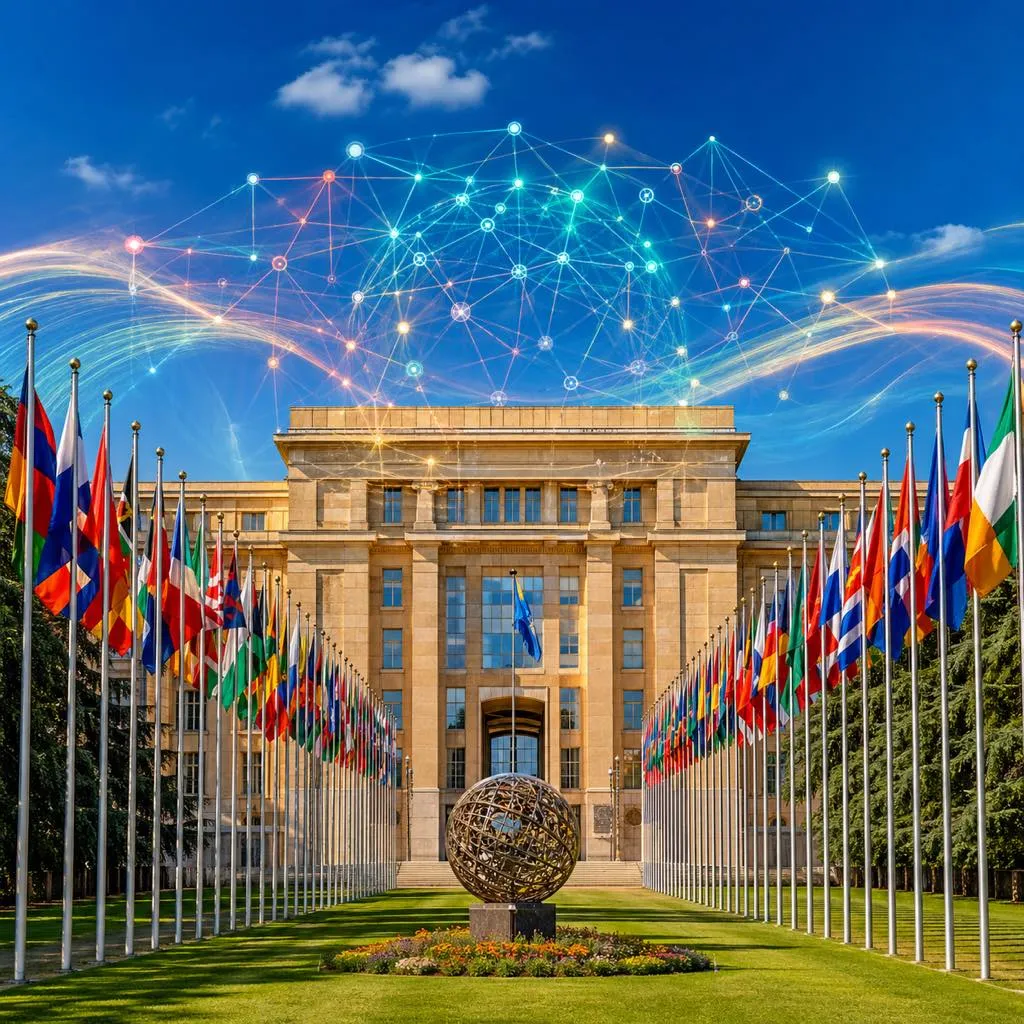
Why Fragmented AI Governance Is Now a Systemic Problem
By mid-2026, the world has accumulated at least four distinct AI governance frameworks with binding or near-binding force: the EU AI Act, the Council of Europe Framework Convention, the US Executive Order on AI, and various national AI laws in the UK, Singapore, Brazil, and China. Each framework uses different risk taxonomies, different transparency requirements, different accountability structures, and different enforcement mechanisms.
For AI developers and deployers operating across borders, this fragmentation is not merely an inconvenience — it is a structural cost. A company deploying an AI hiring tool must meet the EU AI Act’s Annex III conformity assessment requirements in Europe, a different set of accountability and bias-testing requirements under US state-level AI employment laws, and potentially a third set of standards in Asia-Pacific jurisdictions that are developing their own frameworks. The engineering cost of building AI systems that satisfy incompatible transparency requirements in parallel is substantial. The compliance cost of documenting conformity across multiple regimes simultaneously is equally significant.
The UN General Assembly mandate for the Global Dialogue on AI Governance was a response to this reality. The dialogue, organized under a joint secretariat of the Executive Office of the Secretary-General, ITU, UNESCO, and the UN Office for Digital and Emerging Technologies (ODET), is structured not as a treaty-making process — that would take years — but as an interoperability-building exercise: creating shared vocabulary, shared risk frameworks, and shared transparency principles that can reduce compliance friction across national governance regimes.
The Four Thematic Clusters and What They Signal
The Geneva dialogue is organized around four thematic clusters that together map the principal fault lines in global AI governance:
Cluster 1: AI Opportunities and Implications — Examining the societal, cultural, economic, ethical, linguistic, and technical dimensions of AI deployment. The linguistic dimension is politically significant: most AI systems are trained predominantly on English-language data, and most AI governance frameworks are written in English. Nations with non-English-dominant populations — including French-speaking Africa, Arabic-speaking MENA, and South Asian multilingual markets — face a systematic underrepresentation problem both in AI capabilities and in governance design.
Cluster 2: Bridging AI Divides — The Global South capacity gap is the dialogue’s most concrete equity challenge. AI development infrastructure (compute, talent, data) is overwhelmingly concentrated in the US, EU, China, and a handful of other economies. The AI Skills Coalition, referenced in the dialogue’s preparatory materials, represents one capacity-building vehicle, but the divide is structural: countries without high-performance computing infrastructure cannot run the frontier models that governance frameworks are designed to regulate. The dialogue’s ambition is to include capacity-building commitments alongside governance alignment.
Cluster 3: Safe, Secure and Trustworthy AI — The shared safety standards question. Different jurisdictions define “trustworthy AI” differently. The EU frames it through fundamental rights; the US frames it through national security and innovation competitiveness; China frames it through social stability and sovereignty. The Geneva dialogue cannot resolve these philosophical differences, but it can work toward operational interoperability — shared definitions of “incident,” shared minimum logging requirements, shared red-line prohibitions — that reduce the governance gap without requiring philosophical alignment.
Cluster 4: Human Rights Protection — Transparency, accountability, and human oversight are the three pillars that the Council of Europe Framework Convention has already codified at treaty level. The Geneva dialogue’s fourth cluster extends that conversation to the full 193-member UN body — including the states that did not sign the Framework Convention. The cluster’s focus on “robust human oversight” is particularly significant for AI in judicial and law enforcement contexts, where algorithmic decision-making has advanced faster than governance frameworks.
Advertisement
What Stakeholders Should Take Away from the Geneva Process
1. Watch the Interoperability Outcomes, Not the Headline Agreements
The Geneva dialogue is unlikely to produce a binding treaty in its first session — the Framework Convention took five years from initial mandate to signature opening. What it will produce is working-group outputs on shared vocabulary, risk-assessment frameworks, and transparency standards. These outputs are the raw material of future regulatory harmonization. Technology companies and policy teams that engage with the working-group outputs early — before they harden into national legislation — have the most influence over interoperability standards. This means following ITU and UNESCO technical working groups, not just monitoring the diplomatic headline agreements.
2. Use the “Bridging AI Divides” Cluster as a Market Signal
The dialogue’s capacity-building agenda is also an investment signal. Countries in the Global South that commit to specific AI governance frameworks — even non-binding ones — are signaling regulatory intent that precedes formal legislation. For technology companies evaluating market entry in developing economies, governance engagement at the Geneva dialogue is a leading indicator of future regulatory environments. Countries that participate actively in the interoperability clusters are more likely to adopt standards-compatible domestic frameworks, reducing market entry risk for companies that built to those standards.
3. Recognize the Geopolitical Constraints on What Geneva Can Achieve
The dialogue’s joint secretariat — UN, ITU, UNESCO, ODET — represents the international community’s most credible institutional voice on technology governance. But the governance power map identified in preparatory policy analysis is clear: China, India, Russia, and the US shape AI governance outcomes through their participation or strategic non-cooperation. The EU projects regulatory influence through the Framework Convention and the AI Act. The actual governance standard that emerges from Geneva will reflect these power dynamics, not just the preferences of the 193-member UN body.
For countries in the Global South — including Algeria — the value of the Geneva dialogue is not the output but the platform. For the first time, a mechanism exists where all 193 nations have a formal voice in AI governance design, not just the technology-dominant powers. Whether that voice translates to substantive influence depends on how actively developing nations engage with the working-group process.
What Comes Next After Geneva
The July 2026 Geneva session is the first of two planned dialogues. The second session is scheduled for May 2027 in New York, where the working-group outputs from Geneva will be formalized into recommendations. The timeline suggests that any interoperability standards emerging from the process will be available for national adoption by late 2027 or 2028 — roughly concurrent with the next wave of domestic AI legislation in countries that have been waiting for international guidance.
The structural challenge the process faces is the same one that every multilateral technology governance effort has confronted: the speed of AI development outpaces the speed of international diplomacy. The EU AI Act took four years from Commission proposal to adoption. The Framework Convention took five years from mandate to signature. AI systems deployed between now and 2028 — when Geneva’s outputs might influence national legislation — will operate in the governance gap that the dialogue is trying to close.
That gap is not a reason to dismiss the process. It is a reason to engage with it urgently, because the frameworks that take shape in Geneva over the next two years will govern AI systems deployed for decades after they are adopted. The stakes of getting the interoperability standards right are compounding.
Frequently Asked Questions
What is the UN Global Dialogue on AI Governance and how does it differ from existing frameworks?
The UN Global Dialogue on AI Governance is a formal UN General Assembly process, with its first session on July 6–7, 2026 in Geneva, bringing all 193 UN member states together to address AI governance fragmentation. Unlike the Council of Europe Framework Convention (47 founding members, legally binding) or the EU AI Act (EU-only, highly technical), the UN dialogue is designed to produce shared interoperability standards that can reduce compliance friction across national AI governance regimes without requiring countries to adopt identical domestic laws.
What is the “AI divides” problem that the Geneva dialogue addresses, and why does it matter?
The AI divides problem refers to the concentration of AI development infrastructure — compute, frontier models, training data, and talent — in a handful of economies, primarily the US, EU, and China. Countries without high-performance computing infrastructure cannot train frontier models and cannot fully participate in or implement AI governance frameworks designed for those models. The Geneva dialogue’s Cluster 2 aims to include capacity-building commitments alongside governance alignment, so that developing nations receive actual AI infrastructure support rather than just compliance obligations.
Who controls the outcome of the Geneva dialogue, and can developing nations influence it?
The dialogue’s co-chairs are from El Salvador and Estonia — a deliberate balance between Global South and Global North representation. But preparatory policy analysis identifies China, India, Russia, the US, and the EU as the dominant powers shaping AI governance outcomes through their participation patterns and technical agenda-setting. Developing nations can influence outcomes most effectively by: coordinating through regional blocs (African Union, Arab Group, G77), engaging actively in the working-group process rather than only the plenary sessions, and submitting detailed written inputs to the dialogue secretariat — which had a deadline of April 30, 2025 for the first Geneva session.
—