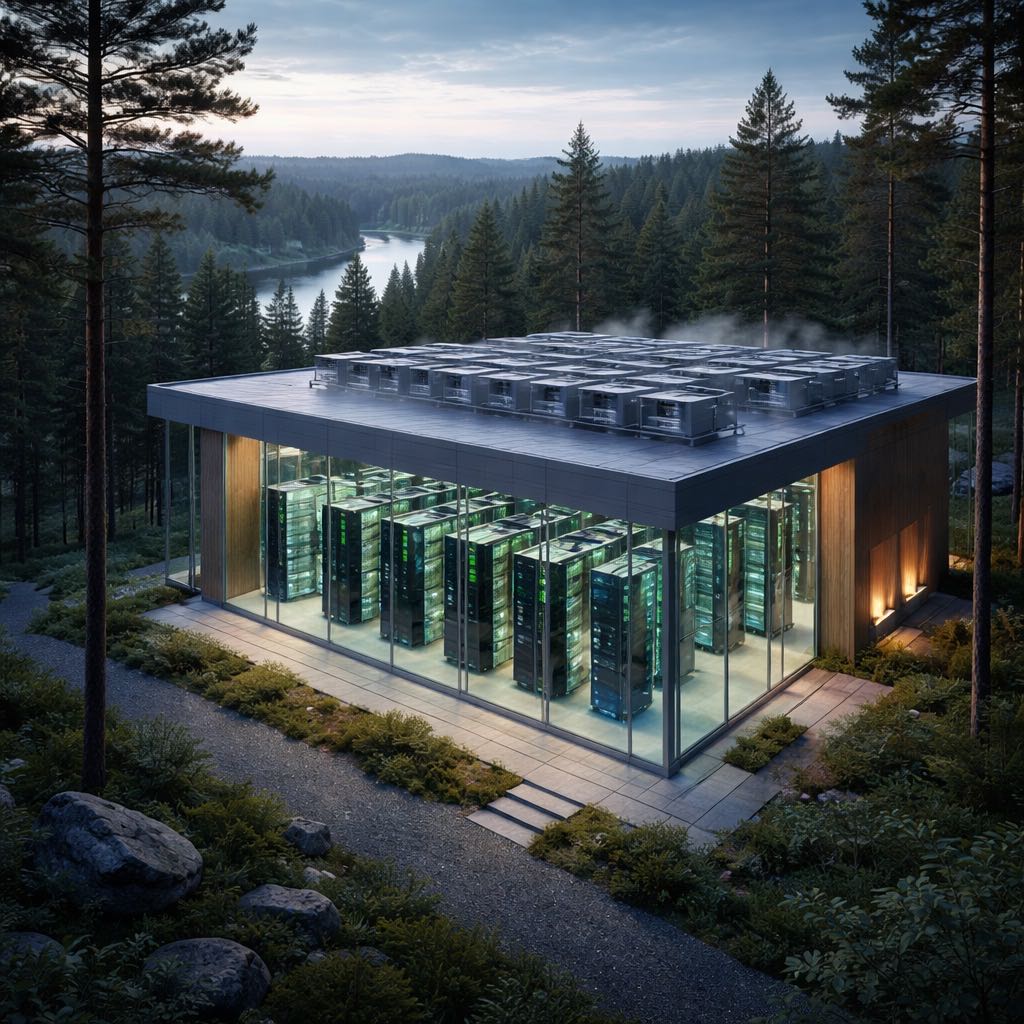
A Billion-Euro Bet on Trust
On April 8, 2026, TikTok announced a EUR 1 billion investment to build its second data center in Finland, this time in the southern city of Lahti. The facility will launch with an initial capacity of 50 megawatts and scale to a potential 128 MW, with operations expected to begin in 2027.
This is not TikTok’s first Finnish data center — its EUR 1 billion Kouvola facility is on track to go live by the end of 2026. And it is not TikTok’s first European data center either — the company already operates facilities in Ireland, and its Norwegian data center is now operational with European user data migration underway.
What makes the Lahti announcement significant is the cumulative signal it sends. TikTok is now building four data centers across three European countries, with a total investment of EUR 12 billion over ten years under its Project Clover initiative. For a company that has faced existential regulatory threats in both the U.S. and Europe, this is the most expensive trust-building exercise in the history of social media.
Project Clover: The Architecture of Sovereignty
Project Clover is TikTok’s decade-long program to store and process the data of more than 200 million European users on European soil. The initiative goes beyond simply locating servers in Europe — it establishes a comprehensive governance framework designed to satisfy regulators and address concerns about Chinese government access to user data.
The key components include:
European data residency. All data belonging to European users is stored in European data centers. The migration from U.S.-based storage to European facilities is underway, with the Norwegian data center handling the initial wave.
Independent security monitoring. NCC Group, a UK-based cybersecurity firm, serves as the independent security provider for Project Clover. NCC Group signed a three-year contract extension with TikTok to audit data controls, monitor data flows, provide independent verification of access policies, and report any incidents. This external oversight is designed to provide regulatory assurance that TikTok’s data isolation commitments are being followed.
Access restrictions. New security protocols ensure that restricted data stored in the European enclave — including phone numbers and IP addresses — cannot be accessed by employees based in China. This addresses the core concern that Chinese national security laws could compel TikTok’s parent company, ByteDance, to share user data with the Chinese government.
Privacy-enhancing technologies. Certain data that needs to flow globally to operate the platform (such as content recommendation signals) is de-identified before leaving the European enclave. This creates a technical barrier to re-identification even if data is intercepted or improperly accessed.
The Finland Paradox
Finland is an interesting choice for TikTok’s European expansion, and not without controversy. When Reuters revealed TikTok’s initial Kouvola data center plans in April 2025, Finland’s then-Minister of Economic Affairs Wille Rydman publicly urged TikTok’s local development partner to reconsider the deal, citing security concerns and a lack of transparency.
Finland’s defence ministry had approved the investment in 2024, but elected officials said they had not been informed — creating a political embarrassment that highlighted the tension between economic development and national security considerations.
Despite the political friction, Finland offers TikTok several practical advantages:
Climate and energy. Finland’s cold climate reduces data center cooling costs, and the country’s energy grid is heavily weighted toward nuclear and renewable sources, supporting TikTok’s sustainability commitments.
EU membership with Nordic governance. Finland is an EU member with a strong rule-of-law tradition, making it a credible host for a data sovereignty initiative. Data stored in Finland falls under GDPR and EU jurisdictional authority.
Geographic positioning. Finland’s location provides low-latency connectivity to the Nordic and Baltic markets while maintaining proximity to major European internet exchange points.
Technical workforce. Finland has a well-educated engineering workforce and established data center operations culture, with existing facilities operated by Google, Microsoft, and Equinix.
Advertisement
The Regulatory Context
TikTok’s European data center investments cannot be understood outside the regulatory environment that motivates them. The company faces ongoing scrutiny from multiple directions:
U.S. ban threat. The U.S. forced-sale deadline for TikTok has been extended multiple times, but the underlying legislation remains in effect. European data sovereignty provides TikTok with a strategic hedge — even if TikTok’s U.S. operations face restrictions, its European business can operate independently with data that never touches U.S. infrastructure.
EU Digital Services Act (DSA). As a designated “Very Large Online Platform” under the DSA, TikTok faces heightened obligations around content moderation, algorithmic transparency, and data protection. Local data storage simplifies compliance by keeping user data within EU jurisdictional reach.
National security reviews. Multiple European governments have restricted or banned TikTok on government devices. By establishing local data centers with independent monitoring, TikTok aims to address the security concerns that drive these restrictions.
GDPR enforcement. European data protection authorities have been increasingly aggressive about cross-border data transfers. The invalidation of the Privacy Shield framework and ongoing challenges to Standard Contractual Clauses make local data storage the most compliance-safe approach.
What TikTok Is Really Building
The EUR 12 billion Project Clover investment is more than data center construction. TikTok is building a regulatory template that other Chinese-origin technology companies will study and potentially replicate.
If Project Clover succeeds in satisfying European regulators — demonstrated by continued market access, NCC Group’s clean audits, and gradual easing of government device bans — it establishes a model for how technology companies from any jurisdiction can operate in regions with heightened data sovereignty requirements.
The model has three pillars: local infrastructure (data never leaves the jurisdiction), independent oversight (third-party verification of access controls), and technical isolation (privacy-enhancing technologies that limit what data flows globally). This framework could become the de facto standard for cross-border technology operations in an era of increasing digital sovereignty demands.
The Cost of Trust
At EUR 12 billion over ten years, Project Clover represents a significant drag on TikTok’s profitability in Europe. Building and operating four data centers across three countries — plus paying for independent security monitoring, privacy-enhancing technology development, and regulatory compliance staff — is far more expensive than using centralized cloud infrastructure.
But the alternative — losing access to 200 million European users — would be catastrophic for TikTok’s global business. The EUR 12 billion investment is ultimately a cost of market access, and TikTok has concluded that the market is worth the price.
For the European data center industry, Project Clover is a windfall. Finland, Ireland, and Norway are all benefiting from construction spending, operational jobs, and increased demand for local energy and connectivity infrastructure. The geopolitical pressures driving data sovereignty are creating economic opportunities for the countries that host the resulting infrastructure.
Frequently Asked Questions
What is Project Clover and how much has TikTok invested?
Project Clover is TikTok’s decade-long initiative to store and process data from 200 million European users on European soil. Total investment is EUR 12 billion across data centers in Ireland, Norway, and two in Finland, with independent security monitoring by NCC Group and privacy-enhancing technologies to restrict data access by non-European employees.
Why did TikTok choose Finland despite political opposition from Finnish officials?
Finland offers cold climate (lower cooling costs), clean energy (nuclear and renewables), EU membership with strong rule-of-law credentials, and low-latency connectivity to Nordic markets. Despite initial political friction — Finland’s Minister of Economic Affairs publicly urged reconsidering the deal — the investment proceeded because Finland’s defence ministry had already approved it and the economic benefits were substantial.
Could Algeria implement similar data sovereignty requirements for foreign tech platforms?
Yes. Algeria’s 2023 data protection law provides the legal framework, but enforcement requires defining specific compliance standards. Project Clover’s model — requiring local data centers, independent third-party security audits, and technical barriers against unauthorized cross-border data transfers — provides a practical template that Algeria could adapt to its regulatory context.
Sources & Further Reading
- TikTok builds second data centre in Finland amid European data sovereignty push — TechWire Asia
- TikTok is spending EUR 1B on a second Finnish data centre — The Next Web
- TikTok sets new standards for security and sustainability through EUR 12bn Project Clover — TikTok Newsroom
- NCC Group signs three-year Project Clover contract extension with TikTok — NCC Group
- Project Clover Update: Data migration to TikTok’s Norwegian data centre has begun — TikTok Newsroom