The Announcement: AI That Speaks Algerian
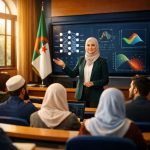
On March 10, 2026, during a visit to the city of Medea, Algeria’s Minister of Knowledge Economy, Startups, and Micro-enterprises, Noureddine Ouadah, made a declaration that placed Algeria squarely in the global sovereign AI movement. The ministry, he announced, is actively working to develop artificial intelligence models tailored to the country’s cultural and social specificities — models that respect Algerian traditions, culture, and societal values.
The statement was not mere rhetoric. Ouadah specified that the growing importance of AI across economic sectors had prompted a deliberate shift: Algeria would no longer rely solely on foreign-built models designed for foreign contexts. Instead, the ministry is working with experts to build AI models suited to the nature and needs of Algerian society, adapted to the country’s languages, available data, and national economic priorities.
The initiative enlists both universities and startups as core partners, positioning Algeria’s sovereign AI ambition as a collaborative effort between academia, the private sector, and government.
Why Sovereign AI Matters for Algeria
The Foreign Model Problem
Today’s dominant large language models — GPT-4, Claude, Gemini, Llama — were designed and trained primarily on English-language data drawn from Western contexts. Arabic, despite being one of the most spoken languages globally with over 300 million native speakers, remains severely underrepresented in mainstream LLM training data. Meta’s Llama, for instance, has Arabic comprising less than 0.1% of its training corpus. Algerian Darija and Tamazight are barely represented at all.
This creates a cascade of practical problems for Algerian users. When an Algerian entrepreneur asks an AI assistant for business advice, the model draws on Silicon Valley assumptions. When a student uses AI for research, the cultural references are American or European. When a government agency deploys AI for citizen services, the model may not understand the linguistic reality of daily Algerian communication — a fluid mix of Arabic, French, Darija, and Tamazight that no foreign model was designed to parse.
Sovereign AI addresses this gap by ensuring that the models themselves are trained on data that reflects local reality, understands local languages, and operates within a framework of local values.
The Global Sovereign AI Wave
Algeria’s move is part of a broader global trend. At least 16 African countries have introduced national AI strategies aimed at promoting local data ownership and sovereign AI capabilities. The UAE has backed Jais, an Arabic-English model built by G42’s Inception in collaboration with MBZUAI and Cerebras Systems. Saudi Arabia’s SDAIA developed ALLaM, an Arabic-first model enriched with more than 500 billion Arabic tokens. Egypt recently unveiled Karnak, its national LLM with versions in the 30-40 billion and 70-80 billion parameter ranges, named after the ancient temple complex.
What distinguishes Algeria’s approach is its explicit emphasis on cultural values — not just language capability, but alignment with societal norms and traditions. This reflects a growing recognition across the Global South that AI sovereignty is not merely a technical challenge but a cultural one.
Algeria’s Linguistic Landscape: The AI Challenge
Algeria’s language situation is uniquely complex, and it is precisely this complexity that makes sovereign AI both urgent and difficult.
Modern Standard Arabic (MSA) serves as the official language of government, education, and media. But daily communication happens overwhelmingly in Darija (Algerian Arabic) — a spoken dialect with heavy Berber, French, and Ottoman Turkish influence that is largely absent from written digital text.
Tamazight (the Berber language family), recognized as a national and official language since the 2016 constitutional amendment, is spoken by an estimated 25-30% of the population across multiple regional variants including Kabyle, Chaoui, Mozabite, and Tuareg. It uses three different scripts: Tifinagh (official), Latin, and Arabic.
French remains the de facto language of business, higher education, and much of the tech sector, creating a trilingual (and often quadrilingual) reality that no single foreign AI model handles well.
The Data Scarcity Problem
Building AI models requires data — enormous quantities of high-quality, representative text. For Darija and Tamazight, this data barely exists in digital form. Darija is rarely written; it is a spoken language. Creating training datasets requires expensive human annotation, audio recording, and transcription. Code-switching between Arabic, French, and Tamazight within a single sentence makes data collection and annotation even more complex.
This is not an insurmountable barrier, but it demands a fundamentally different approach than simply scraping the internet — which is how most Western LLMs were built.
Hadretna: Algeria’s First Homegrown Language Model
The most concrete evidence that Algeria’s sovereign AI ambition is more than policy aspiration comes from the private sector. The Hadretna project (“Our Dialect” in Arabic), launched by Algerian-French startup Fentech in partnership with AI scientist Professor Merouane Debbah, has pre-trained an LLM on 2 billion tokens of Darija and Tamazight data — the first model of its kind targeting Algerian languages.
The project has taken a crowdsourcing approach to data collection. Darija speakers can participate via the Hadretna website by adding translations from Arabic, English, or French into Darija and Tamazight, annotating their entries in all three alphabets used for these languages — Arabic script, Latin script, and Tifinagh.
Hadretna’s ambition is to drive digital inclusion by offering Darija and Tamazight speakers access to global information via generative AI. It represents a bottom-up complement to the government’s top-down sovereign AI strategy — and proves that the technical foundations for Algerian-specific models are already being laid.
The Role of Professor Merouane Debbah
Professor Debbah’s involvement lends significant technical credibility to the Hadretna project. A Franco-Algerian telecommunications engineer and AI researcher, Debbah has held senior positions at Huawei’s Paris research center as VP of R&D and at CentraleSupelec as Full Professor, and has published extensively on wireless communications and machine learning. He currently serves as founding Director of the 6G Research Center at Khalifa University in Abu Dhabi.
Critically, Debbah also served as president of Algeria’s AI Scientific Council, which issued the country’s National AI Strategy on December 7, 2024. His decision to channel his expertise toward Algerian language AI signals that world-class researchers see value — and opportunity — in sovereign model development for the Algerian market.
Debbah’s involvement also highlights the Algerian diaspora’s potential role in sovereign AI. Thousands of Algerian-born scientists and engineers work at leading AI labs across Europe and the Gulf. Creating pathways for diaspora engagement — whether through projects like Hadretna, advisory roles, or return incentives — could dramatically accelerate Algeria’s sovereign AI timeline.
Earlier Research Efforts
Hadretna builds on a foundation of academic NLP research targeting Algerian languages. DziriBERT, a pre-trained language model for the Algerian dialect released on GitHub, demonstrated that dialect-specific models could achieve strong performance on sentiment analysis and text classification tasks. Researchers have also created publicly available datasets of 18,589 Algerian dialect tweets with customized preprocessing pipelines, with their best-performing MARBERT-LSTM model achieving 91.23% accuracy on sentiment analysis.
These projects prove a critical point: Algerian-specific AI is not a distant aspiration but an active research domain with measurable results. The challenge is scaling from academic prototypes (thousands of training examples) to production-grade models (billions of tokens) that can serve real users.
Sector-Specific Applications: Where Sovereign AI Creates Value
Beyond the general case for cultural and linguistic alignment, sovereign AI models unlock specific applications that foreign models cannot adequately serve.
Public Administration and e-Government
Algeria’s government interacts with 45 million citizens through administrative processes that span Arabic, French, and Darija. A sovereign AI model trained on Algerian administrative language, legal terminology, and regulatory frameworks could power intelligent chatbots for citizen services, automate document processing, and streamline bureaucratic workflows. Foreign models trained on American or European administrative language lack this domain knowledge entirely.
Healthcare
Algeria’s healthcare system serves a population with specific epidemiological profiles, traditional medicine practices, and healthcare access patterns. A sovereign AI model could process Arabic-language medical records, assist with diagnosis using Algerian clinical data, and power telemedicine platforms that communicate in Darija — the language most patients actually speak. This is not possible with models trained primarily on English-language medical data from Western healthcare systems.
Agriculture
Agriculture accounts for approximately 13% of Algeria’s GDP, with production patterns shaped by the country’s unique geography (Mediterranean coast, Tell Atlas, Saharan south). AI models trained on Algerian agricultural data — including local crop varieties, soil conditions, water scarcity patterns, and traditional farming practices — could provide precision agriculture recommendations that generic models cannot.
Education
Algerian students already interact with AI tools for homework assistance and research. But when an Algerian high school student asks ChatGPT about the November 1, 1954 revolution, the answer draws on English-language Wikipedia rather than Algerian historiography. Sovereign models trained on Algerian educational curricula and historical sources would provide culturally accurate, pedagogically appropriate responses.
The Institutional Ecosystem: Universities as AI Factories
Ouadah’s announcement did not emerge in isolation. Algeria has been systematically building the institutional infrastructure needed for sovereign AI development.
ENSIA: The AI Flagship
The National School of Artificial Intelligence (ENSIA), located in the Sidi Abdellah technology hub outside Algiers, opened in the 2021-22 academic year as one of Algeria’s most ambitious educational projects. ENSIA educates engineers specializing in AI theory and data sciences, with courses taught in English and French covering machine learning, computer vision, natural language processing, and speech processing.
ENSIA sits within a broader campus at Sidi Abdellah that gathers five specialized schools covering artificial intelligence, cybersecurity, mathematics, nanotechnology, and autonomous systems. A partnership with Chinese technology company Huawei was signed during ENSIA’s opening ceremony, signaling international engagement.
The Broader University Network
Beyond ENSIA, Algeria has deployed 74 master’s-level AI programs across 52 universities and grandes ecoles, with 57,702 students enrolled and approximately 5,000 AI-skilled graduates produced annually. The Ministry of Higher Education has also rolled out 107 incubators, 91 innovation centres, and 51 AI labs across the country.
These institutions represent the human capital pipeline essential for sovereign AI: you cannot build models faithful to Algerian values without engineers who understand both AI architectures and Algerian society.
Advertisement
Infrastructure: From Compute to Capital
The Oran HPC Center
Sovereign AI requires computing power. On March 16, 2025, Minister of Post and Telecommunications Sid Ali Zerrouki laid the foundation stone for Algeria’s first high-performance computing center dedicated to AI in Oran’s Akid Lotfi district. The facility will be equipped with latest-generation GPUs, providing Algerian researchers, startups, and companies with the intensive computing capabilities needed for AI model training and development.
The center targets applications in healthcare, industry, cybersecurity, and smart cities — and represents a critical step toward ensuring that Algerian AI models can be trained on Algerian soil, rather than relying on foreign cloud infrastructure.
The Startup Investment Fund
Algerie Telecom has announced a 1.5 billion Algerian dinars ($11 million) investment fund to support AI, cybersecurity, and robotics startups. While modest by global standards, the fund signals that state capital is flowing toward the AI ecosystem. The government’s broader target is to foster 20,000 startups by 2029 as part of its digital transformation strategy.
The 7% GDP Target
Algeria has set an ambitious target for AI to contribute 7% of GDP by 2027. Achieving this requires not just deploying foreign AI tools but developing domestic AI capabilities that create economic value within Algeria — exactly the kind of value that sovereign models are designed to generate.
The National AI Strategy: Six Pillars
Algeria’s sovereign AI push operates within the framework of its National Artificial Intelligence Strategy, adopted on December 7, 2024 by the AI Scientific Council under the presidency of Professor Merouane Debbah. The strategy is organized across six pillars:
- Scientific Research — Supporting AI R&D through university funding and research center development
- Talent Development — Expanding AI education from ENSIA to all major universities, producing 5,000 graduates annually
- Infrastructure — Building data centers, HPC facilities, and optimized cloud solutions
- Investment Promotion — Creating funds, incubators, and “Scale Centers” to support AI startups
- Data Protection — Expanding the Personal Data Protection Agency to oversee AI regulations
- Sector-Specific Deployment — Implementing AI across agriculture, healthcare, cybersecurity, and public services
The sovereign model initiative sits at the intersection of all six pillars: it requires research (pillar 1), trained engineers (pillar 2), computing infrastructure (pillar 3), startup partnerships (pillar 4), data governance frameworks (pillar 5), and sector-specific applications (pillar 6).
What “Faithful to Values” Means in Practice
Ouadah’s phrase — AI models “faithful to the country’s values” — invites the question: what does this mean concretely?
Cultural Alignment
At the most basic level, it means models that understand and respect Algerian cultural norms. A sovereign Algerian AI model should know that Algeria’s national holidays include November 1 (Revolution Day), that the Casbah of Algiers is a UNESCO World Heritage site, that couscous is a traditional Algerian dish with deep cultural significance, and that administrative processes follow specific Algerian procedures.
Linguistic Competence
More technically, it means models capable of processing Algeria’s full linguistic range: MSA for formal contexts, Darija for everyday communication, Tamazight for Berber-speaking populations, and French for business and technical domains — including the constant code-switching between all four.
Economic Relevance
It also means models trained on Algerian economic data that understand local market dynamics, regulatory frameworks, and business practices. A sovereign model advising an Algerian startup should know about the Startup Act (Loi 20-18), the procedures for registering a company at the CNRC, and the specifics of Algeria’s banking system.
Data Sovereignty
Perhaps most critically, it means keeping Algerian data under Algerian control. When government agencies, healthcare providers, or businesses use AI, sovereign models ensure that sensitive data does not flow to foreign servers under foreign jurisdictions.
Challenges and Realistic Assessment
The Compute Gap
Training competitive language models requires enormous computing power. GPT-4 reportedly cost over $100 million to train. Even smaller, specialized models require GPU clusters that Algeria is only now beginning to build. The Oran HPC center is a start, but closing the compute gap with Gulf states (who have access to the latest hardware and billions in sovereign wealth fund capital) will take years.
The Data Pipeline
Algeria’s most critical bottleneck may be data. Building high-quality training datasets for Darija and Tamazight requires systematic data collection, annotation, and curation at scale. The Hadretna project’s crowdsourcing approach is promising but has collected only 2 billion tokens — a fraction of what major models use. For comparison, Meta’s Llama 3 was trained on over 15 trillion tokens.
The Talent Retention Challenge
Algeria produces 5,000 AI graduates annually, but retaining them in-country against the pull of Gulf, European, and North American salaries remains a persistent challenge. Sovereign AI ambitions require not just training engineers but creating domestic career paths that keep them building Algerian models rather than training foreign ones.
The Timeline Question
Ouadah did not provide a specific timeline or technical roadmap for the sovereign model initiative. The gap between announcement and deployment can be significant, and Algeria will need to move quickly to avoid falling further behind regional competitors who are already fielding operational models.
A Practical Roadmap: What Algeria Needs to Execute
Sovereign AI at the national level requires more than policy intent. It requires a concrete pipeline from data to deployed models. Based on the initiatives already underway and the challenges identified, Algeria’s path forward must address several interconnected requirements.
Phase 1: Data Collection and Curation (0-12 months)
The most urgent priority is scaling data collection for Darija and Tamazight. The Hadretna crowdsourcing model should be expanded and complemented by institutional data partnerships. Government ministries could contribute administrative text corpora. Public broadcasters (Radio Algerie, ENTV) could provide transcribed audio data. University libraries could digitize historical texts. The goal should be to build a national Algerian language corpus of at least 50-100 billion tokens across all four languages within two years — still small by global standards, but sufficient for focused, domain-specific models.
Phase 2: Compute Infrastructure (6-18 months)
The Oran HPC center must move from foundation stone to operational facility. In the interim, Algeria could negotiate GPU access through cloud partnerships — several hyperscalers offer subsidized compute for sovereign AI projects in emerging markets. The Ministry of Higher Education’s existing data center at ENSIA could be expanded to provide initial training capacity for smaller models.
Phase 3: Model Development (12-24 months)
Rather than attempting to build a general-purpose model to rival GPT-4 (an unrealistic goal given resource constraints), Algeria should focus on domain-specific models that excel at particular tasks: government services, education, healthcare, and agriculture. These “narrow sovereign models” would deliver more immediate value than a general-purpose model that performs mediocrely across all domains.
Phase 4: Deployment and Ecosystem (18-36 months)
Trained models must be deployed through APIs and applications that reach end users. This requires an ecosystem of developers building on top of sovereign models — which is where the startup fund and incubator network become essential. The government should consider mandating the use of sovereign models for certain public services, creating guaranteed demand that attracts developers and investment.
The Road Ahead
Algeria’s sovereign AI initiative represents a meaningful commitment to technological self-determination. The combination of a clear policy mandate (Ouadah’s announcement), institutional infrastructure (ENSIA, 74 AI master’s programs), computing investment (Oran HPC center), private sector innovation (Hadretna, DziriBERT), and financial support ($11 million startup fund) creates a foundation that few African countries can match.
The critical question is execution speed. The UAE’s Jais model, Saudi Arabia’s ALLaM, and Egypt’s Karnak have already demonstrated that Arab-world sovereign AI is technically feasible. Algeria has the human capital, the institutional framework, and the political will. What it needs now is rapid, focused execution — particularly on the data pipeline challenge that will determine whether sovereign Algerian AI becomes operational reality or remains a policy aspiration.
For Algerian researchers, engineers, and entrepreneurs, the message is clear: the government has signaled that sovereign AI is a national priority. The opportunities for those who can contribute to building models that truly understand and serve Algerian society are substantial — and growing.
Frequently Asked Questions
How does the Hadretna project address Algeria’s Darija and Tamazight data scarcity for AI training?
Hadretna uses a crowdsourcing approach where Darija and Tamazight speakers contribute translations from Arabic, English, or French into local languages, annotating entries in all three scripts (Arabic, Latin, and Tifinagh). So far the project has collected 2 billion tokens of Darija and Tamazight data — the first model of its kind targeting Algerian languages — though this remains a fraction of the 15 trillion tokens used to train models like Meta’s Llama 3.
What are the six pillars of Algeria’s National AI Strategy adopted in December 2024?
The strategy, adopted on December 7, 2024 under the presidency of Professor Merouane Debbah, is organized across six pillars: Scientific Research (university funding and R&D centers), Talent Development (expanding AI education to produce 5,000 graduates annually), Infrastructure (HPC facilities and cloud solutions), Investment Promotion (startup funds and incubators), Data Protection (expanding the Personal Data Protection Agency), and Sector-Specific Deployment (AI across agriculture, healthcare, cybersecurity, and public services).
How does Algeria’s sovereign AI compute infrastructure compare to Gulf competitors like the UAE and Saudi Arabia?
Algeria is still in the early stages, with the Oran HPC center’s foundation stone laid in March 2025 and a 1.5 billion dinar ($11 million) startup fund announced by Algerie Telecom. By contrast, Gulf states already field operational models — the UAE’s Jais (built by G42’s Inception with Cerebras Systems) and Saudi Arabia’s ALLaM (enriched with 500 billion Arabic tokens). Algeria’s advantage lies in its institutional depth: 74 AI master’s programs across 52 universities, 5,000 AI graduates per year, and 107 incubators, but it must accelerate execution to close the compute and deployment gap.
Sources & Further Reading
- Toward Developing AI Models Tailored to Algeria’s Specificities — Algerie Presse Service
- Algeria Enlists Startups and Universities to Build Local AI Models — Ecofin Agency
- Algeria Works to Develop Homegrown AI Models Rooted in National Culture and Values — iAfrica
- Why Algeria Is Positioned to Become North Africa’s AI Leader — New Lines Institute
- Algeria Targets 7% GDP from AI by 2027 — We Are Tech Africa
- Algerian AI Researchers Crowdsource Local Language Data — Middle East AI News
- Algeria: National Artificial Intelligence Strategy — Digital Policy Alert
- Algeria Breaks Ground on AI Data Center in Oran — Data Center Dynamics
- Algeria Bets Big on AI Startups with New Investment Fund — LaunchBase Africa
- Egypt Launches Karnak National AI Language Model — ITIDA
- Jais: The World’s Most Advanced Arabic LLM — Cerebras
- SDAIA Launches ALLaM Arabic LLM — IBM Newsroom
🔗 Related Intelligence
Algeria’s Emerging AI Regulation: Balancing Innovation with Accountability
Algeria’s National AI Strategy: What the 2025–2030 Roadmap Really Means for Tech Companies
Algeria’s 859 AI Papers: Strong Research, Weak Commercialization Pipeline
Algeria’s 74 AI Master Programs: Building the Workforce for Digital 2030