The Largest AI Deployment Regulators Have Never Planned For
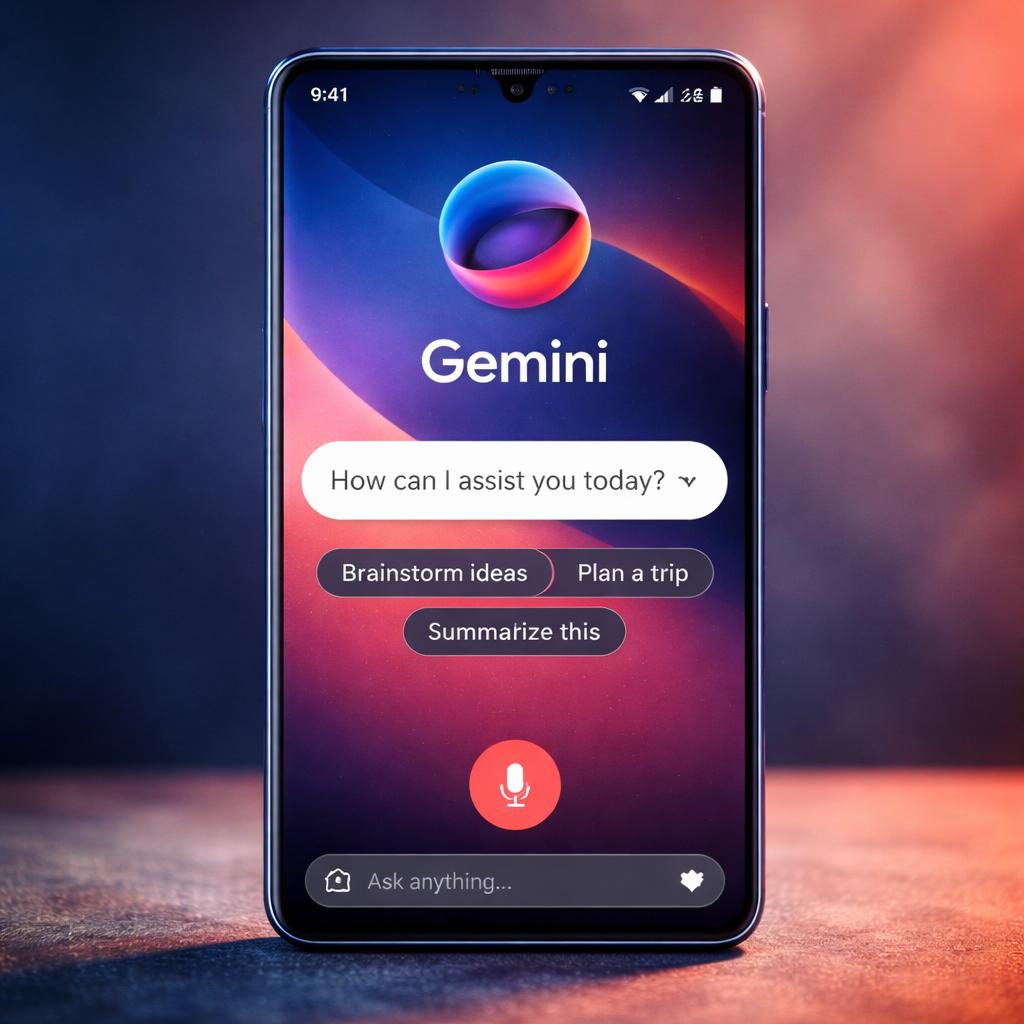
When Samsung co-CEO T.M. Roh told Reuters in early 2026 that the company would “apply AI to all products, all functions, and all services as quickly as possible,” he was not describing an aspiration. He was announcing a rollout at a scale that no regulatory framework was designed to govern: 800 million mobile devices equipped with Google’s Gemini AI by the end of the year, double the 400 million units deployed by the close of 2025.
This is not a gradual expansion. Galaxy AI, which blends capabilities from Google’s Gemini model with Samsung’s own Bixby assistant, delivers generative text tools, real-time translation, content editing, and voice interaction directly on smartphones and tablets. Samsung’s internal surveys show brand awareness of Galaxy AI jumped from 30% to 80% within a single year. The technology is reaching mainstream consumer adoption at a pace that regulation simply cannot match.
The EU AI Act, the world’s most comprehensive AI regulation, becomes fully applicable on August 2, 2026. Its architects designed it for cloud-based AI services and clearly delineated AI providers. What happens when the AI runs on 800 million devices in consumers’ pockets is a question the regulation was not built to answer cleanly.
On-Device AI: The Privacy Promise and Its Complications
On-device AI processing represents a fundamental architectural shift from the cloud-dependent model that has dominated the last decade of AI deployment. When inference happens locally on a device’s CPU, GPU, or neural processing unit, user data never traverses a network connection to a remote server. There are no API calls to the cloud, no token streams crossing networks, no orchestration layers mediating requests.
This architecture aligns naturally with privacy-by-design principles. Personal data processed entirely on-device satisfies the GDPR’s data minimization and storage limitation requirements almost by definition. Approximately 60% of AI processing on modern devices now occurs locally, up from roughly 20% three years ago, driven by hardware advances, privacy expectations, and the need for low-latency responses.
For regulators, on-device AI initially appeared to be the privacy-friendly alternative to cloud AI. If data never leaves the device, many of the thorniest regulatory challenges around cross-border transfers, data residency, and third-party access simply disappear.
But Samsung’s 800-million-device scale exposes complications that the simpler privacy narrative obscures.
Hybrid processing blurs the boundaries. Galaxy AI does not operate purely on-device. Complex queries and certain generative tasks route to Google’s cloud infrastructure for processing by more powerful Gemini models. Determining which user data stays local and which reaches the cloud is a dynamic, real-time decision made by the software. Regulators struggle to audit a compliance boundary that shifts with every interaction.
Model updates change device behavior. Samsung can push over-the-air updates that modify how the on-device AI functions, what data it processes, and how it responds. A device that was privacy-compliant yesterday may behave differently after tomorrow’s update. The EU AI Act’s conformity assessment model assumes a relatively stable product at the time of assessment, not one that continuously evolves.
Data collection for model improvement. Even when inference happens locally, device manufacturers may collect telemetry about how AI features are used, which features are invoked, error rates, and user interactions with AI outputs. This metadata, while not containing the raw data itself, can reveal sensitive patterns about user behavior.
The EU AI Act Meets Consumer Hardware
The EU AI Act classifies AI systems by risk level, with corresponding obligations for providers. AI systems embedded as safety components in regulated products, such as medical devices, vehicles, and machinery, face the strictest requirements including mandatory third-party conformity assessments.
For consumer electronics like smartphones, the classification depends on the AI’s specific use case rather than the device category. A Galaxy AI feature that assists with email drafting falls into a different risk category than one that processes biometric data for authentication. On a single Samsung device, multiple AI features may simultaneously fall under different regulatory classifications.
The August 2026 deadline triggers comprehensive requirements for high-risk AI systems, including completed conformity assessments, finalized technical documentation, CE marking, and EU database registration. For AI systems embedded in regulated products, the deadline extends to August 2027, though the European Commission’s proposed “Digital Omnibus” package could push some obligations further.
Samsung’s challenge is unprecedented in scale. When a cloud provider deploys a high-risk AI system, compliance responsibility is relatively concentrated. When the same AI capabilities are distributed across 800 million consumer devices across every EU member state, determining who is responsible for what, and how compliance can be verified on devices that receive continuous software updates, becomes an entirely different problem.
Advertisement
Device Manufacturers as AI Regulators by Default
Samsung’s Galaxy XR announcement on April 7, 2026, illustrates how device manufacturers are becoming de facto regulators of AI behavior. The Galaxy XR update introduced enterprise-grade controls including device management policies, network configurations, device restrictions, and remote lock or wipe capabilities. Samsung also committed to five years of software updates including security patches.
These enterprise features amount to an access control and governance layer for AI capabilities on physical hardware, functions that in a cloud environment would be managed by IT administrators using established enterprise tools. Samsung is building the governance infrastructure that regulators have not yet defined.
The Galaxy XR’s support for fully managed and dedicated device use cases in healthcare, manufacturing, and retail further complicates the regulatory picture. An XR headset running Gemini AI in a hospital setting may process patient interactions, surgical guidance information, or medical record data. The AI system’s risk classification in that context is significantly different from the same hardware running the same model for consumer entertainment.
The Global Regulatory Patchwork
Samsung operates across every major regulatory jurisdiction, each with different approaches to AI governance. The EU AI Act provides the most comprehensive framework but is not yet fully operational. The United States lacks federal AI legislation, relying on sector-specific guidance from agencies like NIST. China’s Interim Measures for the Management of Generative AI Services impose their own requirements on AI deployed within Chinese borders.
For a manufacturer shipping 800 million devices globally, compliance means implementing different AI behavior rules, data handling policies, and user consent mechanisms based on geography. Software that configures AI feature availability by region adds engineering complexity and creates potential failure modes where a device operating under one jurisdiction’s rules roams into another.
The on-device AI dimension makes this harder than cloud-based compliance. A cloud AI service can enforce regional rules at the server level. An on-device AI system must carry those rules with it wherever the device physically travels.
What Comes Next
Samsung’s 800-million-device Gemini deployment is not just a product strategy. It is a stress test for every regulatory framework that was designed for a world where AI lived in data centers, not in pockets.
The regulatory response will likely develop along several axes. Transparency requirements will demand that manufacturers clearly disclose which AI processing happens locally versus in the cloud, and under what conditions data leaves the device. Update governance will require frameworks for assessing compliance not just at the point of sale but continuously as over-the-air updates modify AI behavior. Manufacturer accountability will need to address the question of who is responsible when an AI system that was compliant at deployment becomes non-compliant through a software update.
For policymakers, the 800-million-device milestone represents an urgent signal: the scale and speed of on-device AI deployment has already outpaced the regulatory infrastructure designed to govern it. The frameworks that emerge over the next two years will determine whether on-device AI’s privacy promise is fulfilled or whether it becomes a compliance gray zone operating beyond effective oversight.
Frequently Asked Questions
Does on-device AI mean user data stays private on the phone?
Not entirely. While on-device processing handles many tasks locally without sending data to the cloud, Samsung’s Galaxy AI uses a hybrid approach where complex queries route to Google’s cloud infrastructure. The boundary between local and cloud processing shifts dynamically with each interaction. Additionally, manufacturers may collect telemetry about AI feature usage even when inference happens locally, creating metadata that can reveal sensitive behavioral patterns.
How does the EU AI Act apply to AI embedded in consumer devices?
The EU AI Act classifies AI systems by risk level rather than device category. On a single Samsung phone, different AI features may fall under different regulatory classifications: email drafting assistance is low-risk, while biometric processing for authentication is high-risk. The challenge is that on-device AI receives continuous software updates that can change how it functions, potentially altering its risk classification after the point of sale. Full compliance requirements take effect August 2026.
What happens when AI-equipped devices cross between different regulatory jurisdictions?
This is one of the hardest unsolved problems. A cloud AI service can enforce regional rules at the server level, but an on-device AI system carries its rules wherever the device physically travels. A Samsung phone configured for EU compliance that travels to a country with different AI regulations creates a compliance gap that neither manufacturers nor regulators have fully addressed. Samsung must implement region-aware AI behavior that adapts to the device’s location.
Sources & Further Reading
- Samsung to Double AI-Enabled Devices to 800 Million in 2026 — The National CIO Review
- Samsung Galaxy XR Evolves Work in the AI Era With New Enterprise Capabilities — Samsung Global Newsroom
- EU AI Act — Shaping Europe’s Digital Future
- On-Device Artificial Intelligence — European Data Protection Supervisor
- Samsung Doubles Down on Gemini AI, Targeting 800 Million Devices — SammyFans
- EU AI Act 2026 Compliance Guide: Key Requirements Explained — SecurePrivacy
🔗 Related Intelligence

Apple’s Siri Overhaul: The Billion-Dollar Gemini Bet That’s Already Late

The Reasoning Model Race: What O3, DeepSeek R1, and Gemini Thinking Mean for Business

OT/ICS Security: Hacking Power Grids and Water Systems in 2026

1 Million Tokens: What Extreme Context Windows Actually Change