A Record Quarter That Rewrites Samsung’s History
Samsung Electronics’ Q1 2026 results are not just good — they are historically unprecedented. The company posted preliminary operating profit of 57.2 trillion won ($37.9 billion), a figure that nearly matches Samsung’s all-time annual profit record set in 2018. In a single quarter.
Consolidated sales reached 133 trillion won ($88 billion), up 68% year-over-year. But the headline number is the profit surge: an 8x increase compared to Q1 2025, driven almost entirely by the explosive global demand for AI infrastructure. Approximately 95% of Samsung’s profits — around $36 billion — came from its semiconductor chip division.
The numbers confirm what industry analysts have been predicting for months: the AI memory supercycle is not slowing down. It is accelerating.
The HBM Engine Behind the Surge
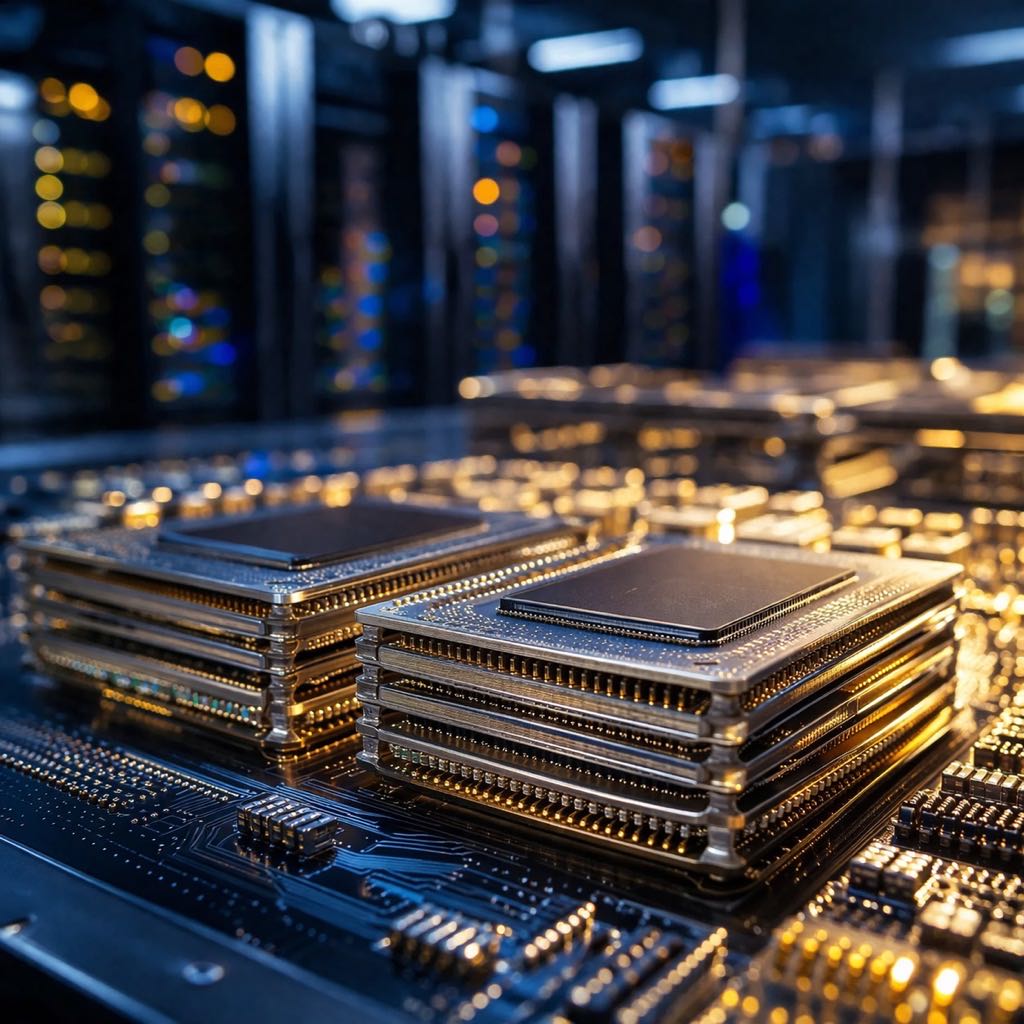
At the center of Samsung’s record quarter is High Bandwidth Memory (HBM) — the specialized stacked memory chips that sit directly on AI accelerators like Nvidia’s GPUs and Google’s TPUs. HBM provides the massive data throughput that large language models and AI training workloads demand, and it has become the single most critical bottleneck in global AI infrastructure expansion.
Samsung’s HBM revenue nearly tripled in Q1 2026 compared to Q1 2025. This growth was driven by two factors: the company’s HBM3E chips reaching full production scale, and a sharp increase in supply volume to Nvidia, which consumes the majority of the world’s HBM output.
Only three companies in the world manufacture advanced HBM: Samsung, SK Hynix, and Micron. This oligopoly structure means that when demand surges — as it has throughout 2025 and into 2026 — pricing power shifts dramatically in favor of the manufacturers. Memory prices have spiked accordingly, with downstream effects on server costs, cloud pricing, and even consumer electronics.
The SK Hynix Rivalry Intensifies
Samsung’s record quarter comes with an important caveat: it is still playing catch-up to SK Hynix in the HBM market. As of Q3 2025, SK Hynix held approximately 53% of the HBM market, Samsung had 35%, and Micron trailed at 11%. SK Hynix’s early qualification with Nvidia for HBM3E gave it a significant head start that Samsung has spent the past year trying to close.
The gap is narrowing. Samsung has successfully qualified its HBM3E parts with major customers and has been ramping production aggressively. The company is expanding memory production capacity by approximately 50% in 2026 to meet AI demand.
But the real battlefield is HBM4 — the next generation of high-bandwidth memory that will power Nvidia’s upcoming Rubin platform. UBS analysts predict that SK Hynix will capture approximately 70% of the HBM4 market for Rubin, while Samsung is positioning its HBM4E variants as the longer-term play. At GTC 2026 in March, Samsung publicly unveiled HBM4E solutions delivering 4.0 TB/s bandwidth at 16 Gbps per pin — the first public demonstration of next-generation memory performance at that level.
Samsung’s co-CEO and chip division head declared “Samsung is back” in reference to HBM4, signaling that the company views the generational transition as its opportunity to reclaim market leadership.
Advertisement
The Memory Supercycle and Its Victims
The AI-driven memory supercycle has been transformative for Samsung, SK Hynix, and Micron. But it has also created collateral damage across the broader technology supply chain.
Memory chips are a commodity, and when AI demand absorbs the majority of production capacity, other buyers — PC manufacturers, smartphone makers, automotive companies — face shortages and price increases. Industry analysts have described this as “Ramageddon”: a scenario where server memory demand crowds out consumer and enterprise supply, driving up prices for everything from laptops to factory equipment.
Samsung’s own results illustrate this dynamic. While the semiconductor division posted extraordinary profits, the company’s other business units — including mobile, display, and consumer electronics — delivered more modest performance. The AI boom is concentrating value in silicon production while squeezing margins elsewhere in the hardware ecosystem.
What the Numbers Mean for AI Infrastructure
Samsung’s Q1 2026 results carry several implications for the broader AI industry:
The capacity constraint is real. With only three HBM manufacturers and demand growing faster than supply, AI infrastructure buildout is constrained by memory availability, not just GPU supply. Hyperscalers planning new data centers must secure memory allocations years in advance.
Pricing power is shifting upstream. For years, cloud providers and AI companies captured the majority of value in the AI stack. The memory supercycle is redistributing margin upstream to component manufacturers. This could slow the decline in AI inference costs that enterprises have been counting on.
Geopolitical risk is concentrated. All three HBM manufacturers are headquartered in East Asia — Samsung and SK Hynix in South Korea, Micron in the U.S. but with significant Asian fabrication. Any disruption to production in these regions — whether from natural disaster, geopolitical tension, or export controls — would have immediate global impact on AI capability.
The HBM4 transition is a market-reshaping event. Whichever company wins the HBM4 qualification race for Nvidia’s Rubin platform will likely set the competitive dynamic for the next three to five years. Samsung’s aggressive investment and capacity expansion suggest it is betting everything on this transition.
The Road Ahead
Samsung’s 755% profit surge is a snapshot of a market in the middle of a structural transformation. AI memory demand shows no signs of plateauing — hyperscaler capital expenditure plans for 2026 exceed $700 billion globally, and every dollar spent on GPU clusters requires a corresponding investment in HBM.
The question is whether Samsung can translate its current momentum into sustained market share gains against SK Hynix, or whether the HBM4 generation will simply reset the competitive landscape. Either way, the message from Q1 2026 is clear: in the AI era, memory is no longer a commodity. It is a strategic asset.
Frequently Asked Questions
Why is High Bandwidth Memory (HBM) critical for AI and why can’t alternatives be used?
HBM is stacked memory that sits directly on AI accelerator chips, providing 5-10x the bandwidth of standard DDR memory. Large language models and AI training require moving massive amounts of data between memory and compute units every millisecond. Standard memory cannot keep pace, creating a bottleneck that makes HBM irreplaceable for frontier AI workloads.
How does Samsung’s 755% profit surge affect end users and cloud customers?
The surge reflects pricing power shifting to memory manufacturers. Cloud providers like AWS, Azure, and Google Cloud must pay more for HBM, and those costs are passed through to customers via higher instance pricing. Enterprises relying on GPU-accelerated cloud instances for AI workloads should expect continued price pressure.
What is the HBM4 transition and why does it matter for the competitive landscape?
HBM4 is the next-generation memory standard that will power Nvidia’s upcoming Rubin GPU platform. Whichever manufacturer — Samsung or SK Hynix — wins primary qualification with Nvidia will dominate the market for 3-5 years. Samsung is investing aggressively in HBM4E to reclaim market leadership from SK Hynix, making this transition the most consequential competitive battle in semiconductor memory.
Sources & Further Reading
- Samsung Q1 2026 Record Profit: AI Memory Chip Demand Drives 755% Surge — IndexBox
- Samsung’s profit surged 8x in Q1 2026, driven by AI data center boom — SamMobile
- Samsung makes history with record-breaking Q1 profit, higher than full 2025 earnings — KED Global
- SK hynix holds 62% of HBM, Micron overtakes Samsung, 2026 battle pivots to HBM4 — Astute Group
- Samsung Unveils HBM4E AI Memory Chips at GTC 2026 in SK Hynix Supply Race — WinBuzzer