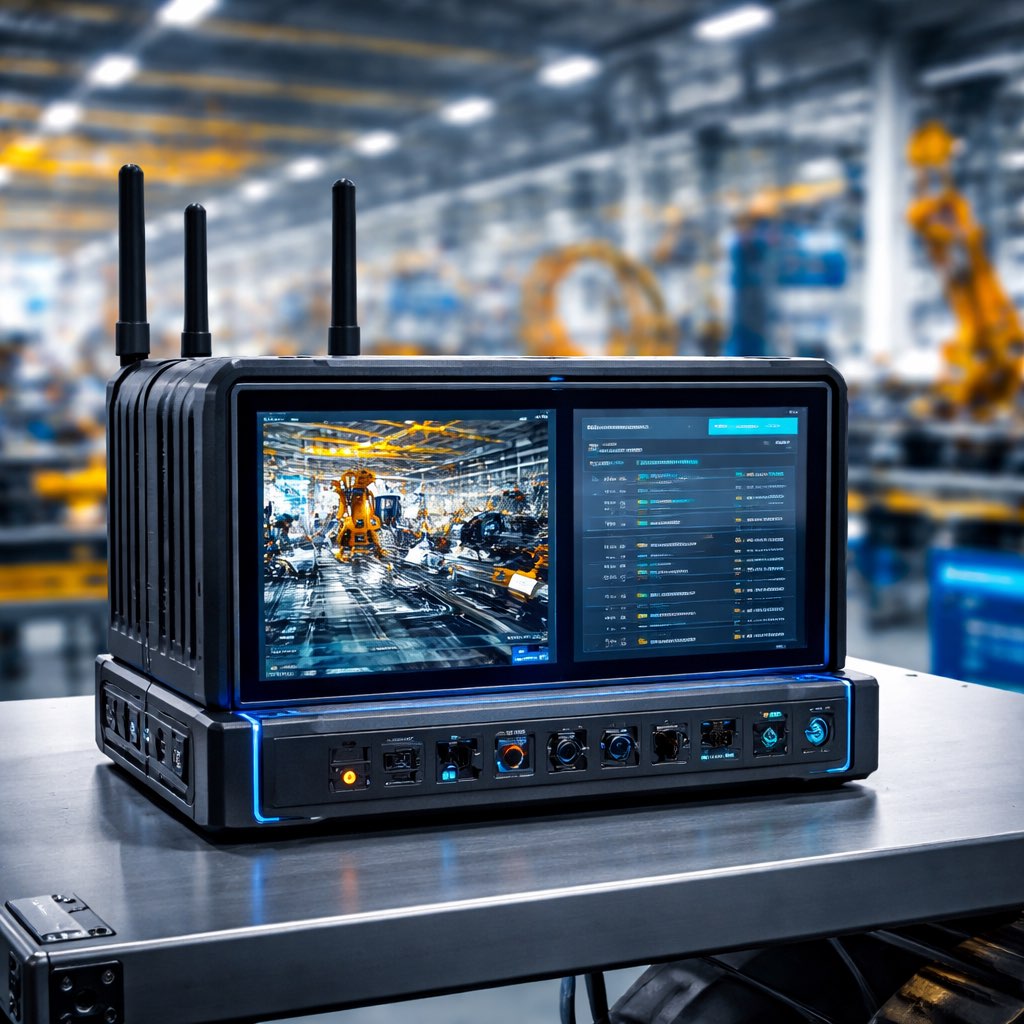
Edge AI Moves From Hype to Production
Edge AI — running artificial intelligence models directly on devices at the network periphery rather than in centralized cloud data centers — has crossed the deployment threshold in 2026. The global edge AI market reached an estimated USD 24.91 billion in 2025 and is expected to hit USD 29.98 billion this year, with a projected CAGR of 21.7% through 2033 when the market will reach USD 118.69 billion.
The transition from experimental pilots to production deployments is driven by a convergence of three forces: multimodal AI models that process text, images, audio, and sensor data simultaneously are now small enough to run on edge hardware; enterprise use cases have matured beyond proof-of-concept to deliver measurable ROI; and hardware advances from companies like Arm, Qualcomm, and NVIDIA have made edge inference practical at scale.
The competitive edge in 2026 lies in how effectively organizations combine agentic AI, multimodal AI, and edge computing into unified intelligent ecosystems. Companies that treat these as separate technology silos will fall behind those that architect them as integrated platforms.
Micro LLMs: Intelligence on the Edge
The enabler behind edge AI’s breakthrough is the emergence of micro LLMs — compact, task-specific language models optimized for efficiency that can run directly on devices with limited compute resources. Unlike cloud-hosted models with hundreds of billions of parameters, micro LLMs operate with parameters in the millions to low billions, requiring less compute, less power, and fitting within device memory constraints.
These models sacrifice generality for precision: a micro LLM deployed in a manufacturing quality control camera does not need to write poetry — it needs to identify defects in real time with millisecond latency. This task-specific design philosophy produces models that outperform general-purpose models on their target domains while consuming a fraction of the compute.
Arm and its ecosystem partners are enabling distributed AI agents, always-on multimodal experiences, and faster deployment workflows from microcontroller-class devices to high-performance edge systems. The hardware foundation now supports running meaningful AI workloads — visual inspection, natural language understanding, anomaly detection — directly on sensors, cameras, and industrial controllers.
Manufacturing Leads Edge AI Adoption
By end-use industry, manufacturing is expected to grow at the fastest CAGR of 23.0% from 2026 to 2033 in edge AI adoption. The sector’s embrace of edge intelligence is driven by concrete operational returns: real deployments report 25% reductions in unplanned downtime, translating directly to millions of dollars in recovered production capacity.
Factory floor use cases demonstrate why multimodal edge AI matters. A single production line may generate visual data from quality inspection cameras, acoustic data from vibration sensors, thermal data from infrared monitors, and time-series data from process controllers — all requiring simultaneous analysis with sub-second response times. Cloud roundtrips introduce latency that is unacceptable for real-time quality control; edge processing eliminates this bottleneck.
Predictive maintenance represents the highest-value edge AI application in manufacturing. By continuously analyzing sensor data at the edge, AI models detect early warning signs of equipment failure — subtle changes in vibration patterns, temperature gradients, or power consumption — enabling maintenance before failure occurs rather than after.
Advertisement
Healthcare, Retail, and Smart Infrastructure
Beyond manufacturing, edge AI deployments are accelerating across healthcare, retail, and urban infrastructure. Healthcare applications include real-time patient monitoring devices that run AI models locally to detect cardiac anomalies, fall events, or medication compliance without transmitting sensitive health data to cloud servers — addressing both latency and privacy requirements.
Retail environments deploy edge AI for real-time inventory tracking, customer behavior analysis, and dynamic pricing optimization. Smart cameras with embedded AI can identify out-of-stock shelves, track foot traffic patterns, and detect potential theft without streaming video to remote data centers.
Smart city infrastructure represents a growing edge AI frontier: traffic management systems, environmental monitoring networks, and public safety cameras increasingly run AI inference locally, reducing bandwidth requirements and enabling faster response times for time-critical applications like emergency vehicle routing.
The Hardware Foundation
The hardware segment led the edge AI market with the largest revenue share of 51.8% in 2025, reflecting the capital-intensive nature of edge infrastructure buildout. Enterprises are investing heavily in specialized edge hardware — AI accelerators, neural processing units (NPUs), and GPU-equipped edge servers — to support on-device inference at scale.
Dell’s edge AI predictions for 2026 emphasize that enterprise buyers are shifting from evaluating edge hardware to procuring it at scale, with particular demand for systems that support multiple AI workloads simultaneously. The era of single-purpose edge devices is giving way to multi-workload edge platforms that can run quality inspection, predictive maintenance, and safety monitoring on the same hardware.
NVIDIA’s Jetson platform, Qualcomm’s AI Engine, and Intel’s OpenVINO toolkit have lowered the barrier to deploying multimodal AI at the edge, providing software frameworks that optimize model inference for power-constrained devices. Arm’s embedded world announcements confirm that the silicon foundation for pervasive edge intelligence is now broadly available.
Security and Data Sovereignty at the Edge
Edge AI addresses a growing enterprise concern: data sovereignty. By processing sensitive data locally rather than transmitting it to cloud data centers — potentially in foreign jurisdictions — edge computing aligns with data protection regulations like GDPR, sector-specific requirements in healthcare and finance, and enterprise policies limiting data movement across borders.
However, edge deployments create new security challenges. Distributed devices are harder to patch, monitor, and protect than centralized cloud environments. Edge AI models may be vulnerable to adversarial attacks in physically accessible environments. And the lifecycle management of hundreds or thousands of edge devices requires robust device management and over-the-air update capabilities.
Frequently Asked Questions
How big is the edge AI market in 2026?
The global edge AI market is estimated at USD 29.98 billion in 2026, growing at 21.7% CAGR toward USD 118.69 billion by 2033. Hardware accounts for the largest segment at 51.8% of revenue.
What are micro LLMs and why do they matter for edge computing?
Micro LLMs are compact, task-specific language models optimized to run on devices with limited compute. They sacrifice generality for precision, delivering high performance on specific tasks like defect detection or anomaly identification while consuming minimal resources.
Which industry is adopting edge AI fastest?
Manufacturing leads with the fastest projected CAGR of 23.0% through 2033, driven by use cases in quality inspection, predictive maintenance, and real-time process optimization that deliver 25% reductions in unplanned downtime.
Sources & Further Reading
- Edge AI Market Size, Share & Trends Report 2033 — Grand View Research
- The Power of Small: Edge AI Predictions for 2026 — Dell
- Arm at Embedded World 2026: Powering Intelligent Edge AI Systems — Arm Newsroom
- Key Edge AI Trends Transforming Enterprise Tech in 2026 — N-iX
- Top AI Development Trends to Watch in 2026 — Abbacus Technologies
🔗 Related Intelligence

Edge AI Engineers: Why On-Device Inference Is 2026’s Hottest Career

AI Development Workflows: How Teams Integrate AI Into Every Stage of Software

AI in Software Development: How AI Is Transforming the Industry

The Multi-Agent Myth: Why More AI Agents Can Actually Make Systems Worse