

📚 Part of the Open Innovation in Algeria series — the complete framework for corporate-startup-university collaboration.
Introduction
When Algerians hear “open innovation,” they think of corporate hackathons and startup accelerators. But the most transformative form of open innovation does not happen in boardrooms or tech parks — it happens in neighborhoods, municipal offices, and public spaces where ordinary citizens become co-designers of the services they use.
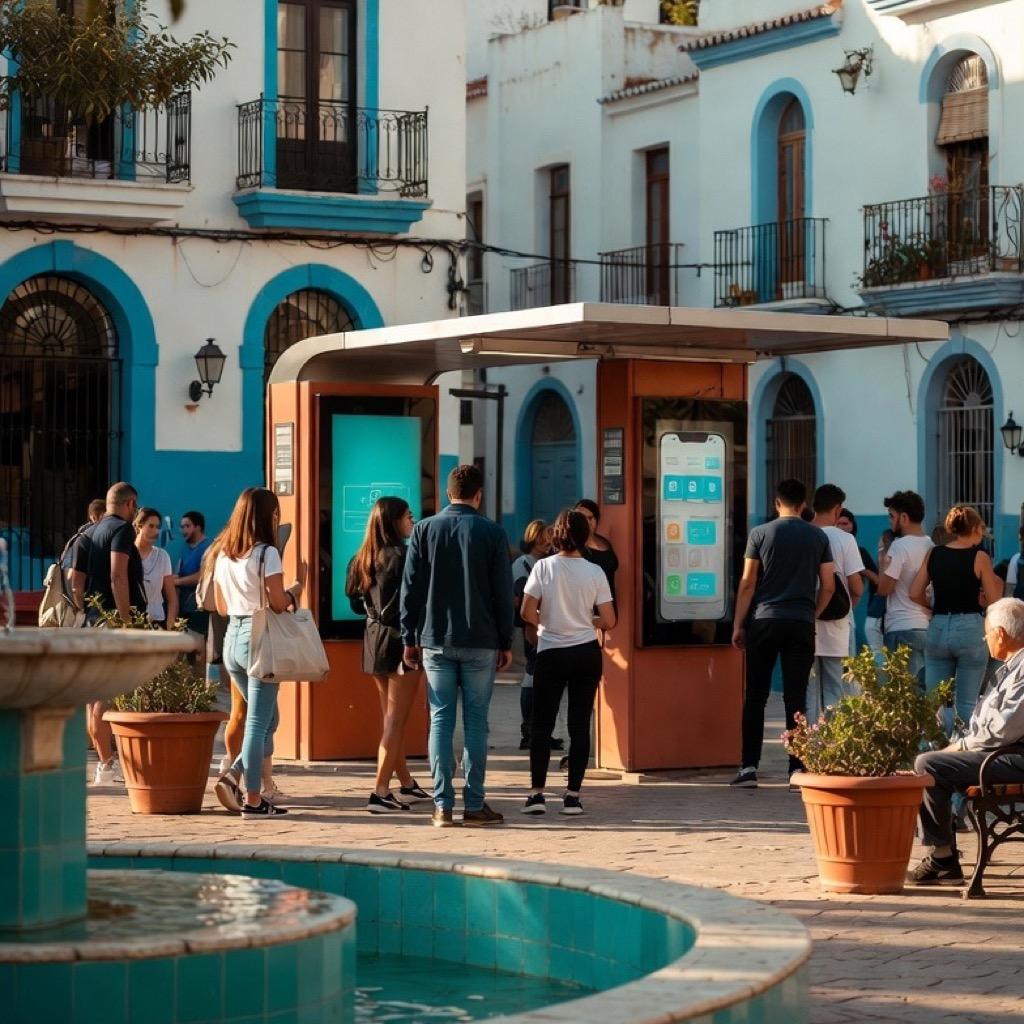
Living labs are real-world testing environments where citizens, researchers, companies, and government collaborate to design, test, and refine innovations in their actual context of use. Instead of building a smart city app in a lab and hoping citizens adopt it, you build it with citizens from day one — testing in real homes, real clinics, and real traffic.
Algeria is in the middle of massive public digitization. The “Digital Algeria 2030” initiative plans over 500 projects for 2025-2026, with 75% focused on modernizing public services. The Dzair Services platform, announced in October 2025, aims to centralize all government e-services through an interoperability system connecting 46 ministries and agencies. Yet Algeria ranks 116th out of 193 countries in the UN E-Government Development Index — last among North African nations — and faces critical challenges in digital literacy, rural connectivity, and cloud adoption.
The problem is not ambition. It is method. According to the World Bank, more than 80% of e-government projects worldwide fail — primarily because they are built for users without users. Living labs offer Algeria a different path.
What Living Labs Actually Are
A living lab is NOT:
- A technology demonstration center
- A coworking space
- A focus group
- A user testing session after the product is built
A living lab IS:
- A sustained partnership between citizens, public authorities, companies, and researchers
- A real-world environment where innovations are co-created, tested, and validated
- A method that puts end users at the center of the innovation process from day one
- A continuous feedback loop where solutions evolve based on actual usage data
The Four Core Principles
- Co-creation: Users are not testers — they are co-designers. They help define the problem, propose solutions, and evaluate prototypes.
- Real-world testing: Innovations are tested in actual environments (homes, offices, streets), not simulated ones.
- Multi-stakeholder: Every living lab involves at least citizens, a public authority, a technology provider, and researchers.
- Iteration: Solutions are refined through multiple cycles of testing and feedback, not launched in a single “big bang.”
Global Models That Work
The European Network of Living Labs (ENoLL) counts over 200 member organizations across 42 countries, providing a proven framework for citizen-centered innovation. Several models are directly relevant to Algeria.
Barcelona: City as Testing Ground
Barcelona’s 22@ Innovation District and its Urban Lab program have turned the city into a large-scale living lab. Since 2008, the Urban Lab has evaluated over 80 innovation proposals, testing the most promising ones directly on city streets. Of the projects piloted in real neighborhoods, an estimated 90% went on to develop viable businesses.
The results are concrete: smart sensors embedded in asphalt guide drivers to available parking spaces, reducing congestion. Smart waste bins use fill-level sensors to optimize collection routes, delivering a 20% reduction in waste collection costs. The 22@ district itself now hosts 90,000 employees and has created more than 56,000 new jobs — proof that living labs generate economic value, not just better services.
Helsinki: Digital Government Co-Design
Helsinki’s Forum Virium, the city’s innovation unit, uses living lab methods to develop digital services in partnership with residents, companies, and the city government. In the Smart Kalasatama district, the organization runs design sprints for green infrastructure and tests autonomous delivery robots in a real neighborhood context.
With 150 successful EU projects, 70 million euros in EU funding received, and a portfolio of 30+ active innovation projects, Forum Virium demonstrates that systematic citizen co-design is not an experiment — it is a proven methodology. The Digital Helsinki programme specifically accelerates city service digitalization through experimentation with diverse user groups, supported by Helsinki Lab, a dedicated organization ensuring user-oriented development.
Tunisia: DigiArt Living Lab
Tunisia’s DigiArt Living Lab (DALL), an ENoLL-accredited member based in Nabeul, operates as a creative technology platform supporting young African talents in digital arts, virtual reality, augmented reality, and IoT. While focused on creative technology rather than e-government, DALL demonstrates that the living lab model can take root in North Africa. Its existence as an ENoLL member in a French-speaking African context is directly relevant to Algeria.
Advertisement
Where Algeria Needs Living Labs
1. E-Government Service Design
Algeria has launched numerous digital platforms — tax filing, civil documents, business registration, university enrollment, and the Bawabatak e-administration portal. Many suffer from low adoption because they were designed by engineers who never watched a citizen try to use them.
The upcoming Dzair Services centralization platform is a prime opportunity. Instead of launching nationally and hoping for the best, Algeria could test the platform’s interfaces in three to four municipalities with actual citizens — including elderly users, low-digital-literacy populations, and Arabic/Tamazight speakers — before national rollout. This single change could be the difference between the platform joining the 80% that fail and the 20% that succeed.
2. Sidi Abdellah Smart City
The Sidi Abdellah new city, 20 kilometers southwest of Algiers, is Algeria’s marquee smart city initiative. Created in 2004 and revised in 2020 to accommodate 90,000 dwellings and 450,000 inhabitants, it is designed to be smart, resilient, and connected. It has been designated as Algeria’s first model city for electronic payment.
Currently, smart city features are being planned by architects and engineers with minimal citizen input. A living lab approach would deploy smart city technologies — smart parking, energy management, public Wi-Fi, digital wayfinding — in a single neighborhood block. The first residents would test, critique, and co-improve the systems before scaling citywide. This block becomes a permanent innovation testbed, attracting startups and researchers to an active proving ground.
3. Digital Health
Algeria is modernizing its healthcare system with digital patient records, telemedicine platforms, and pharmacy management systems. Early deployments have faced resistance from both healthcare workers and patients.
A living lab partnership with three to five polyclinics in different wilayas would co-design digital health tools with doctors, nurses, pharmacists, and patients simultaneously. Identifying workflow barriers, language issues, and trust concerns before national deployment would prevent the kind of costly failures that plague top-down health IT rollouts worldwide.
4. Urban Mobility
Algerian cities face severe traffic congestion. Various smart traffic management and public transportation apps have been proposed or piloted. A living lab approach would instrument two to three corridors in Algiers, Oran, or Constantine with sensors and traffic management systems, co-designing the user-facing interfaces — route apps, real-time bus tracking, parking guidance — with actual commuters.
5. Agricultural Innovation
Algeria’s agricultural sector employs millions but adopts technology slowly. The Institut Technique des Grandes Cultures (ITGC), with its nine experimental stations distributed across the national territory, provides existing infrastructure for agricultural living labs. Partner ITGC and farming cooperatives in the Mitidja plain, Ghardaia oases, or the Setif high plateaus to test precision agriculture tools, drought-resistant techniques, and market linkage platforms with actual farmers in their actual fields. AgriTech Open Innovation details the specific technologies and startups that could anchor such living labs.
How to Build Algeria’s First Living Labs
Model 1: Municipal Living Lab
Location: A progressive municipality (Ben Aknoun, Sidi Abdellah, or Oran’s new city district) Focus: E-government and smart city services Partners: Municipality + university (USTHB/USTO) + tech startups + citizen advisory board Budget: ~$200K/year for 3 years Activities:
- Monthly citizen workshops to identify pain points in municipal services
- Quarterly prototype deployments of digital solutions
- Continuous monitoring through usage analytics and citizen feedback
- Annual “Innovation Day” where solutions are demonstrated and voted on
Model 2: University-Neighborhood Living Lab
Location: University campus + surrounding neighborhood Focus: Digital services for young adults and families Partners: University + student entrepreneurs + neighborhood association + mobile operators Budget: ~$150K/year for 3 years Activities:
- Students develop solutions for neighborhood challenges as coursework
- Neighborhood residents provide ongoing feedback and co-design input
- Best solutions get 6-month pilots with university funding
- Research papers and case studies document lessons learned
Model 3: Rural Agriculture Living Lab
Location: Agricultural region (Mitidja, Ghardaia, or Setif) Focus: Precision agriculture, water management, market access Partners: ITGC/INRA + farming cooperative + agritech startups + university agriculture department Budget: ~$300K/year for 3 years (includes equipment) Activities:
- Seasonal technology deployments aligned with agricultural calendar
- Farmer-led evaluation of tools and techniques
- Peer-to-peer knowledge sharing among participating farmers
- Data collection on yield improvements, water savings, and cost reductions
The Governance Challenge
Living labs require a governance model that Algeria’s centralized bureaucracy is not designed for.
What Needs to Change
- Decision authority must be local. Municipal living labs cannot wait for ministry approval on every iteration cycle
- Citizens must have real power. Advisory boards where citizens vote on which prototypes proceed
- Failure must be permitted. Living labs are inherently experimental — some prototypes should fail. Government culture must accept this
- Data must be shared. Usage data from living lab experiments must be available to all partners, including the public
Recommended Governance Structure
- Steering committee: Municipality + university + industry partner (equal voting)
- Citizen advisory board: 15-20 randomly selected citizens, rotating annually
- Technical team: Researchers and engineers who manage day-to-day operations
- Funding: Blended model — 50% government, 30% industry partners, 20% international grants (EU Neighbourhood funds allocated EUR 160 million to Algeria for 2021-2024, with priorities including digital and green innovation)
The Business Case
Living labs are not a cost — they are an investment that prevents much larger waste:
| Without Living Labs | With Living Labs |
|---|---|
| E-gov platform launched nationally, low adoption, millions wasted | Tested in 3 municipalities, redesigned, high adoption, investment preserved |
| Smart city tech installed, residents ignore it, millions unused | Co-designed with residents, high adoption, generating value |
| Ag tech distributed to farmers, rejected, budget wasted | Tested with farmers, adapted, adopted, producing returns |
Academic research consistently finds that innovations developed through citizen co-creation are more aligned with actual needs, leading to higher adoption rates and more profound social impact. The living lab approach ensures what researchers call “viral adoption” — when users co-create a solution, they become its advocates, driving peer-to-peer spread.
With Algeria planning over 500 digital projects for 2025-2026, even a modest improvement in adoption rates — from the global average of 20% success to 50% — would save hundreds of millions of dinars in wasted deployments.
For a broader perspective on how Algeria’s largest companies are structuring their engagement with the innovation ecosystem, see Corporate Open Innovation in Algeria.
Advertisement
🧭 Decision Radar
| Dimension | Assessment |
|---|---|
| Relevance for Algeria | High — Algeria is investing in 500+ digital projects for 2025-2026 but risks low adoption without citizen co-design |
| Action Timeline | 6-12 months for first pilot living lab; 2-3 years for network of 5-10 labs |
| Key Stakeholders | High Commission for Digitalization, progressive municipalities, university rectors, citizen associations, tech startups, ITGC, EU Neighbourhood Policy office |
| Decision Type | Tactical |
| Priority Level | High |
Quick Take: Algeria is building smart cities and deploying 500+ digital platforms without asking citizens what they actually need. The country ranks 116th in the UN E-Government Index, and the World Bank finds that 80% of e-gov projects worldwide fail. Living labs — real-world co-design environments costing $200-300K/year each — could dramatically improve adoption rates and prevent millions in wasted top-down deployments. Tunisia already has an ENoLL-accredited lab. Algeria needs five.
Sources & Further Reading
- ENoLL — European Network of Living Labs
- Barcelona Urban Lab — Centre for Public Impact
- Forum Virium Helsinki — Innovation Districts as Living Labs
- DigiArt Living Lab Tunisia — ENoLL Member
- World Bank — Why 80% of E-Government Projects Fail
- Algeria Digital Transformation: 500 Projects for 2025-2026 — MeaTechWatch
- Algeria Launches Dzair Services Platform — We Are Tech Africa
- Barcelona Smart City IoT — Harvard Data-Smart City Solutions
🔗 Related Intelligence

Algeria Digital 2030: 500 Projects, 500K Jobs — Reality Check

Open Innovation in Algeria: The Complete Framework for Corporate-Startup-University Collaboration

Corporate Open Innovation in Algeria: How the Country’s Biggest Companies Are Learning to Innovate with Outsiders

Algeria’s Digital Economy Law: What Tech Companies Need to Know in 2026







Advertisement