
Why a Chinese Tech Giant and an Algerian Super-App Joined Forces
In December 2025, Huawei and Yassir signed a Memorandum of Understanding at Yassir’s headquarters in Algiers, establishing a long-term strategic partnership aimed at accelerating Algeria’s digital transformation. The signing ceremony brought together Tony Shi from Huawei and Noureddine Taybi from Yassir, alongside management teams from both companies, followed by a press briefing outlining the partnership’s objectives.
The logic behind the deal is straightforward: Huawei brings global-scale cloud infrastructure, AI hardware, and telecommunications expertise to a market where it already has deep roots. Yassir brings something Huawei cannot build alone — a super-app with over 8 million users, 100,000 service providers, and operations spanning 45 cities across Algeria, Morocco, Tunisia, France, and Canada. Together, the two companies aim to develop locally tailored solutions in cloud computing, artificial intelligence, server infrastructure, mobility services, and mobile payments.
What the Partnership Actually Covers
The MoU between Huawei and Yassir targets five specific areas of cooperation that go well beyond a standard technology vendor relationship.
Cloud Computing and E-Commerce Platforms. Yassir currently runs its core infrastructure on Google Cloud Platform, using Kubernetes Engine Autopilot clusters and BigQuery for data analytics. The Huawei partnership introduces an alternative compute layer through Kunpeng and Ascend server infrastructure. Kunpeng processors, built on ARM architecture, offer energy-efficient general computing for e-commerce and database workloads. Ascend processors add dedicated AI acceleration — the 310 for inference and the 910 for training at 256 TFLOPS FP16 — powering Yassir’s machine learning operations from demand forecasting to route optimization.
Mobile Payments and Financial Services. A significant piece of the partnership focuses on expanding Yassir Cash, the company’s digital wallet backed by a network of over 5,000 agents across Algeria. Yassir is pursuing authorization as a payment institution and plans to introduce features that let users pay, save, and borrow digitally. Huawei’s infrastructure support could be critical here: financial services require low-latency, high-availability systems that benefit from locally hosted compute rather than round-trips to distant cloud regions. Yassir recently acquired the Uno hypermarket chain from the Cevital Group, rebranding stores as “Yassir Market” — with the flagship Bab Ezzouar location in Algiers processing transactions through Yassir Cash.
Smart Mobility and Digital Supply Chains. Ride-hailing and last-mile delivery depend on real-time geospatial processing, dynamic pricing, and fleet management AI. The partnership targets improvements through enhanced processing capabilities, potentially shifting workloads to locally hosted Huawei infrastructure for lower latency.
Telecommunications Integration. Huawei’s existing work with Algeria Telecom — including the national 400G WDM backbone network launched in February 2025 — creates a natural bridge. Yassir’s services sit directly on top of that connectivity layer. Deeper integration could mean preferential quality-of-service for real-time applications like payments and ride-hailing.
Talent Development and Startup Ecosystem. Beyond infrastructure, Huawei and Yassir committed to supporting Algeria’s technology ecosystem through hackathons, innovation programs, major technology events, and startup incubation. Huawei already runs the ICT Competition 2025-2026 for Algerian university students, and Yassir — as a Y Combinator alumnus with 1,500 employees — has the credibility to mentor emerging founders. This ecosystem development piece may prove more consequential long-term than any hardware deployment.
Advertisement
Huawei’s Expanding Footprint in Algeria
The Yassir partnership does not exist in isolation. Huawei has been systematically building Algeria’s digital backbone across multiple fronts.
The company built a government data center and signed a deal with the Public Finance Informatics Agency of the Ministry of Finance to construct a data center for Algerian Customs, replacing the legacy SIGAD system. At MWC Barcelona 2026, Huawei and Algeria Telecom’s CMO Amir Benidir co-launched the Northern Africa Digital Operation Transformation Pioneer Club 2.0, an industry consortium focused on AI-driven network operations across the region.
This pattern — infrastructure first, then partnerships with local application companies — mirrors Huawei’s strategy in other emerging markets where it has gained ground against AWS and Azure by offering data sovereignty guarantees and competitive pricing. Algeria follows the same playbook: Huawei provides the rails, Yassir supplies the riders.
What This Means for Algeria’s Tech Stack
For Algerian developers and technology leaders, the partnership raises practical questions about the country’s cloud infrastructure trajectory.
Multi-cloud becomes real. Yassir’s existing Google Cloud stack combined with Huawei infrastructure creates a genuine multi-cloud environment in Algeria. This is notable because most Algerian companies have relied on hyperscalers with no local presence. Huawei’s physical infrastructure — servers, data centers, network equipment — is already on Algerian soil.
Sovereignty and data residency. Algeria’s data protection law (Law 11-25) and the broader push for digital sovereignty make locally hosted infrastructure increasingly important. A partnership between a global hardware provider and a local super-app handling millions of financial transactions addresses this directly.
AI compute access. Ascend processors offer an alternative to NVIDIA hardware for AI workloads, which matters in a market where GPU access is limited. If Huawei deploys Ascend-based compute resources accessible to Yassir’s ML teams, it could eventually open doors for other Algerian companies needing AI training and inference capacity.
The risk is vendor lock-in. Huawei’s Kunpeng and Ascend ecosystems require specific software stacks and developer tools. Algerian companies committing to these platforms would need to weigh the benefits of local infrastructure against the portability costs of a proprietary ecosystem — the same calculus that enterprises everywhere face with any cloud provider.
The Bigger Picture for North Africa
Algeria’s economic diversification ambitions and its Digital 2030 strategy depend on exactly these kinds of partnerships — where global technology capability meets local market knowledge and distribution. Yassir’s trajectory from a 2017 Algerian ride-hailing startup to North Africa’s highest-valued company shows what is possible when Algerian founders build on world-class infrastructure. The Huawei MoU suggests the next chapter will be about building that infrastructure locally, rather than renting it from distant data centers.
Whether this partnership delivers on its full ambitions will depend on execution speed, regulatory clarity around Yassir’s payment institution license, and whether the ecosystem development commitments translate into actual opportunities for Algeria’s broader technology community. The framework is in place. The hard work starts now.
Frequently Asked Questions
What does the Huawei-Yassir partnership mean for data sovereignty in Algeria?
The partnership directly addresses Algeria’s data sovereignty requirements under Law 11-25 (data protection) and the broader Digital 2030 strategy. By deploying Huawei Kunpeng and Ascend server infrastructure locally, sensitive data — particularly financial transaction data from Yassir Cash — can be processed and stored within Algeria rather than in distant cloud regions. This reduces latency, aligns with regulatory requirements, and gives Algerian regulators oversight of critical infrastructure.
How does Yassir Cash fit into Algeria’s digital payment landscape?
Yassir Cash is a digital wallet backed by over 5,000 agents across Algeria, integrated into Yassir’s super-app alongside ride-hailing, delivery, and e-commerce (including the recently acquired Yassir Market chain). Yassir is pursuing authorization as a payment institution, which would allow it to offer full payment, saving, and lending services. Combined with Huawei’s low-latency infrastructure, Yassir Cash could become a major driver of Algeria’s digital financial services ecosystem.
Is there a risk of vendor lock-in with Huawei’s cloud ecosystem?
Yes. Huawei’s Kunpeng (ARM-based general computing) and Ascend (AI acceleration) processors require specific software stacks and developer tools that differ from the x86 and NVIDIA ecosystems. Algerian companies committing to these platforms must weigh the benefits of local infrastructure and data sovereignty against reduced portability. However, Yassir already runs its core infrastructure on Google Cloud, suggesting the partnership creates a multi-cloud environment rather than a full replacement — a pragmatic approach that preserves optionality.
Sources & Further Reading
- Huawei and Yassir Forge Strategic Partnership to Boost Algeria’s Digital Transformation — TechAfrica News
- Algerian Super-App Startup Yassir, Huawei Launch Cooperation on Cloud, AI and Mobility — Ecofin Agency
- Algeria Telecom Partners with Huawei to Deliver 400G WDM National Backbone Network — Huawei
- Yassir Case Study — Google Cloud
- Algeria’s Fintech Ecosystem in 2026 — The Fintech Times
- How Yassir Hit $225.9M Revenue with a 1.5K Person Team in 2024 — Latka
- Huawei Launches the ICT Competition 2025-2026 for Algerian Students — MEA Tech Watch
🔗 Related Intelligence

Huawei’s Pioneer Club 2.0: Algeria Co-Leads Africa’s AI Telecom Alliance at MWC 2026

Digital Algeria 2030: How the National Strategy Is Drawing Cloud Investment

AWS Launches Middle East Region: What Algerian Cloud Strategists Must Know Now
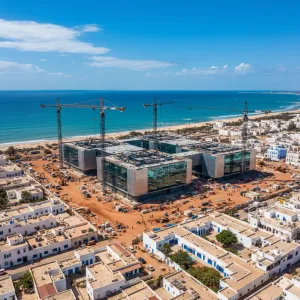
AI Infrastructure: Algeria Breaks Ground on Its First Data Center in Oran