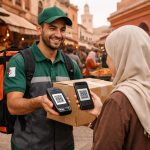
A Landmark Announcement
On February 20, 2026, Algeria’s Minister of Post and Telecommunications Sid Ali Zerrouki confirmed that the country had reached 3 million households connected to fiber-to-the-home (FTTH) broadband. The announcement marked a decisive inflection point in Algeria’s national broadband strategy, validating years of infrastructure investment led by the state-owned operator Algerie Telecom.
The milestone is all the more striking when measured against where Algeria stood just six years earlier. In early 2020, Algeria counted roughly 53,000 FTTH subscribers. The path from 53,000 to 3 million represents a growth rate that few national telecom operators anywhere in the world have matched in such a compressed timeframe.
Minister Zerrouki framed the achievement as a direct result of strategic directives from President Abdelmadjid Tebboune to extend high-speed digital infrastructure across the entire national territory. The government’s “All Fiber” plan, which aims to generalize fiber optic coverage across all 58 wilayas by 2027, is now visibly on track.
The Growth Trajectory: From Marginal to Mainstream
Algeria’s FTTH expansion has followed an exponential curve that accelerated sharply after 2022. The numbers tell a compelling story of infrastructure scaling at pace:
- 2020: ~53,000 FTTH subscribers
- 2022: ~478,000 FTTH subscribers
- 2023: ~1.08 million FTTH subscribers (126% year-over-year growth)
- April 2025: 2 million FTTH subscribers, covering approximately 27% of Algeria’s 7.4 million households
- September 2025: 2.5 million FTTH subscribers
- February 2026: 3 million FTTH households connected
What drove this acceleration? Several converging factors. First, Algerie Telecom invested heavily in fiber distribution infrastructure, deploying new equipment across all wilayas and extending fiber distribution cabinets into residential neighborhoods. Second, the government adopted pricing strategies designed to make fiber accessible: promotional offers brought subscription costs down to as low as 300 DZD (roughly $2) for the first month, with free optical modem installation for customers migrating from older ADSL connections. Third, the progressive degradation of Algeria’s aging copper ADSL network created natural pull demand — as copper reliability declined, fiber became not just faster but often more stable.
The current penetration rate of approximately 40% of households (3 million of ~7.4 million) still leaves significant room for growth. But the pace of new connections — averaging roughly 100,000 per month through 2025 — suggests Algeria could approach 50% household penetration before the end of 2026.
The Infrastructure Behind the Numbers
Reaching 3 million homes is not simply a matter of installing 3 million optical network terminals. The deployment required building out the entire passive optical network (PON) infrastructure from scratch in most areas: fiber feeder cables from central offices, optical line terminals (OLTs) at exchange nodes, fiber distribution hubs at neighborhood level, and last-mile drops to individual residences.
Algerie Telecom deployed new fiber equipment across all 58 wilayas, a commitment to geographic balance that distinguishes Algeria’s approach from countries where fiber deployment concentrates exclusively in profitable urban markets. The national fiber transport network — which had reached nearly 200,000 kilometers of fiber optic cable by the end of 2021 and has continued expanding since — provides the backbone that these local distribution networks connect into. The network features seven regional NG-DWDM loops, each capable of transmitting up to 3 terabits per second.
The deployment also required workforce scaling. Fiber installation demands specialized technicians for splicing, testing, and commissioning — skills that did not exist at scale in Algeria’s labor market six years ago. Algerie Telecom invested in training programs and partnered with equipment vendors to build a domestic installer workforce capable of sustaining the monthly connection rates the rollout demands.
Algeria’s adoption of XGS-PON technology for its higher-tier plans is also noteworthy. Rather than relying solely on legacy GPON (limited to 2.5 Gbps downstream shared across a split), the operator has introduced XGS-PON modems for customers on 1 Gbps and above plans — a symmetrical 10 Gbps-capable technology that provides the headroom to deliver 1.6 Gbps to individual subscribers even at standard split ratios. This forward-looking technology choice means the infrastructure supporting the highest-tier plans can accommodate speed tiers well beyond current offerings without requiring equipment replacement.
Africa’s Fastest Residential Fiber: 1.6 Gbps
Speed matters as much as reach. In August 2025, Algerie Telecom launched new IDOOM Fibre offers with connection speeds of up to 1.6 gigabits per second — the fastest residential FTTH speeds available anywhere on the African continent. This followed the operator’s previous record of 1.2 Gbps set in November 2024, itself a continental milestone at the time.
The 1.6 Gbps offering is not merely a showcase product available to a handful of premium users. Algerie Telecom’s IDOOM Fibre portfolio spans a range of speed tiers designed for different usage profiles, from entry-level plans suitable for light browsing through mid-range tiers for streaming and remote work, up to gigabit-class speeds for power users and content creators. Following a recent restructuring, the entry-level tier was boosted to 60 Mbps, while upper tiers reach 1.5 Gbps and 1.6 Gbps.
The pricing remains competitive by regional standards, with entry-level fiber plans starting at approximately 2,200 DZD per month. The gigabit and above tiers carry premium pricing but remain accessible relative to comparable offerings in North Africa and the Middle East.
For context on what 1.6 Gbps means in practical terms: at that speed, a full HD movie downloads in roughly 4 seconds, a 50 GB game installs in under 5 minutes, and a household can simultaneously run multiple 4K video streams, cloud gaming sessions, and large file transfers without perceptible degradation. For Algeria’s growing remote workforce and digital entrepreneurs, these speeds eliminate bandwidth as a bottleneck.
The Copper Phase-Out: A Hard Deadline
Algeria’s fiber ambitions come paired with an equally bold commitment: the complete phase-out of the copper telecommunications network by the end of 2027. This is not a soft target or an aspirational statement — the government has positioned it as a binding infrastructure policy with the weight of presidential directives behind it.
The copper network, built over decades and once the backbone of Algeria’s fixed-line internet through ADSL technology, has become an increasingly costly liability. Copper lines suffer from distance-dependent signal degradation, vulnerability to weather and physical damage, and sharply limited throughput ceilings. Maintaining the copper plant while simultaneously building fiber represents a double cost that Algerie Telecom is eager to eliminate. As of September 2024, approximately 2.6 million subscribers remained on copper ADSL — representing 44% of the 5.9 million fixed internet subscribers at the time.
The phase-out strategy follows a region-by-region approach. As fiber infrastructure reaches a neighborhood, ADSL services on copper are progressively migrated. Customers on copper ADSL are offered subsidized migration incentives — including free optical modems and waived installation fees — to accelerate voluntary switchover before the copper infrastructure is decommissioned.
The 2027 deadline is aggressive by international standards. France, often cited as a fiber deployment leader, set its own copper shutdown target for 2030. Algeria’s compressed timeline reflects both the urgency of modernization and the relative advantage of building fiber in a market where copper infrastructure was never as deeply entrenched as in older telecom markets.
The copper retirement also carries a material cost-reduction benefit for Algerie Telecom. Operating two parallel fixed-line networks — fiber and copper — roughly doubles maintenance costs for the last-mile infrastructure. Every neighborhood that transitions fully to fiber allows the operator to decommission copper distribution points, reduce truck rolls for copper fault repair, and reallocate technical staff to new fiber installations rather than legacy network maintenance.
Advertisement
Mapping the Gaps: A Participatory Approach
Even as the 3 million milestone was celebrated, Algerie Telecom acknowledged that significant coverage gaps remain. Approximately 4.4 million households — nearly 60% of the total — are still not connected to fiber. Many of these are in rural areas, southern wilayas, and peri-urban zones where fiber distribution infrastructure has not yet been deployed.
To address this systematically, Algerie Telecom launched a public online survey inviting citizens to report areas lacking fiber connectivity. The survey, hosted on the official Algerie Telecom website, asked neighborhood committees and local representatives to provide detailed information including locality names, estimated household counts, and GPS coordinates. The submission window ran through July 2025.
This participatory mapping approach is unusual in the telecom sector, where operators typically rely on internal network planning databases. By crowdsourcing gap identification, Algerie Telecom gains granular, ground-level intelligence that pure top-down planning might miss — particularly in areas where official address databases are incomplete or outdated.
The data collected through the survey is feeding directly into Algerie Telecom’s 2026 action plan, which prioritizes deployment in areas identified as underserved. The approach also serves a public engagement function, signaling to citizens in unconnected areas that their needs are recognized and queued for action.
The 5G Convergence Factor
Algeria’s fiber milestone does not exist in isolation. It arrives in the immediate wake of another transformational infrastructure event: the commercial launch of 5G services on December 3, 2025. All three licensed operators — Mobilis (Algerie Telecom’s mobile arm), Djezzy, and Ooredoo Algeria — paid a combined 63.9 billion dinars (~$492 million) for their 5G spectrum licenses.
The relationship between FTTH and 5G is symbiotic. 5G base stations require high-capacity fiber backhaul to deliver on their throughput promises. Without extensive fiber infrastructure reaching cell tower locations, 5G coverage remains theoretical. Algeria’s 3-million-home fiber network provides exactly the backhaul substrate that makes 5G deployment economically viable beyond the initial pilot provinces.
The 5G licenses include binding coverage milestones: pilot service in eight provinces at launch, with operators required to expand to ten additional wilayas per year until nationwide coverage is reached by 2031. Achieving that mandate will require continued fiber buildout deep into secondary cities and semi-rural areas — creating a virtuous cycle where 5G rollout demands pull fiber investment forward.
Economic and Social Implications
The scale of Algeria’s broadband transformation has implications that extend well beyond download speeds. The government has explicitly linked fiber deployment to its broader economic modernization agenda, including plans to boost the digital sector’s contribution to GDP to 20% by 2030 through more than 500 digital projects planned for 2025-2026.
High-speed broadband is foundational infrastructure for several sectors the government has prioritized:
E-government and digital public services: Algeria has been digitizing administrative processes — tax filing, civil registry, business registration — that require reliable broadband to reach citizens outside major cities. Fiber connectivity in all 58 wilayas means these services can realistically be accessed nationwide rather than remaining urban conveniences.
Education and research: Universities and research institutions require high-bandwidth connectivity for cloud computing, collaborative research platforms, and access to global academic databases. The fiber network provides the backbone for Algeria’s growing higher education system to participate in international research networks.
Healthcare and telemedicine: Algeria’s vast geography — it is the largest country in Africa by land area — makes telemedicine particularly relevant for populations in southern wilayas. Fiber-connected health facilities can support high-definition video consultations, remote diagnostics, and the transmission of medical imaging that ADSL connections could not reliably handle.
Startup ecosystem: Algeria’s emerging tech startup scene depends on affordable, reliable broadband. Cloud-based development, SaaS delivery, and remote collaboration with international clients all require connectivity that fiber delivers and copper cannot.
Regional Context: Where Algeria Stands
Algeria’s 3 million FTTH milestone positions it as the largest FTTH market in North Africa by subscriber count. Egypt leads in total broadband subscribers and median download speeds but has been slower to transition from DSL to fiber, relying more heavily on VDSL upgrades. Tunisia’s fiber deployment remains at an earlier stage.
Across the broader African continent, Algeria’s 1.6 Gbps residential speeds are unmatched. South Africa’s fiber operators offer maximum speeds of 1 Gbps in select urban areas. Kenya’s Safaricom Home Fibre introduced a 1 Gbps Platinum plan in September 2024, though its most popular tiers remain well below that. Nigeria’s fiber market is growing but remains concentrated in Lagos and Abuja.
The continental comparison underscores a reality that is not always recognized internationally: Algeria has quietly built one of the most advanced fixed broadband networks in Africa, executing a deployment program that rivals or exceeds what much wealthier nations have achieved in comparable timeframes.
It is worth noting that Algeria’s FTTH deployment also benefits from a favorable demographic structure. With a population of approximately 47 million concentrated along the Mediterranean coastal strip — roughly 70% of the population lives in the northern 10% of the country’s land area — the economics of fiber deployment are more favorable than in countries with dispersed populations. The challenge lies in the remaining 30%: communities in the Hauts Plateaux, the Saharan Atlas, and the deep south where population density drops dramatically and deployment costs per household rise accordingly.
International Bandwidth: The Submarine Cable Factor
Domestic fiber infrastructure is only half the equation. As millions of Algerian homes gain gigabit-capable connections, the demand for international bandwidth — the submarine cables and cross-border links that connect Algeria to global internet infrastructure — rises in direct proportion.
Algeria currently connects to the global internet through several submarine cable systems, including the Alval/Orval link to Spain (up to 40 Tbps maximum capacity, commissioned December 2020) and the legacy SeaMeWe-4 system. The country’s total installed international bandwidth stands at approximately 10.2 Tbps.
This capacity is about to expand dramatically. Two new submarine cable systems are scheduled to enter service in Algeria in 2026: the Medusa cable (8,700+ km, EUR 342 million, 24 fiber pairs at 20 Tbps each) with landing points at Algiers and Collo, and the Africa-1 cable landing at Bejaia with a capacity of 200-300 Gbps. Together, these systems will multiply Algeria’s available international bandwidth, ensuring that the domestic fiber network’s capacity is matched by proportionate international transit.
The timing is critical. Without new submarine cable capacity, Algeria’s existing international links would face growing congestion as millions of new fiber subscribers drive up demand for cloud services, streaming, and international data transfer. The synchronized arrival of domestic fiber buildout and new submarine cable capacity represents coordinated infrastructure planning that positions Algeria well for sustained bandwidth growth.
What Comes Next
The path from 3 million to universal coverage remains challenging. The final 60% of unconnected households includes the most difficult and expensive deployments — rural areas with low population density, mountainous terrain in the Kabylie and Aures regions, and vast Saharan wilayas where fiber economics are fundamentally different from urban deployments.
Algerie Telecom’s strategy for these remaining areas will likely combine continued FTTH extension in peri-urban zones with fixed wireless access (potentially leveraging the new 5G network) for the most remote locations. The 2027 copper phase-out deadline creates urgency: every household currently on copper ADSL needs an alternative before that network is switched off.
The quality of service dimension also deserves attention. Deploying fiber is necessary but not sufficient — the subscriber experience depends on consistent provisioned speeds, reliable uptime, and responsive fault repair. As the network scales from 3 million to 5 million and beyond, Algerie Telecom will need to scale its operational support systems, network monitoring capabilities, and customer service capacity proportionally. Some of the challenges that have historically affected Algeria’s internet experience — inconsistent speeds, slow fault resolution, and congestion during peak hours — are as much operational as infrastructural, and they will need to be addressed alongside continued physical deployment.
The coming year will test whether Algeria can maintain its deployment momentum as it moves from high-density urban areas into more challenging terrain. But the trajectory is clear. With 3 million homes connected, Africa’s fastest residential fiber speeds, commercial 5G underway, and a firm copper retirement date on the calendar, Algeria’s broadband infrastructure is undergoing a transformation that will shape the country’s digital economy for decades to come.
Frequently Asked Questions
How did Algeria grow from 53,000 FTTH subscribers in 2020 to 3 million by February 2026?
Algeria’s FTTH growth followed an exponential curve: from approximately 53,000 subscribers in 2020 to 478,000 in 2022, then 1.08 million in 2023 (126% year-over-year growth), 2 million by April 2025 covering 27% of Algeria’s 7.4 million households, and finally 3 million by February 2026. This represents a growth rate exceeding 5,500%, driven by the government’s “All Fiber” plan under President Tebboune’s strategic directives to extend fiber coverage across all 58 wilayas by 2027.
What is the timeline for Algeria’s complete copper network phase-out, and what does it mean for ADSL users?
Algeria has committed to eliminating all copper telephone lines by the end of 2027. This copper phase-out is not optional. Organizations and households still on ADSL need to develop migration plans now, as the “All Fiber” plan aims to generalize fiber optic coverage across all 58 wilayas by that deadline. Minister of Post and Telecommunications Sid Ali Zerrouki confirmed this timeline alongside the 3 million FTTH milestone announcement.
How does Algeria’s 1.6 Gbps FTTH speed compare to other African countries, and what 5G developments complement it?
Algeria’s 1.6 Gbps residential FTTH offering is the fastest fiber speed available anywhere in Africa, launched by Algerie Telecom. Complementing this, all three mobile operators — Mobilis, Djezzy, and Ooredoo — have commenced commercial 5G rollouts after being awarded licenses worth nearly $492 million combined. The combination of gigabit fiber and 5G creates infrastructure conditions capable of supporting cloud-native applications and services previously unviable in Algeria.
Sources & Further Reading
- Algeria Reaches Milestone as 3 Million Households Connect to Fibre Broadband — TechAfrica News
- Algeria Telecom Leads Africa’s Internet Race with Launch of 1.6 Gbps FTTH — TechAfrica News
- High-Speed Networks: Algeria to Phase Out Copper, Switch to Fiber by 2027 — We Are Tech Africa
- Algeria Telecom Launches Online Survey to Identify FTTH Gaps — Developing Telecoms
- Algerie Telecom Reaches 2.5 Million Fiber Optic Subscribers — Ecofin Agency
- Algeria to Get 5G as Mobilis, Djezzy and Ooredoo Commence Rollouts — Developing Telecoms
- Algeria Awards 5G Licenses to Three Operators for Nearly $492 Million — Ecofin Agency
- Algeria Announces New Undersea Cable Link to Meet Soaring Data Demand — Ecofin Agency
- IDOOM Fibre — Algerie Telecom Official
- Algeria Unveils Strategy to Boost Digital Economy — Techpression
- Medusa Submarine Cable System — Official Website
🔗 Related Intelligence
Rural Connectivity: Algeria’s Push to Connect 4,500 Areas by 2027
The Medusa Submarine Cable: How a EUR 342 Million Mediterranean Mega-Project Is Reshaping Algeria’s Connectivity
Algerie Telecom 400G Backbone: The Upgrade Powering Algeria’s Digital Future

Global Africa Tech 2026: Algeria Hosts the Continent’s First Digital Sovereignty and Connectivity Summit