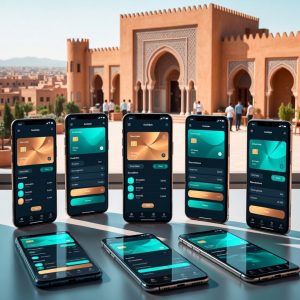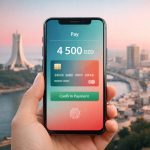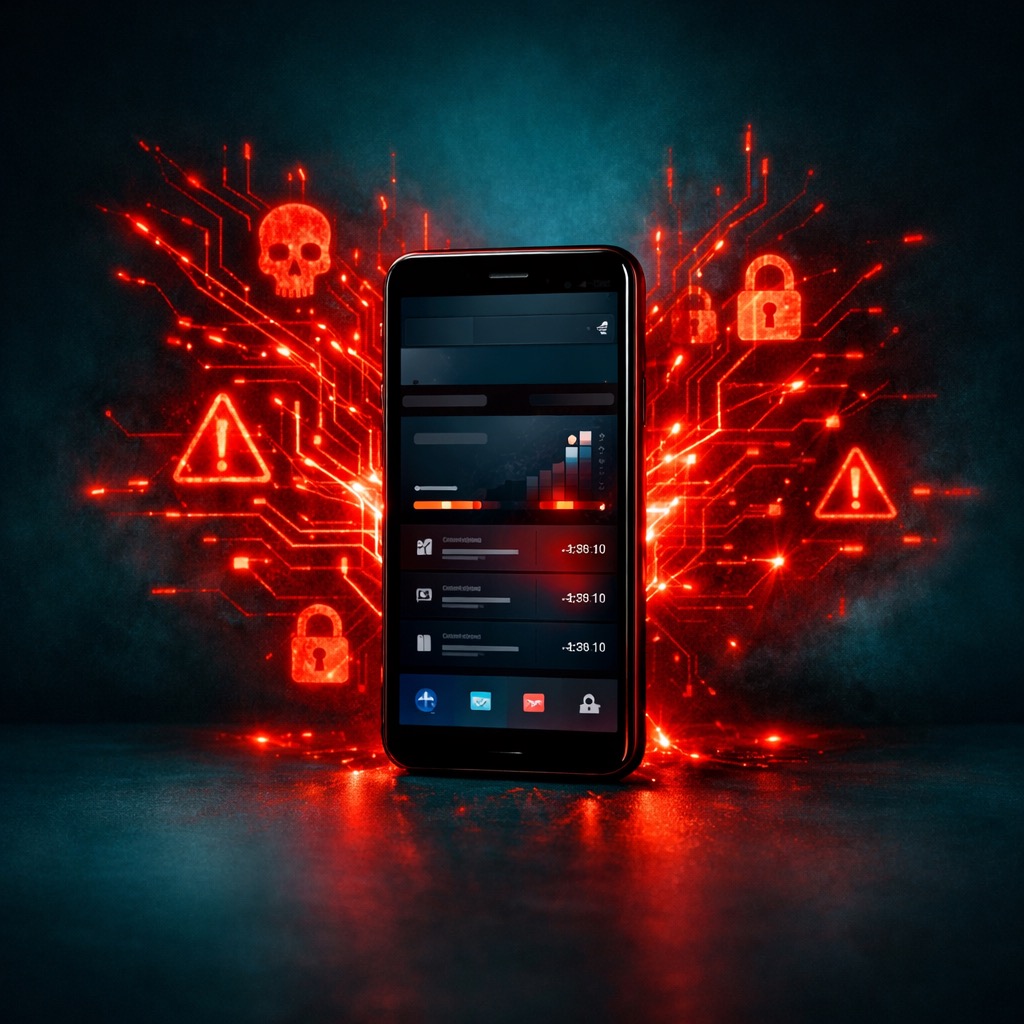
Algérie Poste has issued multiple official warnings about fraudulent links circulating on social media and websites that impersonate the BaridiMob mobile payment application. The counterfeit APK files replicate the app’s branding and interface with convincing accuracy, but they are designed to steal credentials and drain CCP accounts. In November 2024, Algérie Poste reminded customers that “the only official applications are BaridiMob and ECCP” and that any download outside the Google Play Store or Apple App Store “exposes users to serious risks.”
This is not a theoretical concern. It is the documented reality of Algeria’s rapidly digitizing financial ecosystem. As BaridiMob surpassed 13 million downloads on Google Play and CIB card adoption expanded across the banking sector, the country became a high-value target for banking trojans and mobile malware operators who have refined their techniques across dozens of markets.
The Algerian Financial App Landscape
Algeria’s mobile financial ecosystem has expanded at a pace that few predicted. BaridiMob, the mobile banking app for Algérie Poste’s CCP accounts, has become the most widely used digital payment tool in the country. By the end of 2024, the app had approximately 4.7 million active users, up from 3.4 million at the end of 2023. In December 2024 alone, BaridiMob processed 3.5 million account-to-account transfers totaling 46 billion dinars, plus 5.5 million online purchase operations worth 4 billion dinars. A new version launched in January 2026 introduces virtual cards and virtual payment terminals to accelerate digital transactions.
The CIB (Carte Interbancaire) ecosystem, managed by SATIM (Société d’Automatisation des Transactions Interbancaires et de Monétique), connects Algeria’s banking sector through interoperable card payments. Founded in 1995, SATIM now has 19 members comprising 18 banks and Algérie Poste, with over 3.5 million CIB debit cards issued, more than 1,351 ATMs, and 36,000 electronic payment terminals. Each participating bank offers its own mobile app, and the CIBWeb platform processes the majority of online card payments.
Beyond traditional banking, Algeria’s fintech ecosystem is growing. Startups including ALPAY, Slick-PAY, and epay.dz are entering the payments space. TemTem operates a logistics super app combining ride-hailing and delivery across 21 of Algeria’s 48 wilayas. The e-commerce sector, while still reliant on cash-on-delivery, is gradually integrating digital payments.
This combination of millions of users, rapidly adopted financial apps, limited cybersecurity awareness, and a nascent regulatory framework creates what threat intelligence analysts describe as a target-rich environment.
How Banking Trojans Work
Banking trojans are a class of malware specifically designed to steal financial credentials and intercept transactions. Understanding their mechanics is essential for recognizing and defending against them.
Overlay Attacks
The most common technique used by modern banking trojans is the overlay attack:
- The user installs a malicious app, either a fake version of a banking app or a seemingly unrelated utility (flashlight, file manager, PDF reader) that contains hidden trojan code.
- The trojan registers an Accessibility Service on Android, giving it permission to monitor which apps are running in the foreground.
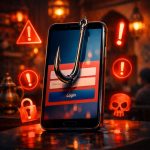
- When the user opens a legitimate banking app such as BaridiMob or a CIB bank app, the trojan immediately displays a fake login screen (the “overlay”) on top of the real app.
- The user, believing they are interacting with their real banking app, enters their username, password, and OTP.
- The trojan captures these credentials and transmits them to a command-and-control (C2) server controlled by the attackers.
- Simultaneously, the trojan can intercept incoming SMS messages to capture OTPs, effectively bypassing two-factor authentication.
This technique is devastatingly effective because the overlay is visually indistinguishable from the real app. The user has no visible indication that anything is wrong.
Keylogging and Screen Recording
Some trojans go beyond overlay attacks to capture every keystroke and record screen activity. This captures not just banking credentials but also messaging content, email passwords, and any other sensitive information entered on the device.
Remote Access Trojans (RATs)
Advanced banking malware families include RAT functionality, allowing attackers to remotely control the infected device. This means they can initiate transactions directly from the victim’s phone, making the activity appear to originate from the legitimate user’s device and IP address, bypassing many fraud detection systems.
Global Malware Families That Threaten Algeria
Banking trojans are not built from scratch for each new market. Instead, sophisticated malware families, often sold as malware-as-a-service (MaaS) on underground forums, are configured with overlays for specific banking apps in targeted countries.
Anatsa (TeaBot)
Anatsa is one of the most active banking trojans targeting Android users globally. First identified around 2020, it has been continuously updated and now targets over 800 financial institutions worldwide, up from approximately 650 in earlier versions. In mid-2025, a fake PDF utility app carrying Anatsa infected 90,000 users directly through the Google Play Store, demonstrating the trojan’s ability to evade Google’s security scans through staged payload delivery: the initial app is clean, and the malicious code downloads later as an “update.” Anatsa’s modular design means that adding overlays for Algerian banking apps requires only configuration changes, not code rewrites.
Cerberus and Its Derivatives
Cerberus was a prominent banking trojan whose source code was leaked on underground forums in September 2020. The leak spawned multiple variant families including Alien (2020), ERMAC (2021, targeting 450+ apps), and Phoenix (early 2024). In September and October 2024, the “ErrorFather” campaign deployed 15 Cerberus variants simultaneously. In August 2025, the ERMAC V3.0 source code was also leaked publicly. While Cerberus itself is no longer actively maintained, its descendants continue to operate and the leaked code has dramatically lowered the barrier to entry for less sophisticated threat actors.
Hook
Hook is a banking trojan announced in January 2023 by “DukeEugene,” the same threat actor behind ERMAC. It adds VNC-like capabilities, allowing attackers to control the infected device in real-time. Hook Version 3, observed in 2025, expanded its command set to 107 (including 38 new commands) with capabilities like stealthy screen streaming and session hijacking. Hook’s full source code leaked in October 2023, triggering widespread deployment. The malware is distributed through phishing websites and via platforms like GitHub.
Hydra and Medusa
Hydra has been active since 2018, initially targeting the Turkish banking sector before expanding to European institutions. Medusa resurfaced in mid-2024 with a new variant targeting banks in France, Italy, the United States, Canada, Spain, the United Kingdom, and Turkey. Both support overlay-based credential theft and distribute through SMS phishing campaigns and fake app stores, techniques that are particularly effective in markets where sideloading APKs remains common.
Distribution Channels in Algeria
The distribution methods used to deploy banking trojans in Algeria exploit specific characteristics of the local digital ecosystem.
Facebook Groups and Social Media
Algeria had 25.6 million Facebook users in early 2025, representing 54.2% of the total population and 83.5% of adults aged 18 and above. Facebook groups, particularly those focused on technology, financial tips, or “life hacks,” are used to distribute malicious APKs disguised as premium app versions, cracked apps, or “updated” banking apps. Posts claiming “BaridiMob new version with instant transfer feature, download here” attract users who may not verify the source.
These posts often use urgency tactics: “Update now before your account is locked,” “New security update required by Algérie Poste,” or “Free premium features for limited time.” Algérie Poste has specifically warned against such posts, confirming that counterfeit versions distributed on social media “can open the way to intrusions into bank accounts and theft of sensitive personal data.”
Telegram Channels
Telegram’s relatively permissive content moderation and support for large file sharing make it a convenient malware distribution platform. Channels offering cracked apps, modified games, and “premium” utilities frequently bundle banking trojans with their offerings. Users who install apps from these channels bypass every layer of app store security.
SMS Phishing (Smishing)
Smishing campaigns send SMS messages impersonating Algérie Poste, banks, or telecom operators. Common variants documented in Algeria include messages such as:
- “Your BaridiMob account has been suspended. Verify here: [malicious URL]”
- “Confirm your CIB card renewal: [malicious URL]”
- “You have a pending transfer of 50,000 DZD. Accept here: [malicious URL]”
Algérie Poste confirmed that “ALG Poste” is the only legitimate SMS sender identifier and urged customers to never click links in text messages. Some scammers also impersonate Algérie Poste staff by phone, requesting secret codes or photographs of Edahabia cards to “activate” accounts.
Fake App Stores and APK Hosting
Third-party APK hosting sites sometimes host modified versions of legitimate Algerian banking apps. While major third-party stores have some scanning in place, smaller hosting services do not. Algerian users who encounter Play Store restrictions or device compatibility issues sometimes turn to unofficial sources, significantly increasing their malware exposure.
QR Code Exploitation
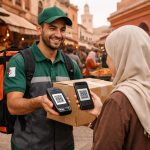
As Algerian merchants begin adopting QR code payments, attackers can deploy malicious QR codes that redirect to phishing sites or trigger malicious app downloads. A sticker placed over a legitimate merchant’s QR code can redirect all scanning customers to a credential-harvesting page.
Advertisement
The Scale of the Problem
Quantifying the exact impact of banking trojans in Algeria is challenging due to limited public disclosure requirements. However, several indicators confirm the threat is significant and growing:
- Cyberattack volume: Kaspersky recorded more than 70 million cyberattacks targeting Algeria in 2024, ranking the country 17th globally among most-targeted nations. More than 13 million phishing attempts and nearly 750,000 malicious email attachments were blocked during the same period.
- Africa-wide mobile threats: Africa has the highest rate of mobile malware attacks globally, with 41% of users encountering malware threats according to Kaspersky. Algeria accounted for 16% of detected potentially unwanted applications targeting businesses in Africa.
- Global banking trojan surge: Kaspersky detected 255,090 new banking trojan installation packages in 2025, a several-fold increase over previous years. The Mamont family alone accounted for nearly half of all banking trojan attacks.
- INTERPOL assessment: The INTERPOL Africa Cyberthreat Assessment Report 2025 warns that cybercriminals have “increased the targeting of mobile platforms, especially in countries where mobile banking services are growing.” Two-thirds of African INTERPOL member countries report cyber-related crimes at medium-to-high levels.
- Institutional maturity gap: Algeria remains at the “establishing” stage (Tier 3) in the ITU’s 2024 Global Cybersecurity Index. Only 30% of African countries have an incident reporting system, 29% a digital evidence repository, and just 19% a cyberthreat intelligence database.
How Banks and Regulators Should Respond
For Financial Institutions
Deploy runtime application self-protection (RASP). RASP technology embedded within the banking app can detect and block overlay attacks, screen recording, keylogging, and device tampering in real-time. Solutions from providers like Promon, Guardsquare, and Zimperium are specifically designed for mobile banking protection.
Implement device binding and fingerprinting. Tie each user’s account to a specific device. If login is attempted from an unrecognized device, require additional verification steps. This prevents stolen credentials from being used on attacker-controlled devices.
Move beyond SMS OTP. While convenient, SMS-based one-time passwords are interceptable by trojans that have Accessibility Service permissions. Transition to in-app push notifications for transaction confirmation, or implement time-based OTP (TOTP) through the banking app itself.
Deploy behavioral biometrics. Modern fraud detection systems analyze how users interact with their phones, including typing patterns, swipe dynamics, and device holding angle. These behavioral signals are nearly impossible for malware to replicate and can flag suspicious activity even when credentials are correct.
Implement transaction anomaly detection. Machine learning models trained on each user’s typical transaction patterns (amounts, timing, recipients) can flag unusual activity for additional verification. A user who typically transfers 5,000 DZD suddenly initiating a 500,000 DZD transfer to an unknown account should trigger an alert.
Conduct takedown operations. Actively monitor Facebook, Telegram, and third-party app stores for fake apps impersonating your brand. Work with platforms to remove malicious content and with hosting providers to take down phishing infrastructure.
For Regulators
Mandate security standards for financial apps. The Bank of Algeria and SATIM should establish minimum security requirements for all apps that process financial transactions, drawing from PCI DSS Mobile Payment Guidelines and the GSMA Mobile Financial Services Security Framework.
Accelerate the cybersecurity strategy implementation. Algeria’s National Cybersecurity Strategy 2025-2029, approved by Presidential Decree 25-321 on December 30, 2025, includes provisions for protecting critical sectors including finance. The operational framework established by Presidential Decree 26-07 (January 7, 2026) mandating cybersecurity units across government must extend to financial sector institutions.
Establish a financial sector CERT. A dedicated Computer Emergency Response Team for Algeria’s financial sector would coordinate threat intelligence sharing between banks, monitor emerging threats, and provide incident response support. The proposed CERIST-hosted sector-specific sharing communities for banking, energy, and telecom should be prioritized.
Strengthen breach notification requirements. When financial apps suffer data breaches or when credential theft campaigns are detected, affected users must be notified promptly. Clear mandatory notification timelines for the financial sector are essential.
Fund cybersecurity research. Support academic and independent security research into Algerian financial apps. Establish legal protections for researchers who responsibly disclose vulnerabilities.
What Users Must Do to Protect Themselves
Essential Steps
- Never install banking apps from outside the official app store. Only download BaridiMob, bank apps, and financial services from the Google Play Store or Apple App Store. No exception, no matter what a Facebook post or SMS says.
- Verify the developer. On Google Play, check that the developer listed is the official institution (e.g., “ALGERIE POSTE” for BaridiMob, the bank’s official name for CIB apps). Check download counts and reviews.
- Do not grant Accessibility Service permissions to unknown apps. If an app that is not a legitimate accessibility tool (screen reader, etc.) asks for Accessibility permissions, deny it immediately. This is the single most critical permission that banking trojans abuse.
- Be deeply skeptical of SMS links. Your bank will never send you a link to download an app update or verify your account via SMS. Algérie Poste confirmed that “ALG Poste” is the only legitimate SMS sender. If you receive a suspicious message, delete it. Open the official app directly from your home screen.
- Keep your device updated. Android security patches fix vulnerabilities that malware exploits. Enable automatic system updates.
- Use Google Play Protect. Ensure Play Protect is enabled (Settings > Google > Security > Google Play Protect) and run periodic scans.
- Monitor transactions. Check your BaridiMob and bank account balances regularly. Report any unauthorized transaction to Algérie Poste or your bank immediately.
If You Suspect an Infection
- Do not open any banking app. Until the malware is removed, any credentials you enter may be captured.
- Boot into Safe Mode. On most Android devices, hold the power button, then long-press “Power Off” to boot into Safe Mode, which disables third-party apps.
- Uninstall suspicious apps. Remove any app you installed recently from unofficial sources.
- Change all passwords from a different, clean device.
- Contact your bank and Algérie Poste to report the compromise and request a temporary account freeze.
- Factory reset your device if you cannot identify and remove the malware. This is the most reliable way to eliminate deeply embedded malware.
The Larger Picture
Banking trojans targeting Algeria are not the work of random hackers. They are products of an organized cybercrime ecosystem where malware developers, distributors, money mules, and cashout specialists collaborate in sophisticated operations. The INTERPOL Africa Cyberthreat Assessment confirms that cybercriminals follow the money, and as Algeria’s digital payment volumes grow, so does their attention.
The country’s defense must be equally organized. Banks must invest in application-level security. Regulators must implement the National Cybersecurity Strategy’s financial sector provisions. Law enforcement must build digital forensic capabilities. And users must develop the skepticism and digital literacy to recognize threats before they strike.
Algeria’s digital financial transformation is irreversible and overwhelmingly positive. But without proportional security investment, the same convenience that makes BaridiMob transformative can become the vector through which millions of Algerians are financially victimized.
Frequently Asked Questions
Can malware steal money directly from my BaridiMob account?
Yes, if you install a trojanized app and enter your credentials, attackers can access your account and initiate transfers. Some advanced trojans with RAT (remote access) capability can perform transactions directly on your device while you are not actively using it, intercepting SMS OTPs automatically. Algérie Poste has officially warned that counterfeit BaridiMob versions “can open the way to intrusions into bank accounts.”
Is it safe to use BaridiMob on public Wi-Fi?
It is generally not recommended for financial transactions. Public Wi-Fi networks can be exploited for man-in-the-middle attacks that intercept your data. If you must use public Wi-Fi, consider using a VPN service and ensure the app uses certificate pinning to validate the server connection.
How can I tell if an APK is fake?
The most reliable check is the source: if the APK did not come from the Google Play Store or Apple App Store, treat it as suspicious. Algérie Poste confirmed these are the only official distribution channels. You can also verify the APK’s digital signature, compare the package name with the official listing (ru.bpc.mobilebank.bpc for BaridiMob), and check the file size against the official app.
Sources & Further Reading
- Algérie Poste Warns Against Fake BaridiMob Application — Algerie360
- Algérie Poste Warns Against Fraudulent SMS and Fake Pages — Econostrum
- Anatsa Banking Trojan Hits 90,000 Users via Fake PDF App — The Hacker News
- Hook Version 3: Banking Trojan with Advanced Capabilities — Zimperium
- Cerberus RAT: Android Malware’s Dark Legacy in 2025 — Prey Project
- INTERPOL Warns of Sharp Rise in Cybercrime in Africa — INTERPOL
- The Mobile Threat Landscape in 2025 — Kaspersky Securelist
- Algeria Adopts 2025-2029 National Cybersecurity Strategy — We Are Tech Africa
- OWASP Mobile Top 10 — OWASP Foundation
- Algeria’s Payment Rails and SATIM — Transfi
🔗 Related Intelligence
Phishing, Ransomware, and Social Engineering: The Top Cyber Threats Targeting Algerian

Ransomware Preparedness for Algerian SMEs: A Practical 72-Hour Incident Response Playbook
Securing Algeria’s E-Commerce Boom: Payment Fraud, Marketplace Scams, and Consumer Trust
Phishing Epidemic: 13 Million Attacks Expose Algeria’s Digital Blind Spot