

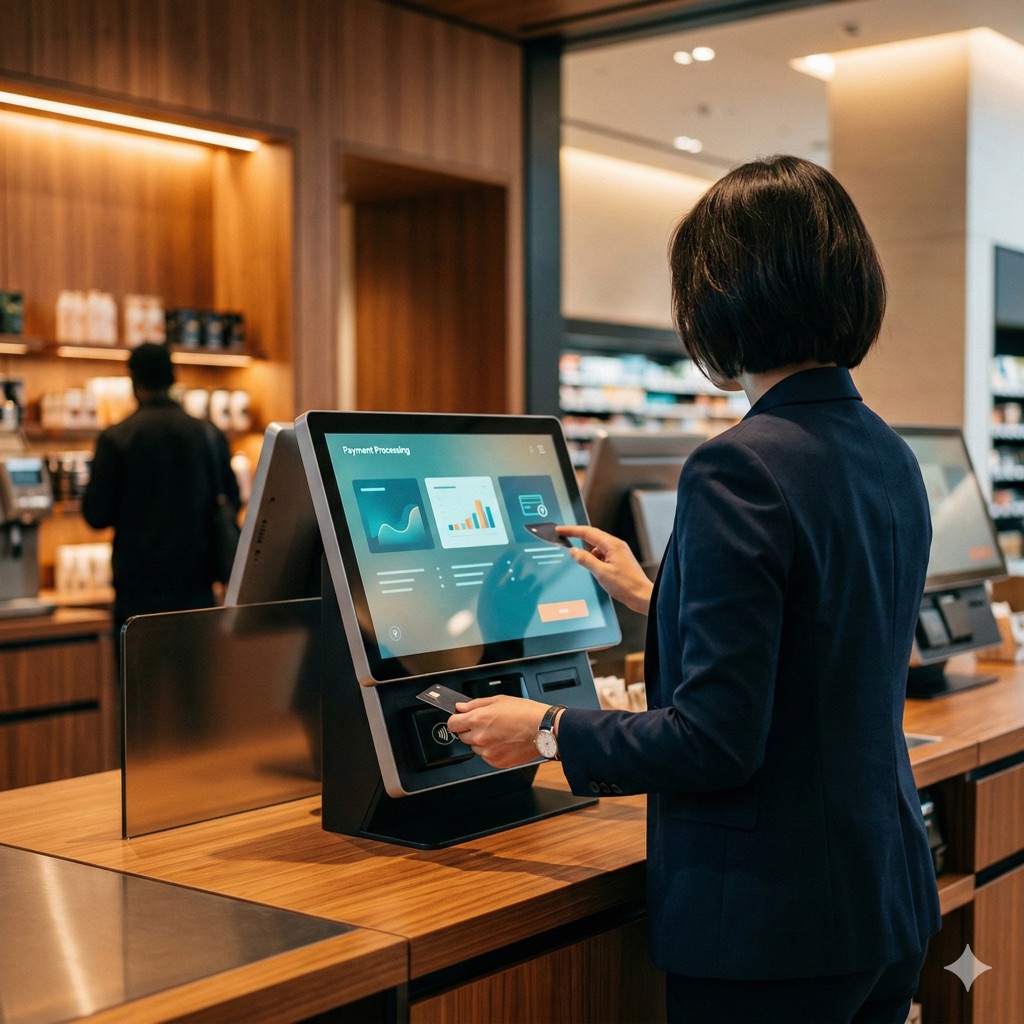
More than half of all business-to-business payments in the United States are still made by paper check. In 2026, when consumers settle restaurant tabs in seconds with a tap of their phone, American enterprises are mailing paper slips to settle invoices worth millions of dollars — often waiting 30 to 60 days for settlement. This is not a niche problem. The global B2B payments market represents roughly $125 trillion in annual transaction volume, and the vast majority of it flows through infrastructure built in the 1970s. The gap between consumer fintech and business payments is one of the strangest anomalies in modern finance — and it is finally beginning to close.
Why B2B Payments Lagged So Far Behind
The consumer payment revolution — Venmo, Apple Pay, instant bank transfers — was never going to automatically migrate into the enterprise. The obstacles are structural. A consumer transaction involves two parties, a single amount, and a few seconds of processing. A B2B payment may involve dozens of line items, purchase orders, contracts, tax codes, currency conversions, multiple approval layers, and mandatory reconciliation against accounting systems that were installed before broadband internet existed.
Enterprise Resource Planning (ERP) systems — SAP, Oracle, Microsoft Dynamics — are the nervous systems of large companies. They hold supplier records, payment terms, general ledger accounts, and audit trails. Replacing or significantly modifying these systems carries enormous operational and financial risk. Finance teams that run the month-end close on 20-year-old software are not experimenting with real-time payment rails when the downside is a failed audit.
Risk aversion is compounded by fraud exposure. The average business email compromise (BEC) scam nets attackers more than $130,000 per incident, according to FBI data. Finance departments that have been burned by fraudulent wire instructions are understandably cautious about any new payment channel, no matter how efficient. The result has been a payments ecosystem frozen in amber while the consumer world moved on.
FedNow Scales — Slowly but Steadily
The U.S. Federal Reserve launched its FedNow instant payment service in July 2023. By early 2026, more than 1,000 financial institutions have enrolled, giving the network meaningful coverage across the banking system. FedNow allows 24/7/365 settlement of transactions up to $500,000 — a threshold that accommodates a large share of SME B2B payments. Unlike the ACH system, which batches transactions and settles in one to two business days, FedNow transfers are final and irrevocable within seconds.
Adoption has been real but measured. Large commercial banks including JPMorgan Chase, Bank of America, and Wells Fargo are live on FedNow for receive capability, with send functionality rolling out in waves. The bottleneck is not the rail itself but the software that sits on top of it: treasury management systems, ERP connectors, and AP automation platforms must be updated to generate compliant FedNow payment instructions. That integration work takes time and budget that enterprise IT teams often do not have available.
The Clearing House’s RTP Network Pushes Higher Limits
Running parallel to FedNow is the RTP (Real-Time Payments) network operated by The Clearing House, a private-sector entity owned by the major U.S. commercial banks. RTP has been live since 2017 and by 2026 processes over $100 billion per quarter in transaction volume. In late 2024, The Clearing House raised the RTP transaction cap from $1 million to $10 million, a change specifically designed to make the network viable for mid-market and enterprise B2B payments rather than just consumer and SME use cases.
The coexistence of FedNow and RTP is sometimes confusing to corporate treasurers, but in practice it has expanded coverage: different banks have chosen different primary networks, and dual-rail capability is increasingly standard at large financial institutions. Interoperability between the two systems remains a policy discussion, but the practical effect for enterprises is a richer set of options for instant settlement than existed three years ago.
AP Automation: The Software Layer That Makes It Real
The payment rail is the highway. AP automation is the vehicle. Platforms like Bill.com, Tipalti, and Coupa have built the software stack that abstracts away the complexity of B2B payments for mid-market companies — OCR-based invoice ingestion, multi-level approval workflows, vendor self-service portals, and payment execution across ACH, wire, check, virtual card, and increasingly, real-time rails.
Bill.com, which processes over $300 billion in payment volume annually for more than 470,000 businesses, has become a de facto operating system for SME accounts payable. Tipalti targets larger enterprises with more complex global supplier networks, handling tax compliance (W-9, W-8, VAT), multi-currency payouts, and regulatory reporting across 196 countries. Coupa sits at the enterprise end, integrating procurement, invoicing, and treasury into a single platform used by Fortune 500 companies.
The business case for AP automation is compelling: manual invoice processing costs between $15 and $40 per invoice. Automated processing drops that cost to $2 to $5. For a company processing 10,000 invoices per month, the savings are material — often more than enough to fund the software subscription and implementation.
Advertisement
Cross-Border B2B Payments: Where Innovation Is Fastest
The most dramatic improvements in B2B payments in recent years have occurred in the cross-border segment. Traditional international wires via SWIFT are slow (2–5 business days), expensive ($15–$50 per transaction), and opaque — payers have no visibility into where funds are in transit or what exchange rate was applied.
Wise Business, the commercial arm of the Wise platform, now supports payroll and supplier payments in over 80 countries, offering mid-market exchange rates with flat fees and same-day or next-day delivery in many corridors. Airwallex, the Australian-founded global payments platform valued at $5.6 billion as of its 2024 funding round, offers multi-currency accounts, FX management, and embedded payment APIs that allow software companies to build payment functionality directly into their products. Nium, Singapore-based and backed by Visa, has built a B2B cross-border network that processes payments in over 100 currencies and has become a key infrastructure provider for banks and fintechs building international pay-out capability.
These players have moved the benchmark: corporate treasury teams now expect same-day or 24-hour settlement in most major corridors, and anything slower is a competitive disadvantage for the financial institution providing it.
Embedded Finance Comes to ERPs
The most consequential development for large enterprises may not be standalone fintech platforms but the embedding of payment capability directly into the ERP layer. SAP, which counts more than 400,000 companies as customers, has invested heavily in SAP Business Network — a platform that connects buyers and suppliers and enables invoice-to-payment workflows without leaving the SAP environment. In 2024, SAP partnered with payment processors including Stripe and American Express to offer embedded payment execution inside SAP Ariba.
Oracle NetSuite has followed a similar path, enabling bank feeds, payment approval workflows, and direct ACH/RTP payment execution within NetSuite modules. For CFOs, the value proposition is clear: if payment execution lives natively inside the system of record, reconciliation is automatic, audit trails are complete, and the data quality that manual processes destroy is preserved.
What Is Still Blocking Adoption
Despite the momentum, meaningful barriers remain. Legacy ERP systems at large corporations are difficult to integrate with new payment rails — a hospital system or a utility company running SAP R/3 on-premises cannot simply flip a switch to enable FedNow. Upgrade cycles at these organizations are measured in years, not quarters.
Fraud concerns have not gone away. Real-time payments are irrevocable: once funds leave, they cannot be recalled the way an ACH batch can be reversed. Finance teams need robust vendor verification and payment controls before they will trust instant rails for large transactions. Regulators are still developing frameworks for instant payment liability and error resolution.
And check remains stubbornly persistent, in part because it is familiar, auditable, and does not require technology investment at either end of the transaction. Changing the behavior of millions of accounts payable departments is a longer arc than any technology can compress entirely.
The $125 Trillion Opportunity
The scale of the prize explains why investment in B2B payments infrastructure has accelerated. McKinsey estimates the total addressable market at $125 trillion annually, with U.S. B2B payments alone representing roughly $25 trillion. The margin profile of B2B payment processing is significantly more attractive than consumer payments — transaction sizes are larger, interchange is higher, and stickiness is greater once a vendor is embedded in an ERP workflow.
Fintechs, banks, and ERP vendors all understand that whoever captures the B2B payment relationship captures the data, the float, and the loyalty of the enterprise customer. That competitive pressure — more than any single regulatory mandate — is what is finally forcing modernization in a segment that spent thirty years watching the consumer world move without it.
Advertisement
Decision Radar (Algeria Lens)
| Dimension | Assessment |
|---|---|
| Relevance for Algeria | Medium — Algeria’s B2B payment ecosystem is nascent; BaridiMob, CIB, and eDahabia cover retail, but enterprise-to-enterprise digital settlement is largely absent; global modernization trends will eventually reach Algerian banks and enterprises |
| Infrastructure Ready? | No — Algeria lacks real-time B2B payment rails; SWIFT access is limited for most enterprises; cross-border B2B payments face currency control constraints under the non-convertible dinar framework |
| Skills Available? | Partial — payment engineering talent exists in Algeria’s fintech startups but is concentrated in consumer apps; enterprise AP automation expertise is scarce |
| Action Timeline | 12–24 months — Algerian enterprises and banks should monitor FedNow/RTP adoption patterns as a model; immediate action limited to awareness-building and early fintech pilots |
| Key Stakeholders | Bank of Algeria (regulatory framework), CPA (Centre de Pré-compensation), commercial banks (BNA, BEA, CPA), BaridiMob, Algerian enterprises with international supplier relationships, fintech startups |
| Decision Type | Educational / Monitor |
Quick Take: Algeria’s B2B payment infrastructure is still at an early stage — most enterprise payments rely on bank transfers, checks, or cash, with limited AP automation. Global modernization through FedNow, RTP, and embedded finance offers a blueprint that Algerian banks and regulators can study as they build out domestic payment infrastructure under the Digital Economy Law. For Algerian enterprises with international suppliers, platforms like Wise Business and Airwallex represent the most immediately accessible tools, pending dinar convertibility improvements.
Sources & Further Reading
🔗 Related Intelligence

Instant Payments Go Mainstream: 74% Adoption and the Global Race

Buy Now Pay Later Faces Its Global Regulatory Reckoning

130 Countries, One Goal: The CBDC Race and What Digital Currencies Mean for Tech

Embedded Finance: When Every App Becomes a Bank







Advertisement