Key Takeaway
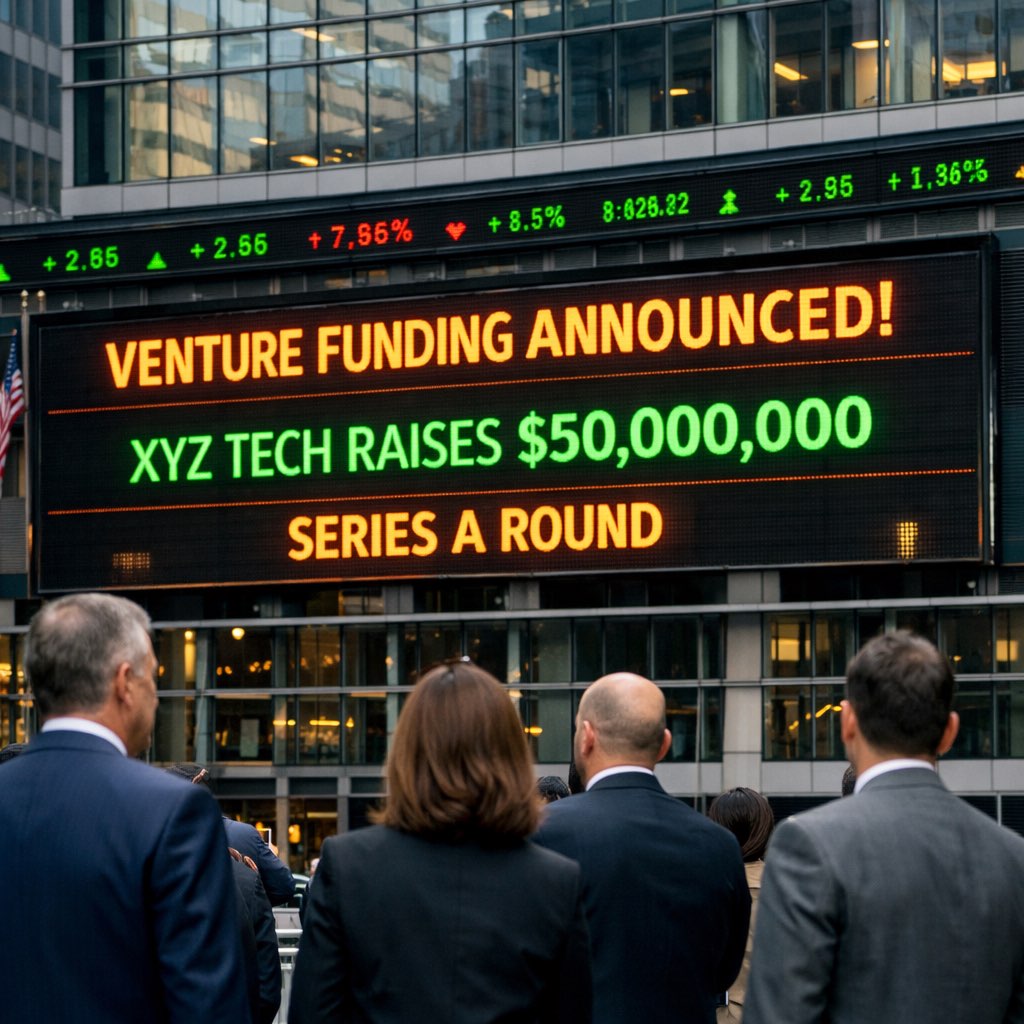
Anthropic’s $30 billion Series G at a $380 billion valuation, the second-largest venture deal in history, signals that the AI industry is consolidating around two dominant players while raising fundamental questions about market concentration and regulatory oversight.
On February 12, 2026, Anthropic closed a $30 billion Series G funding round that valued the AI safety company at $380 billion post-money. The round, led by GIC (Singapore’s sovereign wealth fund) and Coatue, with participation from D. E. Shaw Ventures, Dragoneer, Founders Fund, ICONIQ, and MGX, marks the second-largest venture funding deal of all time, trailing only rival OpenAI’s $40 billion round in 2025.
The scale of this investment demands attention not just for what it reveals about Anthropic’s trajectory but for what it signals about the structure of the AI industry itself.
The Numbers Behind the Round
Anthropic’s financial performance justifies the valuation by venture capital standards. The company reports a $14 billion run-rate revenue that has grown over 10x annually in each of the past three years. The number of customers spending over $100,000 annually on Claude has grown 7x in the past year, and eight of the Fortune 10 are now Claude customers.
The investment will fuel what Anthropic describes as frontier research, product development, and infrastructure expansions. The company has also expanded its partnership with Google and Broadcom for compute infrastructure, ensuring it can train increasingly large models without being dependent on a single cloud provider.
The investor roster itself tells a story. GIC’s lead position represents Singapore’s bet on AI as the defining technology platform of the coming decade. MGX, backed by Abu Dhabi, adds sovereign wealth fund weight from the Gulf. The presence of Founders Fund, Peter Thiel’s venture firm, alongside institutional investors like D. E. Shaw underscores the breadth of conviction behind Anthropic’s approach.
Claude vs GPT: The Enterprise Battleground
The Claude-GPT rivalry has become the defining competitive dynamic in enterprise AI. While OpenAI maintains a larger consumer user base through ChatGPT, Anthropic has made significant inroads in enterprise adoption, particularly in coding, legal analysis, and knowledge work.
Anthropic’s newest model, Opus 4.6, can power agents that manage entire categories of real-world work, generating documents, spreadsheets, and presentations with professional polish. This capability positions Claude not just as a chatbot alternative but as a workflow automation platform that competes with categories beyond traditional AI.
The enterprise focus has strategic implications. By targeting high-value business customers willing to pay premium prices for reliability, safety features, and enterprise-grade support, Anthropic has built a revenue model that may prove more sustainable than consumer subscription revenue.
Advertisement
The Duopoly Question
The $30 billion round crystallizes a growing concern in the AI industry: the emergence of a two-player market that may be too concentrated for healthy competition. With OpenAI valued at approximately $850 billion and Anthropic at $380 billion, these two companies together command over $1.2 trillion in valuation and attract the vast majority of frontier AI investment.
This concentration raises several policy questions:
Market access. Can newer AI companies compete when the top two absorb most available capital and talent? Smaller competitors like Mistral, Cohere, and Meta’s open-source efforts face increasingly steep barriers to parity.
Safety governance. Both OpenAI and Anthropic promote themselves as safety-conscious developers, but their self-governance models lack external verification. The scale of their operations makes independent oversight increasingly difficult.
Compute monopoly. The massive capital requirements for frontier AI training create natural monopoly dynamics. Only companies that can raise tens of billions can afford the GPU clusters needed for next-generation models.
Talent concentration. The AI research talent pool is finite, and the ability to offer top compensation concentrates expertise in a handful of companies, potentially slowing innovation in academia and smaller labs.
Regulatory Implications
The funding mega-rounds are occurring against a backdrop of increasing regulatory attention. The EU AI Act implementation continues through 2026, the US is developing AI governance frameworks through various state-level initiatives, and China has implemented its own AI model regulations.
For Anthropic specifically, the $30 billion round increases regulatory scrutiny in several ways:
Antitrust considerations. At $380 billion, Anthropic is larger than most companies in the S&P 500. Its partnerships with Google and Amazon Web Services (which invested $4 billion in a previous round) raise questions about the relationship between platform companies and their AI dependencies.
National security review. Sovereign wealth fund participation from Singapore (GIC) and Abu Dhabi (MGX) may trigger national security reviews in certain jurisdictions, particularly as AI capabilities approach dual-use thresholds.
AI safety commitments. Anthropic has publicly committed to responsible AI development and has pioneered techniques like constitutional AI. Whether these commitments scale with the company’s growth and competitive pressure will be closely watched by regulators.
What the Round Signals for 2026
Beyond the competitive dynamics, Anthropic’s Series G reveals broader industry trends:
AI investment is not slowing. Despite concerns about an AI bubble, sovereign wealth funds and institutional investors are increasing their commitments, suggesting the smart money sees AI as a generational platform shift.
Infrastructure is the bottleneck. The explicit focus on infrastructure expansion confirms that compute access, not algorithms, is the binding constraint on AI progress.
Enterprise revenue validates the model. Anthropic’s $14 billion run-rate demonstrates that AI companies can generate real revenue at scale, addressing skepticism about AI business models.
Safety as competitive advantage. Anthropic’s positioning as the safety-first AI company resonates with enterprise customers who need trustworthy AI for regulated industries.
Frequently Asked Questions
How does Anthropic’s $30B round compare to OpenAI’s funding?
Anthropic’s $30 billion Series G at $380 billion valuation is the second-largest venture deal in history, behind OpenAI’s $40 billion round in 2025 (valued at approximately $850 billion). Together, these two companies have raised over $70 billion in private capital, reflecting the massive infrastructure costs of frontier AI development.
Why are sovereign wealth funds investing so heavily in AI?
Sovereign wealth funds like Singapore’s GIC and Abu Dhabi’s MGX view AI as the most significant technology platform shift since the internet. These long-term investors can accept the 5-10 year timelines needed for AI infrastructure to generate returns, and their participation signals conviction that AI capabilities will transform entire economies.
What does Anthropic’s funding mean for smaller AI companies?
The concentration of capital in two dominant companies creates significant challenges for smaller competitors. However, the open-source AI movement (led by Meta’s LLaMA and others), specialized vertical AI applications, and regional AI initiatives continue to attract investment. The market may evolve toward a structure with two frontier labs and a diverse ecosystem of specialized applications built on their platforms.
Sources & Further Reading
- Anthropic Raises $30 Billion in Series G Funding — Anthropic
- Anthropic Closes $30 Billion Funding Round — CNBC
- Anthropic Raises $30B in Second-Largest Venture Funding Deal — Crunchbase News
- GIC Leads $30 Billion Series G in Anthropic — GIC Newsroom
- Anthropic’s $30 Billion Revenue Surge: Claude AI Strategy — Open The Magazine