The Meeting That Signals Multilateral Backing
In early April 2026, Minister of the Knowledge Economy, Startups, and Micro-Enterprises Noureddine Ouadah met with Amandeep Singh Gill, the United Nations Under-Secretary-General and Special Envoy for Digital and Emerging Technologies. Held on the sidelines of Global Africa Tech 2026 in Algiers, the meeting focused on cooperation in digitization, innovation, and entrepreneurship, with emphasis on AI’s role in economic development.
This adds a multilateral dimension to what has been primarily a bilateral and continental strategy. The UN Special Envoy’s portfolio covers artificial intelligence governance, digital public infrastructure, and support for digital entrepreneurship in developing countries, opening pathways to technical assistance, capacity building, and inclusion in global digital policy forums.
Algeria’s Digital Infrastructure Push
Algeria’s proposition rests on concrete progress across several fronts. Algerie Telecom reached 2.5 million FTTH subscribers in September 2025, with plans to phase out copper networks by 2027. Two separate high-performance computing facilities are advancing: ENSIA’s HPC center in Algiers, inaugurated in July 2025 with NVIDIA H100 and L40S processors for AI research, and a dedicated AI supercomputing center under construction in Oran with GPU clusters targeting researchers, startups, and academia.
The government has set an ambitious target for AI to contribute 7% of GDP by 2027. The SNTN-2030 digital transformation strategy plans over 500 projects for 2025-2026, with 75% focused on modernizing public services. The strategy also aims to train 500,000 ICT specialists while reducing skilled worker emigration by 40%.
Advertisement
A Growing Startup Ecosystem
Algeria’s startup ecosystem has grown to over 7,800 registered companies on the startup.dz platform, with approximately 2,300 holding the formal Startup Label. The government has set a target of 20,000 labeled startups by 2029, backed by 124 active university incubators engaging 60,000 students. Algeria also recently joined the global 50in5 campaign supported by the UNDP, committing to build public digital infrastructure for digital identity, payments, and data exchange.
Positioned between Europe and sub-Saharan Africa with a trilingual workforce spanning Arabic, French, and English, Algeria can serve as a testbed for digital solutions that need to work across diverse linguistic and cultural contexts.
The Algiers Declaration and Continental Leadership
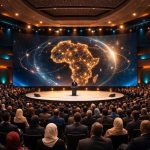
The Algeria-UN meeting came just days after the country hosted Global Africa Tech 2026, drawing over 5,000 participants from 45 countries, including 50 ministers and decision-makers. The summit produced the Algiers Declaration on African Telecommunications Sovereignty, a 14-article political document establishing commitments in universal connectivity, protection of critical digital infrastructure, data sovereignty, and human capital development for 2026-2030.
Algeria’s role as convener of Africa’s digital sovereignty conversation gives its UN partnership added weight. The country is not just seeking support for national projects; it is positioning itself as a bridge between African digital ambitions and the Global Digital Compact adopted by the UN General Assembly, which calls for inclusive digital governance and ensuring AI development respects human rights.
What This Means for Algeria’s Tech Professionals
For startup founders and tech professionals, the partnership signals several practical developments. International recognition increases the credibility of Algeria’s ecosystem in the eyes of foreign investors. Access to UN technical assistance programs could help bridge gaps in AI governance, data protection, and digital skills development.
The partnership also creates opportunities for Algerian companies working on digital public infrastructure, e-government solutions, and AI applications for public services. Concrete cooperation frameworks are expected to follow, targeting technical assistance for Algeria’s national AI strategy and inclusion of Algerian expertise in UN-led digital governance initiatives.
Frequently Asked Questions
What was discussed at the Algeria-UN meeting on digital technologies?
Minister Noureddine Ouadah and UN Special Envoy Amandeep Singh Gill discussed cooperation in digitization, innovation, and entrepreneurship during Global Africa Tech 2026. The meeting addressed AI’s role in economic development, inclusive digital governance, and strengthening Algeria’s startup ecosystem through international partnerships.
How does this partnership connect to Algeria’s SNTN-2030 digital strategy?
The UN partnership adds multilateral support to Algeria’s national SNTN-2030 strategy, which plans over 500 digital projects with 75% focused on modernizing public services. It opens access to UN technical assistance, global policy forums, and capacity building programs that complement Algeria’s target of training 500,000 ICT specialists and achieving 7% GDP contribution from AI by 2027.
What opportunities does this create for Algerian startups and tech companies?
Companies working on digital public infrastructure, e-government solutions, and AI applications for public services may benefit from UN-supported programs. Algeria’s membership in the 50in5 campaign and the Algiers Declaration’s 2026-2030 framework create procurement and partnership opportunities, while increased international visibility could attract foreign investment to the 2,300+ labeled startups in the ecosystem.
Sources & Further Reading
- Algeria-UN Meeting on Digital and Emerging Technologies — Africa News DZ
- Algeria Hosts Global Africa Tech 2026 — AL24 News
- Africa Adopts Algiers Declaration on Telecom Sovereignty — TechAfrica News
- Algeria Launches AI Supercomputing Center in Oran — Data Center Dynamics
- Algeria Joins Global 50in5 Campaign for Digital Infrastructure — AL24 News
- Algeria Plans Over 500 Digital Projects by 2026 — We Are Tech Africa
- Algerie Telecom Reaches 2.5 Million FTTH Subscribers — TechAfrica News
🔗 Related Intelligence
AfCFTA Digital Trade Protocol: What It Means for Algeria’s Tech Services

ICT Africa Summit in Algiers: Algeria’s Bid to Lead Continental Digital Infrastructure
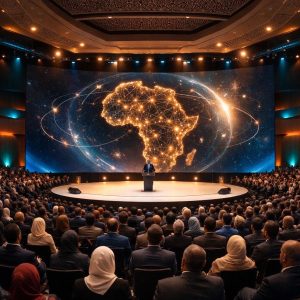
Global Africa Tech 2026: Algeria Hosts the Continent’s First Digital Sovereignty and Connectivity Summit

AI in Government: The Practical Starting Point for Algeria’s Digital Transformation