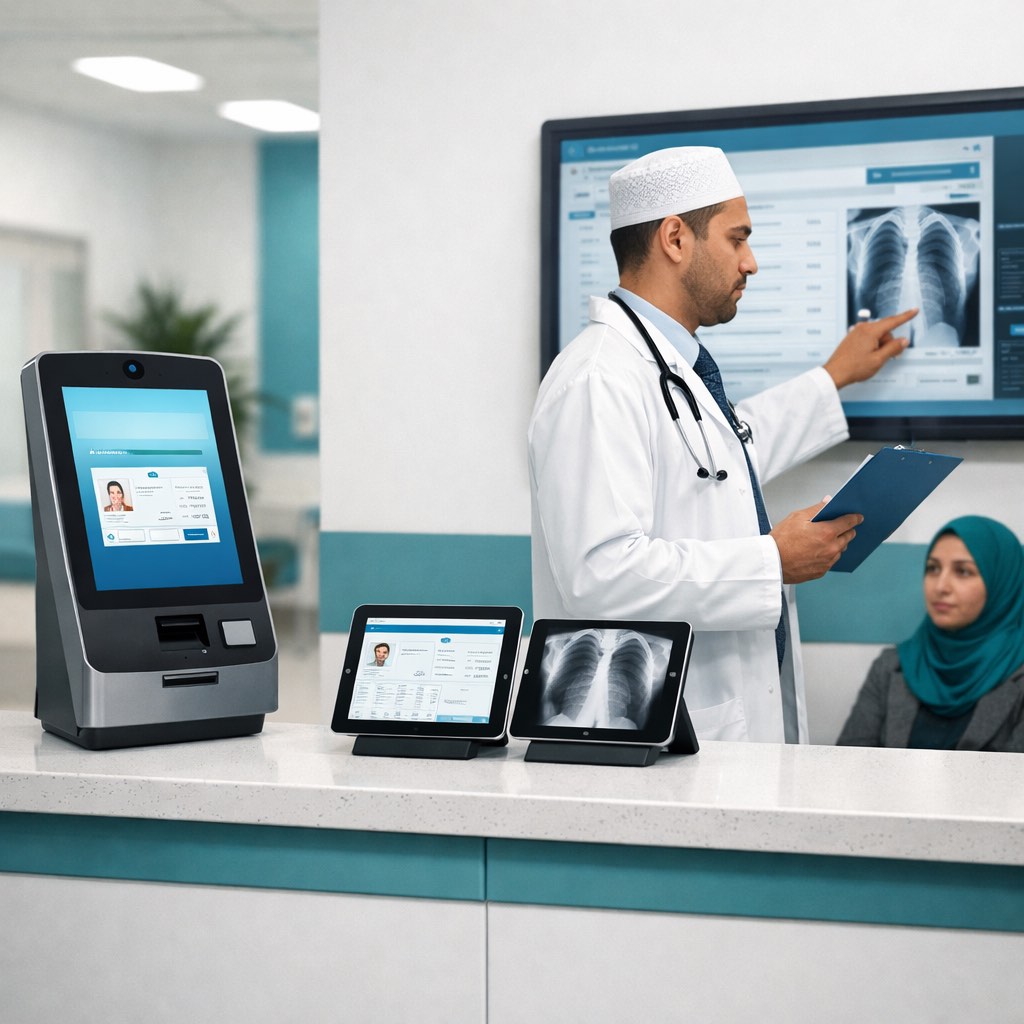
Walk into most Algerian public hospitals and the workflow is immediately visible: paper patient files stacked in corridors, handwritten appointment logs at reception, lab results delivered by hand or not at all. A patient visiting the CHU Mustapha Pacha in Algiers for a routine blood test may wait days for results that exist on a machine but lack a digital pathway to reach the patient or the referring physician. The infrastructure exists — Algeria operates 13 university hospital centers, over 270 public hospitals, and thousands of clinics — but the connective tissue between them is largely analog.
A cohort of Algerian medtech startups is building that connective tissue. With 43 healthtech companies now operating in the country and 15 specifically focused on healthcare IT, Algeria’s medtech ecosystem is moving from isolated experiments to systematic hospital digitalization.
The Appointment Booking Problem
The most visible pain point is appointment scheduling. Most Algerian hospitals use manual booking systems — phone calls, physical queues, or in-person registration at 6 AM to secure a slot. This creates two problems: patients waste hours in queues, and hospitals cannot forecast demand or optimize physician schedules.
Startups like Beesiha have built online platforms for listing, booking, and consulting with doctors. Users search for specialists by location and availability, book appointments online, and manage their medical history digitally — prescriptions, test results, and consultation notes in one place. Dentisium targets the dental sector specifically, connecting patients with dental professionals through a dedicated scheduling and records platform.
Sihhatech takes a different approach, focusing on home healthcare. Its platform matches patients with appropriate healthcare providers for home care needs, handling the logistics of scheduling, matching, and payment for medical visits outside hospital walls.
These platforms solve the front-door problem. The larger challenge is what happens after the patient walks in.
Lab Results and Medical Records
Algeria’s hospital laboratories generate thousands of test results daily. The bottleneck is not the testing — modern analyzers in university hospitals produce results within hours — but the last mile: getting results from the lab system to the patient and the ordering physician.
Most public hospitals lack integrated hospital information systems (HIS). Lab results print on paper, get filed manually, and reach patients through a pickup window. If the patient was referred from another facility, results may need to be physically transported or, more commonly, the tests are simply repeated at the new facility.
DzairPharm addresses the pharmacy side of this fragmentation, providing digital tools for medication management and pharmacy operations. Smart Health builds broader healthcare IT infrastructure, targeting the system-level integration that individual appointment apps cannot solve alone.
The underlying technical challenge is interoperability. Even when individual hospitals adopt digital systems, those systems rarely communicate with each other. A patient’s records at CHU Oran are invisible to CHU Constantine. Algeria does not yet have a national health information exchange (HIE) standard, meaning each digital initiative risks creating another data silo.
Advertisement
Telemedicine After the Pandemic Catalyst
Algeria’s telemedicine landscape accelerated during 2020-2021, when physical access to hospitals became restricted. Remote consultations, previously a regulatory gray area, gained tacit acceptance. The momentum has partially sustained: platforms now offer video consultations, remote monitoring, and digital prescriptions.
However, telemedicine in Algeria faces structural constraints that pure technology cannot solve. Internet connectivity outside major cities remains inconsistent — 4G coverage is broad but speeds vary significantly. More critically, the regulatory framework for remote medical practice lacks the specificity that platforms need: questions around digital prescription validity, liability for remote diagnosis, and cross-wilaya practice remain unresolved.
The startups navigating these constraints are building cautiously. Rather than attempting full remote diagnosis — which carries both medical and legal risk — most platforms position telemedicine as a triage and follow-up tool. A patient in Ghardaia can consult a specialist in Algiers for a second opinion, but the platform routes toward an in-person visit for anything requiring examination.
The Market Opportunity
Algeria’s medical technology market is projected to grow steadily, driven by government investment in healthcare infrastructure, an aging population, and rising expectations for digital services. The government’s hospital construction program — including new facilities in multiple provinces — creates natural insertion points for digital systems: a new hospital can be built with a HIS from day one, avoiding the retrofit challenge of digitizing existing facilities.
Across the broader African continent, healthtech investment reached $550 million between 2020 and 2023, with the market expected to exceed $11 billion by 2025. North Africa, where average life expectancy already exceeds the global average, represents a market with both the infrastructure to support digital health tools and the demand for them.
For Algerian medtech startups, the competitive advantage is local knowledge. International health IT vendors offer powerful systems, but they arrive with assumptions built for European or American healthcare: insurance-based billing, electronic health record standards (HL7 FHIR) that Algeria does not yet mandate, and pricing structures designed for high-revenue hospital systems. Algerian startups build for CCP payments, Arabic-French bilingual interfaces, and the specific administrative workflows of CHU and EPH facilities.
What Needs to Happen Next
Hospital digitalization in Algeria requires movement on three fronts simultaneously. First, the Ministry of Health needs to establish national standards for health data exchange — without interoperability requirements, every hospital’s digital system becomes an island. Second, the regulatory framework for telemedicine needs codification: which consultations can be conducted remotely, how digital prescriptions are validated, and how liability is allocated.
Third, and most practically, hospital IT budgets need to accommodate locally built software. The procurement process for public hospitals heavily favors established vendors with track records, creating a barrier for startups that may have superior products but lack the institutional credibility that a Siemens Healthineers or Cerner brings to a tender process.
The 43 healthtech startups currently operating in Algeria represent the supply side. Unlocking demand requires institutional buyers — hospitals, clinics, and the Ministry of Health itself — to treat homegrown medtech as a strategic investment rather than an experimental procurement risk.